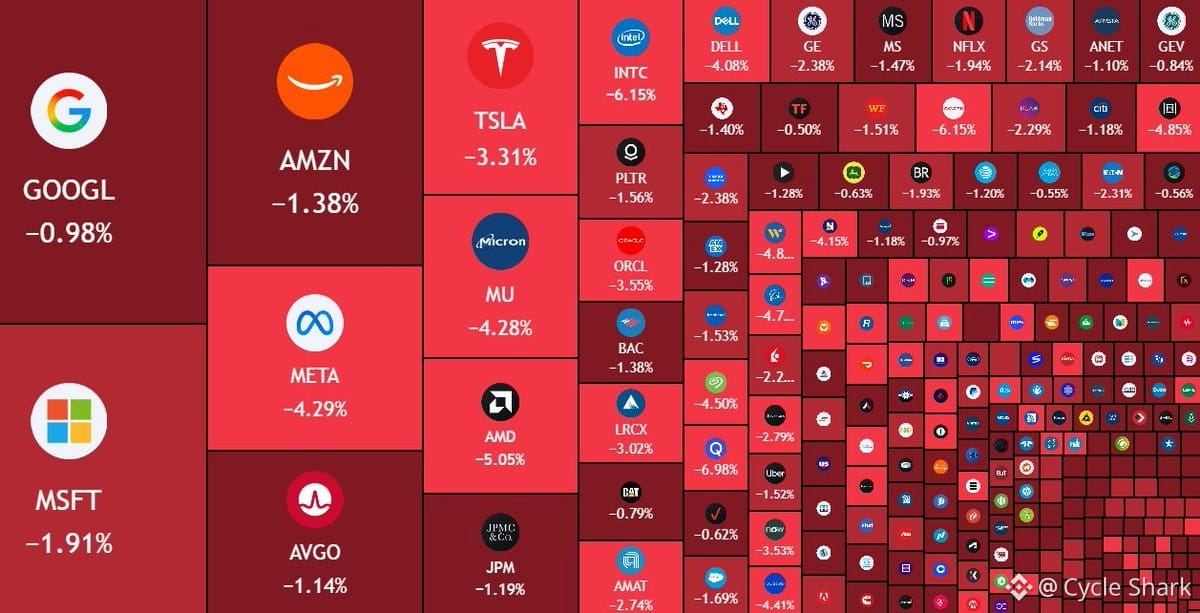
$700 billion wiped from US equities as the 30-year Treasury yield just hit levels not seen since 2001.
This is the bond market screaming. When long-dated yields spike like this, it's not just about inflation expectations or Fed policy anymore — it's about term premium, fiscal sustainability concerns, and the sheer volume of debt the Treasury needs to roll over.
Three things worth noting:
1. Equity valuations get crushed when the risk-free rate climbs this high. If you can lock in 4.5%+ on a 30-year bond, why take equity risk? The discount rate for future cash flows just got reset, and growth stocks feel it first.
2. This isn't happening in isolation. We're seeing similar moves in European sovereign debt, and emerging market currencies are under pressure. Capital is flowing toward dollars and safety, which means liquidity is tightening globally.
3. The feedback loop is ugly. Higher yields mean higher debt servicing costs for the US government, which means more issuance, which pushes yields even higher. At some point, either the Fed steps in or something breaks.
The $700 billion drawdown is just the surface. What matters more is whether this marks the beginning of a broader deleveraging cycle. If yields stay elevated, leveraged positions across credit, private equity, and real estate all start to reprice. And crypto won't be immune — risk assets move together when macro conditions tighten this fast.
This is the bond market screaming. When long-dated yields spike like this, it's not just about inflation expectations or Fed policy anymore — it's about term premium, fiscal sustainability concerns, and the sheer volume of debt the Treasury needs to roll over.
Three things worth noting:
1. Equity valuations get crushed when the risk-free rate climbs this high. If you can lock in 4.5%+ on a 30-year bond, why take equity risk? The discount rate for future cash flows just got reset, and growth stocks feel it first.
2. This isn't happening in isolation. We're seeing similar moves in European sovereign debt, and emerging market currencies are under pressure. Capital is flowing toward dollars and safety, which means liquidity is tightening globally.
3. The feedback loop is ugly. Higher yields mean higher debt servicing costs for the US government, which means more issuance, which pushes yields even higher. At some point, either the Fed steps in or something breaks.
The $700 billion drawdown is just the surface. What matters more is whether this marks the beginning of a broader deleveraging cycle. If yields stay elevated, leveraged positions across credit, private equity, and real estate all start to reprice. And crypto won't be immune — risk assets move together when macro conditions tighten this fast.