

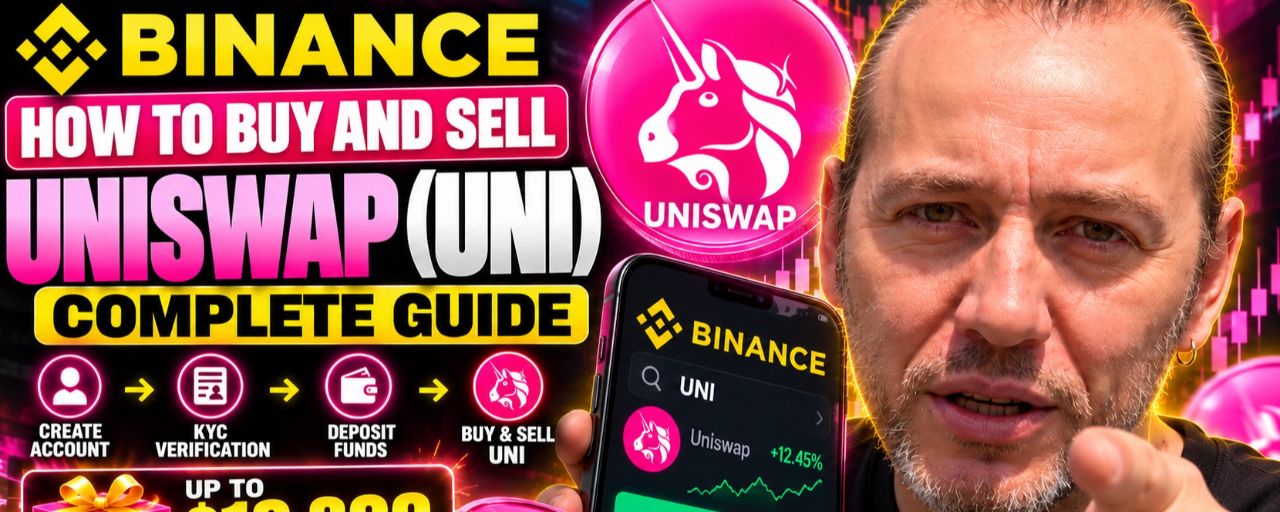


If you want to buy or sell Uniswap (UNI) on Binance, the process starts with creating and securing a Binance account, completing identity verification, depositing funds, and selecting an available UNI Spot trading pair.
Using an eligible Binance referral code can also reduce trading costs. My current codes are CRYPTOFEE20 for Spot trading and FUTURESFEE20 for Futures. Eligible users may receive up to 20% trading-fee benefits, depending on region, account eligibility, referral configuration, and Binance's current terms.
This guide explains the entire process, including Binance fees, BNB fee discounts, KYC, 2FA, order types, UNI risks, and a practical fee simulation.
Create an account on Binance:
https://www.binance.com/register?ref=CRYPTOFEE20
https://www.binance.com/en/events/referral-code-cryptofee20TL;DR: How to Buy Uniswap (UNI) on Binance
The basic process is simple:
1. Create a Binance account and enter referral code CRYPTOFEE20.
2. Complete KYC identity verification.
3. Enable 2FA or a passkey before depositing funds.
4. Deposit supported fiat currency or cryptocurrency.
5. Open Binance Spot and search for UNI.
6. Select an available UNI trading pair.
7. Choose Market or Limit order.
8. Enter the amount of UNI you want to buy and review the transaction before confirming.
For eligible users, CRYPTOFEE20 may provide up to a 20% Spot trading-fee benefit, while FUTURESFEE20 is intended for eligible Futures referral benefits.
Binance currently lists the standard regular-user Spot maker/taker rate as 0.100% / 0.100%. Paying eligible trading fees with BNB currently reduces those rates to 0.075% / 0.075%, equivalent to Binance's published 25% BNB fee discount.
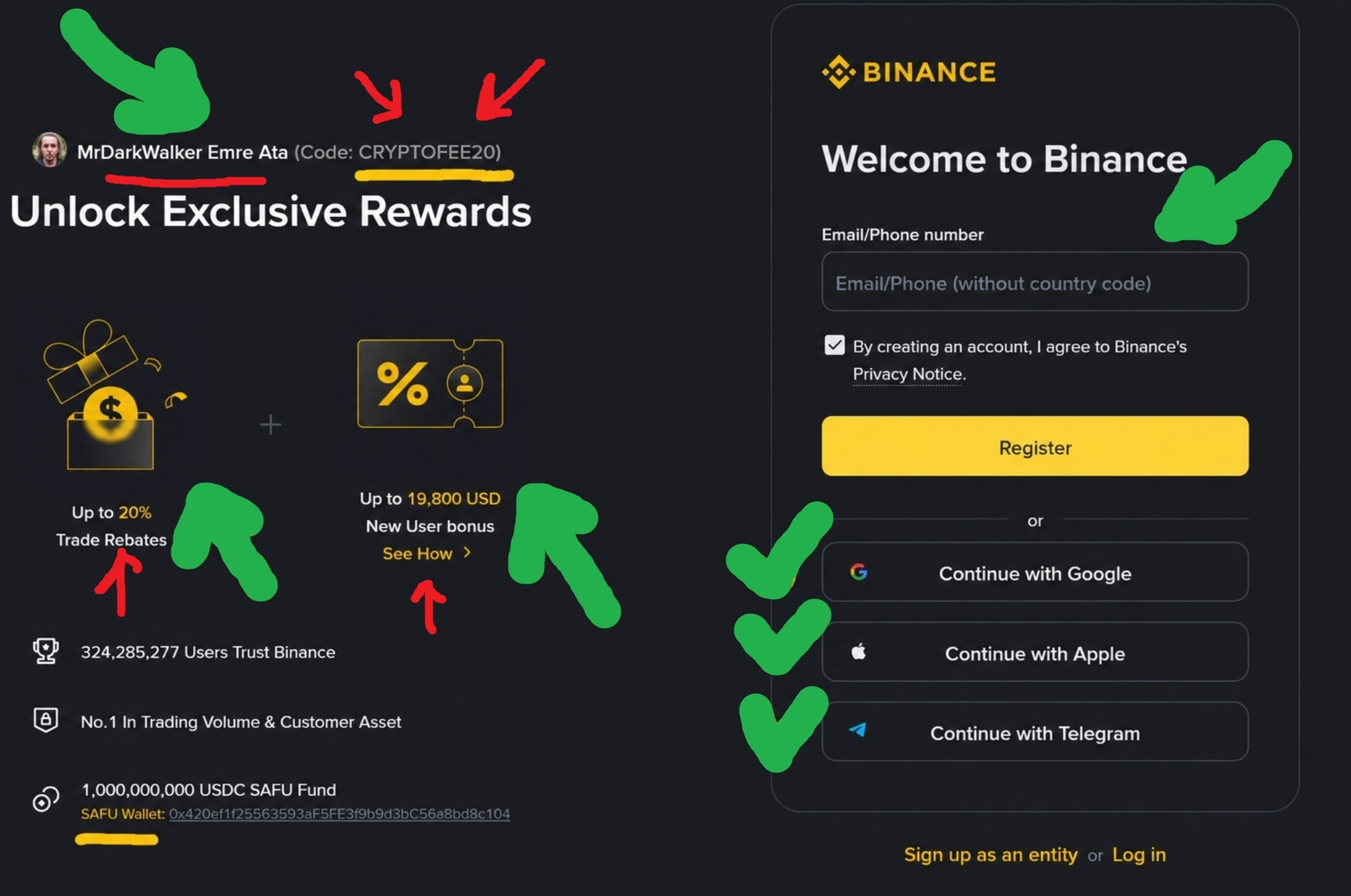
Binance Referral Codes for UNI Traders
My current Binance referral codes are:
CRYPTOFEE20
Spot referral code
Potential benefit: Up to 20% eligible Spot fee cashback/rebate
FUTURESFEE20
Futures referral code
Potential benefit: Up to 20% eligible Futures fee benefits
I also use BESTCODEMAX2 and FUTURESMAX20 in some of my Binance content.
Referral offers are not identical for every user. Binance itself currently publishes referral campaigns advertising up to 20% discounts on qualifying Spot and Futures fees, but eligibility and conditions can vary. Always check what Binance displays on the registration page before creating the account.
Binance Fee Simulation: Referral Code vs No Referral Code
Understanding percentages is easier with a practical example.
Suppose you make a $10,000 UNI Spot trade as a regular Binance user.
Binance's current standard regular-user Spot fee is 0.100% for both maker and taker transactions.
At 0.10%, a $10,000 transaction generates:
$10,000 × 0.10% = $10 standard trading fee
Without an eligible referral rebate, the standard fee in this simplified example is $10.
If your referral arrangement returns 20% of that eligible $10 fee, the benefit is:
$10 × 20% = $2
Effective cost after the rebate:
$8
Now consider Binance's BNB fee-payment option.
The published regular-user Spot rate falls from 0.100% to 0.075% when the applicable 25% BNB discount is used.
On $10,000:
$10,000 × 0.075% = $7.50
The exact interaction between referral rebates, BNB deductions, promotions and specific trading pairs depends on Binance's applicable rules. Therefore, do not simply add “20% + 25%” and assume every user receives a flat 45% reduction.
Check the actual estimated fee shown by Binance before confirming an order.
What Is Uniswap (UNI)?
Uniswap is a decentralized exchange protocol built around automated liquidity pools and smart contracts.
UNI is the governance token associated with the Uniswap ecosystem.
UNI has a maximum supply of 1 billion tokens under its original token allocation framework. Circulating supply is different from maximum supply and changes over time as tokens enter circulation.
This distinction matters when evaluating a cryptocurrency.
Price alone does not determine valuation. Investors should also research market capitalization, circulating supply, token distribution, protocol activity, liquidity, governance participation, competition and future token emissions.
How to Create a Binance Account
Start from Binance's official website or application and select Sign Up.
You can then create your account using one of the registration methods currently supported in your region.
When the Referral ID field is available, enter:
CRYPTOFEE20
Before completing registration, confirm that the referral code and any advertised benefit are actually displayed.
Use a unique password that you do not use for email, social media or another cryptocurrency exchange.
How to buy and sell UNISWAP on Binance Video:
https://www.binance.com/square/post/371562801544051
How Binance KYC Verification Works
Binance requires new users to complete identity verification to access its products and services, including crypto deposits and trading.
The process generally asks you to select your residence and document-issuing country, choose an accepted identification document, upload or scan it, and complete a facial liveness check.
Your personal information must correspond with your identification document.
Binance states that submitted verification documents are usually reviewed within 48 hours, although some cases may take longer.
Requirements can differ by jurisdiction.
What Is the Binance Test During Account Setup?
Depending on your country and the financial products you attempt to access, Binance may present additional knowledge, suitability, appropriateness or risk-related questions.
These should not be treated as an obstacle to click through quickly.
Read every question and answer according to your actual knowledge and circumstances.
Requirements can differ significantly by jurisdiction and product. In particular, access to derivatives, leveraged products and other advanced services may involve additional restrictions.
Passing or completing an assessment also does not mean a cryptocurrency or leveraged position is safe.
How to Protect Your Binance Account with 2FA
After registration, security should come before your first deposit.
Go to your Binance Security settings and enable an authenticator-based second factor.
Binance supports authenticator applications that generate a six-digit verification code. This means that possession of your password alone is not sufficient to pass that additional authentication step.
Binance also supports passkeys, including compatible biometric, device and hardware-security-key methods. Binance describes passkeys as providing faster and more secure verification than relying only on passwords.
Also consider withdrawal-address whitelisting, anti-phishing protections and separate passwords for your Binance and email accounts.
Never share your password, authenticator code, recovery information or private keys with anyone.
How to Buy Uniswap (UNI) on Binance
After completing KYC and securing your account, deposit supported cryptocurrency or fiat funds.
Open Trade → Spot and search for UNI.
Select an available UNI trading pair appropriate for the asset you hold.
You will normally encounter two basic order types.
Market Order: attempts to execute immediately against available liquidity at current market prices.
Limit Order: allows you to specify the maximum price you are willing to pay when buying, or your desired selling price.
A limit order is not guaranteed to execute.
Before pressing Buy UNI, verify the pair, amount, estimated fee and total transaction value.
How to Sell UNI on Binance
Selling UNI follows essentially the reverse process.
Open the appropriate UNI Spot market, select Sell, choose Market or Limit, enter the amount of UNI you want to sell and review your order.
Binance explains that Spot trading fees are generally charged on the asset received. For example, when selling an asset against another asset, the fee can be deducted from the asset received from that trade.
You can inspect actual fees afterward in your Trade History.
Why Holding BNB Can Reduce Binance Fees
BNB is Binance's ecosystem token and can be used to pay eligible trading fees.
For regular Spot users, Binance currently publishes:
Standard maker fee: 0.100%
Standard taker fee: 0.100%
With the applicable BNB discount: 0.075% maker / 0.075% taker
This represents a 25% reduction from the standard regular-user rate.
However, BNB itself is a volatile crypto asset. Buying BNB solely to save a small amount in fees introduces BNB price exposure, so users should consider whether that trade-off makes sense for their trading volume.
Risks of Buying Uniswap (UNI)
UNI can rise or fall significantly in a short period.
Major risks include cryptocurrency-market volatility, smart-contract and protocol risks, regulatory developments, competition among decentralized exchanges, changes in token governance, liquidity conditions and broader movements in Bitcoin and altcoin markets.
Using UNI in leveraged Futures introduces additional risks.
Leverage amplifies both gains and losses, and positions can be liquidated.
A trading-fee rebate does not reduce market risk.
What Is Binance Rebind Code CRYPTOFEE20?
Binance Referral Rebind is designed to give certain eligible existing Binance users who do not currently have an upstream inviter an opportunity to establish a referral relationship without opening a new account. If your account is eligible, you can check the official Binance Rebind page while logged in and follow the instructions shown for your account. CRYPTOFEE20 is my referral code and may provide eligible successfully bound users with up to 20% trading-fee benefits, subject to Binance's current referral terms and regional availability.
How to use it: Log in to Binance, open the official Referral Rebind/Recall page, check whether your existing account is eligible, follow Binance's displayed binding process, and, where the code-entry option is available, use CRYPTOFEE20 to complete any eligibility or evaluation requirements shown by Binance. Verify that the referral relationship has been successfully activated.
Important: Rebind is not an unrestricted way to replace an existing inviter. Eligibility and the available binding method vary by account, and Binance may require an invitation link rather than manual code entry in some Recall flows. Always follow the instructions displayed directly in your Binance account.
Binance rebind code page: https://www.binance.com/activity/referral/bind-ref
Binance rebind Code: CRYPTOFEE20
About the Author and Transparency Disclosure
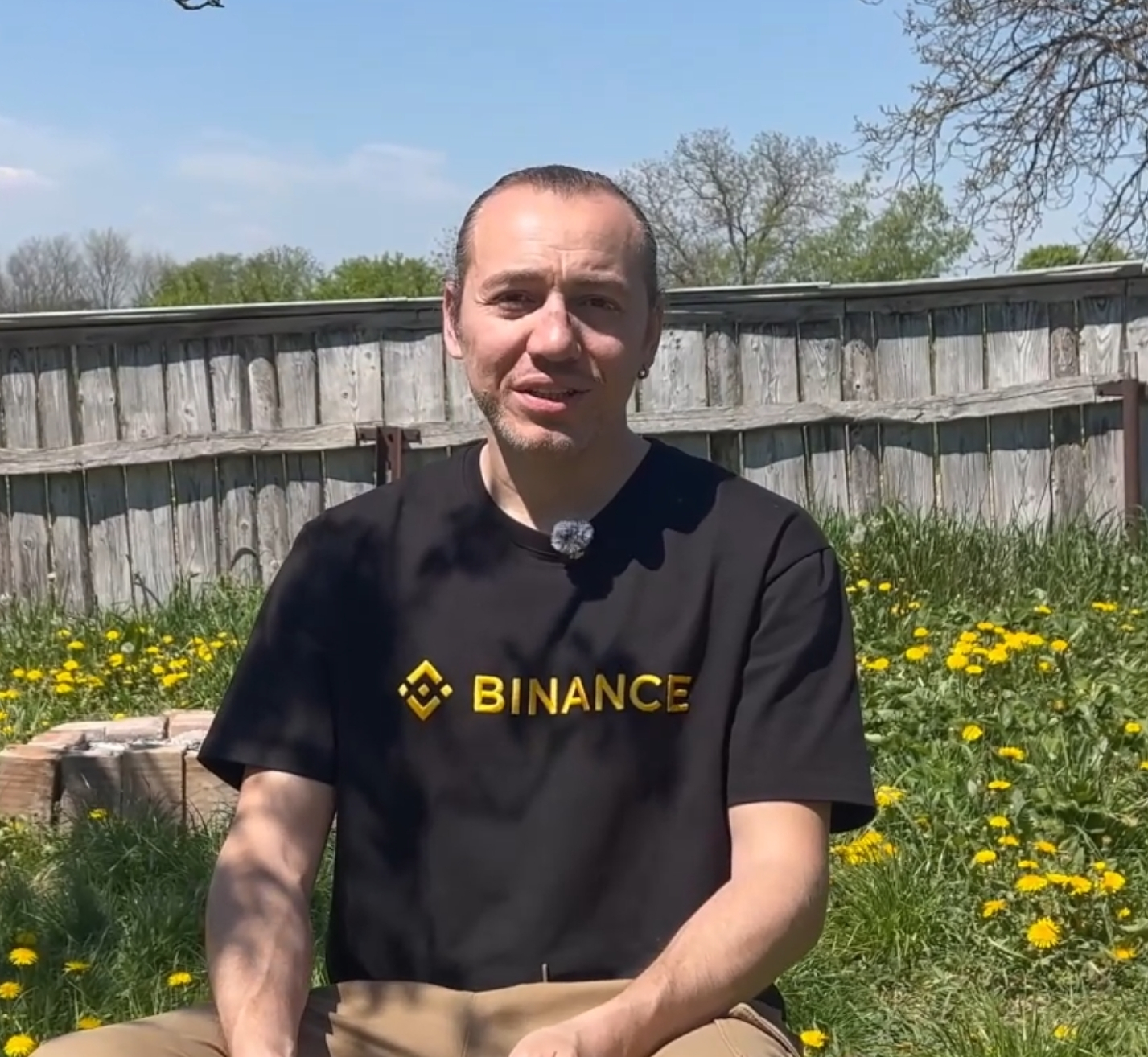
Emre Ata is a cryptocurrency publisher, webmaster and long-term Binance affiliate who has produced educational content about cryptocurrency exchanges, referral programs and digital assets for several years.
Transparency disclosure: This article contains my Binance referral codes. If an eligible reader registers or trades through one of these codes, I may receive an affiliate commission from Binance. Depending on the referral configuration, eligible users may also receive a trading-fee rebate.
This commercial relationship does not change the risks of UNI or guarantee that Binance, UNI, or any trading strategy will be suitable for a particular reader.
YMYL, E-E-A-T and Financial Disclaimer
This article concerns financial products and therefore should be treated as Your Money or Your Life (YMYL) content.
The purpose is educational: to explain Binance account security, fees, referral mechanics and how UNI trading works.
Nothing here constitutes personalized investment, financial, tax or legal advice.
Information about fees, promotions, referral programs, KYC requirements and product availability can change. Binance products are also restricted or unavailable in some jurisdictions.
Verify current information directly inside your Binance account before depositing or trading.
Frequently Asked Questions
1. How do I buy Uniswap (UNI) on Binance?
Create and verify your Binance account, deposit funds, open Spot trading, find an available UNI pair, choose Market or Limit order, enter the amount and confirm the transaction.
2. What is the Binance referral code for UNI?
My Spot referral code is CRYPTOFEE20. Eligible users may receive up to a 20% Spot fee benefit depending on Binance's current terms and referral configuration.
3. What is the Binance Futures referral code?
My Futures referral code is FUTURESFEE20, intended for eligible Futures referral benefits.
4. How much does Binance charge to trade UNI?
For regular users, Binance currently lists standard Spot maker and taker fees at 0.100% / 0.100%. Actual fees can vary by VIP level, pair and promotion.
5. Does paying Binance fees with BNB save money?
Yes, for eligible Spot transactions. Binance currently lists regular-user maker/taker rates of 0.075% / 0.075% with the 25% BNB discount, compared with 0.100% / 0.100% standard rates.
6. Can I sell UNI after buying it?
Yes, provided Binance supports the relevant UNI trading service for your account and region. Open the appropriate UNI Spot market and place a Market or Limit sell order.
7. Is buying UNI risk-free?
No. UNI is a volatile cryptocurrency. Its price can decline substantially, and there is no guaranteed return.
8. Is a referral-code discount the same as an investment bonus?
No. A trading-fee rebate reduces or returns part of eligible trading fees according to the applicable referral terms. It does not increase the value of UNI and does not protect you against trading losses.
Last updated: September 2026. Binance fees, referral benefits, regional eligibility and promotions can change, so verify the current conditions displayed by Binance before trading.
DYOR — Do Your Own Research.
Other topics you can explore
Binance Futures Trading Fees Page
How to Claim the New Binance 19800 USD Welcome Bonus
How to Buy and Sell Crypto (Altcoins) on Binance Mobile App
How to Buy and Sell bStocks on Binance: A Guide for Beginners