
$BTC The Fed hiked. Treasury yields jumped. Bitcoin is absorbing the shock.
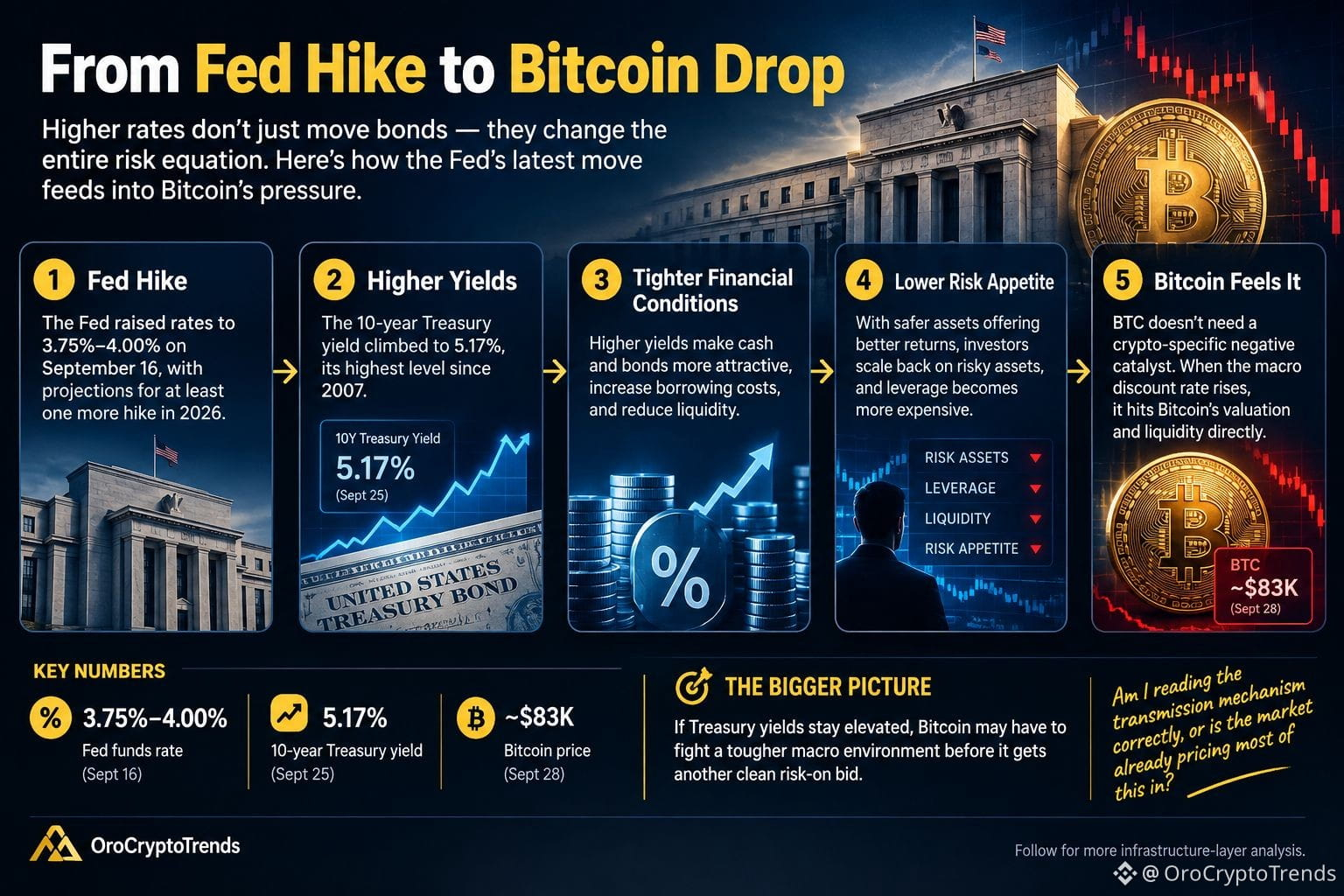
On September 16, the Fed raised rates to 3.75%–4.00%, while its projections still showed at least one more hike in 2026.
Then the 10-year Treasury yield climbed to 5.17%.
That’s where the Bitcoin connection gets interesting.
A tighter Fed raises the cost of money. Higher Treasury yields then give investors a more attractive alternative to volatile risk assets. Financial conditions tighten, leverage becomes more expensive, and liquidity becomes harder to chase.
Bitcoin sits directly in that risk-liquidity channel.
So when yields reprice higher, BTC doesn't need a crypto-specific negative catalyst to come under pressure. The macro discount rate itself can become the catalyst.
That’s why I’m paying less attention to the headline Fed hike and more attention to what happens to yields, liquidity and positioning afterward.
If Treasury yields stay elevated, Bitcoin may have to fight the macro environment before it gets another clean risk-on bid.
Am I reading the transmission mechanism correctly, or is the market already pricing most of this in?
On September 16, the Fed raised rates to 3.75%–4.00%, while its projections still showed at least one more hike in 2026.
Then the 10-year Treasury yield climbed to 5.17%.
That’s where the Bitcoin connection gets interesting.
A tighter Fed raises the cost of money. Higher Treasury yields then give investors a more attractive alternative to volatile risk assets. Financial conditions tighten, leverage becomes more expensive, and liquidity becomes harder to chase.
Bitcoin sits directly in that risk-liquidity channel.
So when yields reprice higher, BTC doesn't need a crypto-specific negative catalyst to come under pressure. The macro discount rate itself can become the catalyst.
That’s why I’m paying less attention to the headline Fed hike and more attention to what happens to yields, liquidity and positioning afterward.
If Treasury yields stay elevated, Bitcoin may have to fight the macro environment before it gets another clean risk-on bid.
Am I reading the transmission mechanism correctly, or is the market already pricing most of this in?