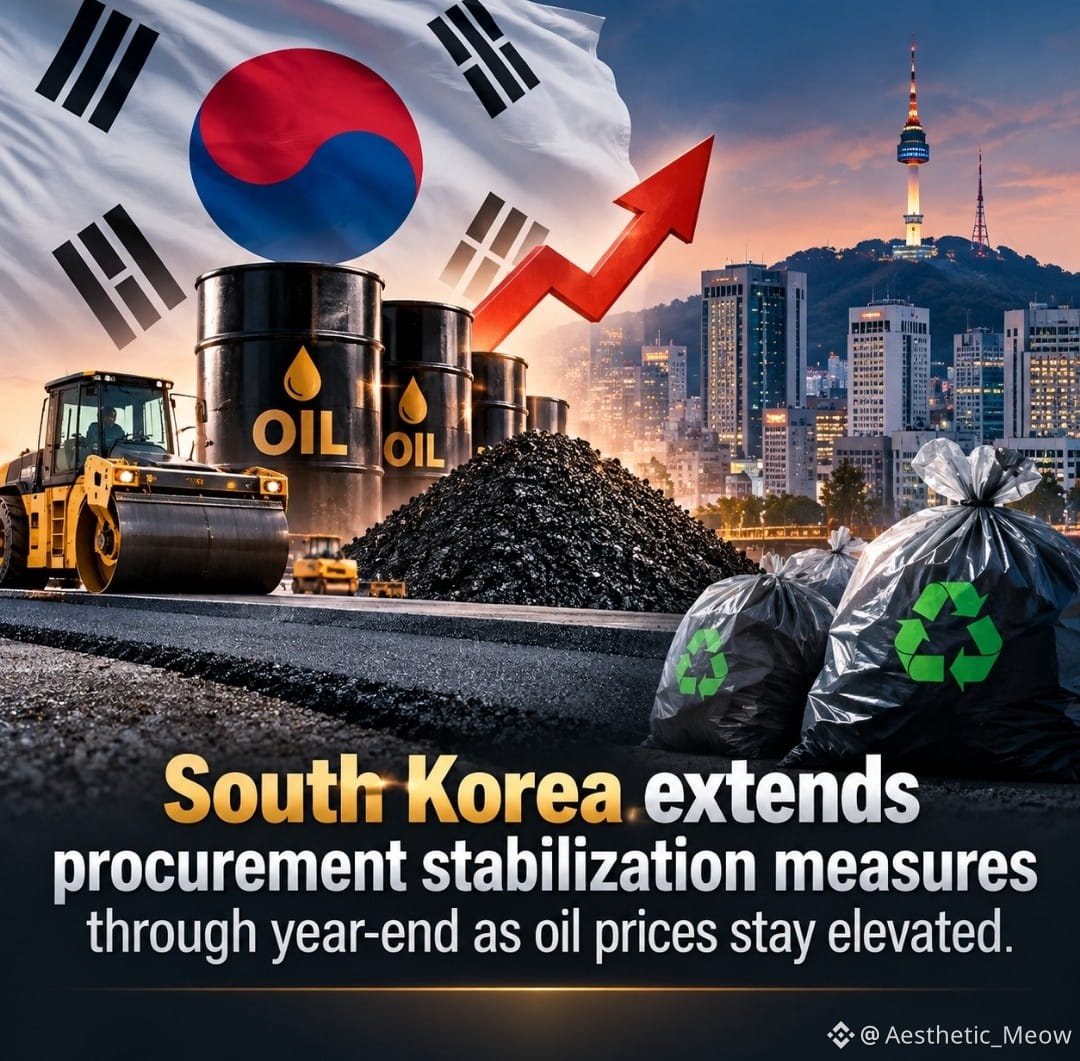

🇰🇷 South Korea extends procurement support as oil prices remain elevated
South Korea’s Public Procurement Service is reportedly extending its procurement-market stabilization measures through the end of 2026, as elevated oil $CL prices linked to the prolonged Middle East conflict continue to pressure raw-material costs.
The measures cover asphalt concrete and metered garbage bags, products whose costs are closely connected to oil $BZ prices. The agency introduced the support in March and has used temporary exemptions from the second stage of contract competition, faster deliveries, and more flexible price-adjustment rules.
📌 Potential impact
1. Less pressure on suppliers: Companies can reflect higher raw-material costs in government contract prices more quickly, reducing the risk of losses.
2. More stable public projects: Asphalt and other construction-related procurement should face fewer disruptions if material prices remain volatile.
3. Higher government procurement costs: Faster price adjustments can mean increased spending on affected public contracts when input prices rise.
4. Broader inflation implications: The policy may help prevent supply disruptions and sudden cost increases from spreading through public-sector projects and everyday products.
5. Oil remains the key variable: If geopolitical tensions keep crude prices elevated, further procurement and energy-support measures could remain necessary. South Korea is already monitoring energy-price volatility and diversifying supply sources.
Overall, the move signals that South Korea expects elevated input-cost risks to persist and is prioritizing procurement and supply-chain stability through year-end.
$QNT
South Korea’s Public Procurement Service is reportedly extending its procurement-market stabilization measures through the end of 2026, as elevated oil $CL prices linked to the prolonged Middle East conflict continue to pressure raw-material costs.
The measures cover asphalt concrete and metered garbage bags, products whose costs are closely connected to oil $BZ prices. The agency introduced the support in March and has used temporary exemptions from the second stage of contract competition, faster deliveries, and more flexible price-adjustment rules.
📌 Potential impact
1. Less pressure on suppliers: Companies can reflect higher raw-material costs in government contract prices more quickly, reducing the risk of losses.
2. More stable public projects: Asphalt and other construction-related procurement should face fewer disruptions if material prices remain volatile.
3. Higher government procurement costs: Faster price adjustments can mean increased spending on affected public contracts when input prices rise.
4. Broader inflation implications: The policy may help prevent supply disruptions and sudden cost increases from spreading through public-sector projects and everyday products.
5. Oil remains the key variable: If geopolitical tensions keep crude prices elevated, further procurement and energy-support measures could remain necessary. South Korea is already monitoring energy-price volatility and diversifying supply sources.
Overall, the move signals that South Korea expects elevated input-cost risks to persist and is prioritizing procurement and supply-chain stability through year-end.
$QNT