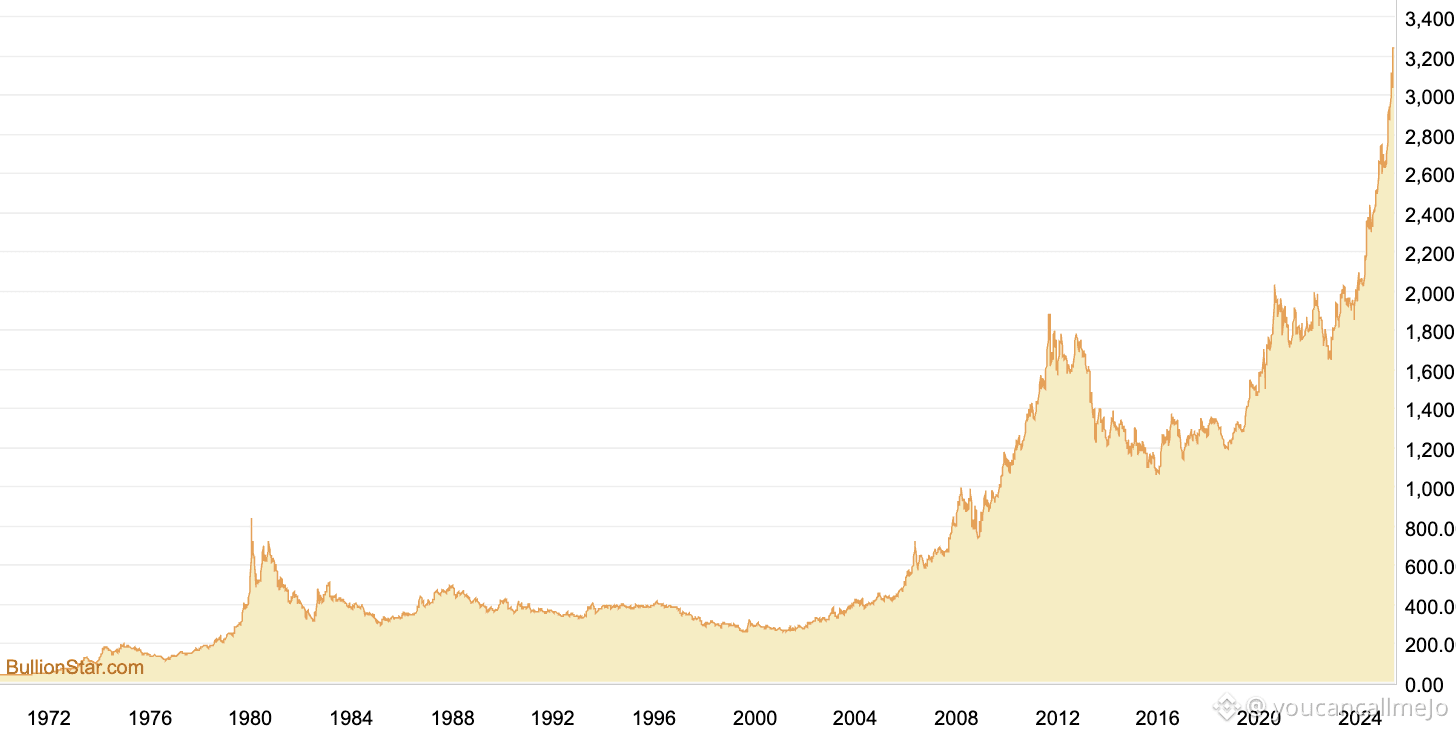
🥇 FROM GOLD BARS TO 24/7 GOLD TRADING: 1980 → 2026
Gold didn't change. The way we trade it did.
🔸 1980s — PHYSICAL GOLD
Gold trading was still heavily connected to physical bars, coins, dealers and traditional financial institutions. Owning gold meant dealing with storage, transportation, security and physical settlement.
🔸 1990s — FUTURES & DERIVATIVES
Gold futures and other derivatives became an increasingly important part of the market, allowing participants to trade and hedge gold prices without moving physical bars every time.
🔸 2000s — ELECTRONIC & ETF ERA
Electronic trading expanded access and speed, while gold ETFs gave investors another way to gain exposure to gold without personally storing bullion.
🔸 2010s — GLOBAL DIGITAL MARKETS
Gold became increasingly connected to global electronic markets, with OTC trading, exchanges and derivatives creating a highly liquid worldwide ecosystem.
🔸 2020s — GOLD MEETS BLOCKCHAIN
Tokenized gold brought another layer: blockchain-based tokens representing physical gold, combining gold exposure with digital transferability and, depending on the product, access to the wider digital-asset ecosystem.
🔸 2026 — GOLD ENTERS THE BINANCE TRADING ENVIRONMENT
This is where Binance enters the story.
On January 5, 2026, Binance launched XAUUSDT, a USDT-settled TradFi perpetual contract tracking gold. Unlike physical or tokenized gold, it does not represent ownership of the underlying metal. Instead, it allows eligible users to trade gold price movements through a perpetual contract. And the evolution didn't stop there. In July 2026, Binance also launched Gold and Silver Commodity Options, giving eligible users another derivatives-based way to access gold price movements from the same ecosystem.
So look at the journey:
🥇 Physical gold
→ Futures
→ ETFs
→ Electronic markets
→ Tokenized gold
→ 24/7 digital derivatives
The metal stayed the same. The infrastructure around it kept evolving.
And today, gold can exist across physical markets, ETFs, futures, tokenized assets and digitally.
Gold didn't change. The way we trade it did.
🔸 1980s — PHYSICAL GOLD
Gold trading was still heavily connected to physical bars, coins, dealers and traditional financial institutions. Owning gold meant dealing with storage, transportation, security and physical settlement.
🔸 1990s — FUTURES & DERIVATIVES
Gold futures and other derivatives became an increasingly important part of the market, allowing participants to trade and hedge gold prices without moving physical bars every time.
🔸 2000s — ELECTRONIC & ETF ERA
Electronic trading expanded access and speed, while gold ETFs gave investors another way to gain exposure to gold without personally storing bullion.
🔸 2010s — GLOBAL DIGITAL MARKETS
Gold became increasingly connected to global electronic markets, with OTC trading, exchanges and derivatives creating a highly liquid worldwide ecosystem.
🔸 2020s — GOLD MEETS BLOCKCHAIN
Tokenized gold brought another layer: blockchain-based tokens representing physical gold, combining gold exposure with digital transferability and, depending on the product, access to the wider digital-asset ecosystem.
🔸 2026 — GOLD ENTERS THE BINANCE TRADING ENVIRONMENT
This is where Binance enters the story.
On January 5, 2026, Binance launched XAUUSDT, a USDT-settled TradFi perpetual contract tracking gold. Unlike physical or tokenized gold, it does not represent ownership of the underlying metal. Instead, it allows eligible users to trade gold price movements through a perpetual contract. And the evolution didn't stop there. In July 2026, Binance also launched Gold and Silver Commodity Options, giving eligible users another derivatives-based way to access gold price movements from the same ecosystem.
So look at the journey:
🥇 Physical gold
→ Futures
→ ETFs
→ Electronic markets
→ Tokenized gold
→ 24/7 digital derivatives
The metal stayed the same. The infrastructure around it kept evolving.
And today, gold can exist across physical markets, ETFs, futures, tokenized assets and digitally.