

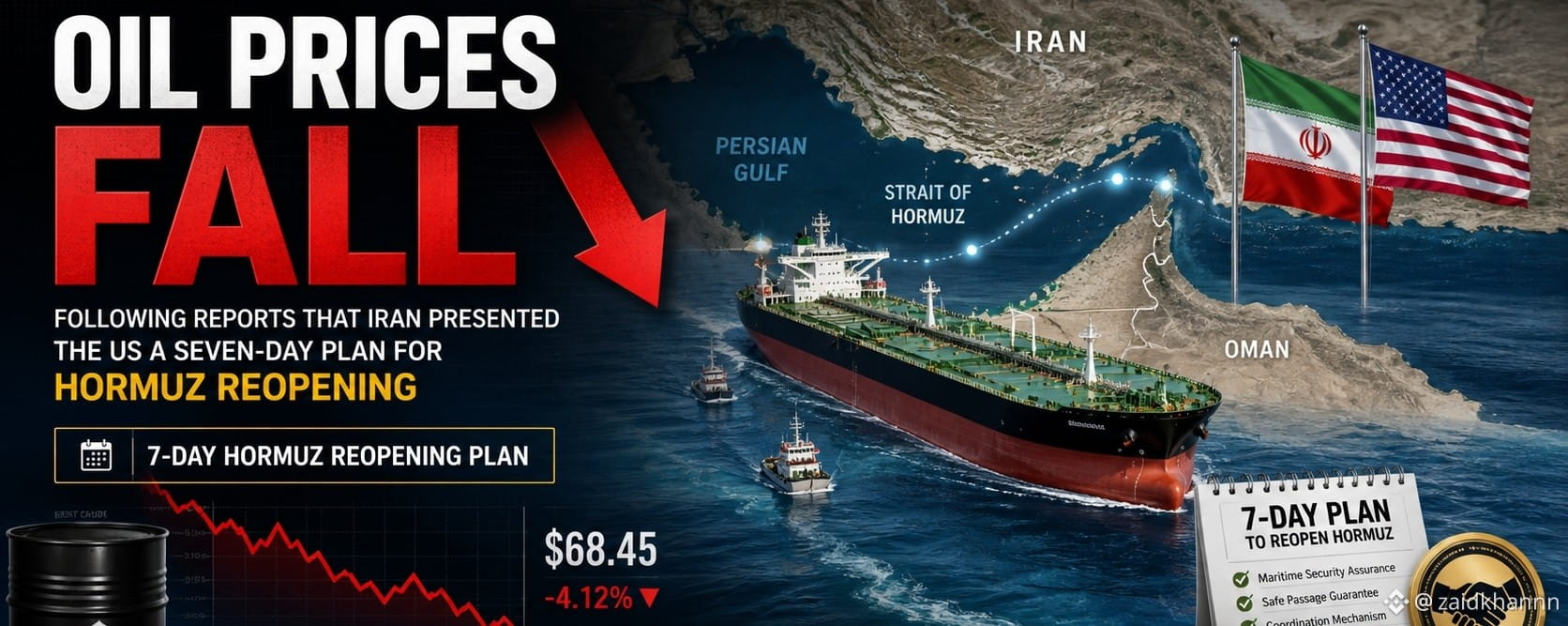
Oil prices moved lower after reports that Iran presented the United States with a seven-day plan aimed at reopening the Strait of Hormuz.
The development has raised hopes that a diplomatic pathway could restore shipping through one of the world’s most important energy corridors and reduce fears of prolonged supply disruptions.
📉 Why the market reacted: • Reduced risk of extended supply disruption
• Potential normalization of tanker traffic
• Lower geopolitical risk premium
• Improved expectations for global energy supply
🌍 Why Hormuz matters:
The Strait of Hormuz is a critical route for global oil shipments. Any sustained disruption can put upward pressure on crude prices, while a reliable reopening could ease supply concerns.
⚠️ Key point for traders:
The proposal itself does not guarantee that Hormuz will reopen. Markets will closely watch negotiations, shipping activity, and any official confirmation of a sustained reopening.
🔥 Bottom line:
If shipping through Hormuz returns to normal, the easing of supply-risk premiums could continue to influence oil prices and broader financial markets.
#Oil #CrudeOil #Brent #WTI #Iran #Hormuz #Energy #Trading #Markets


#Geopolitics