$OP Optimism Launches Upgrade 20: A Stepping Stone to the Cross Chain Interop Era
Optimism released Upgrade 20 on September 25, upgrading the OP Stack's fault proof system and laying the foundation for future cross-chain interoperability (Interop).
Core changes:
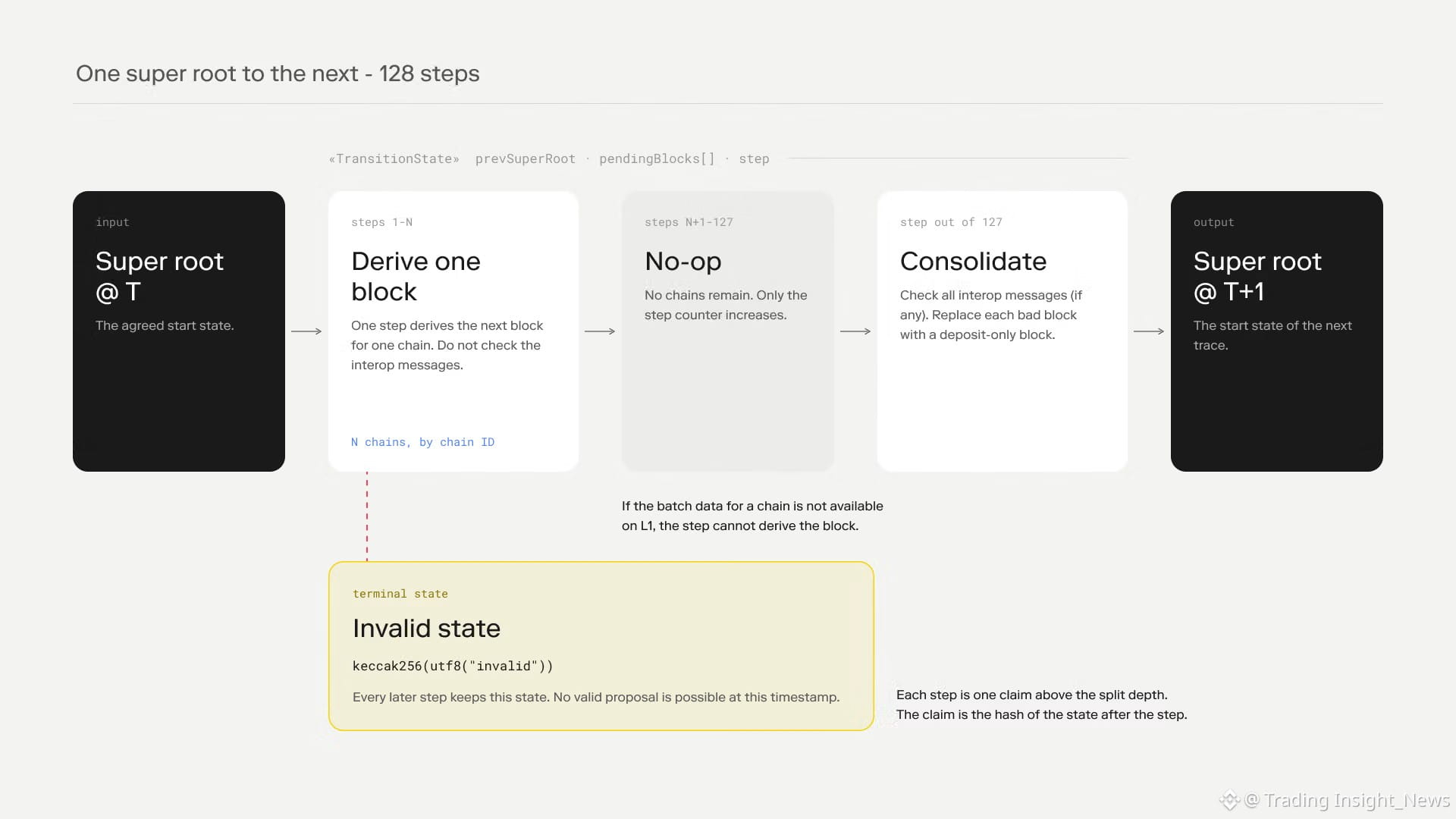
Proposal upgraded from single-chain root output to super root supporting multiple chains
Super root is a hash of version, timestamp, and multiple (chainID, outputRoot) pairs, capable of snapshotting any number of chains with the same timestamp
Dispute mechanism still operates independently per chain, but now has the capacity to handle cross-chain dependencies
Notable points:
Upgrade executed incrementally to reduce risk
Withdrawal proof logic still based on output root → backward compatible
Node operators need no action; chain operators need to update configs
Later hard forks will officially activate cross-chain messaging
This is an important step, but executed very cautiously. Optimism isn't rushing into Interop they're building the foundation first.
Why does super root matter?
In the old model, each OP Stack chain has its own output root. To verify multiple chains' states, you'd process each root separately. With super root, you can snapshot all chains at once with the same timestamp.
This opens the door to cross-chain verification and messaging without waiting for individual chains.
But there's a key detail: the dispute mechanism remains independent per chain. This means if one chain has issues, it doesn't bring down the entire super root system. That's a sensible safety design.
What to watch:
Upgrade 20 is just the beginning. Later hard forks will officially activate cross-chain messaging and that's when we'll see Interop's real impact.
What do you think is super root the right foundation for Optimism's multi-chain future, or is it too early to tell?
News is for reference, not investment advice. Please read carefully before making a decision.
Optimism released Upgrade 20 on September 25, upgrading the OP Stack's fault proof system and laying the foundation for future cross-chain interoperability (Interop).
Core changes:
Proposal upgraded from single-chain root output to super root supporting multiple chains
Super root is a hash of version, timestamp, and multiple (chainID, outputRoot) pairs, capable of snapshotting any number of chains with the same timestamp
Dispute mechanism still operates independently per chain, but now has the capacity to handle cross-chain dependencies
Notable points:
Upgrade executed incrementally to reduce risk
Withdrawal proof logic still based on output root → backward compatible
Node operators need no action; chain operators need to update configs
Later hard forks will officially activate cross-chain messaging
This is an important step, but executed very cautiously. Optimism isn't rushing into Interop they're building the foundation first.
Why does super root matter?
In the old model, each OP Stack chain has its own output root. To verify multiple chains' states, you'd process each root separately. With super root, you can snapshot all chains at once with the same timestamp.
This opens the door to cross-chain verification and messaging without waiting for individual chains.
But there's a key detail: the dispute mechanism remains independent per chain. This means if one chain has issues, it doesn't bring down the entire super root system. That's a sensible safety design.
What to watch:
Upgrade 20 is just the beginning. Later hard forks will officially activate cross-chain messaging and that's when we'll see Interop's real impact.
What do you think is super root the right foundation for Optimism's multi-chain future, or is it too early to tell?
News is for reference, not investment advice. Please read carefully before making a decision.