What happens when multiple resolvers compete for the same order?
One interesting part of Omniston is how it handles situations where more than one resolver can fulfill a single order.
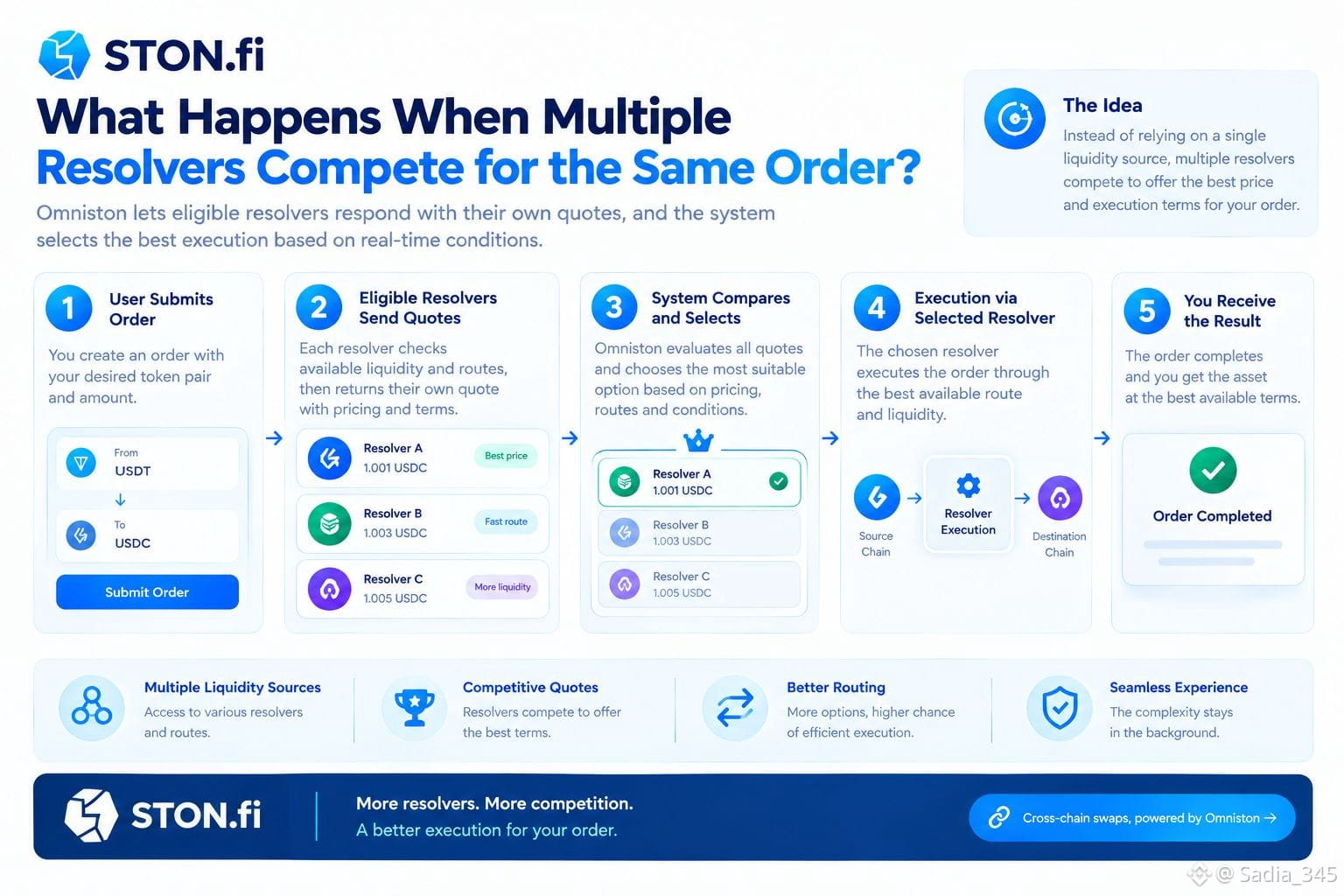
When a user submits a request, eligible resolvers can respond with their own quotes. Each resolver may offer different pricing and execution terms based on the liquidity and routes available to them. This means the same order can receive multiple competing options.
The system then compares those quotes to select the most suitable execution. Instead of relying on a single liquidity source, the process introduces competition between available resolvers.
This structure is useful because the final route is determined by the actual conditions offered at that moment. The competition happens in the background, while the user experience remains focused on submitting an order and receiving a clear result.
Curious how others think about routing in multi-source systems do you prefer single-path execution or competitive quoting?
#STONfi✅ $GRAM
One interesting part of Omniston is how it handles situations where more than one resolver can fulfill a single order.
When a user submits a request, eligible resolvers can respond with their own quotes. Each resolver may offer different pricing and execution terms based on the liquidity and routes available to them. This means the same order can receive multiple competing options.
The system then compares those quotes to select the most suitable execution. Instead of relying on a single liquidity source, the process introduces competition between available resolvers.
This structure is useful because the final route is determined by the actual conditions offered at that moment. The competition happens in the background, while the user experience remains focused on submitting an order and receiving a clear result.
Curious how others think about routing in multi-source systems do you prefer single-path execution or competitive quoting?
#STONfi✅ $GRAM