



Haedal (@Haedal Protocol ), the Sui protocol best known for its haSUI liquid staking token, just launched something new, it’s a Lending Vault that automates yield across multiple lending markets. It's already off to a fast start.
Lending yields on $SUI shift constantly between protocols, and chasing the best rate manually means moving funds around all the time. The Lending Vault does that work automatically.
How it works
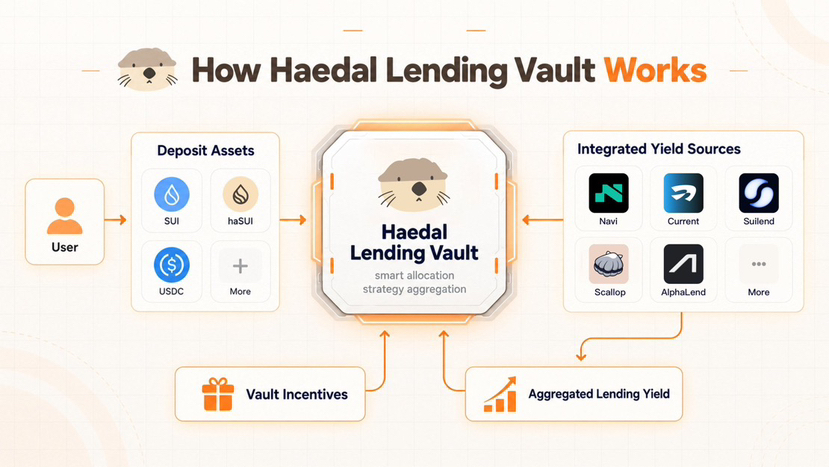
Deposit a single asset (SUI, USDC, or haSUI at launch) and the vault allocates that liquidity across multiple lending markets on Sui, including Navi Protocol, Current, Suilend, Scallop, and AlphaFi, with Cetus Vault acting as a buffer pool for flexibility. In return, you get an LP token representing your share. As the vault earns, the LP token's value goes up. No manual rebalancing, no reward claiming, no jumping between apps.
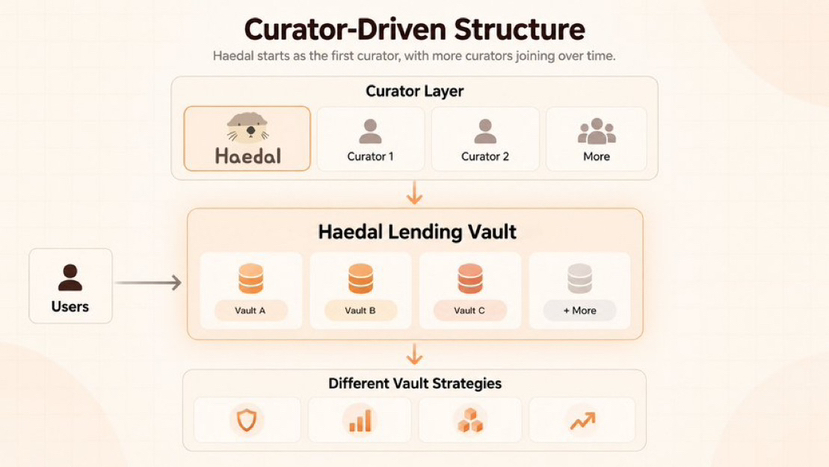
Haedal is running the vault as the first curator, actively managing strategy and allocation at launch, with the framework designed to open up to other curators over time.
Why it matters right now
Lending incentives across Sui have been genuinely strong lately, but they don't sit still. Rates move as liquidity shifts between protocols. A vault that automatically follows that movement, instead of leaving users to track it themselves, is a real upgrade for anyone parking stables or SUI for yield.
The market noticed fast. The vault reportedly crossed $1M in TVL within just two days of launch, prompting Haedal to raise deposit caps on both the SUI and USDC vaults to 700,000 each to keep up with demand. The USDT side of the vault has also had its limit lifted as more capital comes in.
 For a brand-new product, that's a strong signal that the "single deposit, automated multi-market yield" pitch is landing with users tired of managing positions across five different apps.
Bottom line
If you've been sitting on $SUI , $USDC , or $haSUI and manually hopping between lending markets to chase yield, Haedal's Lending Vault is built to do that for you, and it's already proving there's real demand for it.