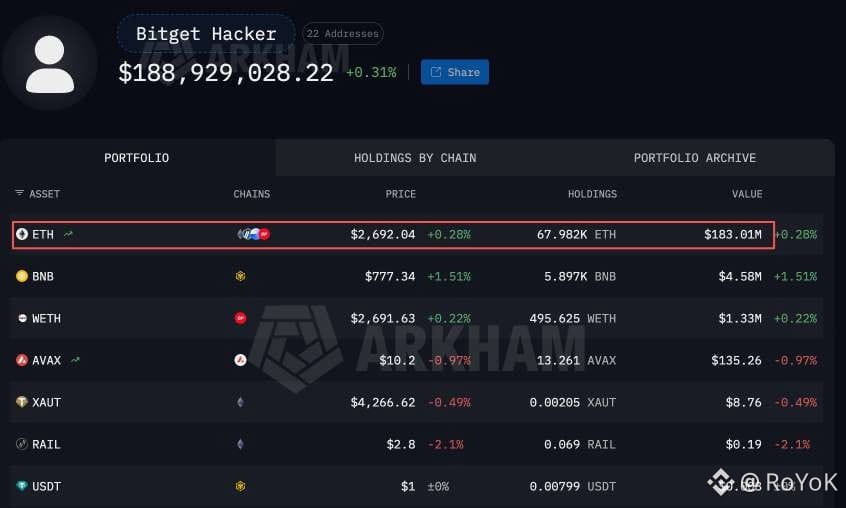

🚨 The $351.6 million Bitget breach is making headlines, but the actual dollar amount isn't the main takeaway.
Bitget claims the stolen money was taken from hot and warm wallets, leaving their cold storage completely untouched. They are also pointing to their roughly $464 million User Protection Fund, stating it is more than enough to cover the damages.
This does clear up one thing: the losses won't exceed their safety net.
However, it completely ignores the elephant in the room: How on earth did hundreds of millions of dollars get transferred before any internal safeguards kicked in?
One theory making the rounds is that the attacker didn't just grab a private key, but instead breached the wallet-signing infrastructure. This distinction is huge. If the signing system was compromised, it means there were flaws in access restrictions, transaction rules, or automated safety nets not just one exposed key.
Looking at the blockchain activity adds another clue. Someone swapped $19.67 million USDT for 7,111 ETH in just six minutes, eating heavy slippage costs
No one does that looking for a good rate. It screams attacker rushing to move funds, not a system error.
What to focus on next:
All eyes should be on Bitget's upcoming technical report. Specifically, the method of attack, the design of the wallets involved, a complete timeline of events, how much has been recovered, and a full accounting of the $351.6 million.
Until those specifics are released, any claims about who did it or how they got in are pure speculation.
The protection fund might make the exchange whole financially, but it doesn't explain why the security failed or whether the actual vulnerability has been patched
#Bitget #Hacked
$MPon $NVDAB
Bitget claims the stolen money was taken from hot and warm wallets, leaving their cold storage completely untouched. They are also pointing to their roughly $464 million User Protection Fund, stating it is more than enough to cover the damages.
This does clear up one thing: the losses won't exceed their safety net.
However, it completely ignores the elephant in the room: How on earth did hundreds of millions of dollars get transferred before any internal safeguards kicked in?
One theory making the rounds is that the attacker didn't just grab a private key, but instead breached the wallet-signing infrastructure. This distinction is huge. If the signing system was compromised, it means there were flaws in access restrictions, transaction rules, or automated safety nets not just one exposed key.
Looking at the blockchain activity adds another clue. Someone swapped $19.67 million USDT for 7,111 ETH in just six minutes, eating heavy slippage costs
No one does that looking for a good rate. It screams attacker rushing to move funds, not a system error.
What to focus on next:
All eyes should be on Bitget's upcoming technical report. Specifically, the method of attack, the design of the wallets involved, a complete timeline of events, how much has been recovered, and a full accounting of the $351.6 million.
Until those specifics are released, any claims about who did it or how they got in are pure speculation.
The protection fund might make the exchange whole financially, but it doesn't explain why the security failed or whether the actual vulnerability has been patched
#Bitget #Hacked
$MPon $NVDAB