#BTC☀ $BNB 📉📉📉📉📉📉
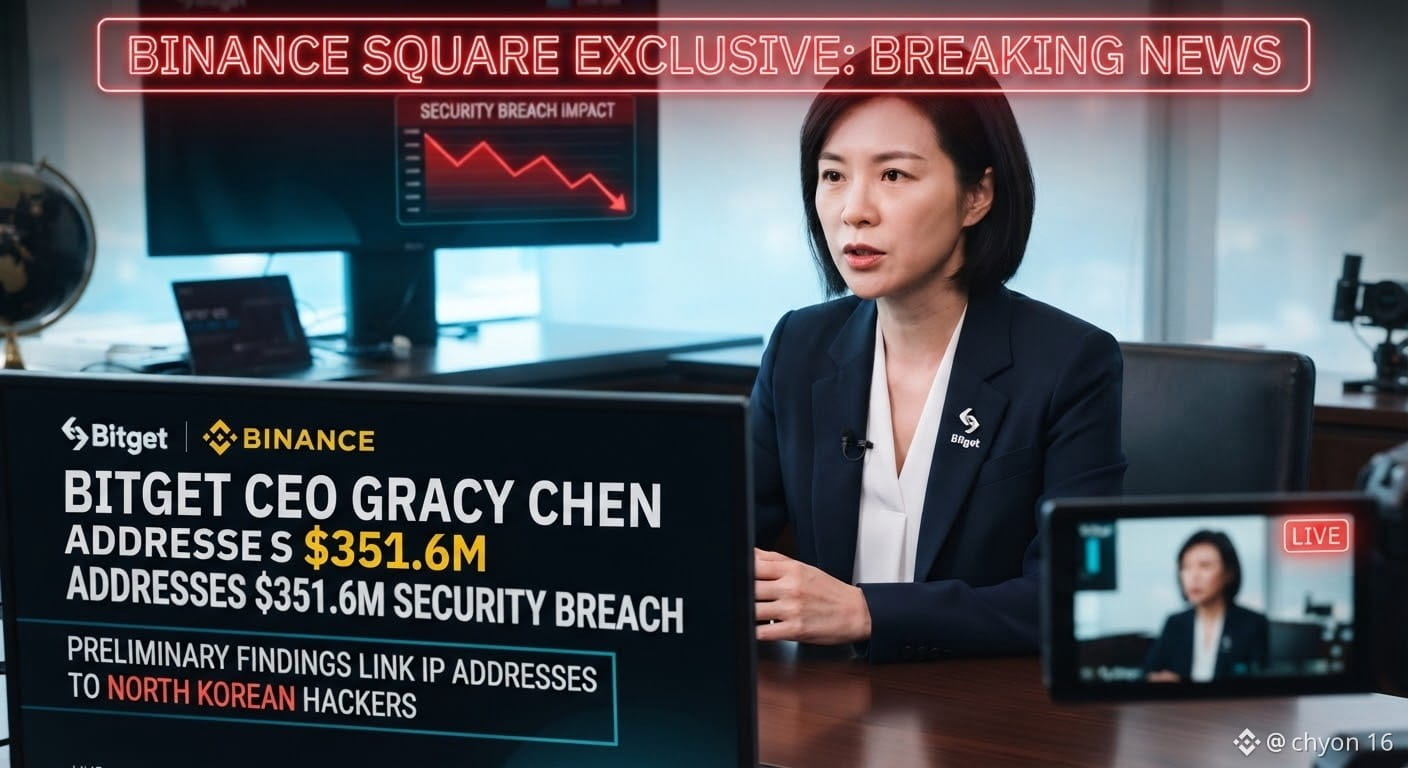
Bitget Chief Executive Officer Gracy Chen said North Korean hackers may be behind the exchange's $351.6 million security breach on Thursday, citing preliminary findings that linked IP addresses to VPN services used by a North Korean group, according to Cointelegraph. Speaking during a live Q&A on X after the incident, Chen said security investigators had flagged similarities with previous North Korean attacks and that the exchange did not believe the breach was an inside job. "We've identified some IP addresses that match the VPN choices by a certain DPRK group," she said, referring to the Democratic People's Republic of Korea, adding that "the pattern looks very much like what the North Korean team did before."
Chen disclosed that the hackers breached Bitget's systems and transferred funds directly rather than forging user withdrawal requests. "They did not forge user withdrawal requests, nor did they obtain our private keys of the cold wallet and any hot, warm wallet," she said, adding that investigators were still determining which systems were compromised and how the attackers gained access. North Korean hackers were linked to an estimated $2.02 billion in crypto theft in 2025, including the roughly $1.5 billion Bybit hack that the FBI attributed to North Korea.
The comments follow Bitget's report of unauthorized transfers affecting portions of its hot and warm wallet infrastructure on Thursday, with withdrawals still suspended at the time of publication. During the Q&A, Chen said some stolen funds had been recovered, without specifying an amount, and that the exchange was working with blockchain foundations and other partners on recovery efforts.
Bitget Chief Executive Officer Gracy Chen said North Korean hackers may be behind the exchange's $351.6 million security breach on Thursday, citing preliminary findings that linked IP addresses to VPN services used by a North Korean group, according to Cointelegraph. Speaking during a live Q&A on X after the incident, Chen said security investigators had flagged similarities with previous North Korean attacks and that the exchange did not believe the breach was an inside job. "We've identified some IP addresses that match the VPN choices by a certain DPRK group," she said, referring to the Democratic People's Republic of Korea, adding that "the pattern looks very much like what the North Korean team did before."
Chen disclosed that the hackers breached Bitget's systems and transferred funds directly rather than forging user withdrawal requests. "They did not forge user withdrawal requests, nor did they obtain our private keys of the cold wallet and any hot, warm wallet," she said, adding that investigators were still determining which systems were compromised and how the attackers gained access. North Korean hackers were linked to an estimated $2.02 billion in crypto theft in 2025, including the roughly $1.5 billion Bybit hack that the FBI attributed to North Korea.
The comments follow Bitget's report of unauthorized transfers affecting portions of its hot and warm wallet infrastructure on Thursday, with withdrawals still suspended at the time of publication. During the Q&A, Chen said some stolen funds had been recovered, without specifying an amount, and that the exchange was working with blockchain foundations and other partners on recovery efforts.