#BrazilOrdersReportingOf$10KSelfCustodyTransfers
🇧🇷 Brazil Tightens Oversight: Mandatory Reporting for $10K Self-Custody Transfers 🔍🛡️
The Central Bank of Brazil (BCB) has enacted Resolution BCB No. 588, officially expanding Anti-Money Laundering (AML) and Counter-Terrorism Financing (CFT) compliance to cover non-custodial operations.
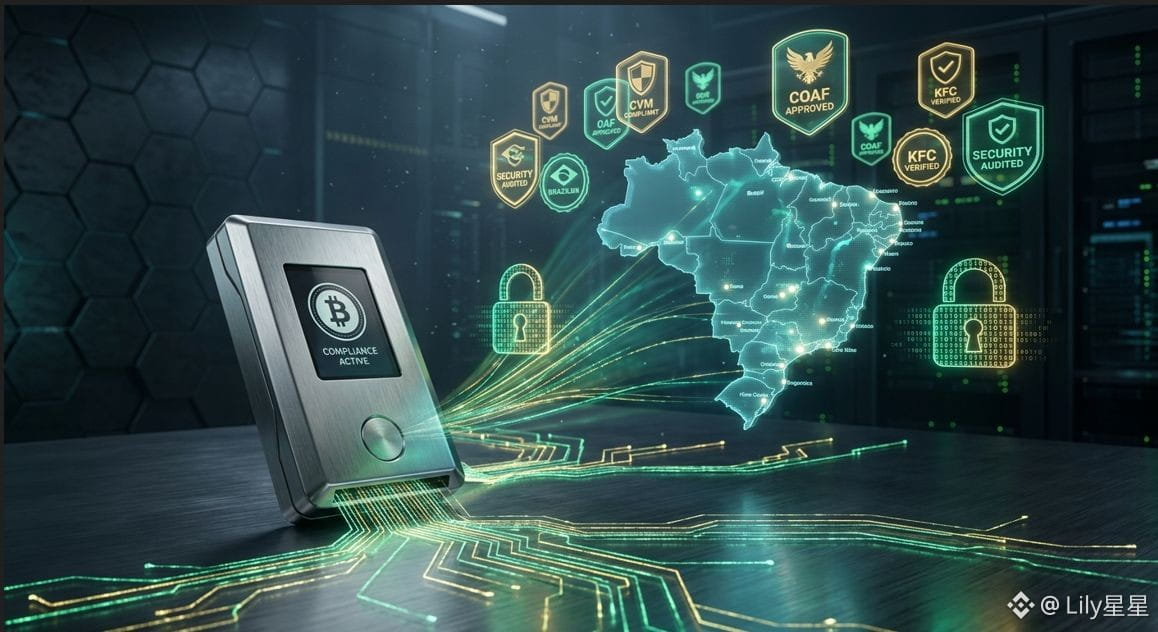
Starting October 1, 2026, supervised institutions and Virtual Asset Service Providers (VASPs) must report any virtual asset transfer equal to or exceeding $10,000 involving self-custody wallets to Brazil's financial intelligence agency (COAF).
📌 Breakdown of Key Regulatory Facts
📜 What Is Required: Covered exchanges and financial institutions must report transfers of $10,000 or more moving to or from personal self-custody wallets (such as cold storage or hardware wallets).
🛡️ No Ban on Self-Custody: The central bank emphasized that Resolution 588 creates a reporting mandate only. It does not prohibit self-custody, impose transaction caps, or freeze funds.
🏛️ Addressing Information Gaps: The BCB noted that direct key control in self-custody reduces monitoring visibility. The new rule aligns self-custody reporting with existing obligations for large cash and foreign exchange operations.
🚫 Unlicensed VASP Ban: Accompanying Resolution 589 officially prohibits licensed institutions from interacting or conducting business with unauthorized crypto service providers operating in Brazil.
💡 What This Means for Crypto Privacy & Market Strategy
Address Mapping: Reporting requirements on exchange-to-wallet routes will help authorities gradually construct databases connecting personal KYC records to self-custodial wallet addresses.
Operational Impact: While retail transfers under $10,000 remain standard, high-net-worth investors and institutions moving large treasury positions will face heightened compliance oversight when withdrawing to hardware wallets.
Share your thoughts below! 💬👇
#FedOctoberRateHikeOddsRiseTo69.7% #SelfCustody #CryptoRegulation
🇧🇷 Brazil Tightens Oversight: Mandatory Reporting for $10K Self-Custody Transfers 🔍🛡️
The Central Bank of Brazil (BCB) has enacted Resolution BCB No. 588, officially expanding Anti-Money Laundering (AML) and Counter-Terrorism Financing (CFT) compliance to cover non-custodial operations.
Starting October 1, 2026, supervised institutions and Virtual Asset Service Providers (VASPs) must report any virtual asset transfer equal to or exceeding $10,000 involving self-custody wallets to Brazil's financial intelligence agency (COAF).
📌 Breakdown of Key Regulatory Facts
📜 What Is Required: Covered exchanges and financial institutions must report transfers of $10,000 or more moving to or from personal self-custody wallets (such as cold storage or hardware wallets).
🛡️ No Ban on Self-Custody: The central bank emphasized that Resolution 588 creates a reporting mandate only. It does not prohibit self-custody, impose transaction caps, or freeze funds.
🏛️ Addressing Information Gaps: The BCB noted that direct key control in self-custody reduces monitoring visibility. The new rule aligns self-custody reporting with existing obligations for large cash and foreign exchange operations.
🚫 Unlicensed VASP Ban: Accompanying Resolution 589 officially prohibits licensed institutions from interacting or conducting business with unauthorized crypto service providers operating in Brazil.
💡 What This Means for Crypto Privacy & Market Strategy
Address Mapping: Reporting requirements on exchange-to-wallet routes will help authorities gradually construct databases connecting personal KYC records to self-custodial wallet addresses.
Operational Impact: While retail transfers under $10,000 remain standard, high-net-worth investors and institutions moving large treasury positions will face heightened compliance oversight when withdrawing to hardware wallets.
Share your thoughts below! 💬👇
#FedOctoberRateHikeOddsRiseTo69.7% #SelfCustody #CryptoRegulation