
#fedoctoberratehikeoddsriseto69.7%
The Fed’s October Hike Isn’t the Whole Story
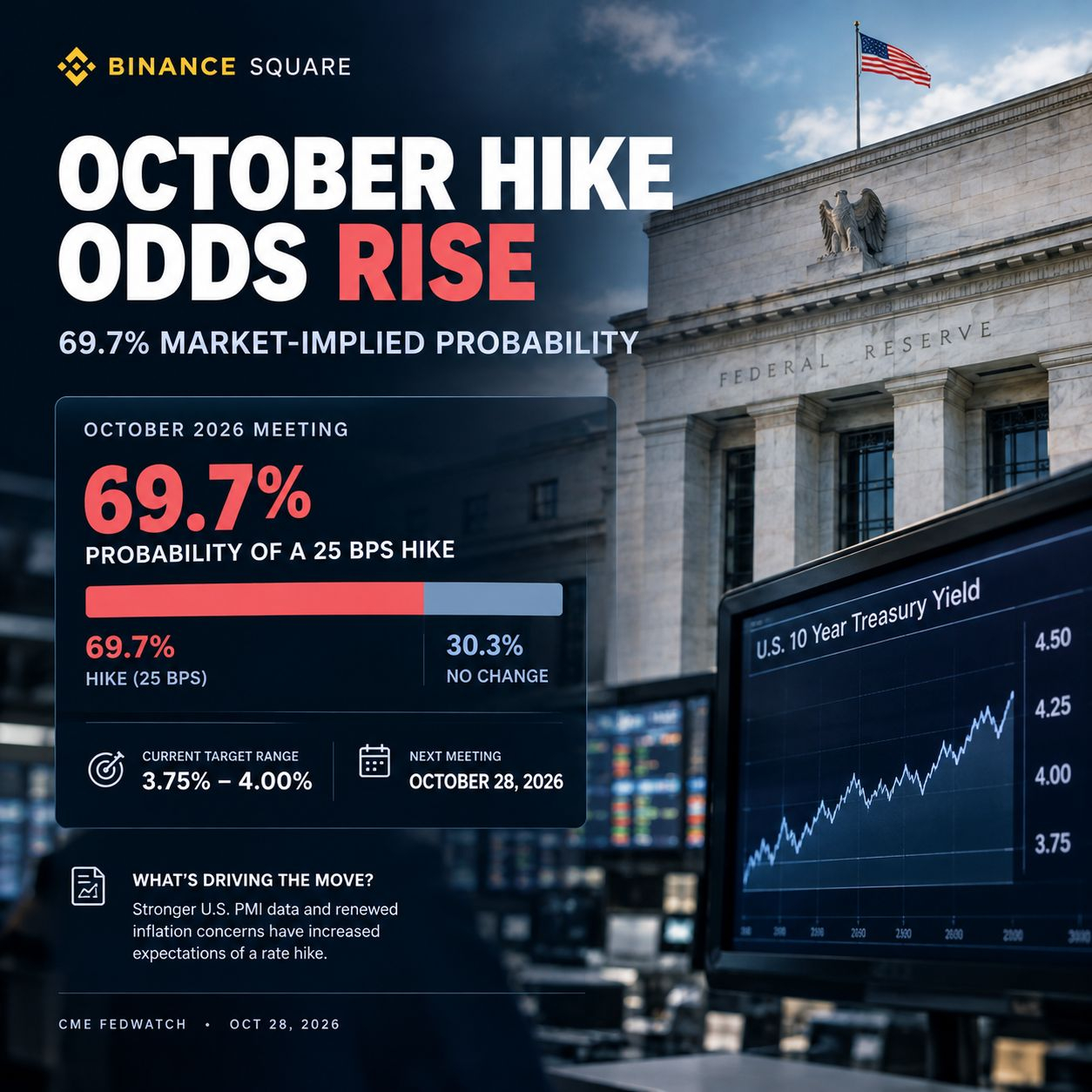
The 69.7% probability of a Fed hike in October isn't the most important number in the market right now.
According to a September 23 CME FedWatch snapshot, traders were pricing a 69.7% probability of a 25-basis-point hike at the October meeting, compared with 30.3% for no change. The same pricing showed a 54.8% probability of 50 basis points of cumulative additional hikes by December.
That changes the question.
It's no longer simply:
“Will the Fed hike in October?”
The bigger question is:
“How far could rates move by year-end?”
The Market Is Looking Beyond October
The Federal Reserve already raised its target range by 25 basis points in September, bringing it to 3.75%–4.00%. The September decision was the first Fed hike since 2023.
Now traders are looking at whether another increase comes in October — and whether the tightening continues afterward.
That's why the December pricing matters.
A 54.8% probability of cumulative 50 basis points of additional hikes doesn't mean the Fed has committed to that path. FedWatch probabilities are market-implied estimates derived from futures pricing and can change quickly as new economic information arrives.
But it shows that traders are no longer focusing on a single meeting in isolation.
They're pricing the potential path.
Why This Matters for Bitcoin
For $BTC and other risk assets, the headline rate decision is only one part of the equation.
What matters is how expectations for future rates affect broader financial conditions.
If markets begin pricing a more persistent tightening cycle, traders may pay closer attention to:
Treasury yields
Higher short-term yields can reflect expectations for a tighter Fed path.
The U.S. dollar
Changes in rate expectations can also affect dollar demand and global financial conditions.
Liquidity
The availability and cost of capital can influence how much risk investors are willing to take.
That's why a single FedWatch percentage shouldn't automatically be treated as a bullish or bearish signal for Bitcoin.
The Bigger Macro Shift
The interesting part is how quickly expectations can change.
Recent market pricing has moved toward another hike after the Fed's September decision, while Fed officials have continued emphasizing elevated inflation. Reuters reported that Minneapolis Fed President Neel Kashkari supported the September hike and said inflation remained too high across the economy.
At the same time, the Fed's September projections pointed to another rate increase this year as the median expectation among officials.
So the market is dealing with two separate questions:
What happens at the next meeting?
And:
Where does policy end up by December?
The second question could ultimately matter more for risk assets.
What Crypto Traders Should Watch
Rather than treating the 69.7% figure as an automatic sell signal, I'd watch how the broader market responds.
Keep an eye on:
2-year Treasury yields
10-year Treasury yields
The U.S. dollar
Liquidity conditions
Changes in FedWatch expectations
Bitcoin's reaction to macro data and Fed communication
If rate expectations rise but Bitcoin remains resilient, that tells a different story from a market where higher yields immediately translate into broad risk reduction.
And if expectations for additional hikes start falling, the liquidity backdrop could change again.
For now, the interesting part isn't simply that October is increasingly being priced as a hike.
It's that traders are already looking beyond October.
The real macro question for $BTC may be how restrictive the Fed becomes through the end of 2026 — and how much of that path is already reflected in prices.