I Tested a Polygon → TON Cross-Chain Route on STON.fi
I wanted to see what it actually feels like to move USDC from Polygon to USDT on TON through STON.fi.
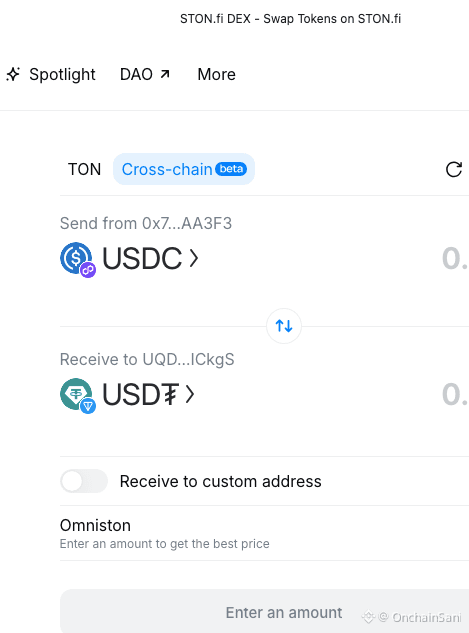
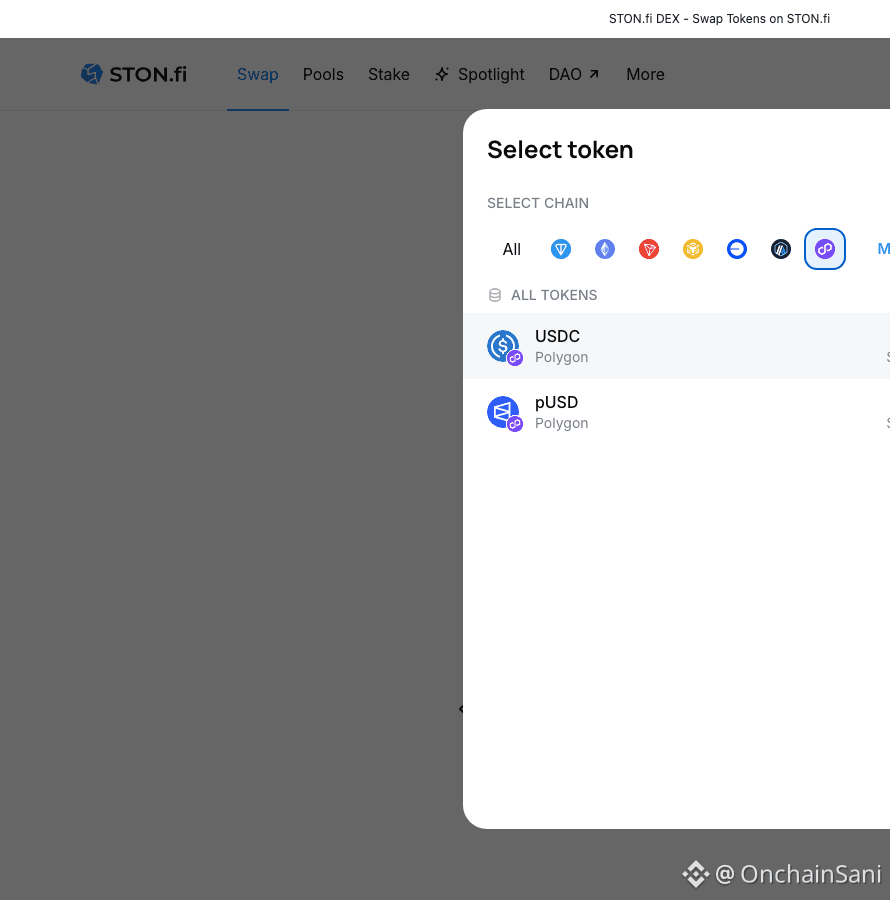
I started by selecting USDC as my source asset.
The first thing I checked was the network because USDC exists across multiple chains.
Then I selected USDT on TON as the destination
At this point, the route was easy to understand.
I wasn't manually moving the USDC somewhere first and then trying to figure out the next step.
Before confirming, I checked the quote and transaction details.
That's an important part of the process for me.
I want to know:
Where the asset is coming from Where it's going What I'm expected to receive What fees or other transaction details are shown
The basic flow is:
USDC on Polygon → STON.fi → USDT on TON
The interesting part isn't just that the assets are on different networks.
It's that the user experience can present that cross-chain movement as one understandable flow instead of making the user manually coordinate every step.
I wanted to see what it actually feels like to move USDC from Polygon to USDT on TON through STON.fi.
I started by selecting USDC as my source asset.
The first thing I checked was the network because USDC exists across multiple chains.
Then I selected USDT on TON as the destination
At this point, the route was easy to understand.
I wasn't manually moving the USDC somewhere first and then trying to figure out the next step.
Before confirming, I checked the quote and transaction details.
That's an important part of the process for me.
I want to know:
Where the asset is coming from Where it's going What I'm expected to receive What fees or other transaction details are shown
The basic flow is:
USDC on Polygon → STON.fi → USDT on TON
The interesting part isn't just that the assets are on different networks.
It's that the user experience can present that cross-chain movement as one understandable flow instead of making the user manually coordinate every step.