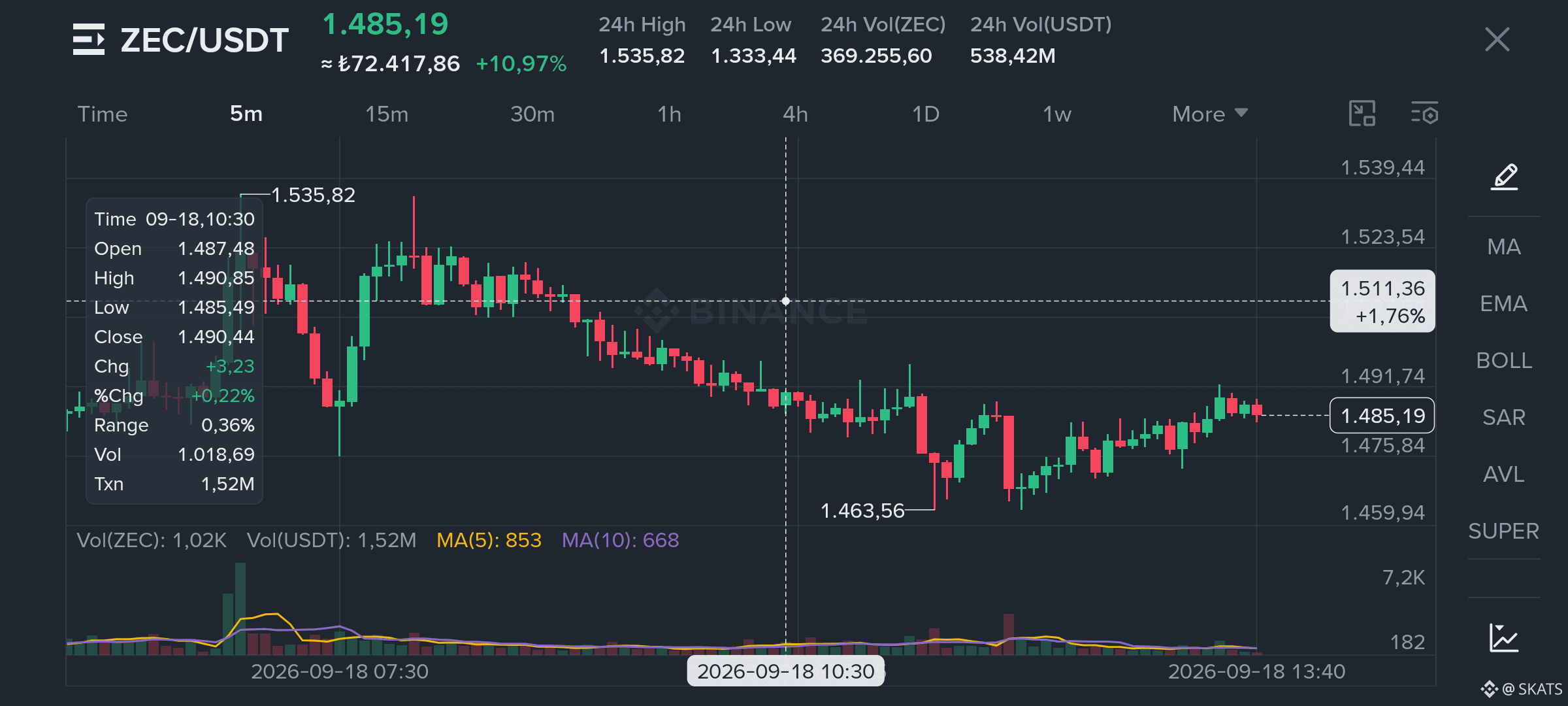
With ZEC, I’m less interested in how fast the price moved and more interested in how this move has redistributed positions across the market.
We’ve seen a double-digit move in 24 hours, a clear expansion in volume, and price testing the 1,535 area before settling around 1,485.
Short liquidations may have accelerated part of that move.
But I wouldn’t reduce the whole move to that.
Because several things changed at the same time.
Capital positioned much lower is now sitting on meaningful profits.
New money that didn’t want to miss the move entered at a much higher cost basis.
And on the short side, some positions may have been forced out or reduced their risk.
So while the price changed, something else changed with it:
The level at which different participants start to feel uncomfortable.
That matters more to me now.
After a strong move, price doesn’t always need more money to keep moving.
Sometimes it only needs existing positions to start behaving differently.
If earlier buyers are in no rush to take profits, newer buyers can tolerate the first pullback, and shorts don’t immediately rebuild aggressive exposure, the market may begin accepting a higher price range.
But the opposite can happen just as quickly.
If late buyers become the first group to lose conviction, what looks strong today can become fragile very fast.
So I’m not looking at ZEC and thinking:
“Shorts got liquidated, therefore it goes higher.”
I’m asking a different question.
Who is most likely to be forced into changing their decision first?
The earlier capital sitting on profits?
The newer capital that entered at a higher price?
Or the short side trying to rebuild exposure?
Because sometimes the next move isn’t decided by the strongest side.
It’s decided by the side that becomes uncomfortable first.
#ZEC #MarketStructure #Binance
We’ve seen a double-digit move in 24 hours, a clear expansion in volume, and price testing the 1,535 area before settling around 1,485.
Short liquidations may have accelerated part of that move.
But I wouldn’t reduce the whole move to that.
Because several things changed at the same time.
Capital positioned much lower is now sitting on meaningful profits.
New money that didn’t want to miss the move entered at a much higher cost basis.
And on the short side, some positions may have been forced out or reduced their risk.
So while the price changed, something else changed with it:
The level at which different participants start to feel uncomfortable.
That matters more to me now.
After a strong move, price doesn’t always need more money to keep moving.
Sometimes it only needs existing positions to start behaving differently.
If earlier buyers are in no rush to take profits, newer buyers can tolerate the first pullback, and shorts don’t immediately rebuild aggressive exposure, the market may begin accepting a higher price range.
But the opposite can happen just as quickly.
If late buyers become the first group to lose conviction, what looks strong today can become fragile very fast.
So I’m not looking at ZEC and thinking:
“Shorts got liquidated, therefore it goes higher.”
I’m asking a different question.
Who is most likely to be forced into changing their decision first?
The earlier capital sitting on profits?
The newer capital that entered at a higher price?
Or the short side trying to rebuild exposure?
Because sometimes the next move isn’t decided by the strongest side.
It’s decided by the side that becomes uncomfortable first.
#ZEC #MarketStructure #Binance