
Smart Tr ⁶⁶⁰
1.8k Publications
Smart Tr ⁶⁶⁰
opportunities Are Endless , Let's Stay Focused, Execute the plan ,and Print The Money.
Trade régulièrement
5.3 an(s)
406 Suivis
23.6K+ Abonnés
5.9K+ J’aime
Publications
Tous
Citations
Vidéos
PINNED

Trade sur 30 j $ZKP 251.3 USDT
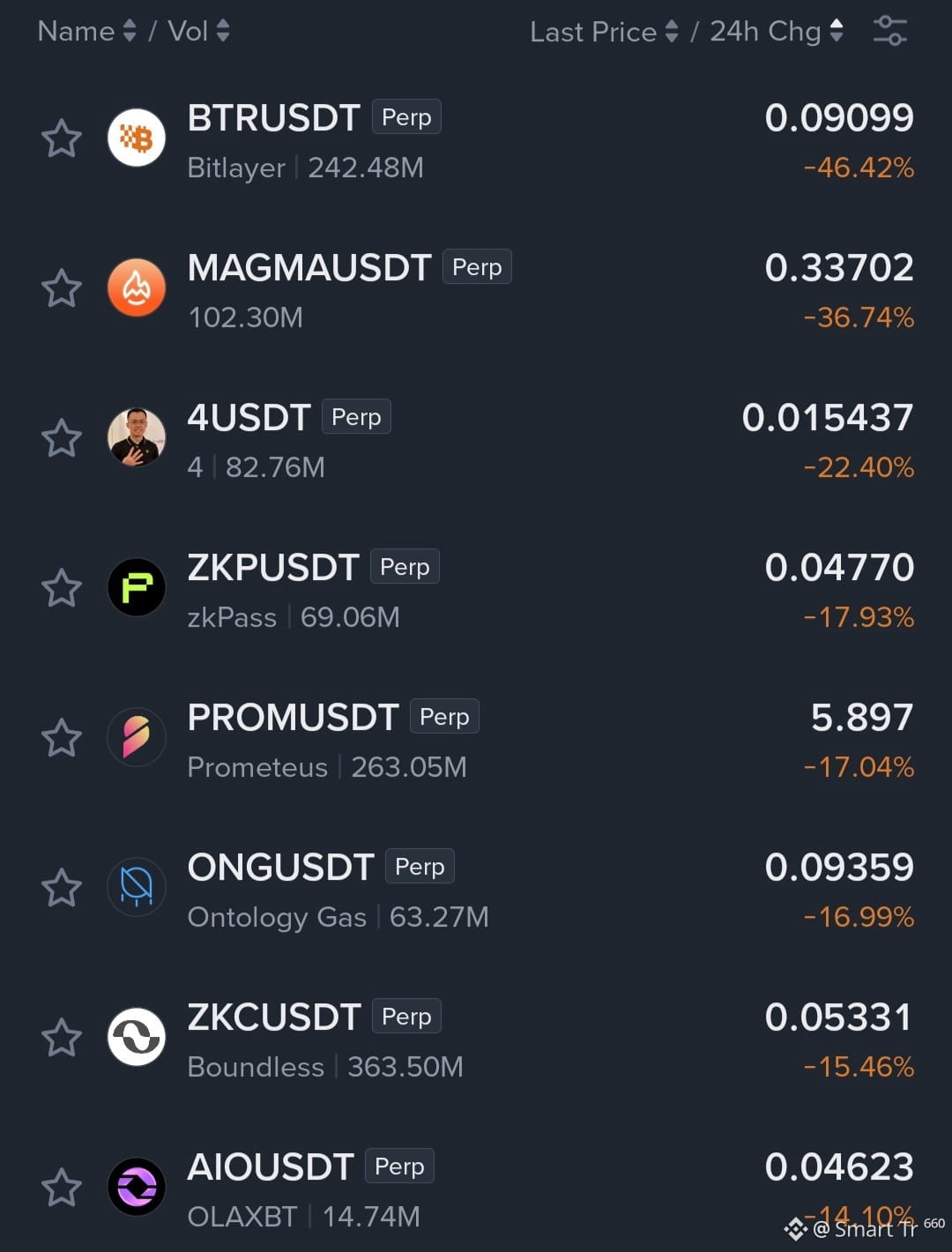
top of the futures loser board right now, and it's not pretty.
BTR down 46.42%, back to $0.09 after that no-catalyst pump we flagged just days ago.
MAGMA down 36.74%. ZKP down almost 18%. this isn't one coin bleeding — it's a wave of overextended alts getting flushed at once.
classic pattern: fast pump, no fundamentals backing it, then just as fast unwind. the coins that ran hardest on hype alone are the ones cracking hardest now.
if you were long any of these chasing the pump, this is the lesson.
$BTR $MAGMA $ZKP
BTR down 46.42%, back to $0.09 after that no-catalyst pump we flagged just days ago.
MAGMA down 36.74%. ZKP down almost 18%. this isn't one coin bleeding — it's a wave of overextended alts getting flushed at once.
classic pattern: fast pump, no fundamentals backing it, then just as fast unwind. the coins that ran hardest on hype alone are the ones cracking hardest now.
if you were long any of these chasing the pump, this is the lesson.
$BTR $MAGMA $ZKP
most traders don't actually know what blockchain is. they just trade the coins.
quick breakdown, no jargon:
blockchain is basically a shared record book that lives on thousands of computers at once instead of one company's server. every new transaction gets bundled into a "block," and each block links to the one before it — that's the "chain" part.
why it matters for trading:
no single person or company controls it. once something's recorded, it can't be quietly changed or deleted. and everyone on the network can verify it themselves — no bank, no middleman needed.
here's the real reason this matters to you as a trader: understanding the tech behind a coin tells you if there's actual utility or if it's just hype riding a chart. supply schedules, unlock dates, consensus mechanism — all of that comes from understanding the blockchain itself, not the candles.
you don't need to code. you just need to know what you're actually buying.
$BTC
$ETH
quick breakdown, no jargon:
blockchain is basically a shared record book that lives on thousands of computers at once instead of one company's server. every new transaction gets bundled into a "block," and each block links to the one before it — that's the "chain" part.
why it matters for trading:
no single person or company controls it. once something's recorded, it can't be quietly changed or deleted. and everyone on the network can verify it themselves — no bank, no middleman needed.
here's the real reason this matters to you as a trader: understanding the tech behind a coin tells you if there's actual utility or if it's just hype riding a chart. supply schedules, unlock dates, consensus mechanism — all of that comes from understanding the blockchain itself, not the candles.
you don't need to code. you just need to know what you're actually buying.
$BTC
$ETH

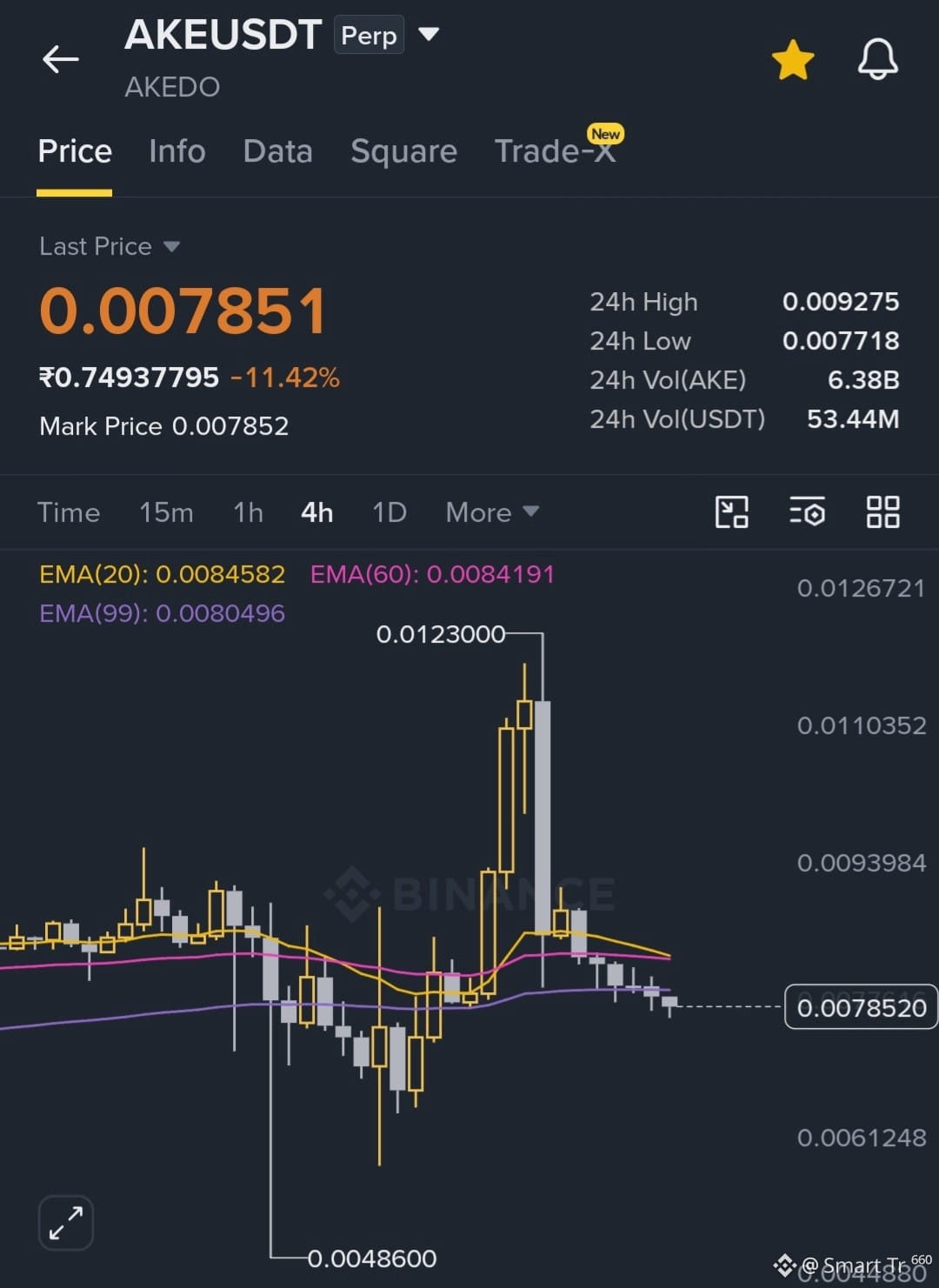
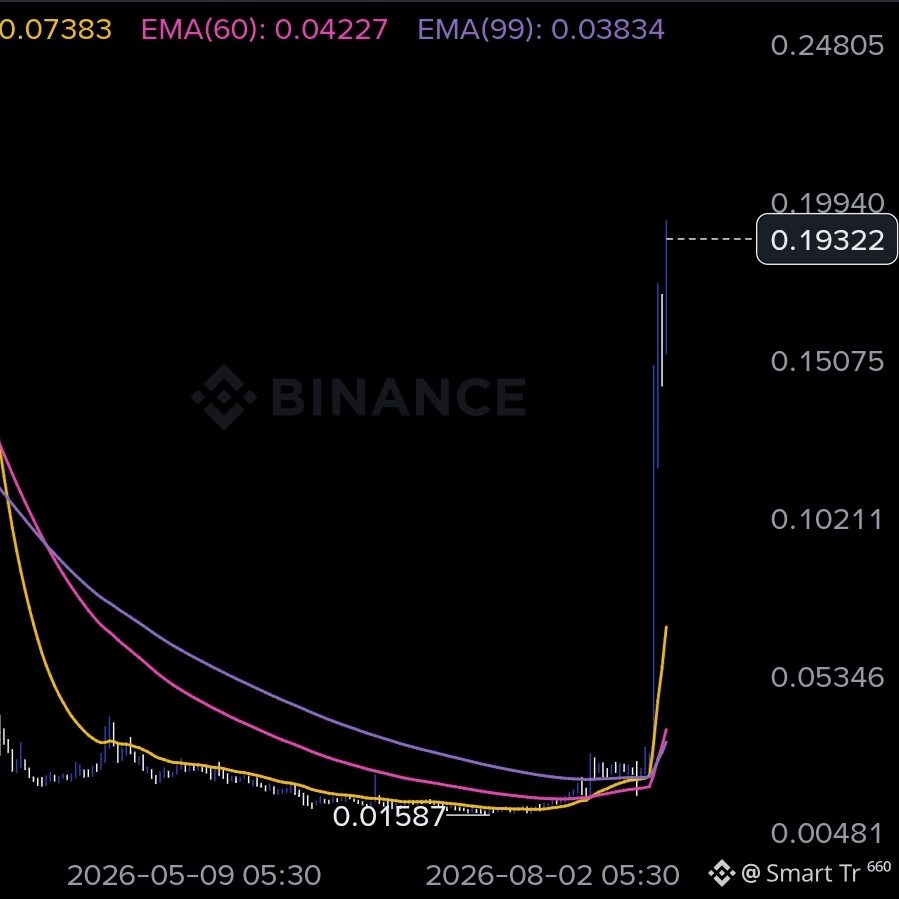
what's actually happening: crypto's in extreme greed mode right now (Fear & Greed at 81), and money's rotating into small-cap alts looking for the next 10x. BTR just happened to catch that wave.
pure momentum pumps with heavy supply overhang tend to end one way. be careful chasing this one.
shorting BTR right now? think twice.
if you're bearish, wait for it to lose momentum first. don't fight a coin that's still ripping.
$BTR | $AKE
pure momentum pumps with heavy supply overhang tend to end one way. be careful chasing this one.
shorting BTR right now? think twice.
if you're bearish, wait for it to lose momentum first. don't fight a coin that's still ripping.
$BTR | $AKE
banks want a piece of the stablecoin pie now. and they're coming straight for Circle's territory.
WSJ just reported that banks, big and small, are warming up to launching their own stablecoins. the news hit and CRCL dropped 6%, now sitting around $89.
funny thing is — Goldman just raised their price target on CRCL to $81 this same week. so Wall Street's still bullish long-term, the market's just getting nervous short-term.
honestly the real question isn't whether banks show up. they will. the question is whether Circle's first-mover edge (USDC, Arc, CPN) is strong enough to stay ahead once they do.
$CRCL
WSJ just reported that banks, big and small, are warming up to launching their own stablecoins. the news hit and CRCL dropped 6%, now sitting around $89.
funny thing is — Goldman just raised their price target on CRCL to $81 this same week. so Wall Street's still bullish long-term, the market's just getting nervous short-term.
honestly the real question isn't whether banks show up. they will. the question is whether Circle's first-mover edge (USDC, Arc, CPN) is strong enough to stay ahead once they do.
$CRCL
Nvidia's memory shortage warning was supposed to be bullish for NAND suppliers.
Instead, SNDK is pulling back hard — down over 7% now, giving back its premarket gains.
Classic "sell the news" reaction after such a massive 2026 run — profit booking kicking in even on good fundamental news.
NVDA holding steady, up modestly — decoupling from the memory-stock weakness.
$SNDK
$NVDA
Instead, SNDK is pulling back hard — down over 7% now, giving back its premarket gains.
Classic "sell the news" reaction after such a massive 2026 run — profit booking kicking in even on good fundamental news.
NVDA holding steady, up modestly — decoupling from the memory-stock weakness.
$SNDK
$NVDA
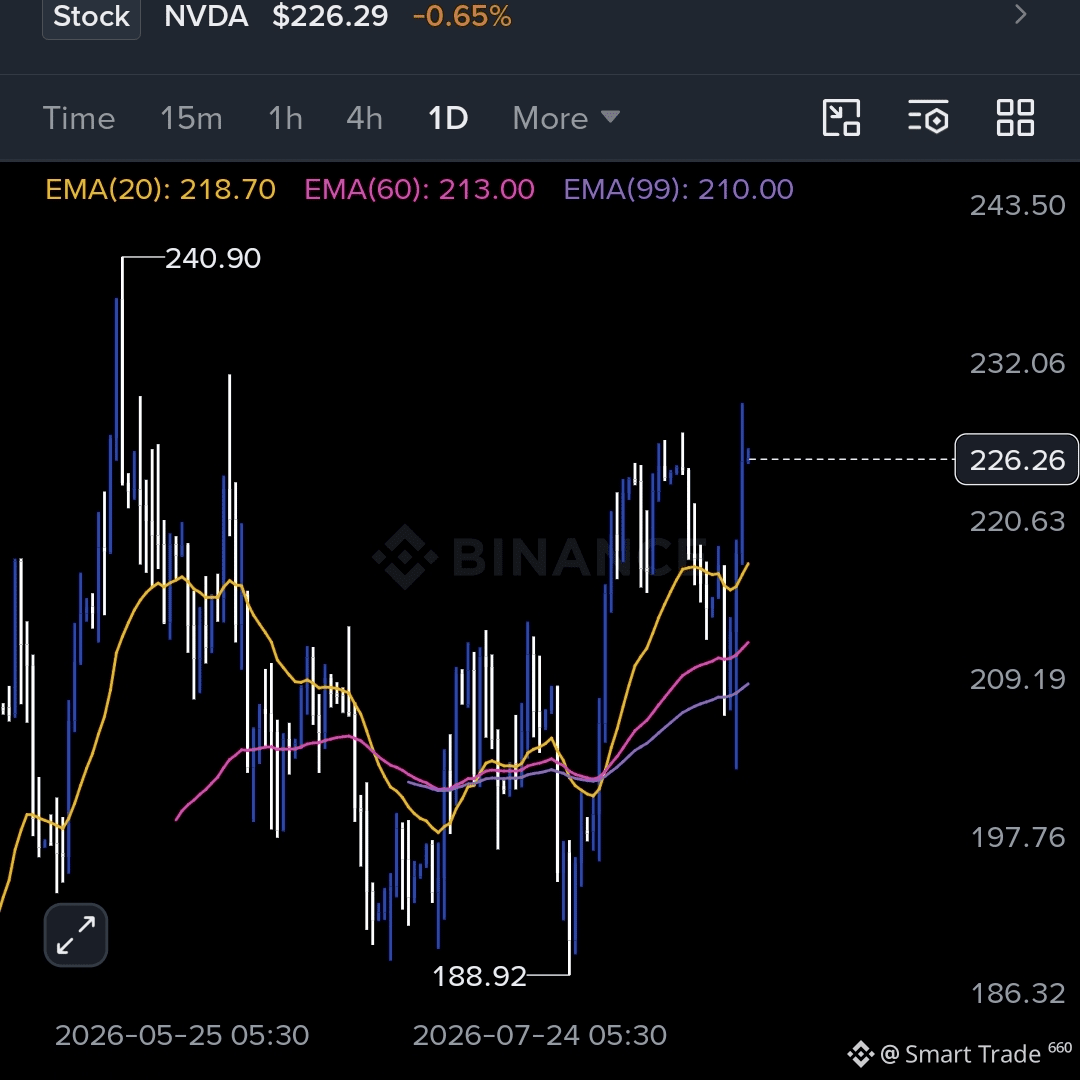
NVDA up 8.74% today, closing near $228, adding $441.5B in market cap — one of the biggest single-day gains in U.S. stock market history.
$NVDA | $INTC | $NBIS
The reason: Q2 revenue hit $96.22B, up 106% YoY, crushing estimates ($92.37B expected). Data center revenue alone contributed $89B.
Guidance was the real trigger — company guided for ~70% revenue growth next year, nearly double what analysts expected. CEO Jensen Huang said demand is "accelerating" and outpacing supply.
Chip stocks rallied alongside it (Broadcom, Intel, Nebius) — signaling the AI trade is very much alive. #Bstocks
$NVDA | $INTC | $NBIS
The reason: Q2 revenue hit $96.22B, up 106% YoY, crushing estimates ($92.37B expected). Data center revenue alone contributed $89B.
Guidance was the real trigger — company guided for ~70% revenue growth next year, nearly double what analysts expected. CEO Jensen Huang said demand is "accelerating" and outpacing supply.
Chip stocks rallied alongside it (Broadcom, Intel, Nebius) — signaling the AI trade is very much alive. #Bstocks
Trade sur 30 j $DUSK 552 USDT
I’ve spent this campaign looking at Dusk from different angles, and my biggest question now isn’t whether regulated assets can move onchain.
It’s whether Dusk can turn those assets into a network that becomes more useful as more financial activity joins it.
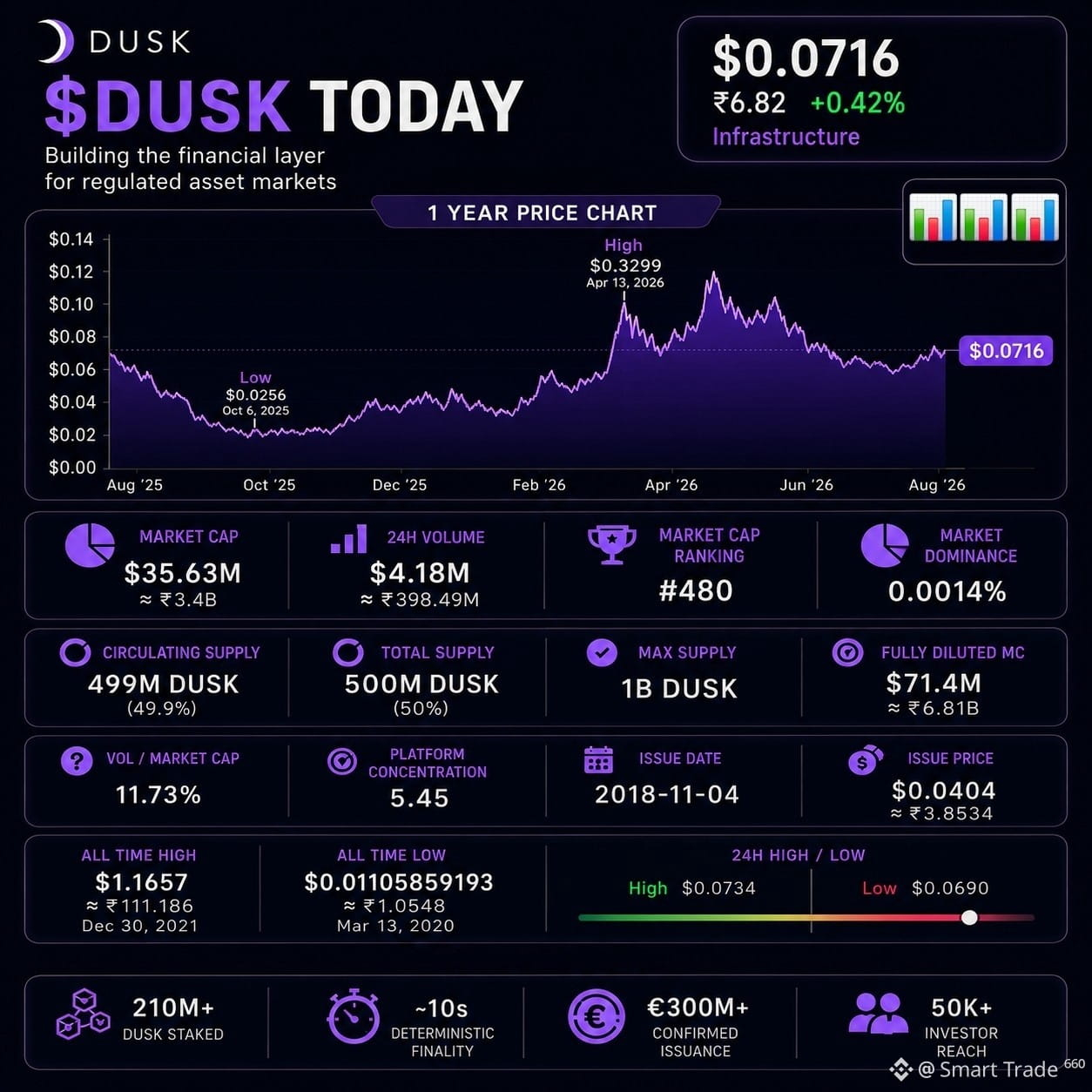
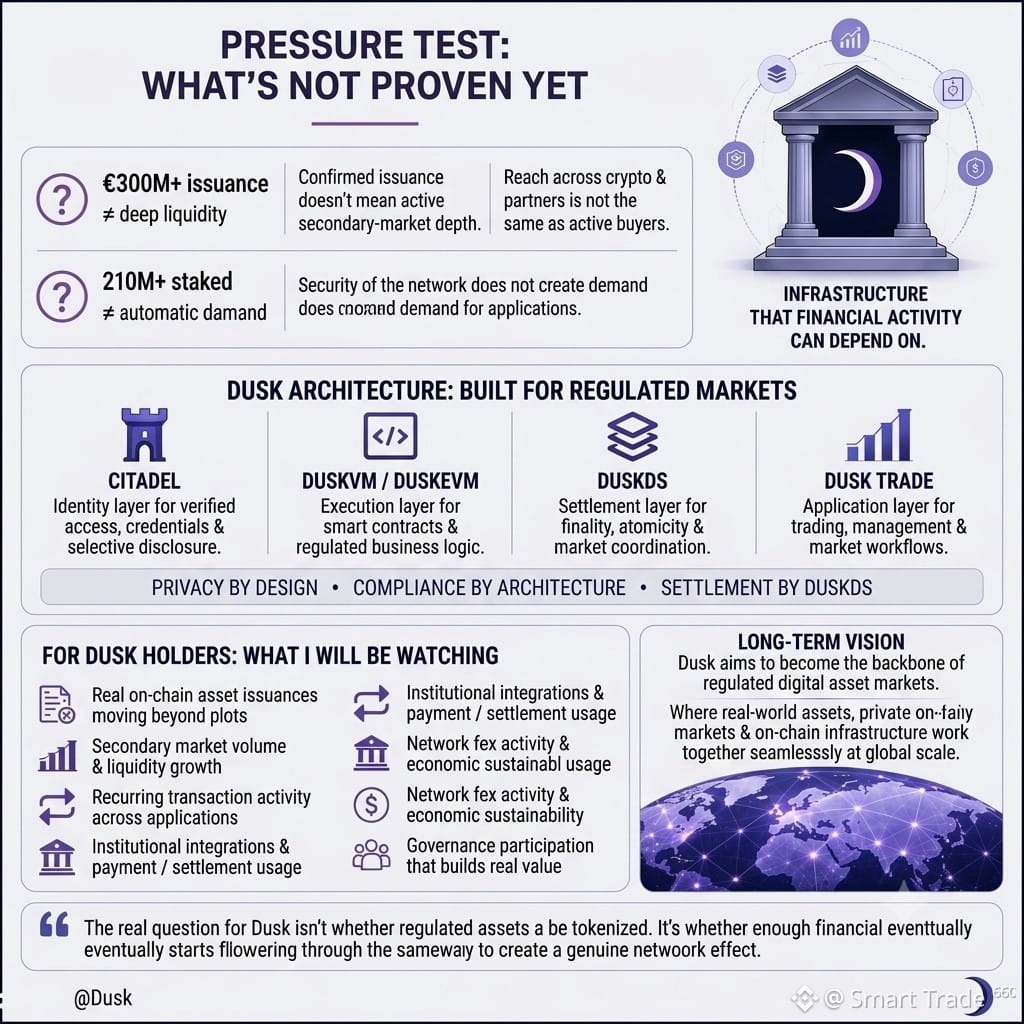
The current numbers are interesting: Dusk reports €300M+ in confirmed issuance, 50K+ investor reach, 210M+ DUSK staked, and roughly 10-second deterministic finality.
But those numbers are only the starting point.
The harder part is connecting the full financial loop:
asset issuance → eligible investors → payments → settlement → trading → secondary liquidity → more market activity.
That is where I think Dusk’s long-term thesis gets interesting.
Its architecture is being built around more than token creation. Dusk is targeting eligibility, controlled transfers, privacy with selective disclosure, payment coordination and settlement around regulated asset workflows.
And its work with NPEX matters for the same reason: Dusk is trying to connect regulated-market experience with onchain issuance, trading and settlement.
But I wouldn’t call the thesis proven yet.
€300M+ of confirmed issuance does not automatically mean deep secondary-market liquidity.
50K+ investor reach does not mean 50K active buyers.
And 210M+ DUSK securing the network does not, by itself, create demand for financial applications.
That’s the pressure test I’ll be watching.
For DUSK holders, I’d focus less on short-term noise and more on measurable signals: recurring transaction activity, real secondary-market volume, new regulated assets, institutional integrations, and whether network usage eventually creates meaningful fee activity.
If those pieces start reinforcing each other, Dusk could become more than infrastructure for tokenized assets.
It could become infrastructure that financial activity actually depends on.
That’s the long-term thesis I think is worth testing — not assuming.
Can Dusk turn tokenization into a genuine financial network effect?
@Dusk #dusk $DUSK
It’s whether Dusk can turn those assets into a network that becomes more useful as more financial activity joins it.
The current numbers are interesting: Dusk reports €300M+ in confirmed issuance, 50K+ investor reach, 210M+ DUSK staked, and roughly 10-second deterministic finality.
But those numbers are only the starting point.
The harder part is connecting the full financial loop:
asset issuance → eligible investors → payments → settlement → trading → secondary liquidity → more market activity.
That is where I think Dusk’s long-term thesis gets interesting.
Its architecture is being built around more than token creation. Dusk is targeting eligibility, controlled transfers, privacy with selective disclosure, payment coordination and settlement around regulated asset workflows.
And its work with NPEX matters for the same reason: Dusk is trying to connect regulated-market experience with onchain issuance, trading and settlement.
But I wouldn’t call the thesis proven yet.
€300M+ of confirmed issuance does not automatically mean deep secondary-market liquidity.
50K+ investor reach does not mean 50K active buyers.
And 210M+ DUSK securing the network does not, by itself, create demand for financial applications.
That’s the pressure test I’ll be watching.
For DUSK holders, I’d focus less on short-term noise and more on measurable signals: recurring transaction activity, real secondary-market volume, new regulated assets, institutional integrations, and whether network usage eventually creates meaningful fee activity.
If those pieces start reinforcing each other, Dusk could become more than infrastructure for tokenized assets.
It could become infrastructure that financial activity actually depends on.
That’s the long-term thesis I think is worth testing — not assuming.
Can Dusk turn tokenization into a genuine financial network effect?
@Dusk #dusk $DUSK
Vérifié
don't think the interesting part of OpenDusk is the treasury.
It's where the treasury's money comes from.
I was looking deeper into Dusk's current block-reward mechanics, and one detail stood out.
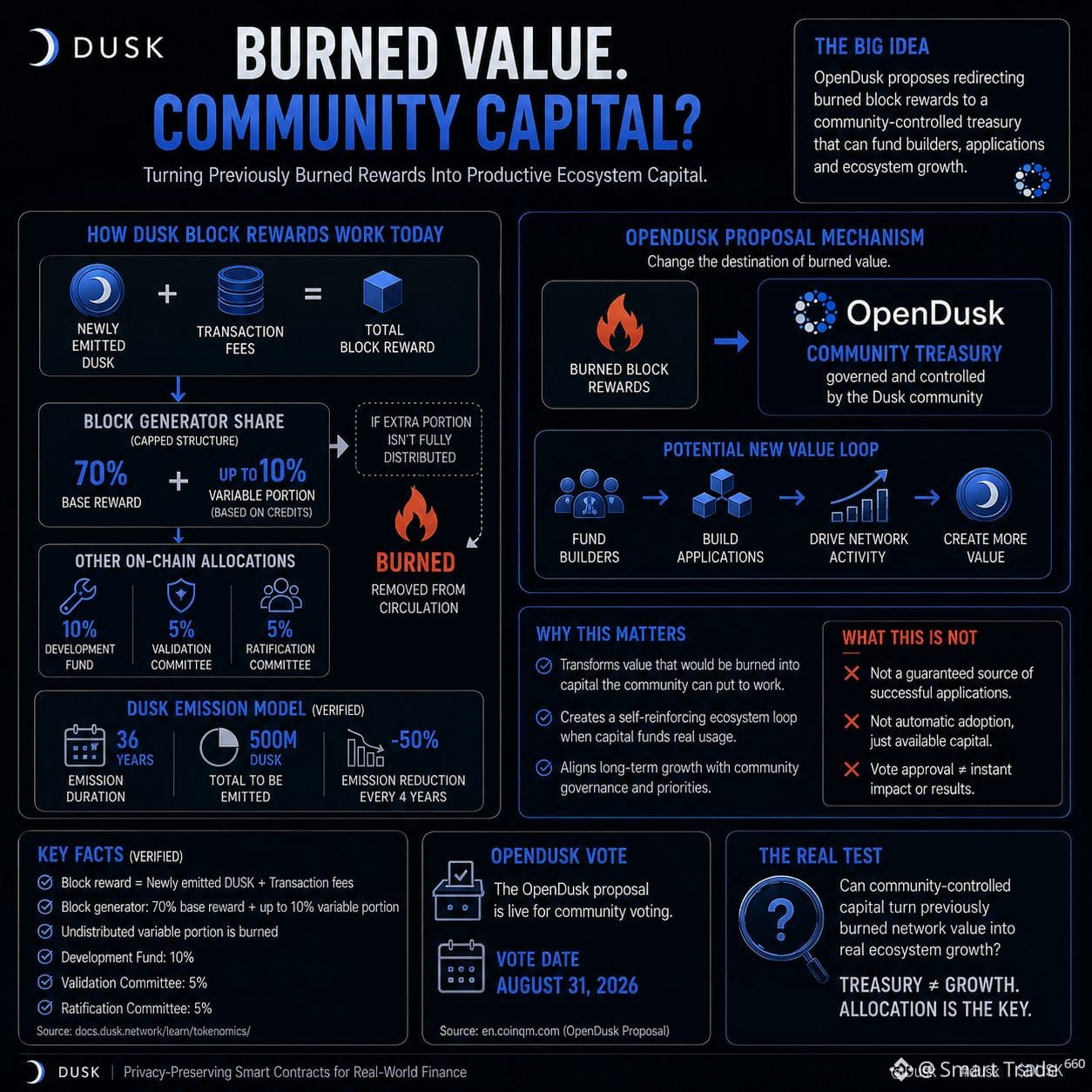
A Dusk block reward combines newly emitted DUSK with the transaction fees in that block.
The block generator gets 70%, plus up to another 10% based on the credits included in the certificate. If that variable portion isn't fully distributed, the remainder is burned.
So there is already value being created by the network that can simply disappear from the system.
OpenDusk proposes a different destination for that burned block-reward value: a community treasury that can be used to support growth across the Dusk ecosystem.
That's where I think the second-order effect becomes interesting.
Instead of:
network activity → reward → burn
the potential loop becomes:
network activity → reward → community capital → ecosystem funding → more applications.
But this is still only a mechanism, not proof of growth.
A treasury doesn't automatically attract good builders.
Capital doesn't guarantee useful applications.
And approving the proposal wouldn't prove that the funded projects will generate meaningful users or transaction volume.
That's the part I would watch most closely.
Can community-controlled capital actually turn previously burned network value into productive ecosystem activity?
Because if it can, OpenDusk isn't just creating a treasury.
It is experimenting with a different way of turning network economics into ecosystem growth.
#dusk $DUSK @Dusk
It's where the treasury's money comes from.
I was looking deeper into Dusk's current block-reward mechanics, and one detail stood out.
A Dusk block reward combines newly emitted DUSK with the transaction fees in that block.
The block generator gets 70%, plus up to another 10% based on the credits included in the certificate. If that variable portion isn't fully distributed, the remainder is burned.
So there is already value being created by the network that can simply disappear from the system.
OpenDusk proposes a different destination for that burned block-reward value: a community treasury that can be used to support growth across the Dusk ecosystem.
That's where I think the second-order effect becomes interesting.
Instead of:
network activity → reward → burn
the potential loop becomes:
network activity → reward → community capital → ecosystem funding → more applications.
But this is still only a mechanism, not proof of growth.
A treasury doesn't automatically attract good builders.
Capital doesn't guarantee useful applications.
And approving the proposal wouldn't prove that the funded projects will generate meaningful users or transaction volume.
That's the part I would watch most closely.
Can community-controlled capital actually turn previously burned network value into productive ecosystem activity?
Because if it can, OpenDusk isn't just creating a treasury.
It is experimenting with a different way of turning network economics into ecosystem growth.
#dusk $DUSK @Dusk
Trade sur 30 j $DUSK 461.7 USDT
I was looking over the protocol changes made by #Dusk and one detail in Boreas caught my attention.
Boreas was not a feature.
Boreas was about making sure the network interprets transactions the way.
Boreas introduced boundaries between how transactions are accepted from clients represented inside Rusk and stored in the ledger.
That sounds like engineering.
I think Boreas is more important than it looks.
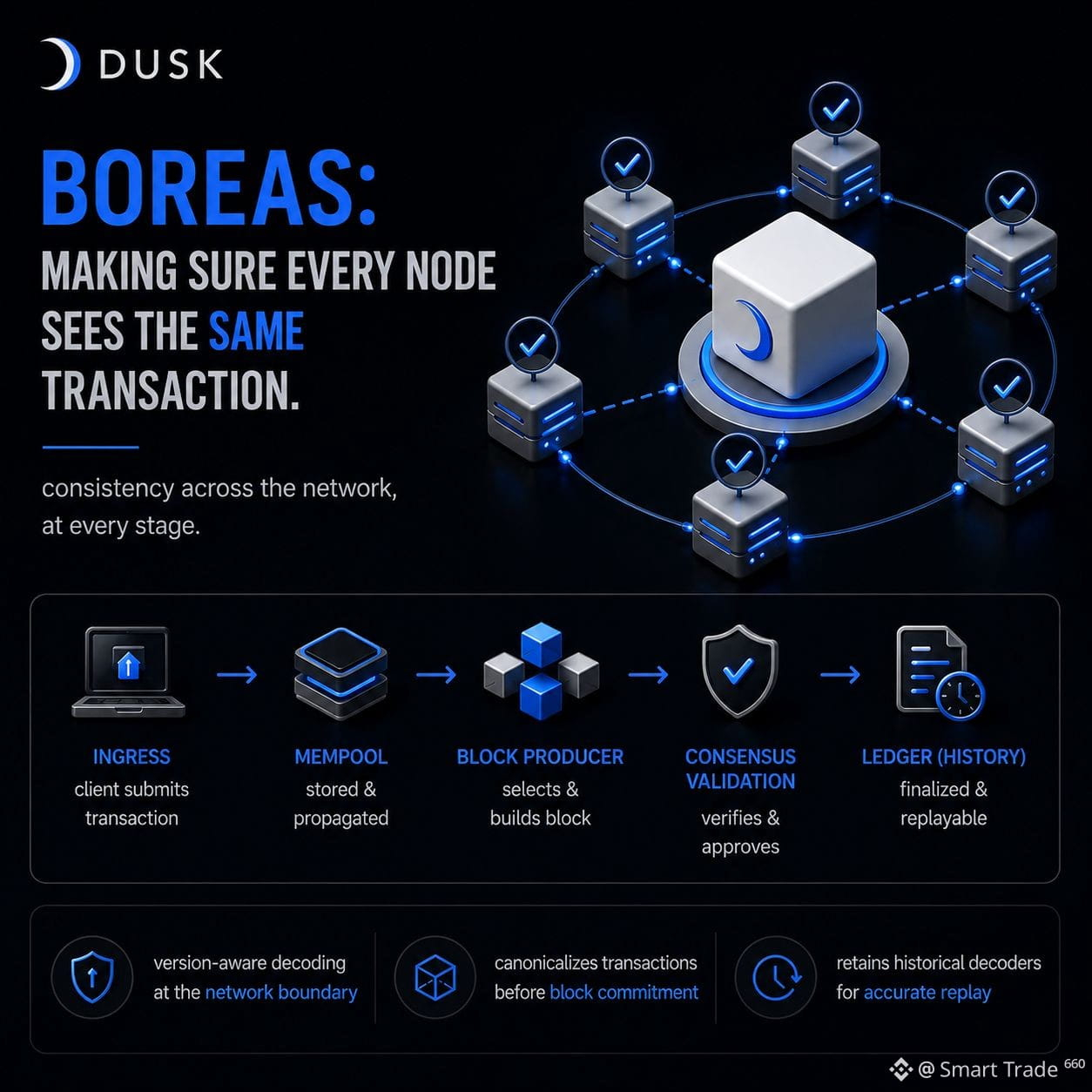
A transaction passes through stages before it becomes part of the historical chain data: ingress, mempool handling, block production, consensus validation and eventually replay.
If different parts of the node interpret the bytes differently the problem is not just a failed transaction.
It can become a consistency problem.
Boreas addresses this by using version‑aware decoding at the network boundary and by canonicalizing transactions before they are committed into blocks.
The interesting part is that Dusk also keeps decoders so older blocks can still be replayed correctly.
So the design is not simply: "change the transaction format."
It is closer to: "change the rules without making old history ambiguous."
That is a requirement for a network expected to handle long‑lived financial infrastructure.
It makes me look at protocol upgrades differently.
A successful hard fork is not about adding new capabilities.
It is also about making sure every layer agrees on what the transaction means.
What I am watching now is whether this kind of protocol discipline remains robust as Dusk adds execution paths and financial applications.
Because complexity does not disappear when you modularize a blockchain.
It just moves to the boundaries, between the modules.
#dusk $DUSK @Dusk
Boreas was not a feature.
Boreas was about making sure the network interprets transactions the way.
Boreas introduced boundaries between how transactions are accepted from clients represented inside Rusk and stored in the ledger.
That sounds like engineering.
I think Boreas is more important than it looks.
A transaction passes through stages before it becomes part of the historical chain data: ingress, mempool handling, block production, consensus validation and eventually replay.
If different parts of the node interpret the bytes differently the problem is not just a failed transaction.
It can become a consistency problem.
Boreas addresses this by using version‑aware decoding at the network boundary and by canonicalizing transactions before they are committed into blocks.
The interesting part is that Dusk also keeps decoders so older blocks can still be replayed correctly.
So the design is not simply: "change the transaction format."
It is closer to: "change the rules without making old history ambiguous."
That is a requirement for a network expected to handle long‑lived financial infrastructure.
It makes me look at protocol upgrades differently.
A successful hard fork is not about adding new capabilities.
It is also about making sure every layer agrees on what the transaction means.
What I am watching now is whether this kind of protocol discipline remains robust as Dusk adds execution paths and financial applications.
Because complexity does not disappear when you modularize a blockchain.
It just moves to the boundaries, between the modules.
#dusk $DUSK @Dusk
Trade sur 30 j $ZEC 144.5 USDT
Trade Signal - PUMP 🔻
small size ( Low Lev )
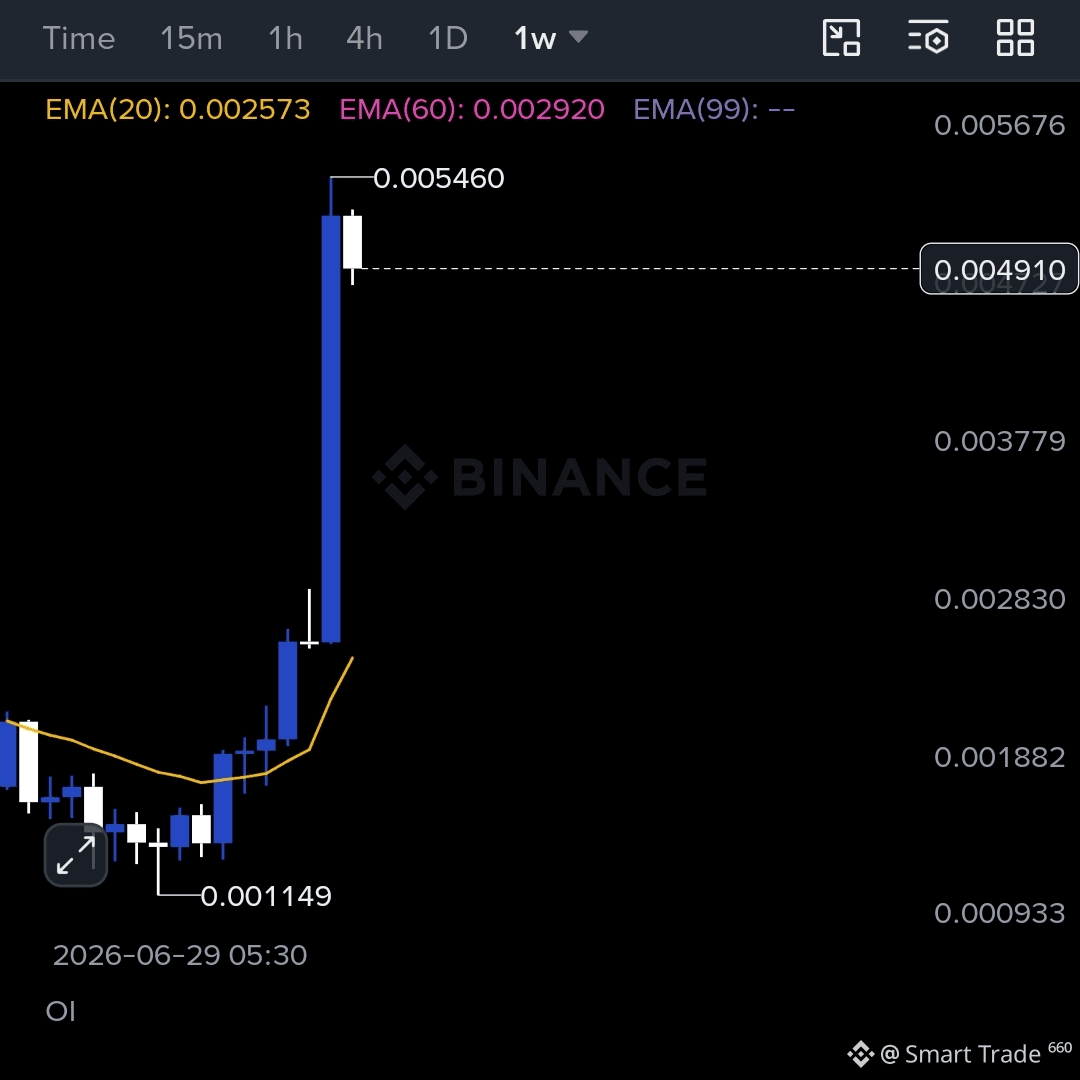
Order - 0.00498
SL - 0.0054
TP - 0.0041 ( Move SL )
$PUMP
$VELVET
small size ( Low Lev )
Order - 0.00498
SL - 0.0054
TP - 0.0041 ( Move SL )
$PUMP
$VELVET
Trade sur 30 j $NBIS 1.5K USDT
Short Signal - ZEC 🔻
order - 850 - 860 limit
SL - 890
Tp - 796 Move SL ( Trail SL )
$ZEC
| $AKE
order - 850 - 860 limit
SL - 890
Tp - 796 Move SL ( Trail SL )
$ZEC
| $AKE
you don't need to catch every move. 🧘♀️ 🧘♂️ you need to survive enough of them to catch the ones that matter. 🕰️ patience compounds too. ⏳
$PROM | $SOL | $ZEC
$PROM | $SOL | $ZEC
Partiellement vrai
I was going through Dusk's latest developer updates, and one detail caught my attention:
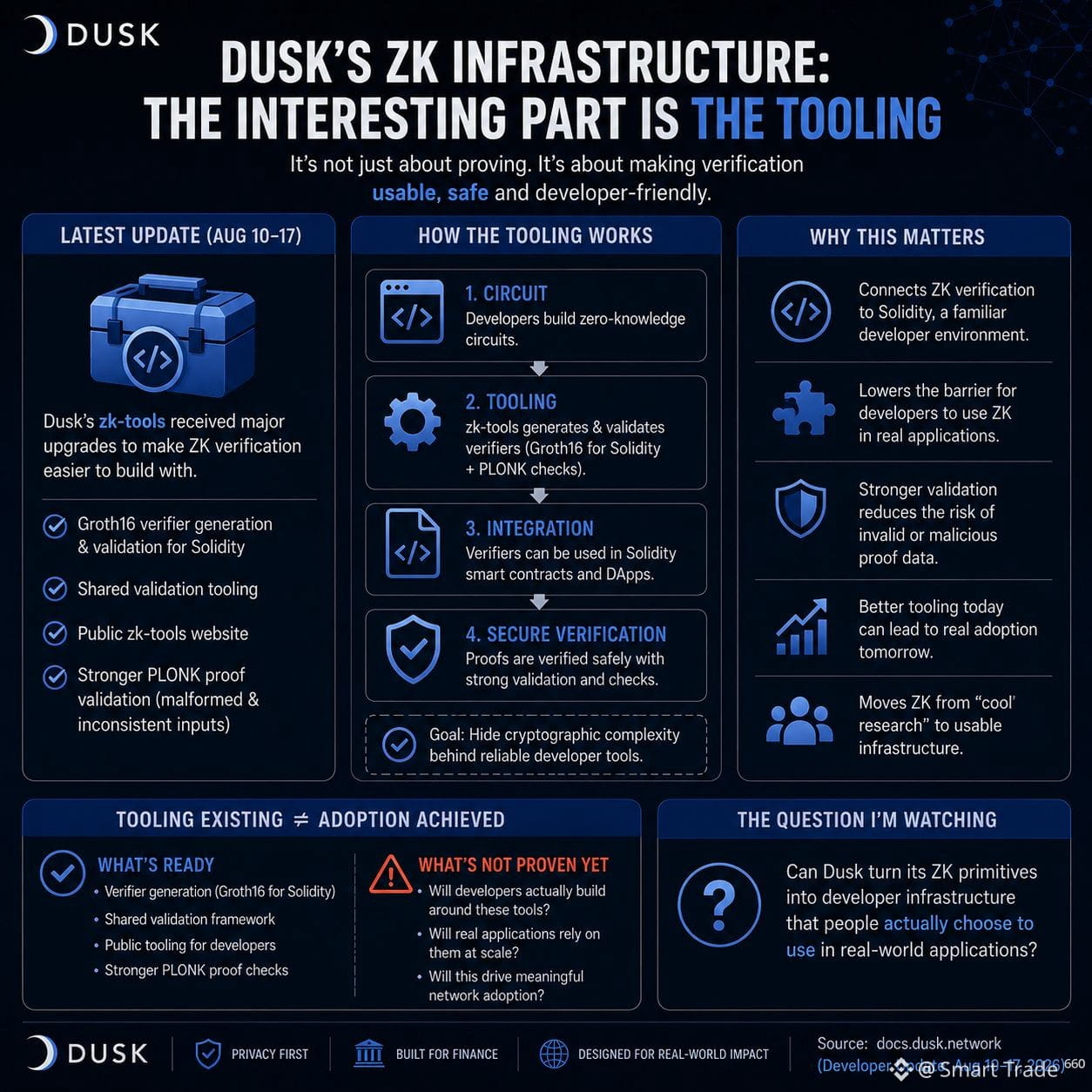
they're not just adding ZK capabilities. They're working on the tooling around verification.
The recent zk-tools update added tooling to generate and validate a Groth16 verifier for Solidity, along with shared validation tooling and a public site for exploring the toolkit.
That sounds like developer plumbing.
But I think it's actually an important part of making zero-knowledge useful.
A proof system can exist at the protocol level, but developers still need practical ways to generate verification logic, validate inputs and integrate that verification into applications.
Otherwise, “we support ZK” can remain mostly a technical capability.
What caught my attention is the Solidity side.
Dusk is building tooling that can connect ZK verification with a language already familiar to a large smart-contract developer base.
So the interesting question isn't:
“Does Dusk use zero-knowledge?”
The better question is:
“How much cryptographic complexity can Dusk hide behind usable developer tooling?”
And there's a second layer I don't want to ignore.
The same recent update shows Dusk strengthening proof validation for malformed and inconsistent inputs in its PLONK work.
That tells me the engineering focus isn't only on making proofs possible.
It's also on making invalid inputs fail safely.
But tooling existing is not the same as tooling being battle-tested.
My biggest question is whether developers will actually build around these ZK tools once real applications start demanding them.
That's the adoption signal I'll be watching.
#dusk $DUSK @Dusk
they're not just adding ZK capabilities. They're working on the tooling around verification.
The recent zk-tools update added tooling to generate and validate a Groth16 verifier for Solidity, along with shared validation tooling and a public site for exploring the toolkit.
That sounds like developer plumbing.
But I think it's actually an important part of making zero-knowledge useful.
A proof system can exist at the protocol level, but developers still need practical ways to generate verification logic, validate inputs and integrate that verification into applications.
Otherwise, “we support ZK” can remain mostly a technical capability.
What caught my attention is the Solidity side.
Dusk is building tooling that can connect ZK verification with a language already familiar to a large smart-contract developer base.
So the interesting question isn't:
“Does Dusk use zero-knowledge?”
The better question is:
“How much cryptographic complexity can Dusk hide behind usable developer tooling?”
And there's a second layer I don't want to ignore.
The same recent update shows Dusk strengthening proof validation for malformed and inconsistent inputs in its PLONK work.
That tells me the engineering focus isn't only on making proofs possible.
It's also on making invalid inputs fail safely.
But tooling existing is not the same as tooling being battle-tested.
My biggest question is whether developers will actually build around these ZK tools once real applications start demanding them.
That's the adoption signal I'll be watching.
#dusk $DUSK @Dusk
seen this before — BTC pumps, whole market turns green, and everyone's calling it "the bullrun." 📈🚀
but one green day driven by BTC alone isn't the same as a real bullrun. genuine bull markets build slowly, across sectors, over weeks. 🐢🏗️
what usually happens next: BTC pauses, and the altcoins that pumped in sympathy give it all back — because there was no independent strength, just BTC dragging them up. 📉💸
not saying this time is different. just that "market is green" and "bullrun started" aren't the same claim. 🤷♀️🤔
staying observant, not excited. 👀🧘
$TUT | $TRUMP | $BSB
but one green day driven by BTC alone isn't the same as a real bullrun. genuine bull markets build slowly, across sectors, over weeks. 🐢🏗️
what usually happens next: BTC pauses, and the altcoins that pumped in sympathy give it all back — because there was no independent strength, just BTC dragging them up. 📉💸
not saying this time is different. just that "market is green" and "bullrun started" aren't the same claim. 🤷♀️🤔
staying observant, not excited. 👀🧘
$TUT | $TRUMP | $BSB
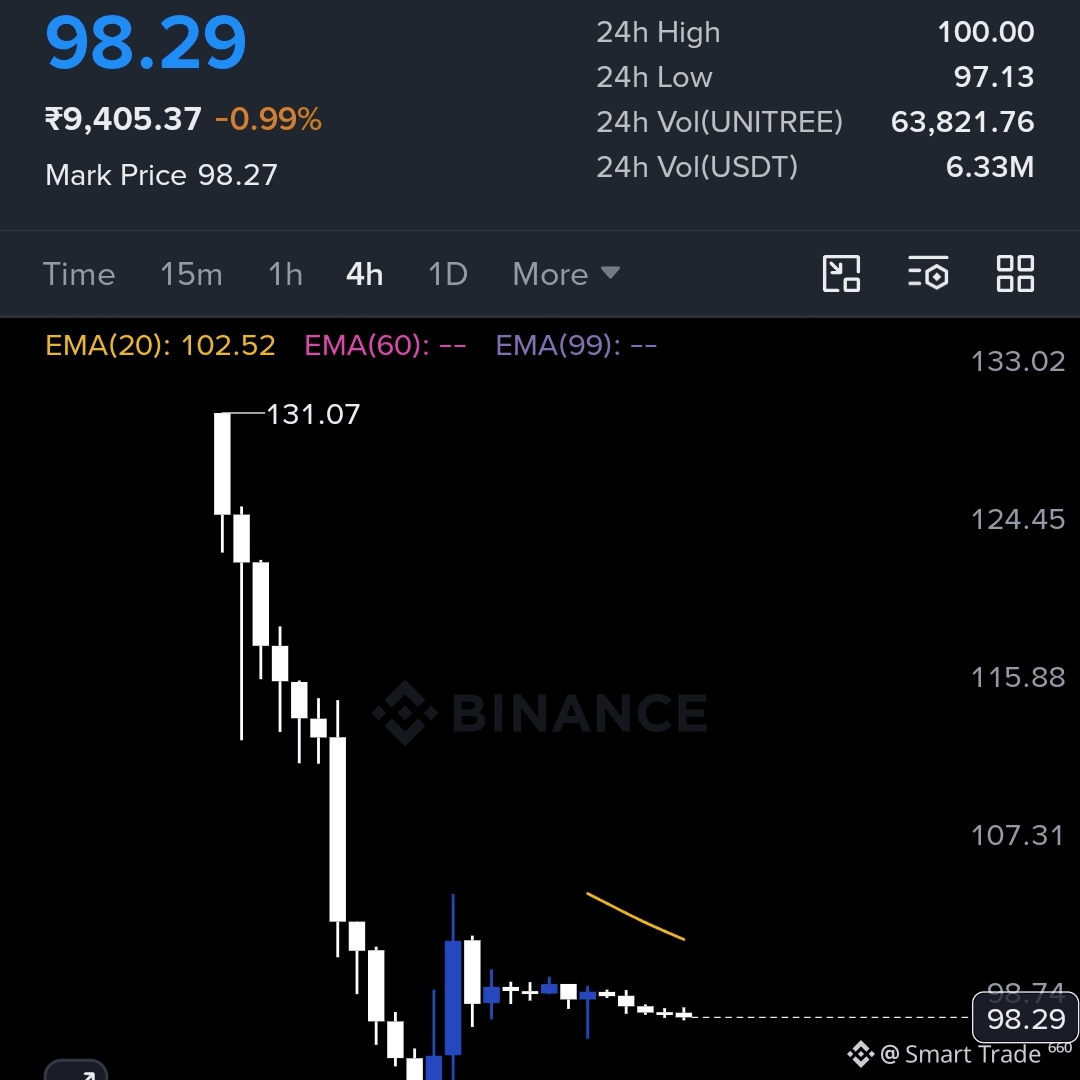
been watching $UNITREE since it listed and honestly the debut was wild — Unitree Robotics (yeah, the company behind those viral robot-dog videos) opened 629% above its IPO price. crypto perps had actually called this days earlier too, pricing in a $38B valuation when the IPO itself was only $9B.
but here's what i'm seeing now — it topped out near $131, dumped hard to $92, and has just been kind of... sitting at $98 the last day or two. not really doing much.
my honest take: the hype's already priced in. this feels like a "let it breathe" phase, not a breakout setup. i'm not touching it until it actually shows me a direction again.
$UNITREE #Unitree
but here's what i'm seeing now — it topped out near $131, dumped hard to $92, and has just been kind of... sitting at $98 the last day or two. not really doing much.
my honest take: the hype's already priced in. this feels like a "let it breathe" phase, not a breakout setup. i'm not touching it until it actually shows me a direction again.
$UNITREE #Unitree
Connectez-vous pour découvrir plus de contenu