
Aria Bloom 阿莉娅
515 Publications

Aria Bloom 阿莉娅
Aria Bloom | Learning, growing, and exploring crypto with patience and purpose. Every step is progress 💞
Ouvert au trading
Trade fréquemment
1.5 an(s)
326 Suivis
9.3K+ Abonnés
4.0K+ J’aime
Publications
Portefeuille
Tous
Citations
PINNED
Peaceful moments, beautiful views and a little furry companion by my side. 🐱🤍 Sometimes, the simplest moments are the ones worth remembering. ✨
Stay calm stay focused, and keep building your journey in the crypto world. 🚀📈
#Binance #cryptouniverseofficial
$BTC $LAB
Stay calm stay focused, and keep building your journey in the crypto world. 🚀📈
#Binance #cryptouniverseofficial
$BTC $LAB

😍

远方1688 BNB
·
--
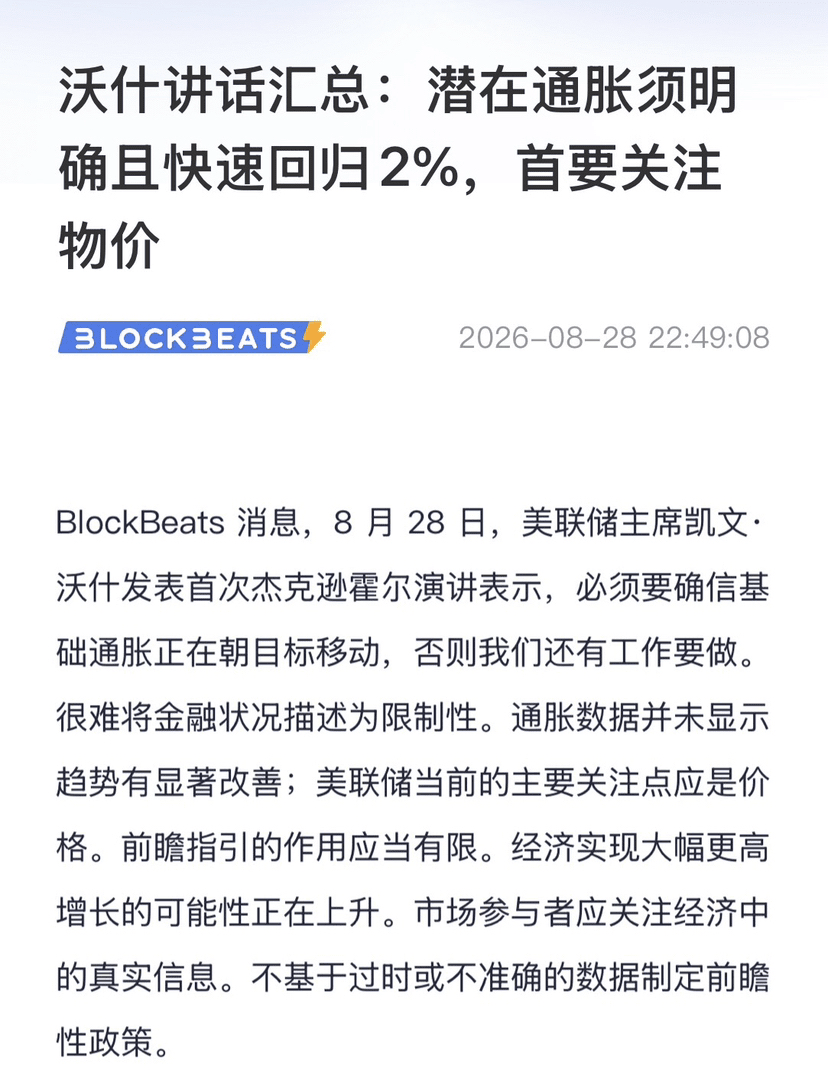
沃什这次讲话,不要乐观着往降息利好上理解。
他明确提到,2%的通胀目标不会变,但目前的数据还不足以证明通胀正在快速回到2%。这很关键。
现在市场最想交易的是降息,但美联储真正关心的还是通胀。
如果后面的PCE、CPI继续改善,宽松预期自然会升温;
但如果通胀反复,降息预期一样会被重新定价。
所以现在这个阶段,我反而觉得要保持一点警惕。
市场可以提前交易降息预期,但流动性真正宽松之前,预期终究只是预期。
最近行情越热,越不能只看价格,宏观这条线还没有真正走完。
他明确提到,2%的通胀目标不会变,但目前的数据还不足以证明通胀正在快速回到2%。这很关键。
现在市场最想交易的是降息,但美联储真正关心的还是通胀。
如果后面的PCE、CPI继续改善,宽松预期自然会升温;
但如果通胀反复,降息预期一样会被重新定价。
所以现在这个阶段,我反而觉得要保持一点警惕。
市场可以提前交易降息预期,但流动性真正宽松之前,预期终究只是预期。
最近行情越热,越不能只看价格,宏观这条线还没有真正走完。

🤔

圣克斯Lucky1688
·
--
🧧🧧🔥🧧🧧实际收益率上升速度快于名义收益率和盈亏平衡利率,这表明根据彭博社的说法,债券市场认为美联储对通胀的立场具有可信度。关注我,回答1,带走$SOL红包。🧧🧧🔥🧧🧧
🤭


Syco 疯子
·
--
Have Patience
Take your time, be patient with yourself
Many people are anxious, restless, and eager to
make quick money
But most end up being taken advantage of
You need to be grounded and cultivate yourself
Adhere to long-termism
Only then can you reap the rewards
Take your time, be patient with yourself
Many people are anxious, restless, and eager to
make quick money
But most end up being taken advantage of
You need to be grounded and cultivate yourself
Adhere to long-termism
Only then can you reap the rewards

😍

Rafnal
·
--
Do you like $BNB ?

🤫

Tahir 塔希尔
·
--
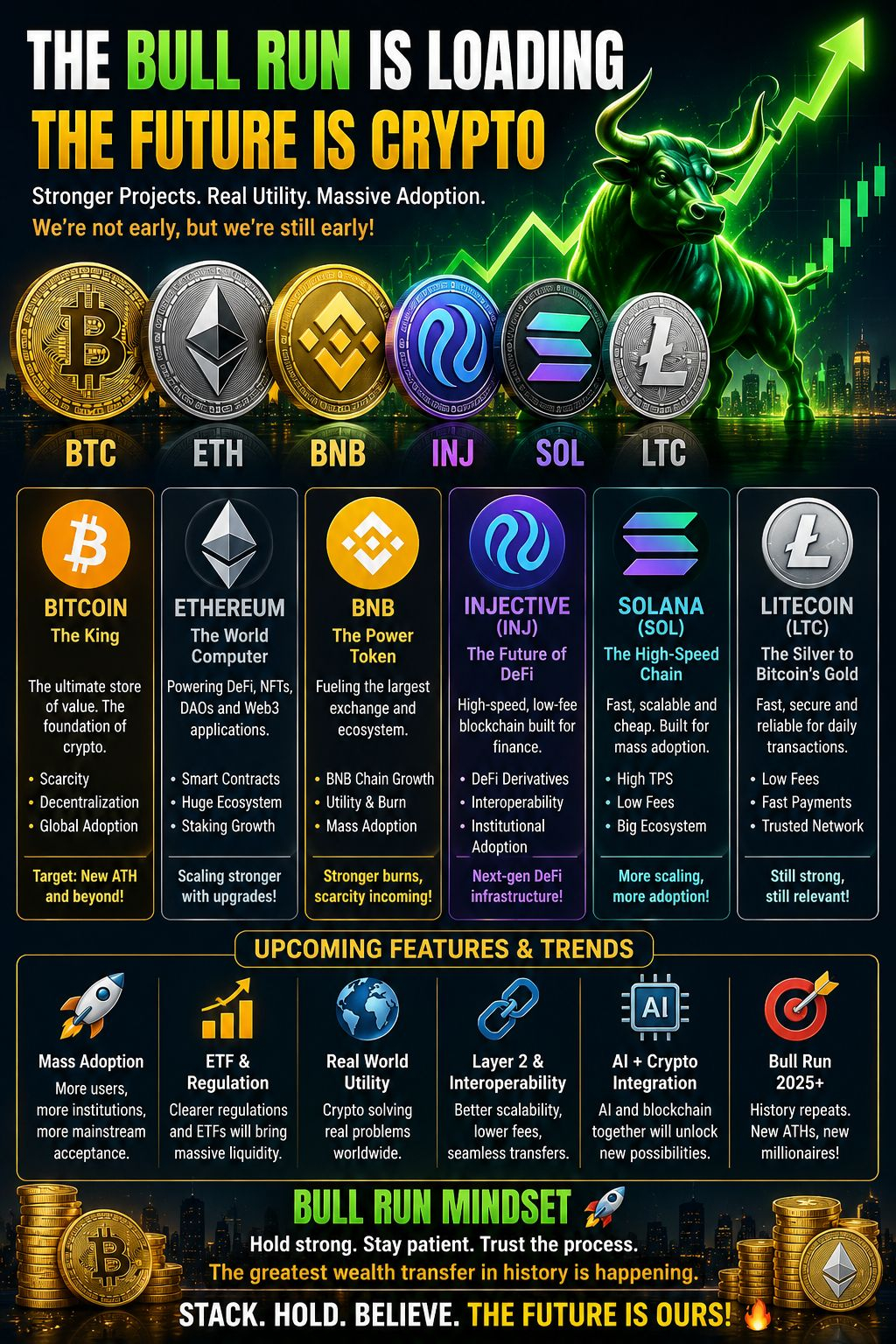
🚀 CRYPTO BULL RUN: THE NEXT BIG MOVE? 🐂🔥
The crypto market is evolving fast — and the next cycle may be driven by utility, adoption, institutions, and real on-chain finance, not just hype.
₿ BTC — The King
Digital scarcity + institutional adoption + ETF demand. Bitcoin remains the foundation of the entire market.
♦️ ETH — The World Computer
Ethereum continues pushing scalability and ecosystem growth, with major upgrades focused on making the network faster and more efficient.
🟡 BNB — The Ecosystem Engine
BNB Chain continues expanding its DeFi, Web3 and application ecosystem while BNB benefits from network utility and token economics.
🔵 INJ — Finance on-chain
Injective is building toward a finance-native blockchain with EVM + WASM, tokenized assets, stablecoin settlement, institutional access and an expanding RWA ecosystem.
🌈 SOL — Speed + Adoption
Solana continues pushing performance, while Alpenglow is one of the major protocol upgrades to watch in 2026, targeting dramatically faster finality.
⚡ LTC — The Veteran
Litecoin remains focused on fast, reliable payments, while upcoming developments include programmable functionality and its next halving cycle.
🔥 WHAT COULD DRIVE THE NEXT BULL RUN?
✅ Institutional capital
✅ ETF adoption
✅ Clearer crypto regulation
✅ Real-world asset tokenization
✅ Stablecoin growth
✅ DeFi expansion
✅ AI + blockchain
✅ Faster & cheaper networks
✅ Mass adoption
✅ New all-time highs
Bitcoin recently moved back above $80K, while ETH and SOL also posted strong gains — but a rally does not automatically guarantee a full bull market.
The real question isn't:
“Will crypto survive?”
It's:
“How big can the next adoption wave become?” 🌎🚀
BTC. ETH. BNB. INJ. SOL. LTC.
Different narratives.
Different technology.
One massive ecosystem.
🐂 The bull may be waking up.
#Bitcoin #Ethereum #BNB #Injective #Solana #Litecoin #Crypto #BullRun #DeFi #RWA #Web3 #Blockchain
The crypto market is evolving fast — and the next cycle may be driven by utility, adoption, institutions, and real on-chain finance, not just hype.
₿ BTC — The King
Digital scarcity + institutional adoption + ETF demand. Bitcoin remains the foundation of the entire market.
♦️ ETH — The World Computer
Ethereum continues pushing scalability and ecosystem growth, with major upgrades focused on making the network faster and more efficient.
🟡 BNB — The Ecosystem Engine
BNB Chain continues expanding its DeFi, Web3 and application ecosystem while BNB benefits from network utility and token economics.
🔵 INJ — Finance on-chain
Injective is building toward a finance-native blockchain with EVM + WASM, tokenized assets, stablecoin settlement, institutional access and an expanding RWA ecosystem.
🌈 SOL — Speed + Adoption
Solana continues pushing performance, while Alpenglow is one of the major protocol upgrades to watch in 2026, targeting dramatically faster finality.
⚡ LTC — The Veteran
Litecoin remains focused on fast, reliable payments, while upcoming developments include programmable functionality and its next halving cycle.
🔥 WHAT COULD DRIVE THE NEXT BULL RUN?
✅ Institutional capital
✅ ETF adoption
✅ Clearer crypto regulation
✅ Real-world asset tokenization
✅ Stablecoin growth
✅ DeFi expansion
✅ AI + blockchain
✅ Faster & cheaper networks
✅ Mass adoption
✅ New all-time highs
Bitcoin recently moved back above $80K, while ETH and SOL also posted strong gains — but a rally does not automatically guarantee a full bull market.
The real question isn't:
“Will crypto survive?”
It's:
“How big can the next adoption wave become?” 🌎🚀
BTC. ETH. BNB. INJ. SOL. LTC.
Different narratives.
Different technology.
One massive ecosystem.
🐂 The bull may be waking up.
#Bitcoin #Ethereum #BNB #Injective #Solana #Litecoin #Crypto #BullRun #DeFi #RWA #Web3 #Blockchain
😍

Node知行
·
--
祝岁岁平安,步步舒心,万事尽可期待✨
风雨皆过往,来日皆曙光,愿一切向好。
平安喜乐,得偿所愿,一切顺遂。
🧧🧧🧧
风雨皆过往,来日皆曙光,愿一切向好。
平安喜乐,得偿所愿,一切顺遂。
🧧🧧🧧
😍

J U N I A
·
--
🎁🎁🎁 CLAIM REWARD

😍
Leo - F0
·
--
Haussier🧧🧧🔥HAPPY SUNDAY FULL OF GİFTS FOR EVERYONE FROM DUBAİ!🔥🧧🧧
"Close the terminal and let the wallet grow. Chasing the high life only traders know."
$BTC 🔥🔥🧧🧧#Dubái
$BNB $ETH
#1688家族family 💚 @周周1688 @Hawk自由哥 #xrp #DOGE #Binance
"Close the terminal and let the wallet grow. Chasing the high life only traders know."
$BTC 🔥🔥🧧🧧#Dubái
$BNB $ETH
#1688家族family 💚 @周周1688 @Hawk自由哥 #xrp #DOGE #Binance

😍

Bilverse
·
--
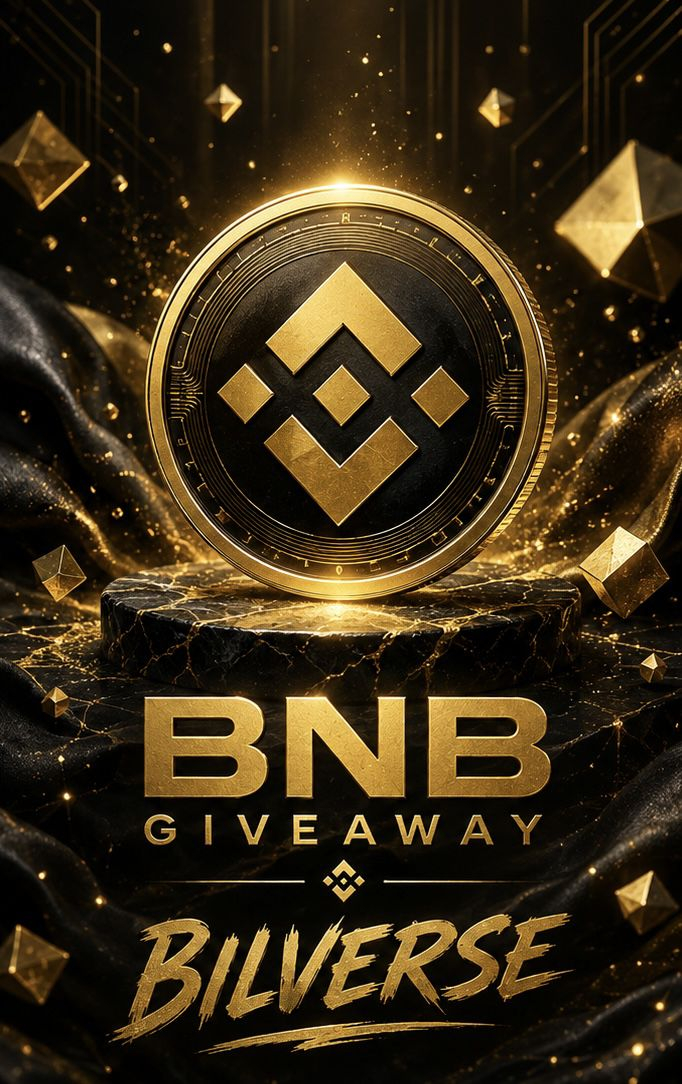
🧧 BNB RED PACKET GIVEAWAY 🎁🧧
I’M GIVING AWAY BNB TO MY BINANCE FOLLOWERS! 🟡
Want your share? It’s SUPER simple 👇
💬 Comment 999 below
🎁 Receive your BNB immediately!
No complicated steps. No waiting. Just 999 → BNB in your red packet. 🧧💰
🔥 If you’re seeing this, don’t miss it!
Click here to DOUBLE your Rewards! 🧧🚀
🚀 Let’s make this BNB giveaway HUGE!
#BNB #RedPacket #CryptoCommunity #Bilverse
I’M GIVING AWAY BNB TO MY BINANCE FOLLOWERS! 🟡
Want your share? It’s SUPER simple 👇
💬 Comment 999 below
🎁 Receive your BNB immediately!
No complicated steps. No waiting. Just 999 → BNB in your red packet. 🧧💰
🔥 If you’re seeing this, don’t miss it!
Click here to DOUBLE your Rewards! 🧧🚀
🚀 Let’s make this BNB giveaway HUGE!
#BNB #RedPacket #CryptoCommunity #Bilverse
😍

大仁Jaron
·
--
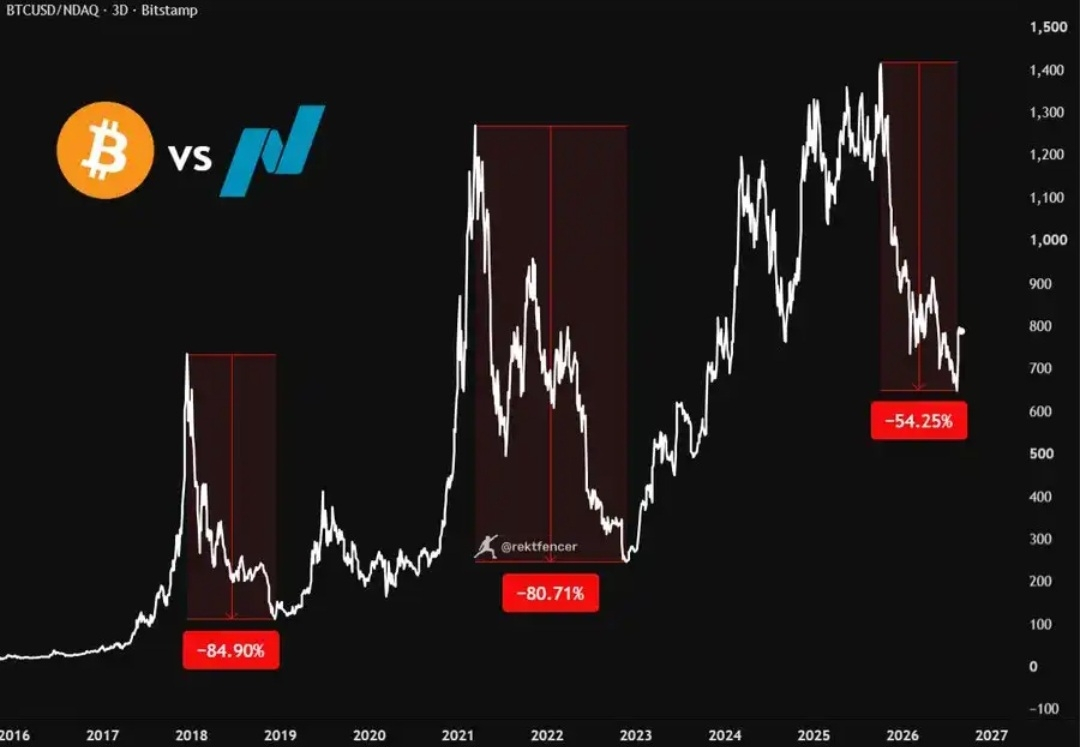
8 月 30 日,分析师 Rekt Fencer 发布 BTC 与纳指 3 日线比率图,标注了三次显著回撤:2018 年约-84.9%、2022 年约-80.7%、2026 年当前约-54.3%。Rekt Fencer 表示,前两次比特币相对纳斯达克出现如此大幅度的落后之后,都迎来了非常强劲的独立上涨行情,价格随后直线拉升。当前比率再次大幅回落,历史可能第三次重演,底部已经临近,接下来 BTC 将重新走强。
🧧🧧🧧回复666获得$SOL 🧧🧧🧧
🎁🎁🎁👇👇👇🎁🎁🎁
🧧🧧🧧回复666获得$SOL 🧧🧧🧧
🎁🎁🎁👇👇👇🎁🎁🎁
😍
E L E X A
·
--
🚨 LIVE NOW 🚨
Watching is easy… winning takes action 👀
Want free $USDT?
💬 Comment 666
❤️ Like
🔁 Share
➕ Follow
⏳ Spots are filling fast
Comment 666 now 🚀
#Crypto #USDT
Watching is easy… winning takes action 👀
Want free $USDT?
💬 Comment 666
❤️ Like
🔁 Share
➕ Follow
⏳ Spots are filling fast
Comment 666 now 🚀
#Crypto #USDT

😍😍

Bobbypk
·
--
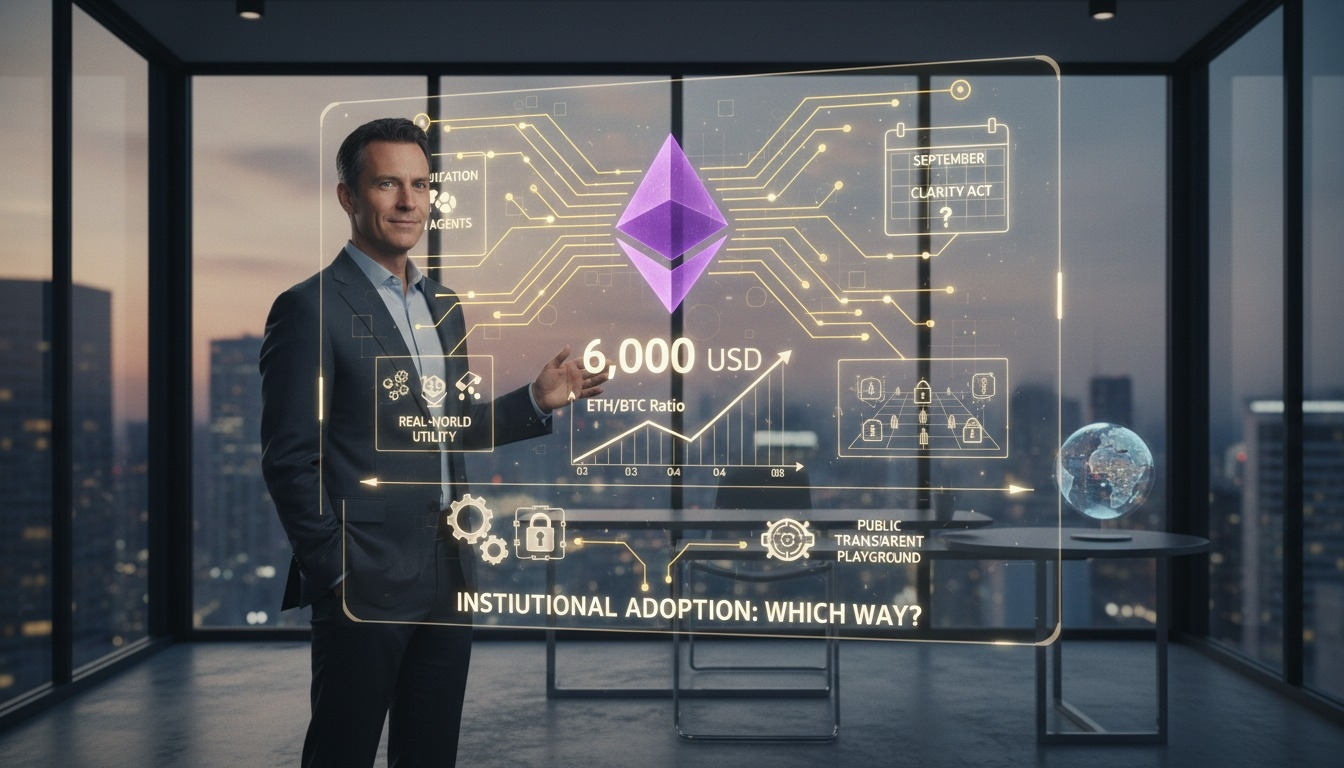
Haussier✨Tom Lee thinks $6,000 ETH by the end of the year isn’t a wild stretch—it’s actually kind of a safe bet in his eyes. He’s basing that on the ETH/BTC ratio nudging up from 0.03 to 0.04, which honestly is still a long way from where it peaked at 0.08 in 2021.
So what’s changed this time? He’s not focused on meme coins or NFT mania. Lee points to real-world utility stuff like tokenization and AI agents doing real work. The current payment rails just weren’t built for machines to move money back and forth, and he thinks Ethereum has a shot at becoming the default highway for all those automated transactions.
He’s also watching for a possible spark: the CLARITY Act coming up in September. Sure, it’s a catalyst, but even if it doesn’t move forward, he figures ETH is still in a solid spot.
Then there’s the bigger question floating around: Are institutions going to embrace permissioned, more private compliance systems, or will they stick with Ethereum’s public, transparent playground? That conversation’s only going to heat up as more agent-driven activity kicks in. So which way’s it going to go?
#NIL @Ethereum #NYSilverFuturesDrop3%
#ETH
So what’s changed this time? He’s not focused on meme coins or NFT mania. Lee points to real-world utility stuff like tokenization and AI agents doing real work. The current payment rails just weren’t built for machines to move money back and forth, and he thinks Ethereum has a shot at becoming the default highway for all those automated transactions.
He’s also watching for a possible spark: the CLARITY Act coming up in September. Sure, it’s a catalyst, but even if it doesn’t move forward, he figures ETH is still in a solid spot.
Then there’s the bigger question floating around: Are institutions going to embrace permissioned, more private compliance systems, or will they stick with Ethereum’s public, transparent playground? That conversation’s only going to heat up as more agent-driven activity kicks in. So which way’s it going to go?
#NIL @Ethereum #NYSilverFuturesDrop3%
#ETH
😍

燕寶Melissa
·
--
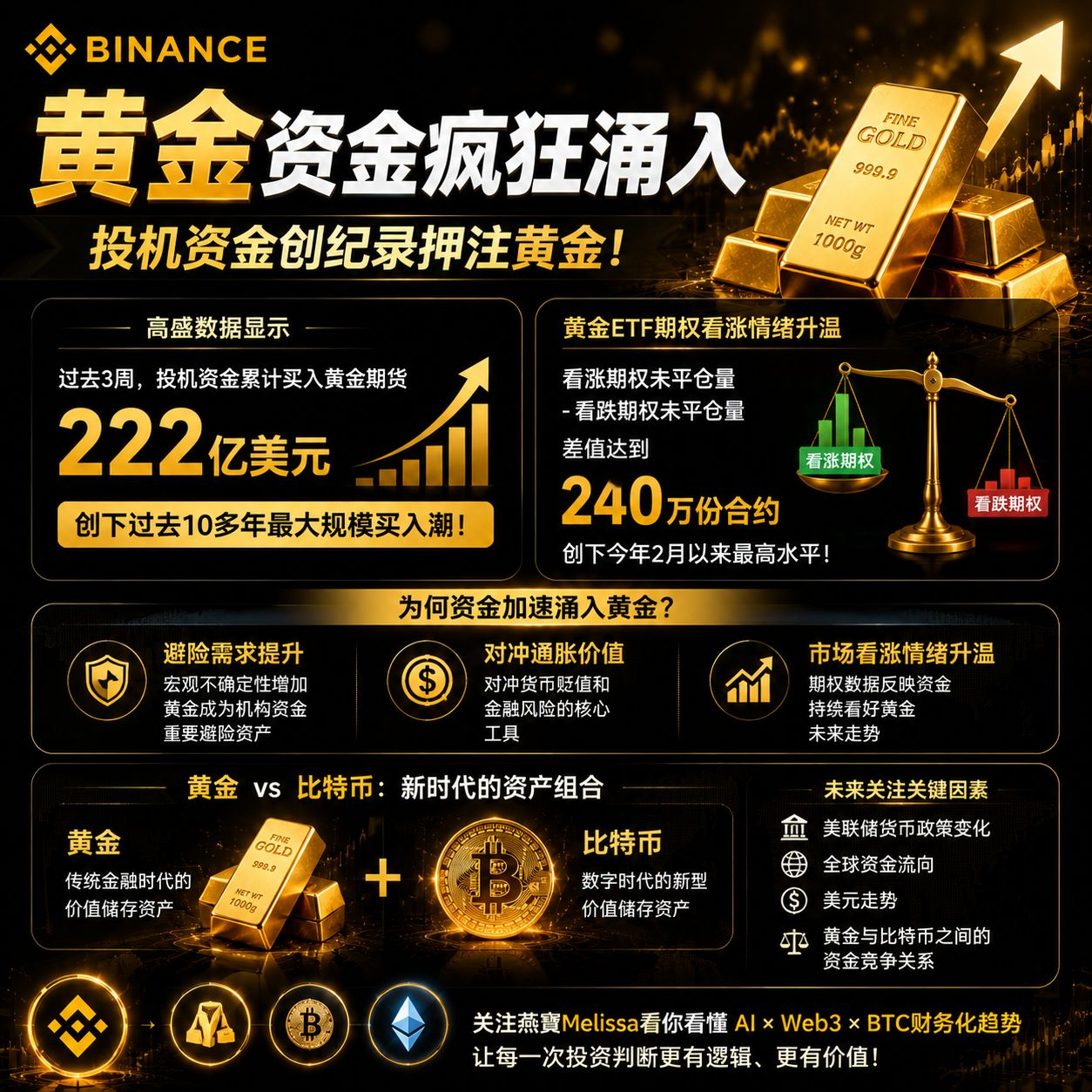
Baissier🥇 黄金正在成为全球资金的新焦点!
当市场关注加密资产、AI和科技股时,另一场资金迁移正在发生:
📊 高盛数据显示:
过去 3周内,投机资金累计买入黄金期货约 222亿美元!
这是:
🔥 过去10多年最大规模的黄金期货买入潮!
为什么资金正在加速涌入黄金?
核心原因可能来自几个方向:
🌍 1. 全球避险需求提升
在宏观不确定性增加的环境下,黄金再次成为机构资金配置的重要资产。
💰 2. 资金正在寻找抗通胀价值
黄金长期被视为对冲货币贬值和金融风险的重要工具。
📈 3. 市场看涨情绪明显升温
数据显示:
黄金ETF看涨期权未平仓量
与看跌期权未平仓量的差值达到约:
🔥 240万份合约
创下今年2月以来最高水平。
这意味着越来越多资金正在押注黄金继续上涨。
过去几十年:
黄金代表传统金融时代的价值储存。
而比特币正在成为数字时代的新型价值资产。
未来的资产配置,可能不再是“黄金 vs 比特币”的选择,而是:
🌐 传统避险资产 + 数字资产的组合时代。
#美联储9月加息概率升至57%
$BTC
$ETH
$BNB
当市场关注加密资产、AI和科技股时,另一场资金迁移正在发生:
📊 高盛数据显示:
过去 3周内,投机资金累计买入黄金期货约 222亿美元!
这是:
🔥 过去10多年最大规模的黄金期货买入潮!
为什么资金正在加速涌入黄金?
核心原因可能来自几个方向:
🌍 1. 全球避险需求提升
在宏观不确定性增加的环境下,黄金再次成为机构资金配置的重要资产。
💰 2. 资金正在寻找抗通胀价值
黄金长期被视为对冲货币贬值和金融风险的重要工具。
📈 3. 市场看涨情绪明显升温
数据显示:
黄金ETF看涨期权未平仓量
与看跌期权未平仓量的差值达到约:
🔥 240万份合约
创下今年2月以来最高水平。
这意味着越来越多资金正在押注黄金继续上涨。
过去几十年:
黄金代表传统金融时代的价值储存。
而比特币正在成为数字时代的新型价值资产。
未来的资产配置,可能不再是“黄金 vs 比特币”的选择,而是:
🌐 传统避险资产 + 数字资产的组合时代。
#美联储9月加息概率升至57%
$BTC
$ETH
$BNB
😍

Shaheen 69
·
--
🎁 5 EARNING TIPS + LIVE BNB REWARD! 🔥
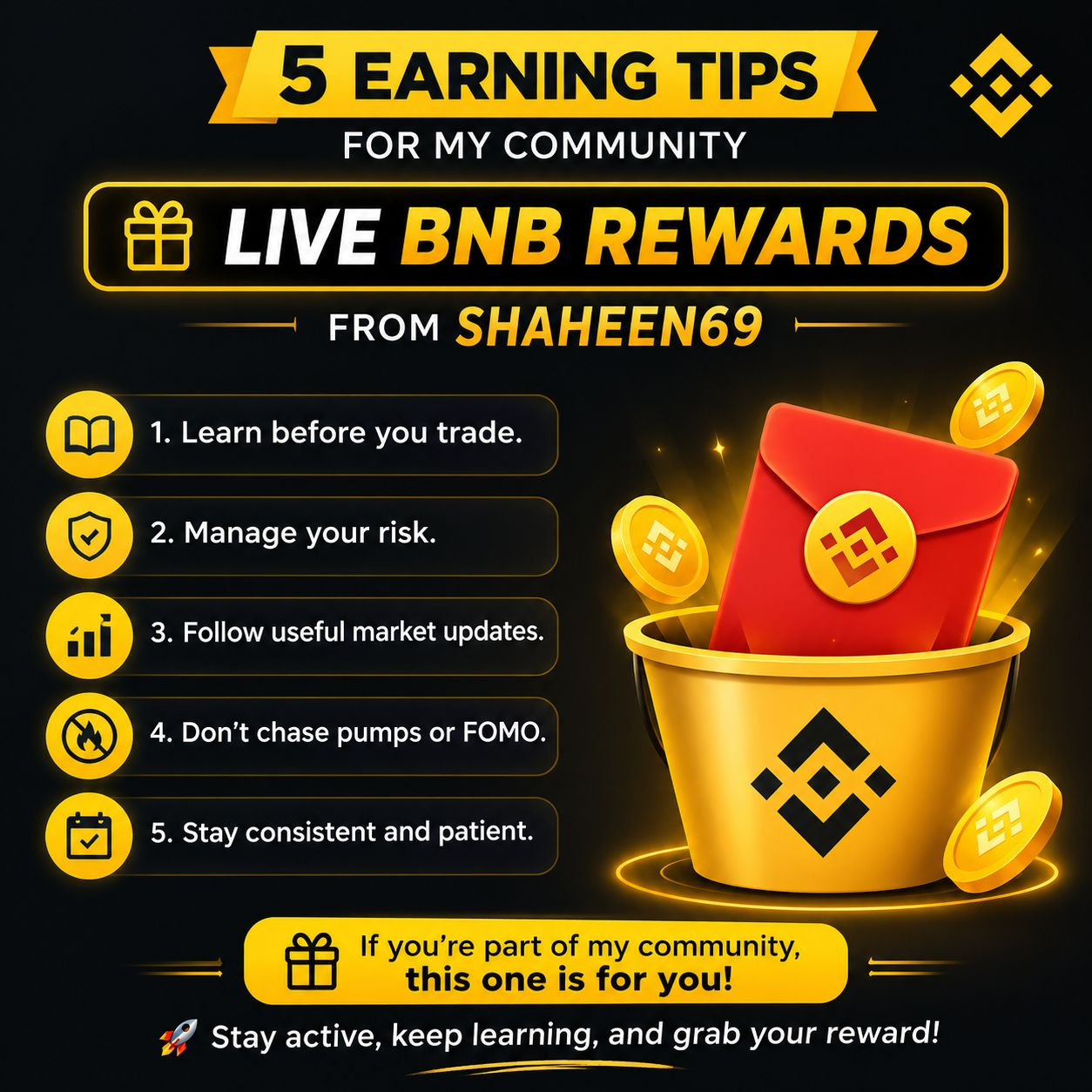
Want to grow your crypto journey? Start with these 5 simple tips:
1️⃣ Learn before you trade.
2️⃣ Manage your risk.
3️⃣ Follow useful market updates.
4️⃣ Don’t chase pumps or FOMO.
5️⃣ Stay consistent and patient.
💰 Shaheen69 is sharing a LIVE BNB Red Packet reward! 🎁
If you’re part of my community, this one is for you. ❤️
Stay active, keep learning, and grab your reward when it drops! 🚀
#Binance #Crypto
$PROM $UNI $OPG
Want to grow your crypto journey? Start with these 5 simple tips:
1️⃣ Learn before you trade.
2️⃣ Manage your risk.
3️⃣ Follow useful market updates.
4️⃣ Don’t chase pumps or FOMO.
5️⃣ Stay consistent and patient.
💰 Shaheen69 is sharing a LIVE BNB Red Packet reward! 🎁
If you’re part of my community, this one is for you. ❤️
Stay active, keep learning, and grab your reward when it drops! 🚀
#Binance #Crypto
$PROM $UNI $OPG
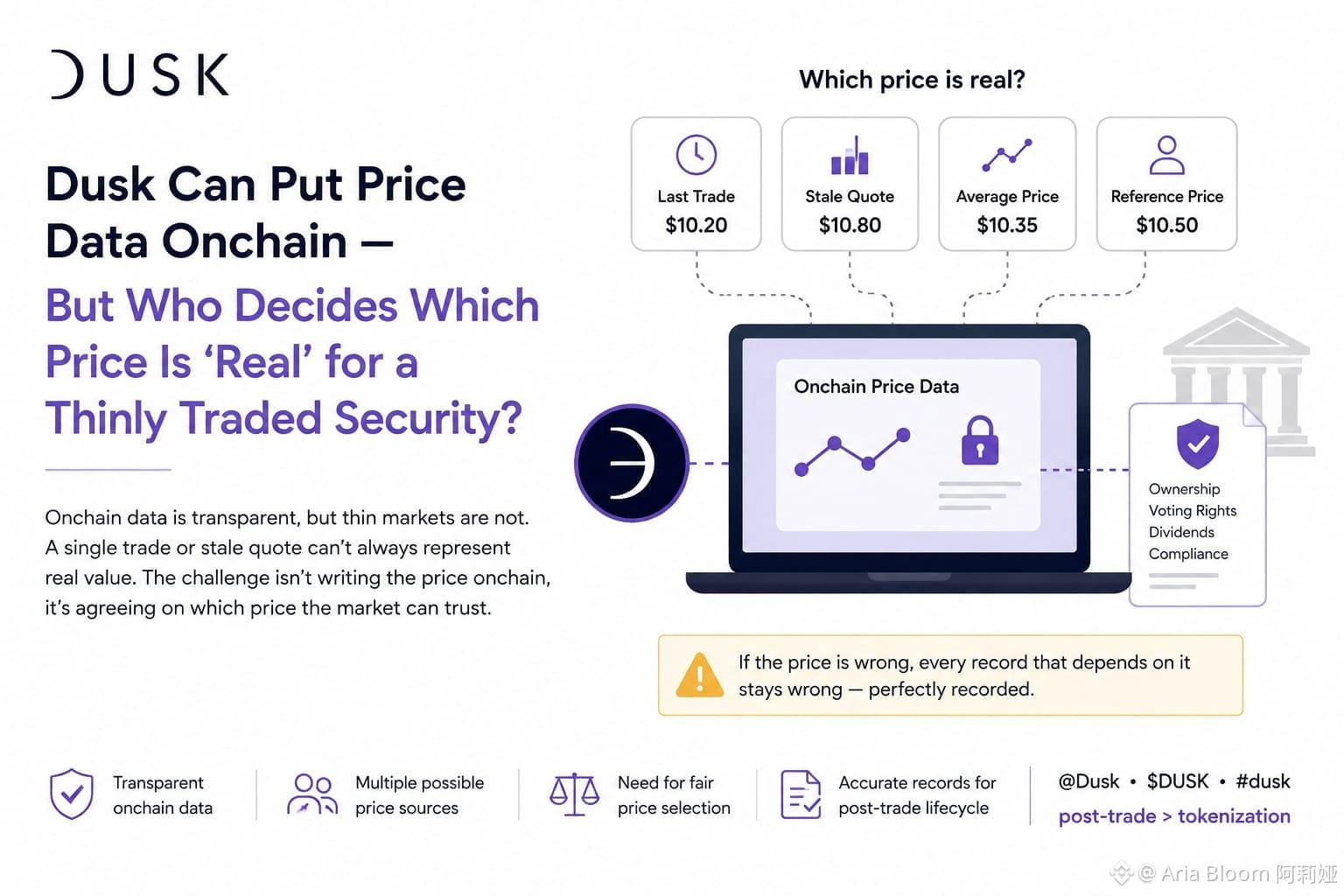
I’ve been thinking about Dusk’s onchain price data a bit differently lately. Putting a price onchain sounds straightforward until I imagine a security that barely trades. If it moves once every few days which price actually represents the market? The last trade? A stale quote? An average? Or some reference value agreed by the system?
That matters because tokenization doesn’t automatically make the underlying asset more measurable. The chain can preserve a number very accurately but it can’t decide by itself whether that number still reflects reality. For a thinly traded security a single small transaction could look meaningful even when it tells us very little about what another buyer would actually pay.
I think this is where Dusk’s post-trade focus gets more interesting to me. The source material makes the point that the hard part is keeping records correct after trading including rights payments and compliance. But there’s another dependency sitting underneath those records: the inputs have to be trustworthy in the first place. If eligibility or valuation eventually depends on price data.
bad inputs can stay perfectly recorded onchain.
I’d want to see how Dusk handles stale or disputed prices in practice. Who gets the final say when the market itself barely speaks?
#dusk $DUSK @Dusk
That matters because tokenization doesn’t automatically make the underlying asset more measurable. The chain can preserve a number very accurately but it can’t decide by itself whether that number still reflects reality. For a thinly traded security a single small transaction could look meaningful even when it tells us very little about what another buyer would actually pay.
I think this is where Dusk’s post-trade focus gets more interesting to me. The source material makes the point that the hard part is keeping records correct after trading including rights payments and compliance. But there’s another dependency sitting underneath those records: the inputs have to be trustworthy in the first place. If eligibility or valuation eventually depends on price data.
bad inputs can stay perfectly recorded onchain.
I’d want to see how Dusk handles stale or disputed prices in practice. Who gets the final say when the market itself barely speaks?
#dusk $DUSK @Dusk
#dusk $DUSK @Dusk
Dusk’s approach feels genuinely refreshing in crypto.
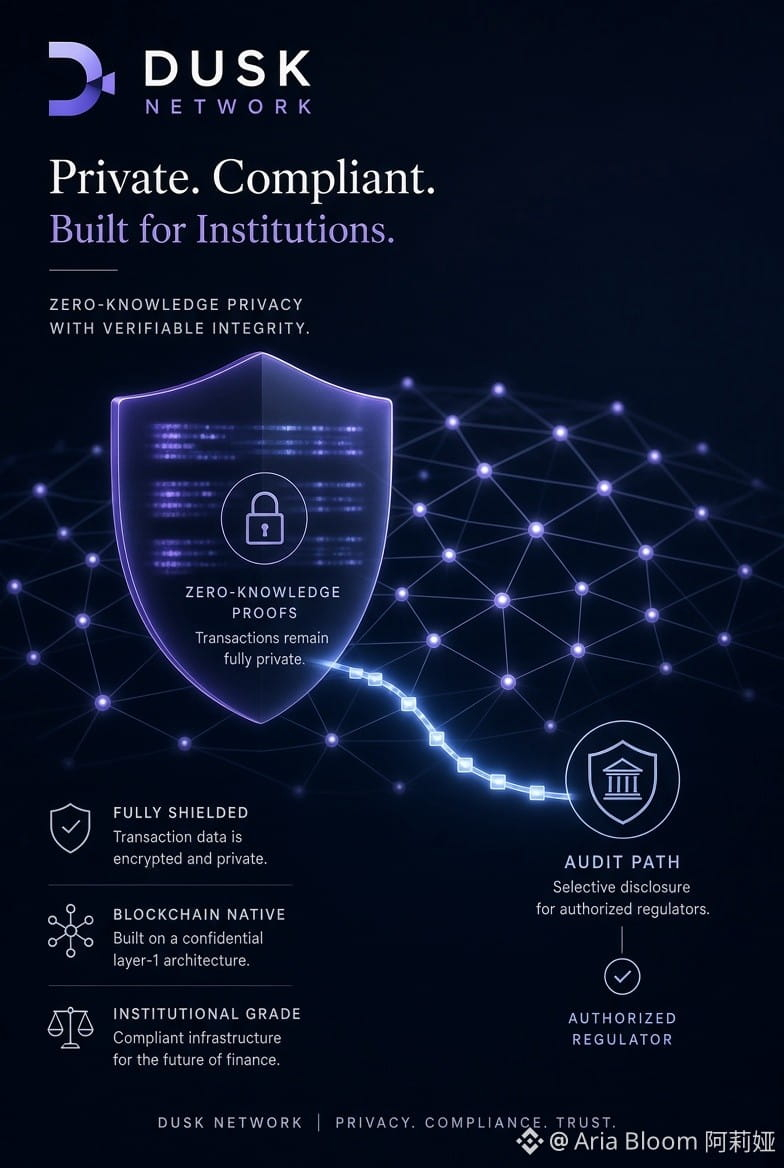
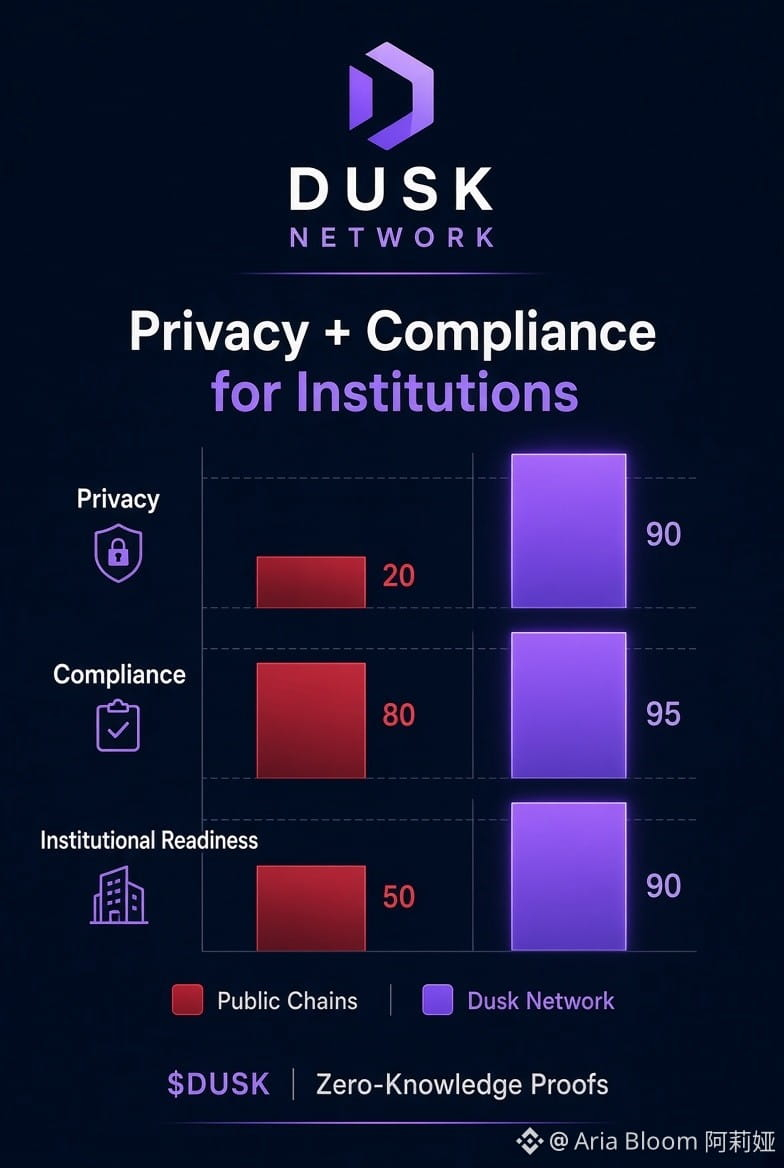
On most chains, every transaction is fully public amounts, parties, everything. Institutions hate this. They need privacy, yet regulators still demand full audit trails. It’s a hard conflict.
Dusk solves it cleanly. Their system separates transaction truth from transaction disclosure Using zero-knowledge proofs, the network can verify that a transaction is valid, rules were followed, and balances check out without revealing the actual details.
Only authorized parties and regulators can see the real data. Everyone else just sees confirmation that it’s legitimate.
That’s why Dusk is becoming a serious contender for real-world assets and regulated finance. Privacy and compliance finally work together.
For institutions, this removes a major barrier. Public chains no longer feel like such a risk.
They’re quietly building something that actually solves a real problem. Worth watching.
Dusk’s approach feels genuinely refreshing in crypto.
On most chains, every transaction is fully public amounts, parties, everything. Institutions hate this. They need privacy, yet regulators still demand full audit trails. It’s a hard conflict.
Dusk solves it cleanly. Their system separates transaction truth from transaction disclosure Using zero-knowledge proofs, the network can verify that a transaction is valid, rules were followed, and balances check out without revealing the actual details.
Only authorized parties and regulators can see the real data. Everyone else just sees confirmation that it’s legitimate.
That’s why Dusk is becoming a serious contender for real-world assets and regulated finance. Privacy and compliance finally work together.
For institutions, this removes a major barrier. Public chains no longer feel like such a risk.
They’re quietly building something that actually solves a real problem. Worth watching.
Night by the sea, soft lights, and a little peace in the air 🌊
Just me, the waves, and this quiet moment.
Ocean breeze, string lights, and a soft smile ✨
Sometimes the best nights are the quiet ones.
Sea, lights, aur thodi si sukoon 🌊
Bas yahi moment feel kar rahi hun.
Night vibes only 🌙🌊
Soft lights, soft smile.
Where the waves meet the lights and everything feels a little softer $DUSK #BTC
Just me, the waves, and this quiet moment.
Ocean breeze, string lights, and a soft smile ✨
Sometimes the best nights are the quiet ones.
Sea, lights, aur thodi si sukoon 🌊
Bas yahi moment feel kar rahi hun.
Night vibes only 🌙🌊
Soft lights, soft smile.
Where the waves meet the lights and everything feels a little softer $DUSK #BTC
Sometimes the best moments are the simplest ones ☕🌹✨
A peaceful moment, a warm cup of coffee, and a little beauty in the day. ❤️
$DUSK $BTC
A peaceful moment, a warm cup of coffee, and a little beauty in the day. ❤️
$DUSK $BTC
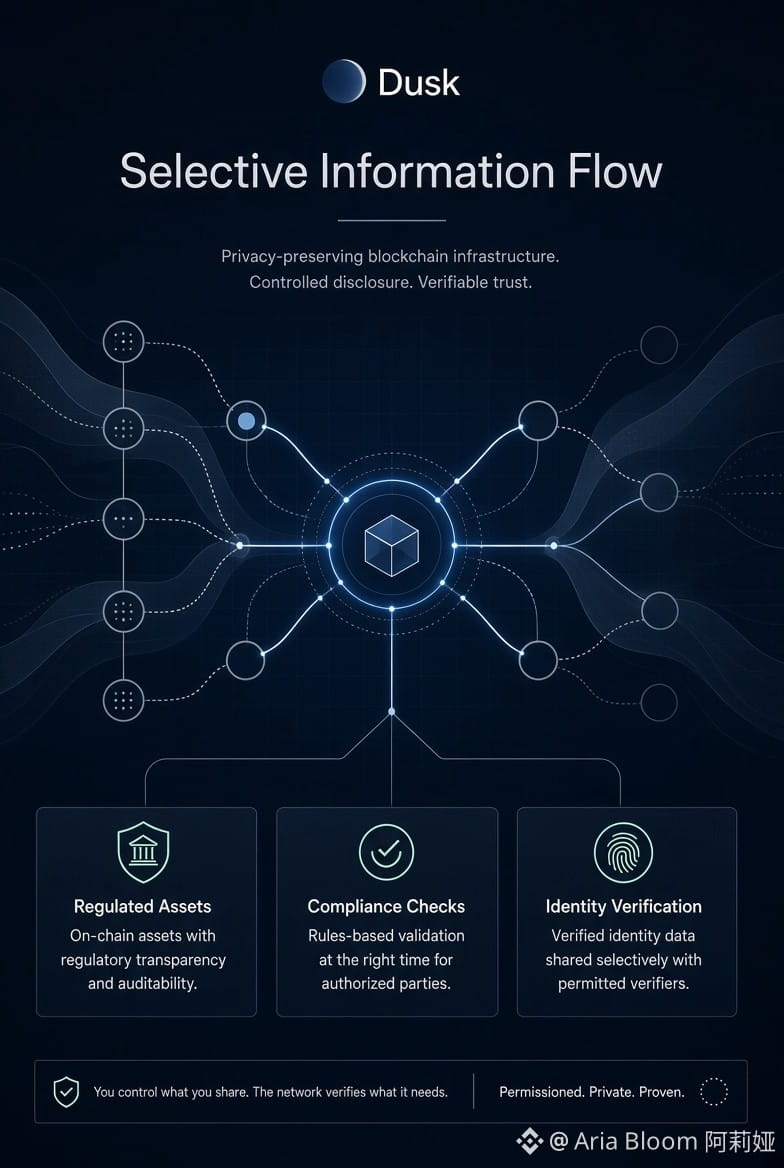
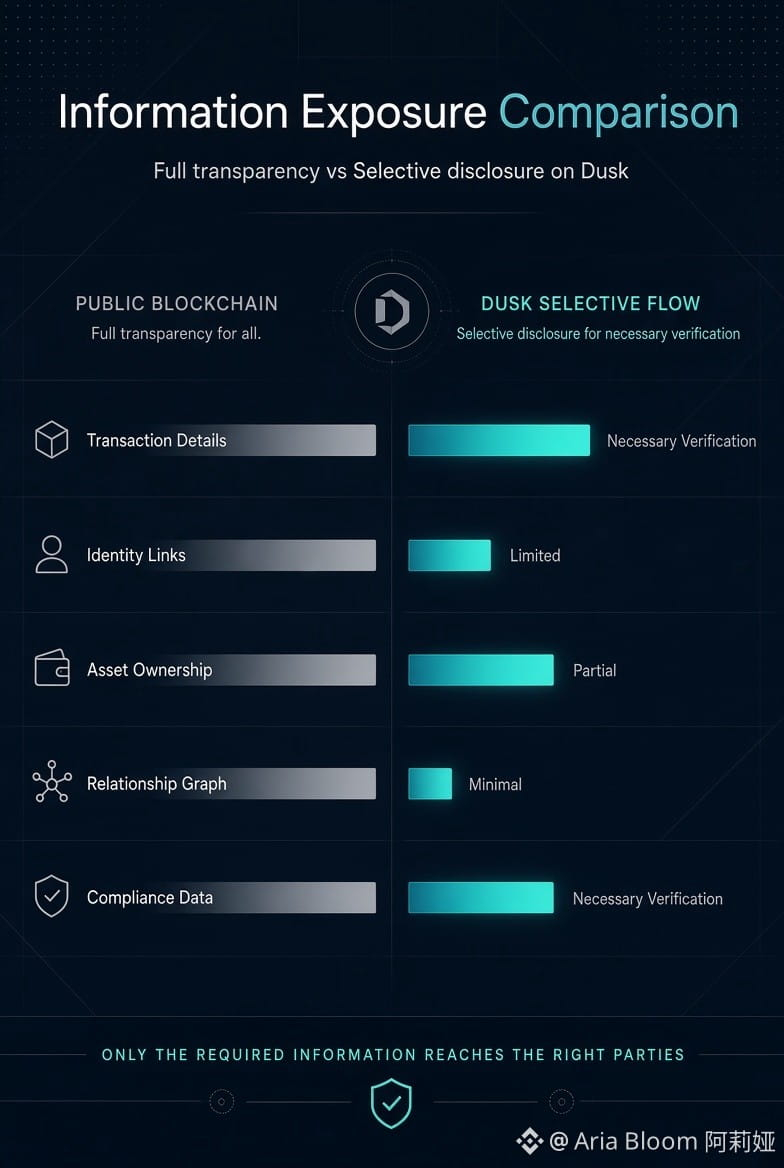
I’ve started thinking about Dusk’s privacy model less as hiding transactions and more as controlling how information moves.
That distinction matters. On a public blockchain the problem isn’t only that data is visible. It’s that small pieces of visible information can be connected over time. A transaction an identity check, an asset transfer or a relationship between addresses can become part of a much larger picture.
What interests me about @Dusk is the idea that privacy can be designed around selective information flow instead. The goal isn’t necessarily to make everything invisible. It’s to let the network verify what actually needs to be verified without automatically exposing everything surrounding it.
That feels particularly important for regulated assets. Institutions may need to prove compliance, ownership, eligibility, or transaction validity, but that doesn’t mean every participant should receive the full underlying dataset.
The difficult part is getting the balance right. Too much transparency creates unnecessary exposure. Too much privacy can make verification and compliance harder.
For me, that’s where $DUSK becomes interesting. The real question isn’t simply whether a transaction is private. It’s who gets to learn what, when they learn it, and why that information is necessary.
That’s a much more useful way to think about blockchain privacy.
#dusk $DUSK @Dusk
That distinction matters. On a public blockchain the problem isn’t only that data is visible. It’s that small pieces of visible information can be connected over time. A transaction an identity check, an asset transfer or a relationship between addresses can become part of a much larger picture.
What interests me about @Dusk is the idea that privacy can be designed around selective information flow instead. The goal isn’t necessarily to make everything invisible. It’s to let the network verify what actually needs to be verified without automatically exposing everything surrounding it.
That feels particularly important for regulated assets. Institutions may need to prove compliance, ownership, eligibility, or transaction validity, but that doesn’t mean every participant should receive the full underlying dataset.
The difficult part is getting the balance right. Too much transparency creates unnecessary exposure. Too much privacy can make verification and compliance harder.
For me, that’s where $DUSK becomes interesting. The real question isn’t simply whether a transaction is private. It’s who gets to learn what, when they learn it, and why that information is necessary.
That’s a much more useful way to think about blockchain privacy.
#dusk $DUSK @Dusk
Connectez-vous pour découvrir plus de contenu