
Dream Spicer 梦想家
11.3k Publications

Dream Spicer 梦想家
Dream big, earn smart | Crypto learner | Airdrop Hunter | Charts on, stress gone | Let’s grow 🚀
504 Suivis
25.0K+ Abonnés
16.3K+ J’aime
Publications
Tous
Citations
Vidéos
Direct
PINNED
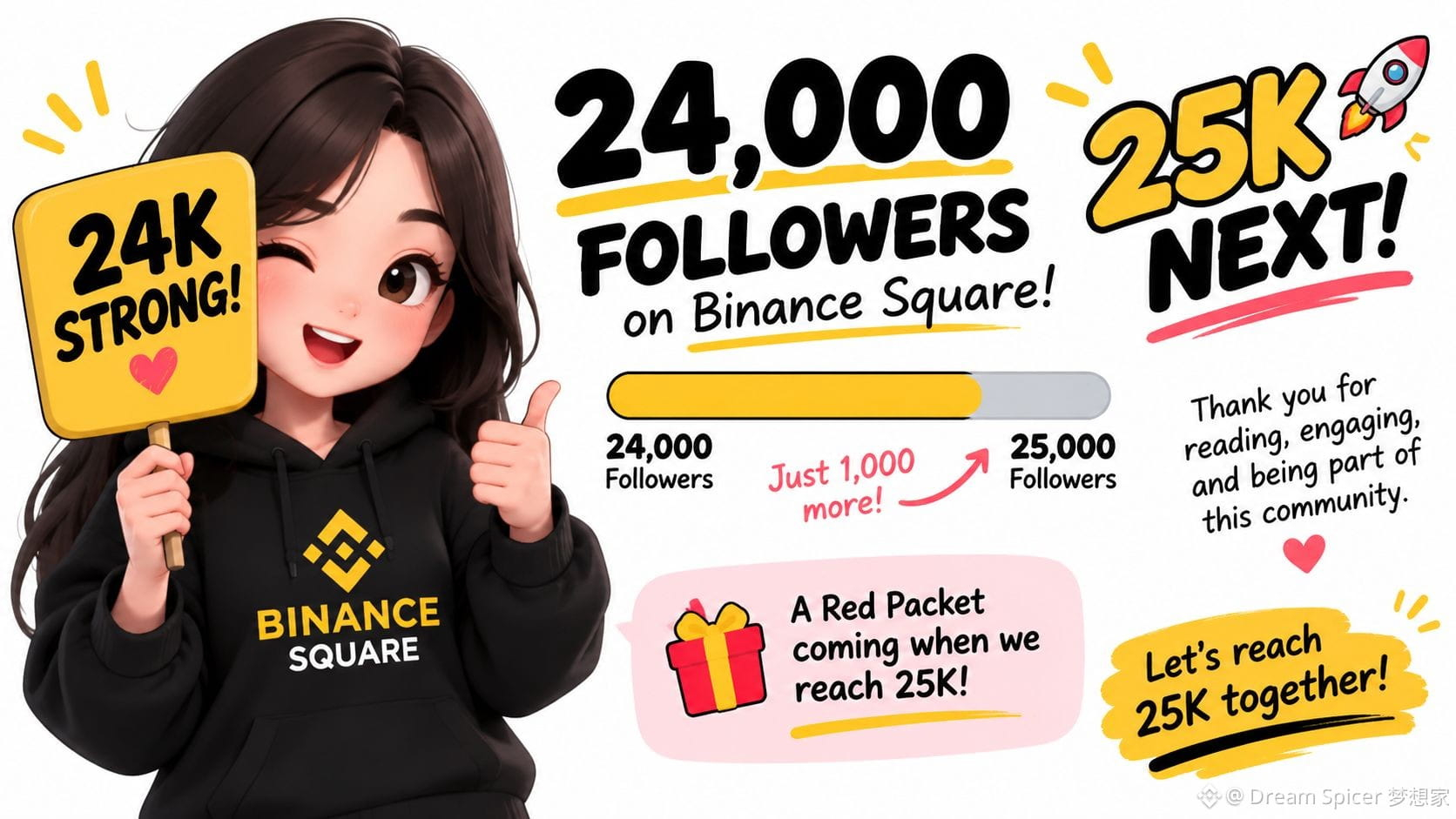
24K Strong. 25K Next.
We’ve officially reached 24,000 followers on Binance Square.
What started as sharing research, insights, and ideas with the community has grown into something much bigger.
Now, we’re just 500 followers away from 25K.
To celebrate everyone who has supported the journey, I’ll be sharing a Red Packet when we reach the milestone. 🎁
Thank you for reading, engaging, and being part of this community.
Let’s reach 25K together.
$BNB
We’ve officially reached 24,000 followers on Binance Square.
What started as sharing research, insights, and ideas with the community has grown into something much bigger.
Now, we’re just 500 followers away from 25K.
To celebrate everyone who has supported the journey, I’ll be sharing a Red Packet when we reach the milestone. 🎁
Thank you for reading, engaging, and being part of this community.
Let’s reach 25K together.
$BNB
Claim@Hawk自由哥


Hawk自由哥
·
--
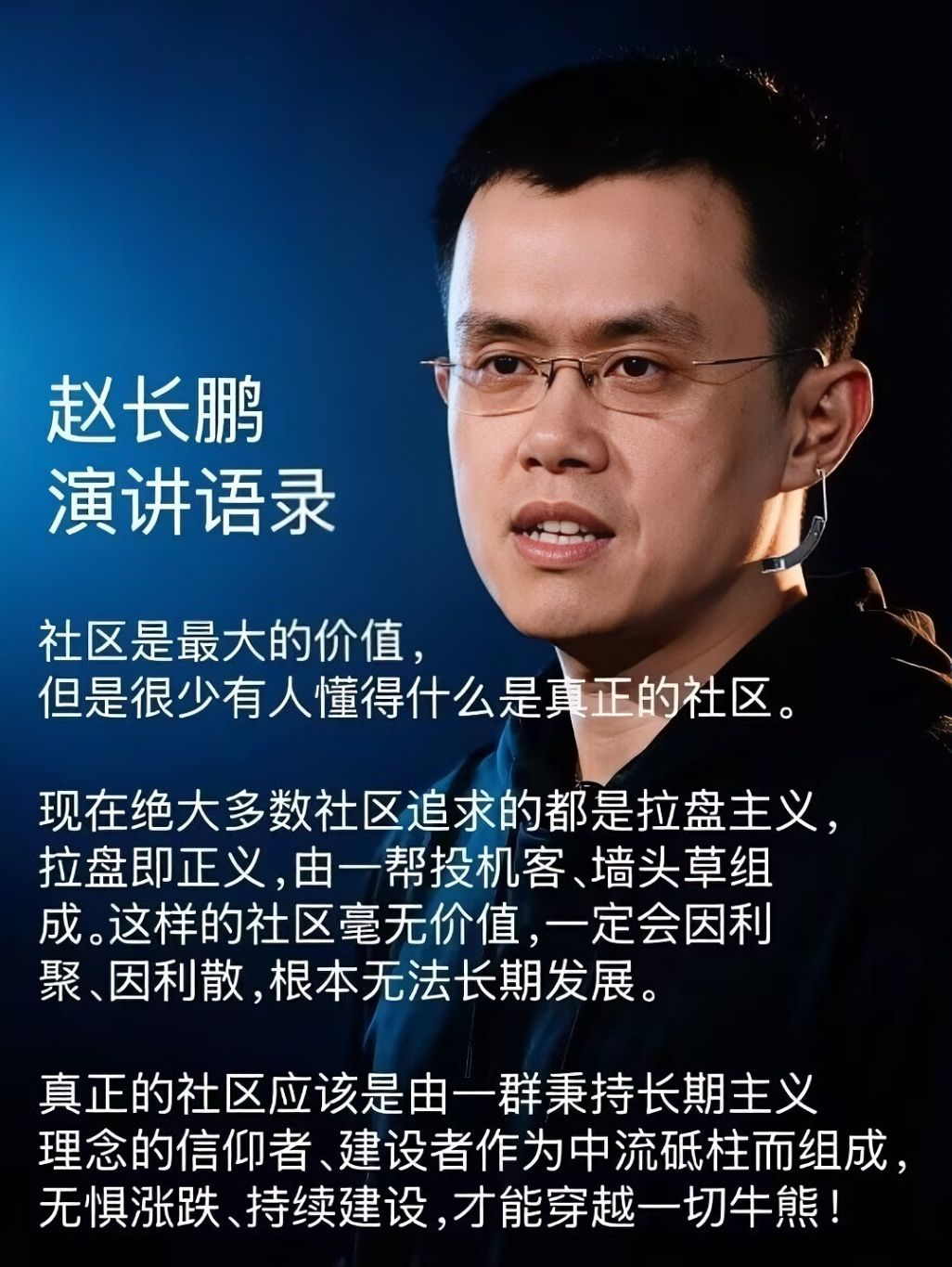
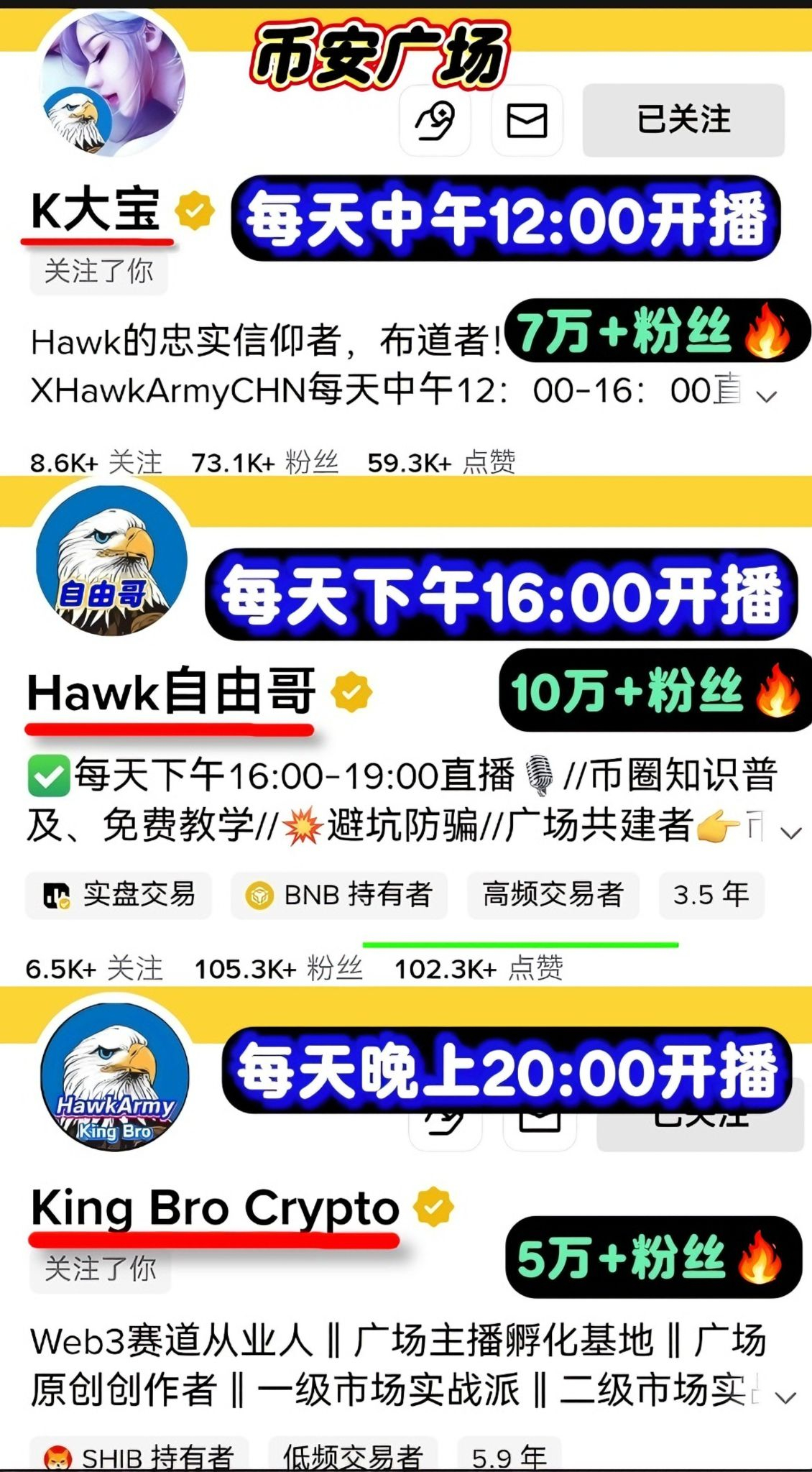
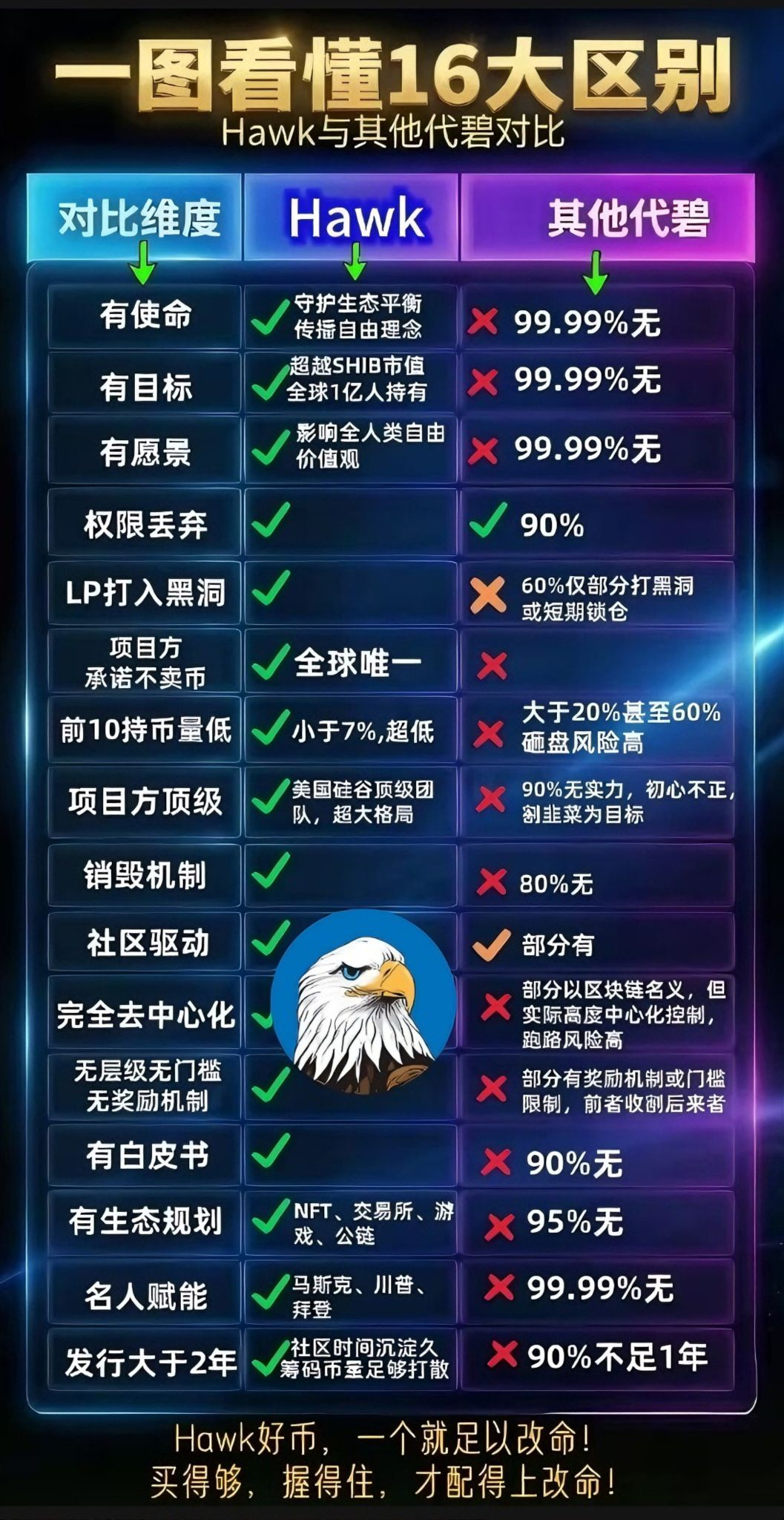
#Hawk 坚信@CZ 发表的价值观点🧧🧧🧧
社区将秉承长期建设的决心✊不但要正心正念打造一个持续长久的品牌🎉更希望塑造一个有利于行业和人类的数字身份标签!我们深信:Hawk以传播自由理念和守护地球生态平衡🍃这两大核心使命定能影响到更多志同道合同频共振的人,追逐全方位自由和共同爱护大自然生态🍃共创地球🌍美好家园本就是我们每个正常人该有的理想🌈
社区将秉承长期建设的决心✊不但要正心正念打造一个持续长久的品牌🎉更希望塑造一个有利于行业和人类的数字身份标签!我们深信:Hawk以传播自由理念和守护地球生态平衡🍃这两大核心使命定能影响到更多志同道合同频共振的人,追逐全方位自由和共同爱护大自然生态🍃共创地球🌍美好家园本就是我们每个正常人该有的理想🌈
Gooo

Frenzy _13
·
--
Hello crypto friends 🤗✨
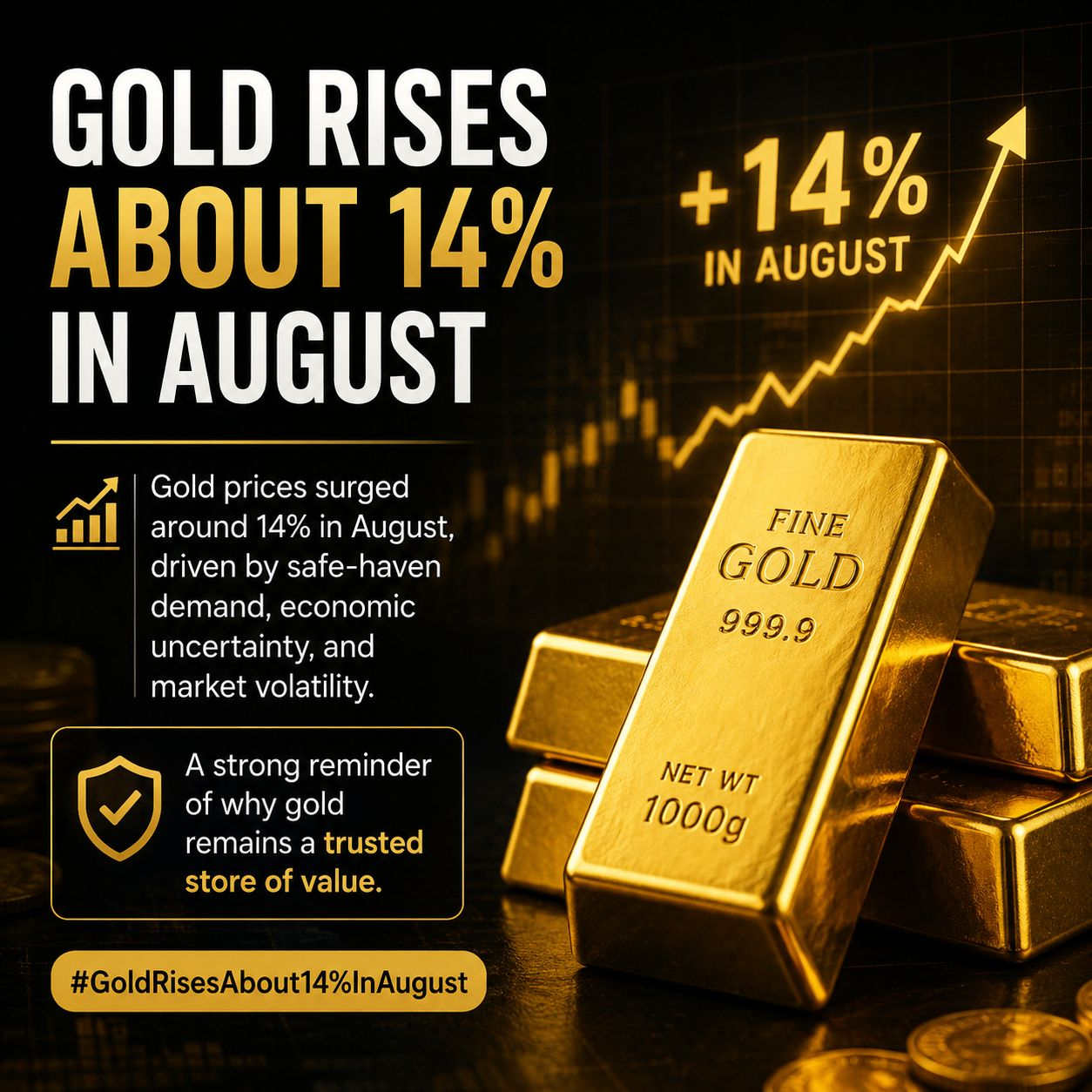
Gold is up around 14% in August, and that’s definitely caught my attention. To me, this move looks bigger than just a short-term price pump. It shows how much interest investors still have in safe-haven assets. Now I’m watching to see if this momentum can carry into September.
$XAU
Gold is up around 14% in August, and that’s definitely caught my attention. To me, this move looks bigger than just a short-term price pump. It shows how much interest investors still have in safe-haven assets. Now I’m watching to see if this momentum can carry into September.
$XAU
claim

远方1688 BNB
·
--
₿ $BTC 價格預測 — 2026 → 2035 🚀
未來十年,BTC 可能走向哪裏?👀
2026 → $125K
2027 → $100K
2028 → $140K
2029 → $200K
2030 → $300K
2031 → $250K
2032 → $350K
2033 → $450K
2034 → $550K
2035 → $700K+ 🔥🔥🔥
📌 如果採用和需求持續增長, 比特幣到 2035 年可能達到 50 萬到 70 萬美金以上。
這段旅程不會一帆風順——預計途中會出現重大回調、熊市以及爆發式反彈。
你會一直持有 BTC 到 2035 年嗎?👁️👁️
#BTC #Bitcoin #Crypto #CryptoPrediction #Bitcoin2035
未來十年,BTC 可能走向哪裏?👀
2026 → $125K
2027 → $100K
2028 → $140K
2029 → $200K
2030 → $300K
2031 → $250K
2032 → $350K
2033 → $450K
2034 → $550K
2035 → $700K+ 🔥🔥🔥
📌 如果採用和需求持續增長, 比特幣到 2035 年可能達到 50 萬到 70 萬美金以上。
這段旅程不會一帆風順——預計途中會出現重大回調、熊市以及爆發式反彈。
你會一直持有 BTC 到 2035 年嗎?👁️👁️
#BTC #Bitcoin #Crypto #CryptoPrediction #Bitcoin2035

24K followers. 😮💨
Okay… apparently some people actually enjoy reading my crypto thoughts. 😂
Now we’re only 1,000 followers away from 25K — and I want to make the final push a little more fun.
🧧 RED PACKET coming at 25K!
If you’ve been following, reading, commenting, or quietly watching me overthink crypto charts… this one is for you. 😂
Help me close the final 1K:
❤️ Like
🔁 Share
👥 Invite a crypto friend
💬 Comment 25K
Let’s make 25K happen together.
Okay… apparently some people actually enjoy reading my crypto thoughts. 😂
Now we’re only 1,000 followers away from 25K — and I want to make the final push a little more fun.
🧧 RED PACKET coming at 25K!
If you’ve been following, reading, commenting, or quietly watching me overthink crypto charts… this one is for you. 😂
Help me close the final 1K:
❤️ Like
🔁 Share
👥 Invite a crypto friend
💬 Comment 25K
Let’s make 25K happen together.

🎙️ Let's start to share Dusk live Trading Session
Fin
01 h 08 min 52 sec
302

BNB
Avoirs
-1.69
0
🎙️ Talk About Dusk, live Trade, live Analysis
Fin
01 h 18 min 19 sec
288
DUSK/USDT
Market/Vente
Exécuté
0
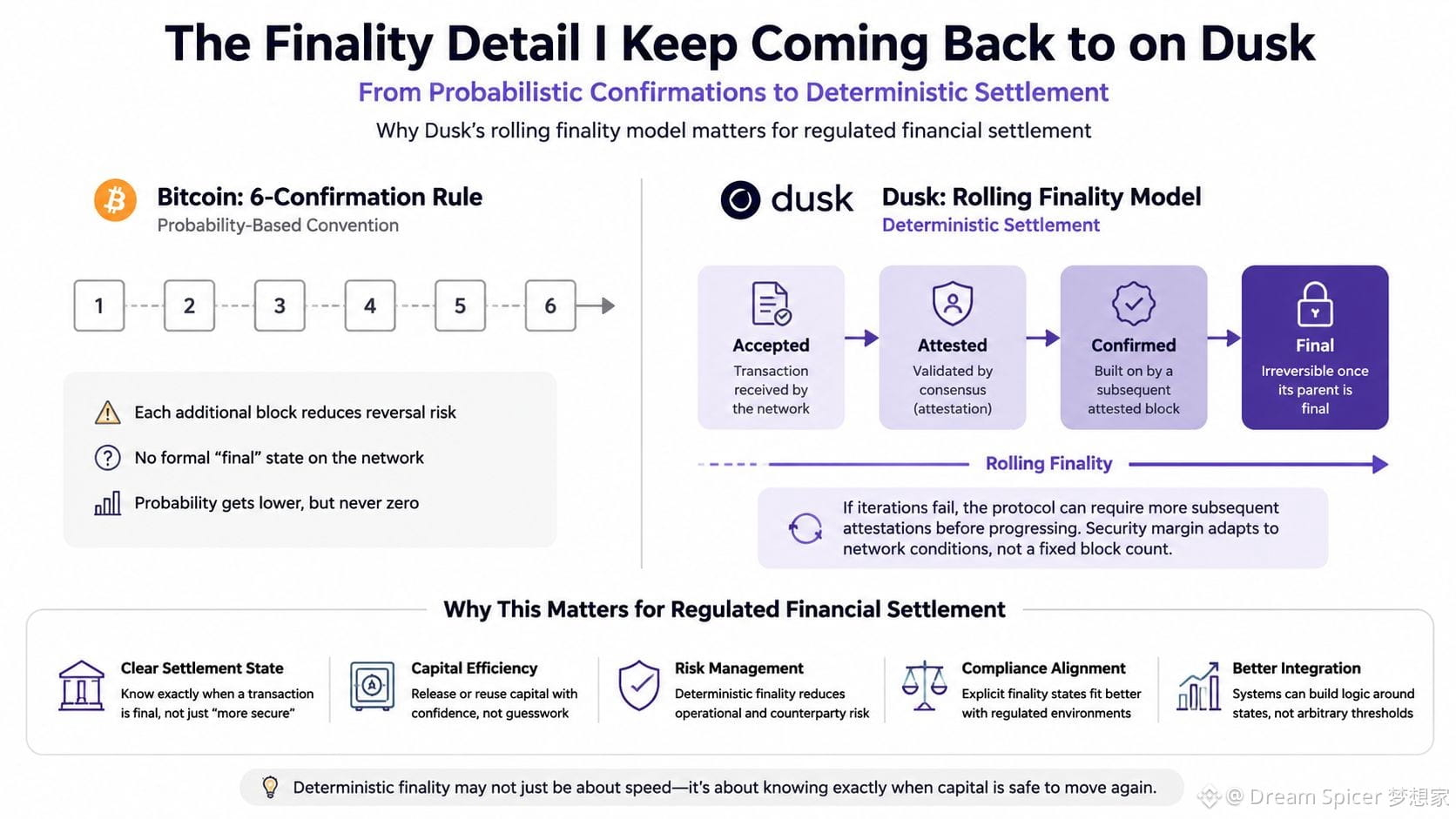
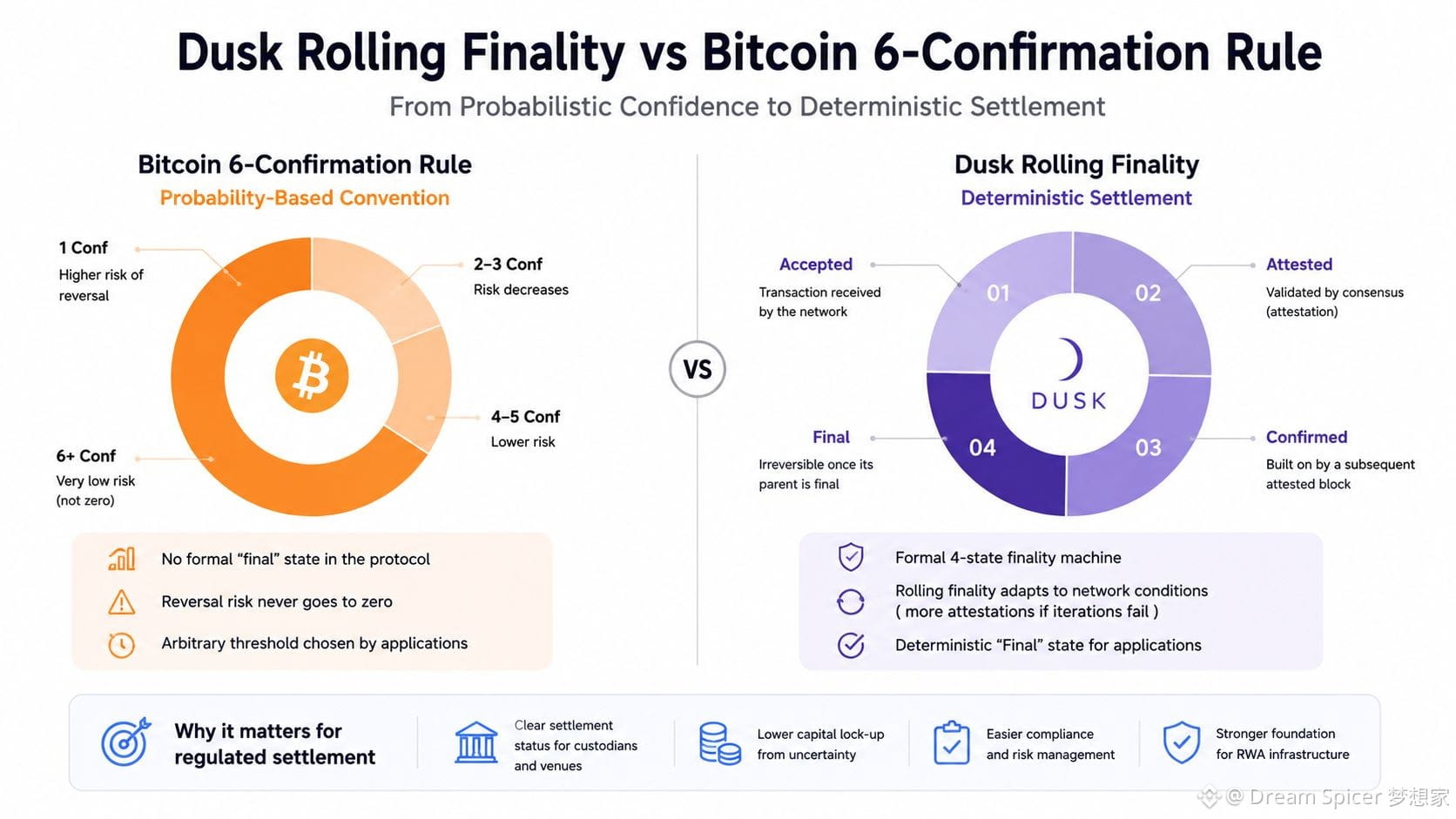
The more I study @Dusk , the more I think its rolling finality is easy to underestimate.
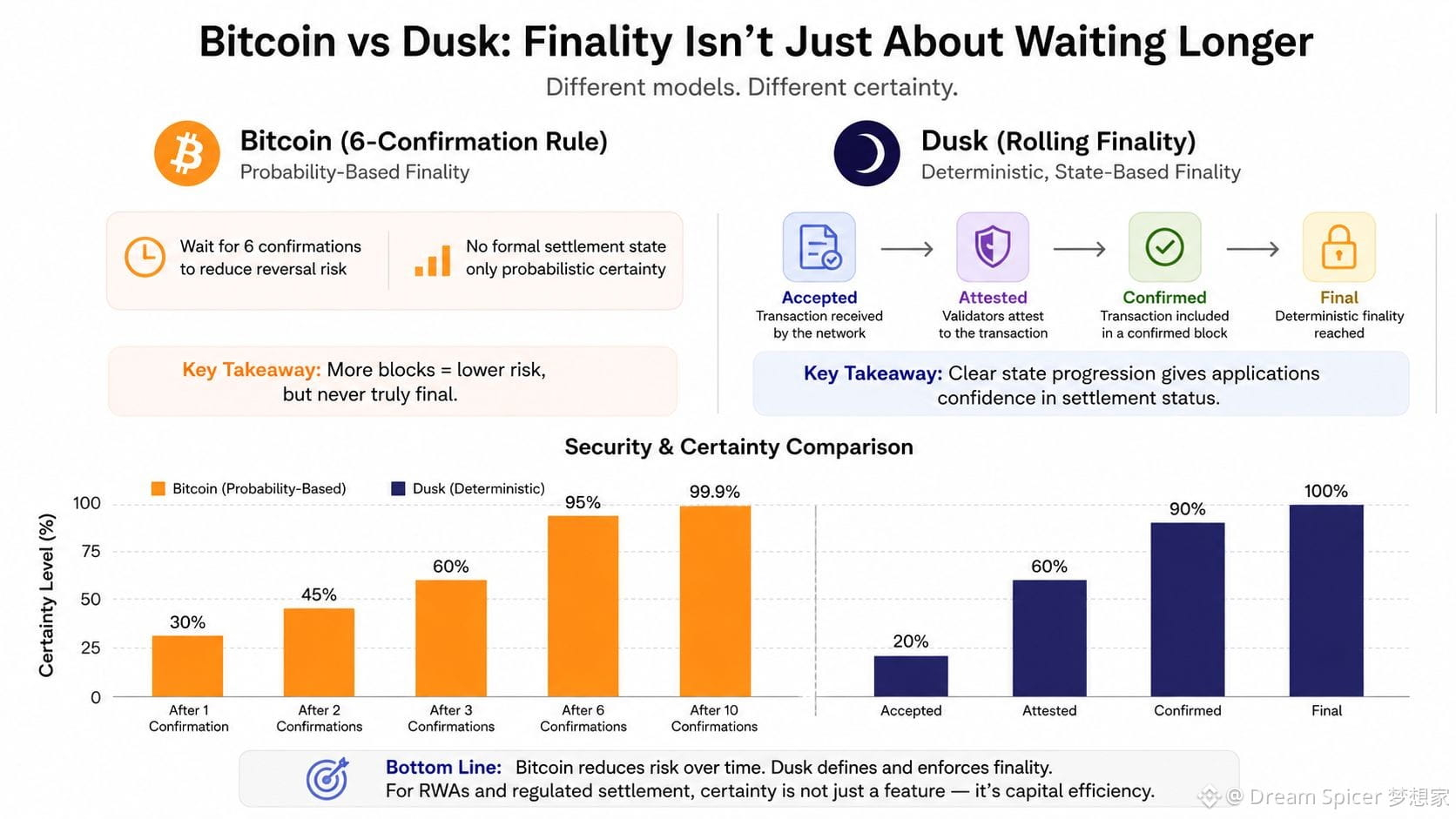
Bitcoin’s familiar 6 confirmation rule is really a probability based convention. Waiting longer reduces the chance of a reversal, but the network doesn’t move through a formal settlement state called final.
$DUSK takes a different approach.
Accepted → Attested → Confirmed → Final
I like this distinction because it gives applications a clearer idea of where a transaction actually stands. A custodian or financial venue can treat final differently from simply seeing a transaction included or confirmed.
The rolling part matters too. If iterations fail, the protocol can require more subsequent attestations before progressing. So the security margin isn’t just an arbitrary block count.
There’s an obvious trade off. Applications now need to understand the state machine instead of reducing everything to wait six blocks.
But that complexity may be worthwhile for regulated settlement, where uncertainty has a real capital cost.
If deterministic finality can make settlement status more predictable. I wonder whether its biggest advantage for RWAs will ultimately be speed or simply knowing exactly when capital is safe to move again.
#dusk #DUSK #Dusk
Bitcoin’s familiar 6 confirmation rule is really a probability based convention. Waiting longer reduces the chance of a reversal, but the network doesn’t move through a formal settlement state called final.
$DUSK takes a different approach.
Accepted → Attested → Confirmed → Final
I like this distinction because it gives applications a clearer idea of where a transaction actually stands. A custodian or financial venue can treat final differently from simply seeing a transaction included or confirmed.
The rolling part matters too. If iterations fail, the protocol can require more subsequent attestations before progressing. So the security margin isn’t just an arbitrary block count.
There’s an obvious trade off. Applications now need to understand the state machine instead of reducing everything to wait six blocks.
But that complexity may be worthwhile for regulated settlement, where uncertainty has a real capital cost.
If deterministic finality can make settlement status more predictable. I wonder whether its biggest advantage for RWAs will ultimately be speed or simply knowing exactly when capital is safe to move again.
#dusk #DUSK #Dusk
🎙️ Dusk Live Trading, Real analysis, Real Trade 📌
Fin
01 h 27 min 02 sec
429
DUSK/USDT
Market/Vente
Exécuté
1
Vérifié
The Dusk consensus problem I didn’t notice at first.
While going deeper into @Dusk , I found the future generator problem more interesting than the usual consensus discussion.
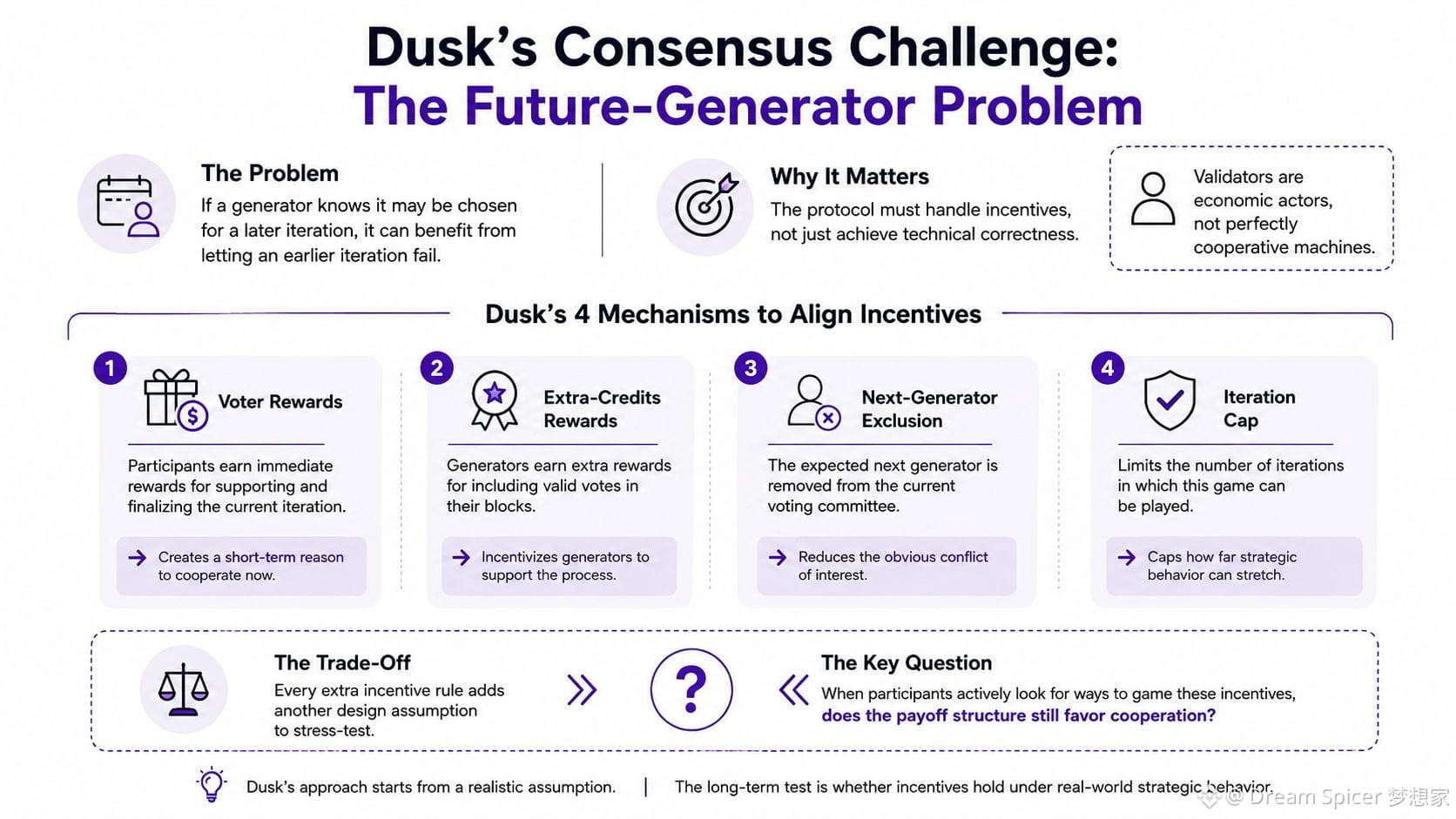
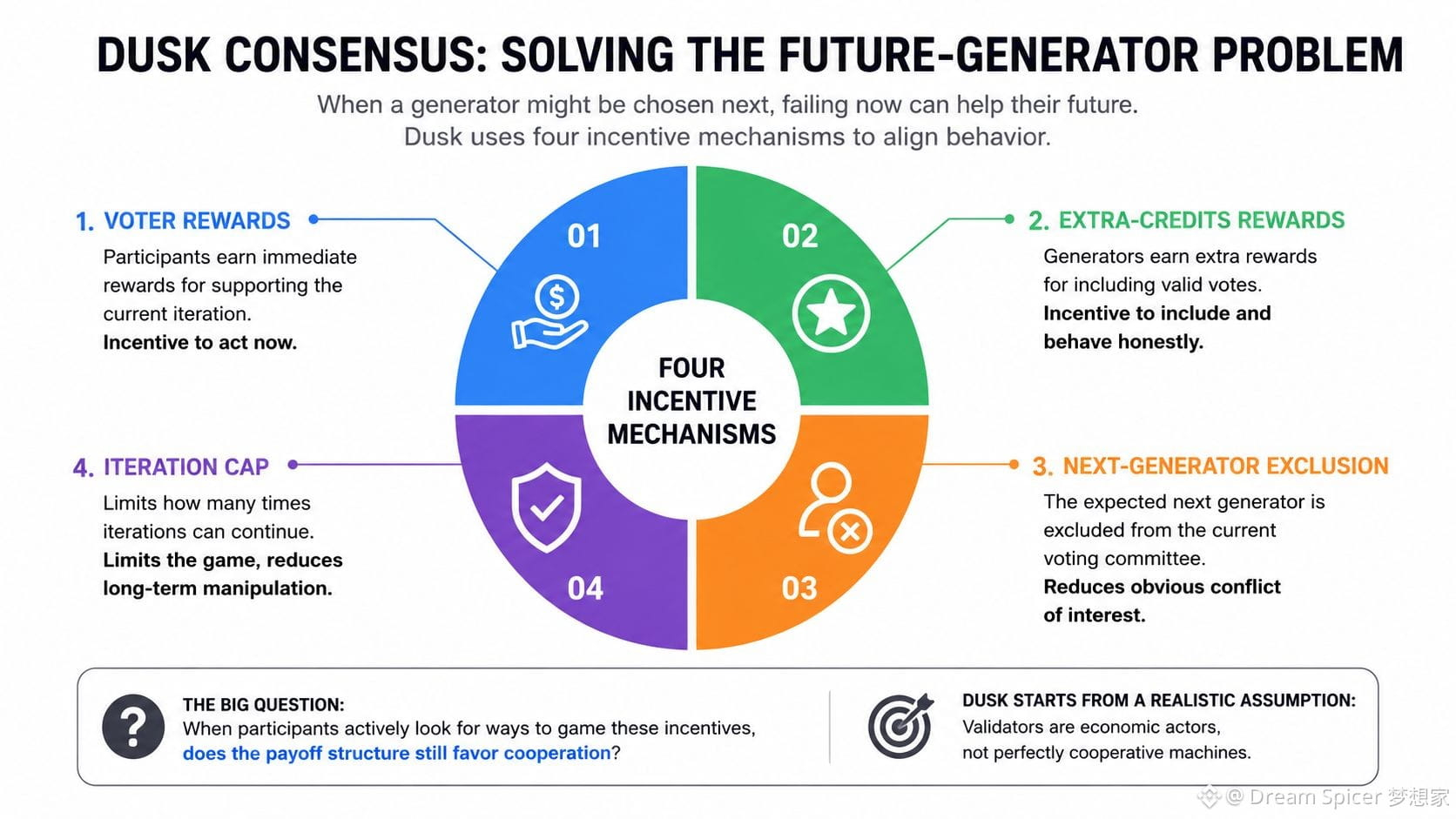
The basic issue is pretty simple. If a generator knows it may be chosen for a later iteration, there can be a reason to let an earlier iteration fail. That failure could improve its own chance to become the next useful generator. So the protocol has to deal with incentives, not just technical correctness.
$DUSK approaches it with four mechanisms.
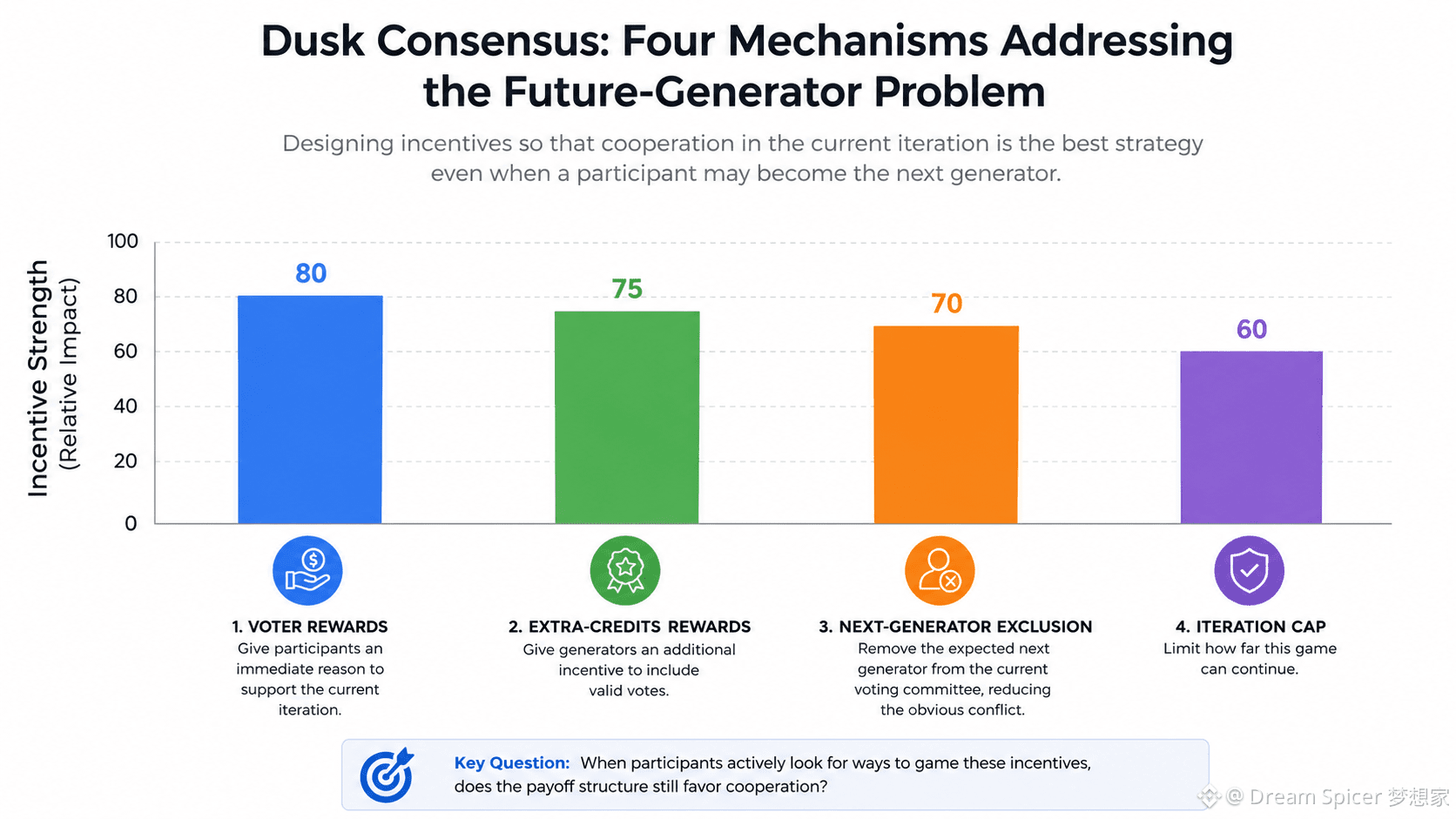
Voter rewards give participants an immediate reason to support the current iteration.
Extra credits rewards give generators another incentive to include valid votes.
Next generator exclusion removes the expected next generator from the current voting committee, reducing the obvious conflict.
And the iteration cap limits how far this game can continue.
I like this because it starts from a realistic assumption validators are economic actors, not perfectly cooperative machines.
The trade off is that every extra incentive rule adds another design assumption to stress test.
So the question I’m left with is.
When participants actively look for ways to game these incentives, does the payoff structure still favor cooperation?
That’s the part of Dusk consensus I’ll be watching.
#dusk #DUSK #Dusk
While going deeper into @Dusk , I found the future generator problem more interesting than the usual consensus discussion.
The basic issue is pretty simple. If a generator knows it may be chosen for a later iteration, there can be a reason to let an earlier iteration fail. That failure could improve its own chance to become the next useful generator. So the protocol has to deal with incentives, not just technical correctness.
$DUSK approaches it with four mechanisms.
Voter rewards give participants an immediate reason to support the current iteration.
Extra credits rewards give generators another incentive to include valid votes.
Next generator exclusion removes the expected next generator from the current voting committee, reducing the obvious conflict.
And the iteration cap limits how far this game can continue.
I like this because it starts from a realistic assumption validators are economic actors, not perfectly cooperative machines.
The trade off is that every extra incentive rule adds another design assumption to stress test.
So the question I’m left with is.
When participants actively look for ways to game these incentives, does the payoff structure still favor cooperation?
That’s the part of Dusk consensus I’ll be watching.
#dusk #DUSK #Dusk
🎙️ Dusk Real Trade, Real Analysis
Fin
01 h 47 min 22 sec
467
DUSK/USDT
Market/Vente
Exécuté
0
Vérifié
I’ve been looking at the NPEX × Dusk partnership less from the tokenized securities angle and more from a workflow perspective.
That changes the picture.
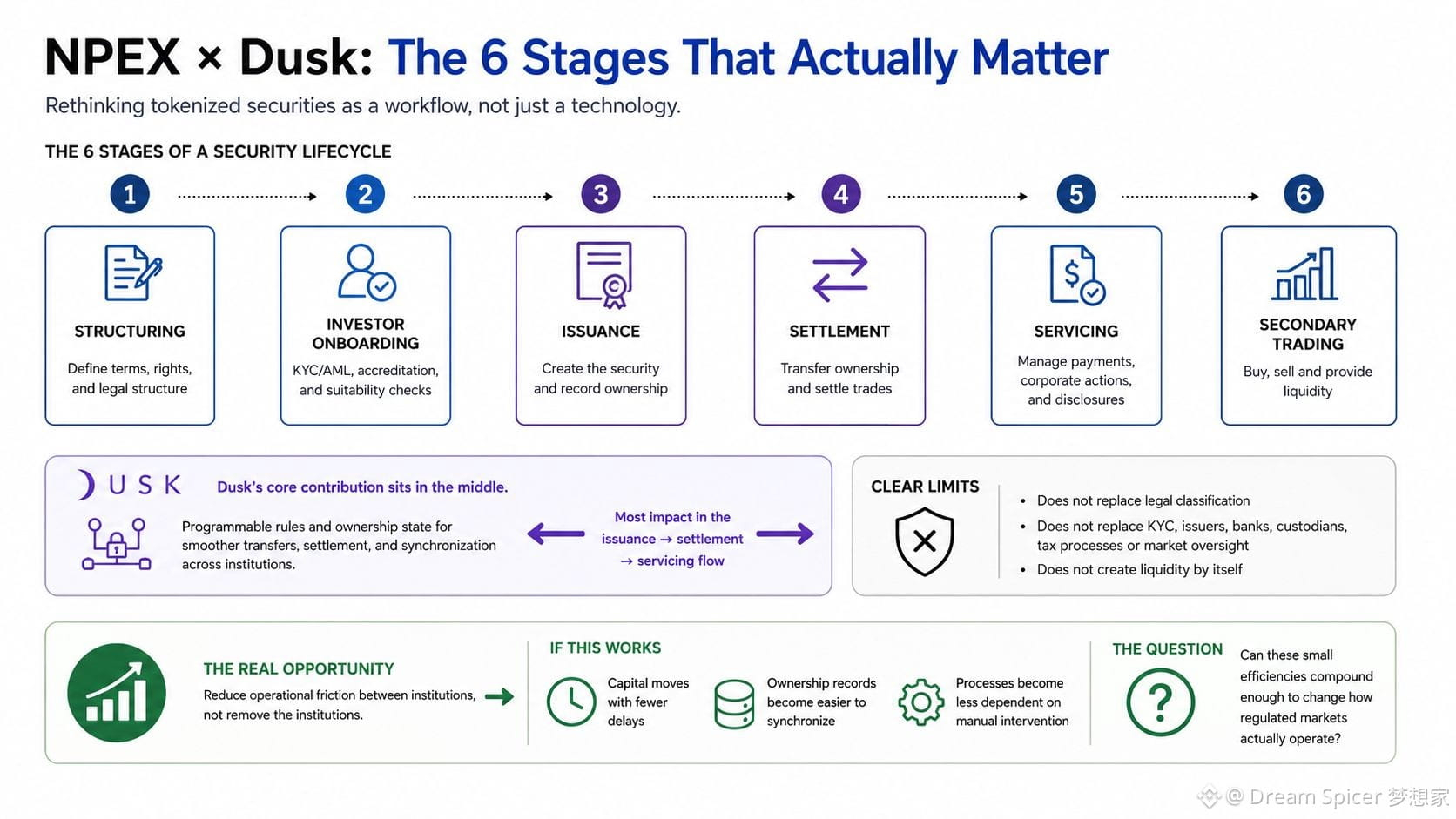
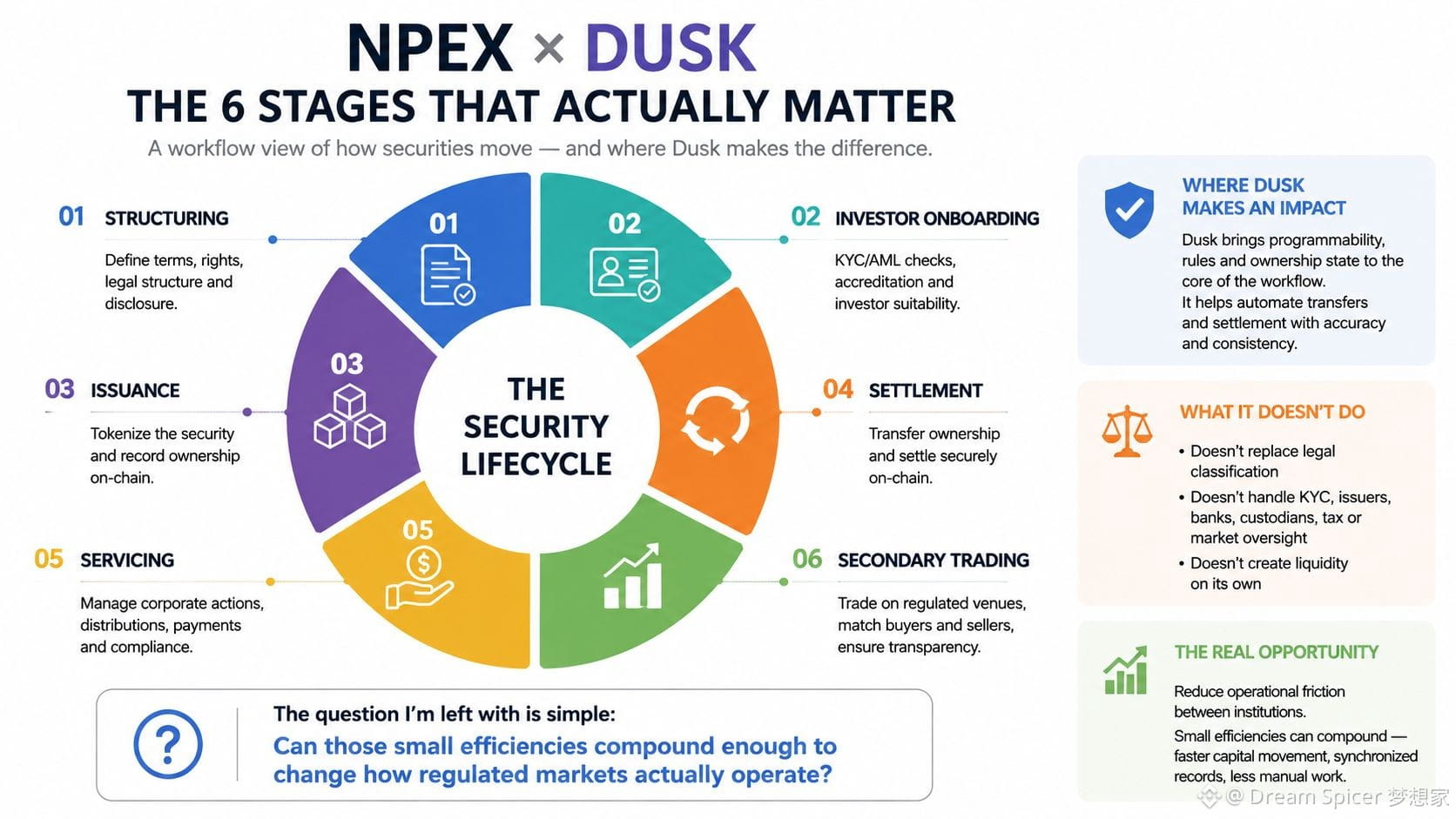
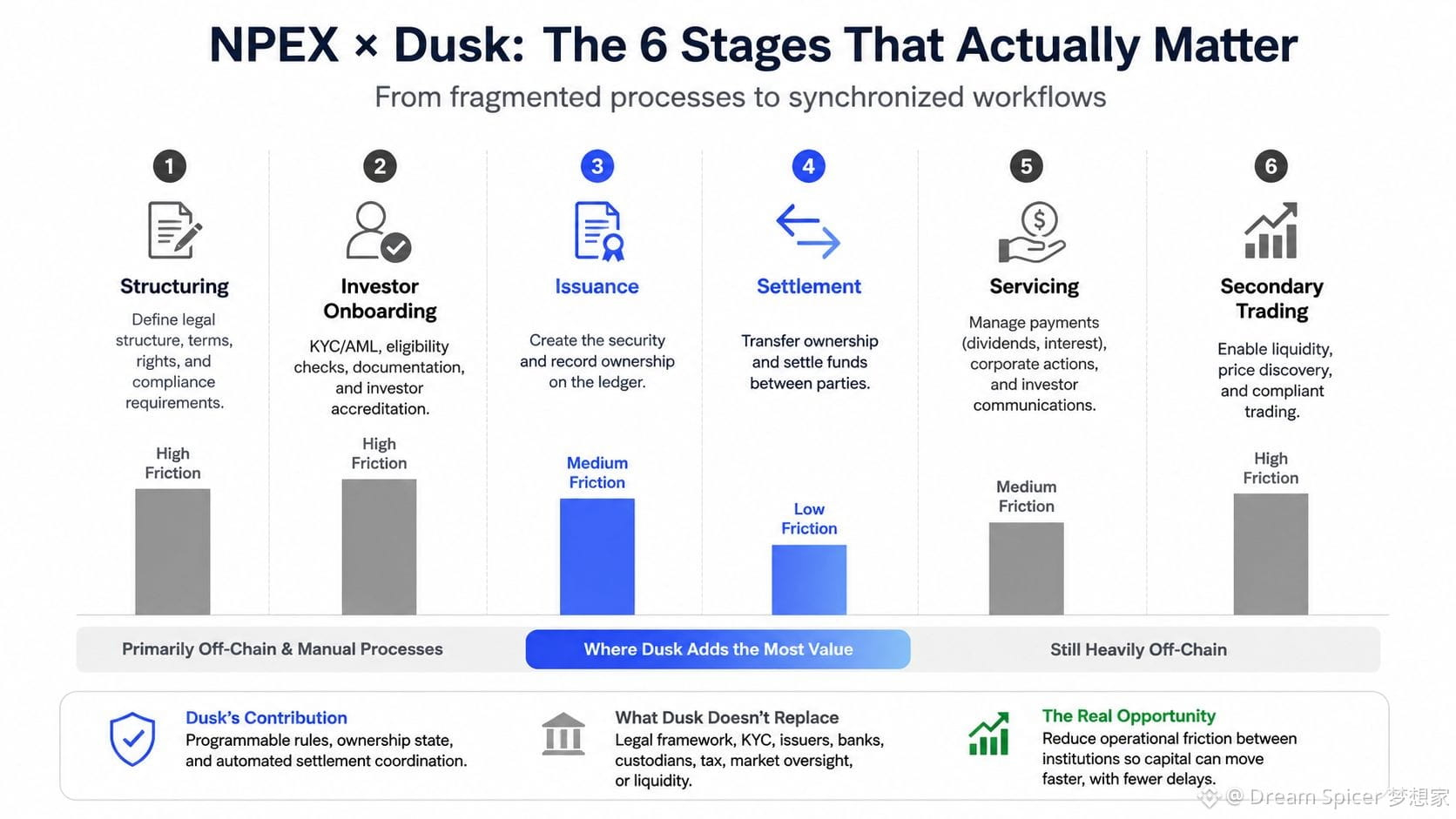
Before $DUSK , a security can move through six separate stages. Structuring, investor onboarding, issuance, settlement, servicing and secondary trading. Each can involve different systems, records and manual reconciliation.
@Dusk ’s contribution is mainly in the middle of that mess. Some rules and ownership state can become programmable, making transfers and settlement easier to coordinate.
But there’s a clear limit.
Dusk doesn’t replace legal classification, KYC, issuers, banks, custodians, tax processes or market oversight. It also can’t create liquidity simply because an asset becomes tokenized.
That distinction is important.
The real opportunity, in my view, is reducing the operational friction between institutions rather than trying to remove the institutions themselves.
If that works, capital could move with fewer delays. Ownership records become easier to synchronize, and certain processes become less dependent on manual intervention.
The question I’m left with is simple.
Can those small efficiencies compound enough to change how regulated markets actually operate?
#dusk #DUSK #Dusk
That changes the picture.
Before $DUSK , a security can move through six separate stages. Structuring, investor onboarding, issuance, settlement, servicing and secondary trading. Each can involve different systems, records and manual reconciliation.
@Dusk ’s contribution is mainly in the middle of that mess. Some rules and ownership state can become programmable, making transfers and settlement easier to coordinate.
But there’s a clear limit.
Dusk doesn’t replace legal classification, KYC, issuers, banks, custodians, tax processes or market oversight. It also can’t create liquidity simply because an asset becomes tokenized.
That distinction is important.
The real opportunity, in my view, is reducing the operational friction between institutions rather than trying to remove the institutions themselves.
If that works, capital could move with fewer delays. Ownership records become easier to synchronize, and certain processes become less dependent on manual intervention.
The question I’m left with is simple.
Can those small efficiencies compound enough to change how regulated markets actually operate?
#dusk #DUSK #Dusk
Notification Received Alhamdulliah I'm on Top 50🙌🏻✨
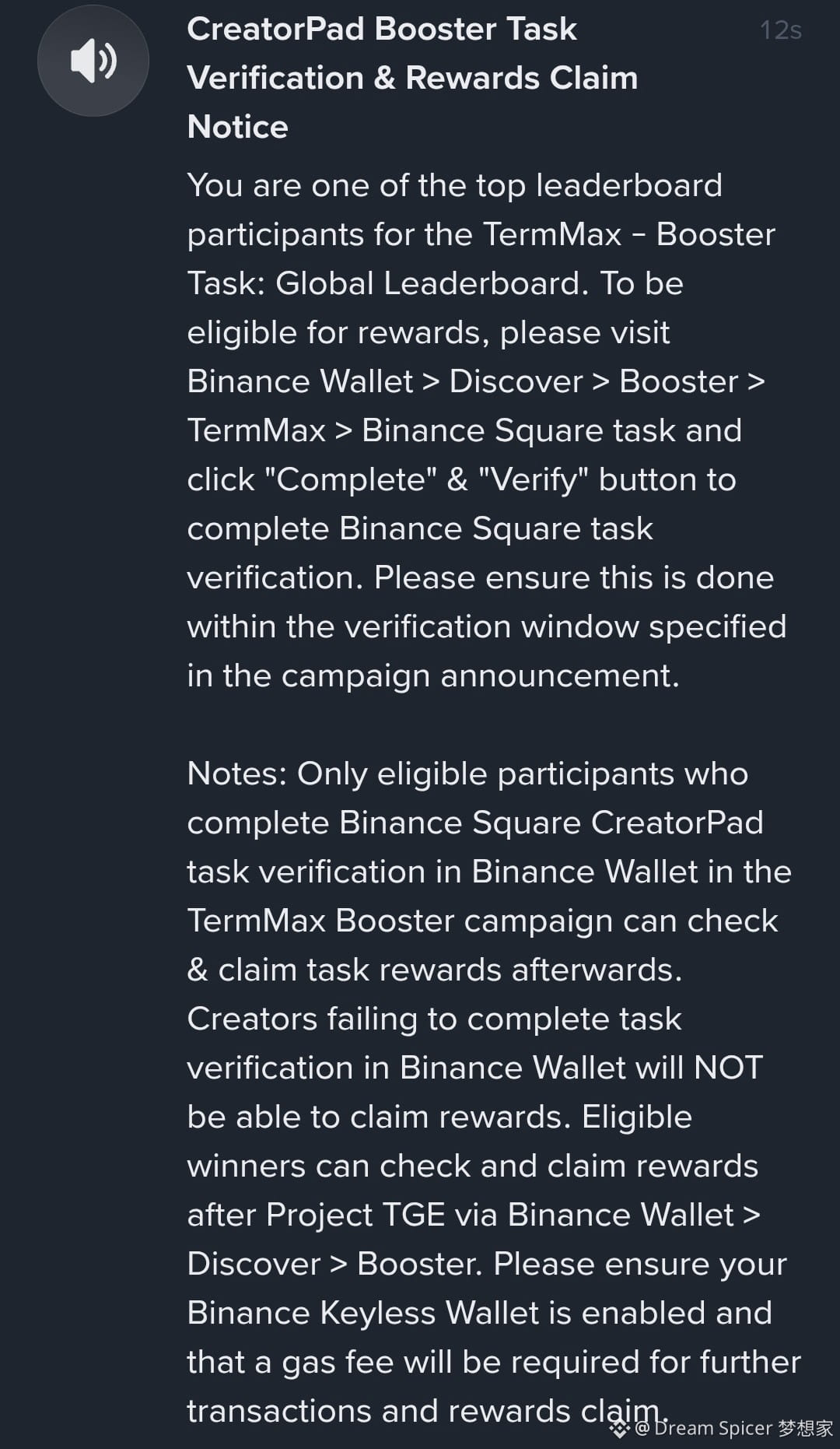
If you are also eligible, verify the task now.
Waiting For TMX listing. . . . . 😅
$SPK $KII $PUBLIC
#SolanaGovernanceVoteToDoubleDeflationRate #GoldNearsThreeMonthHigh #SamsungFalls6.4%OnReturnPlanMiss #CanadaUSTradeTalksCollapse #BitcoinStrongestWeekSinceMarch2023
If you are also eligible, verify the task now.
Waiting For TMX listing. . . . . 😅
$SPK $KII $PUBLIC
#SolanaGovernanceVoteToDoubleDeflationRate #GoldNearsThreeMonthHigh #SamsungFalls6.4%OnReturnPlanMiss #CanadaUSTradeTalksCollapse #BitcoinStrongestWeekSinceMarch2023


Vérifié
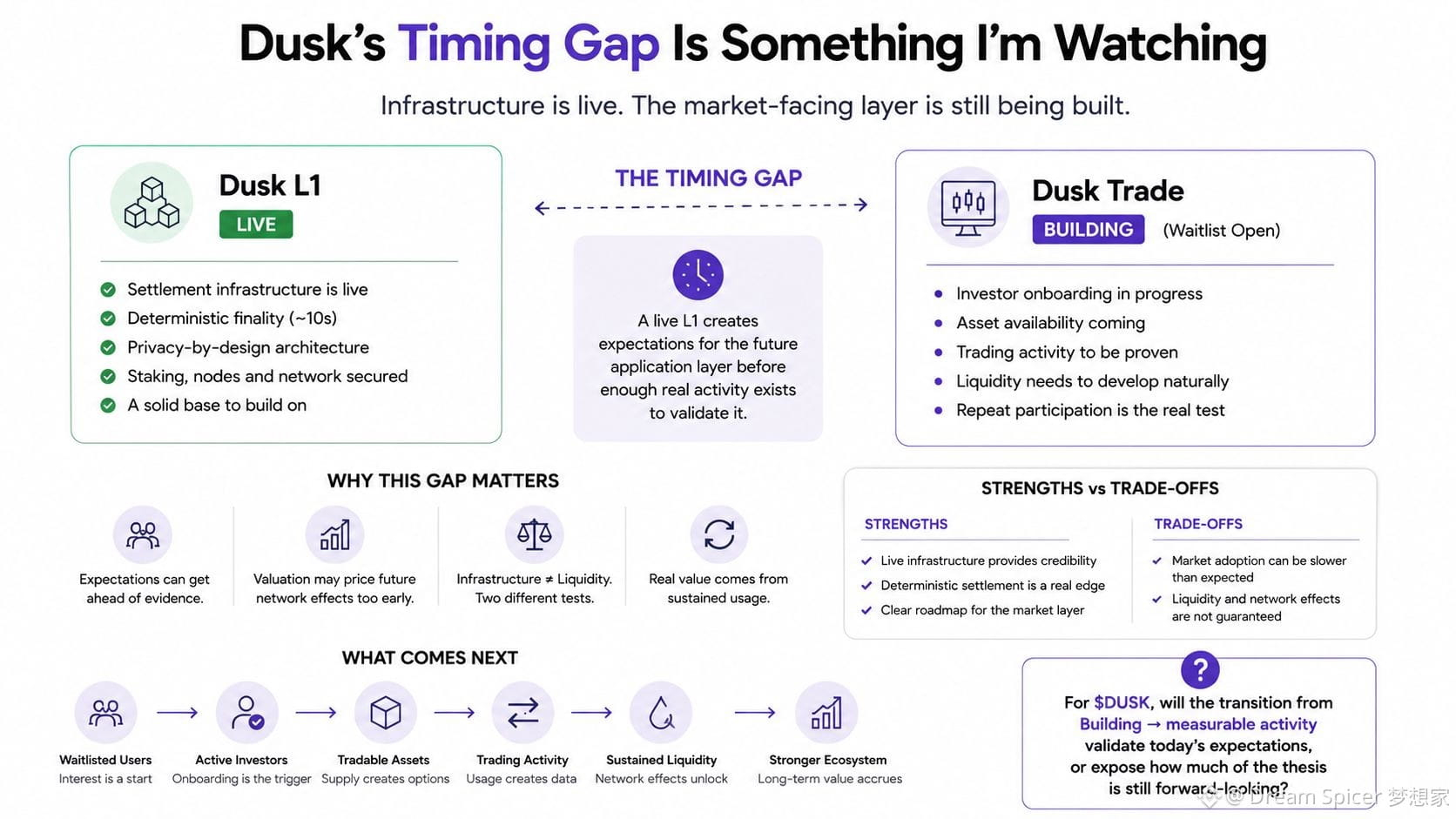
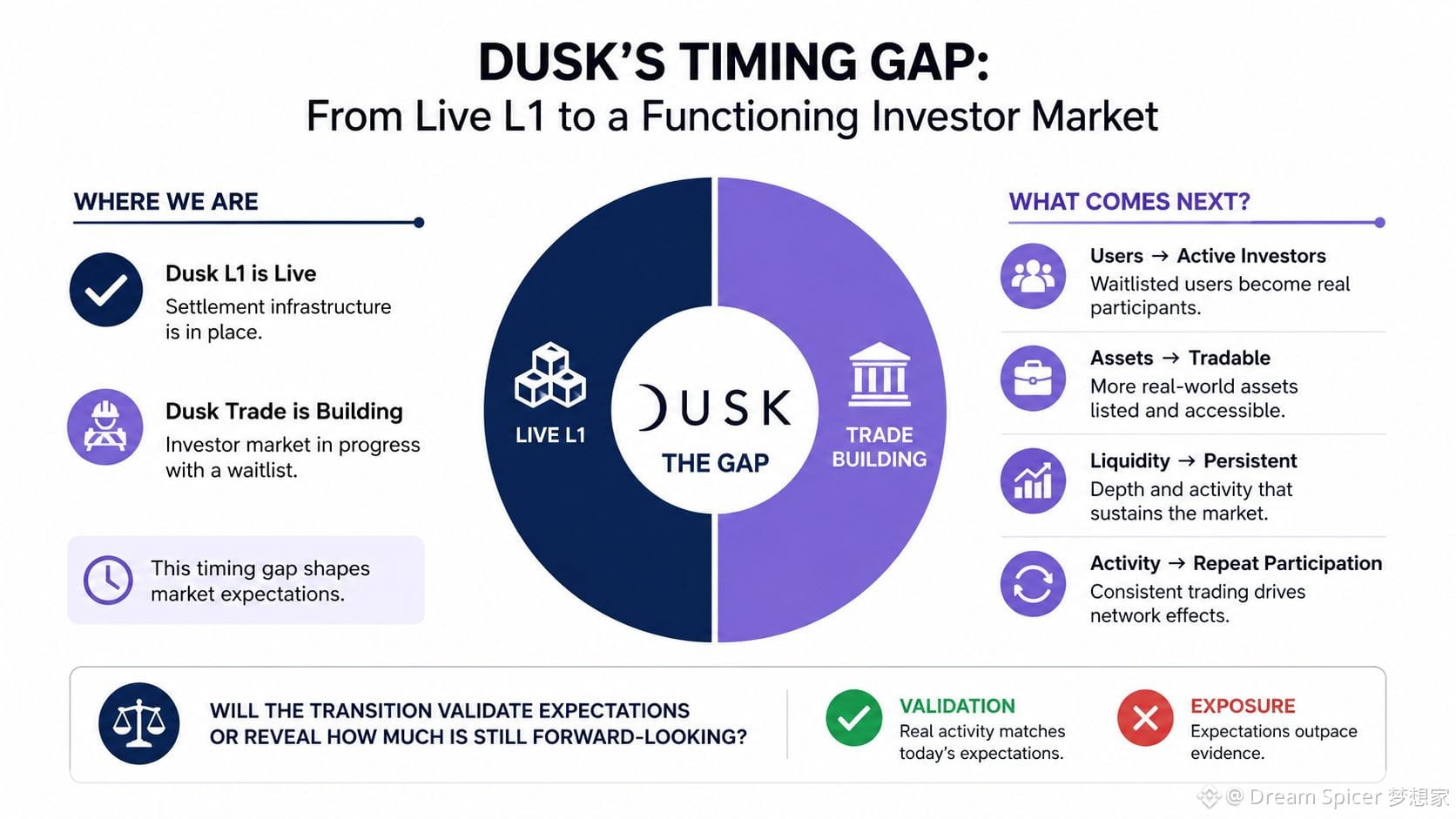
The more I look at $DUSK , the more I think the interesting part isn’t simply that Dusk L1 is live while Dusk Trade is still in the Building phase with a waitlist.
It’s what that gap can do to expectations.
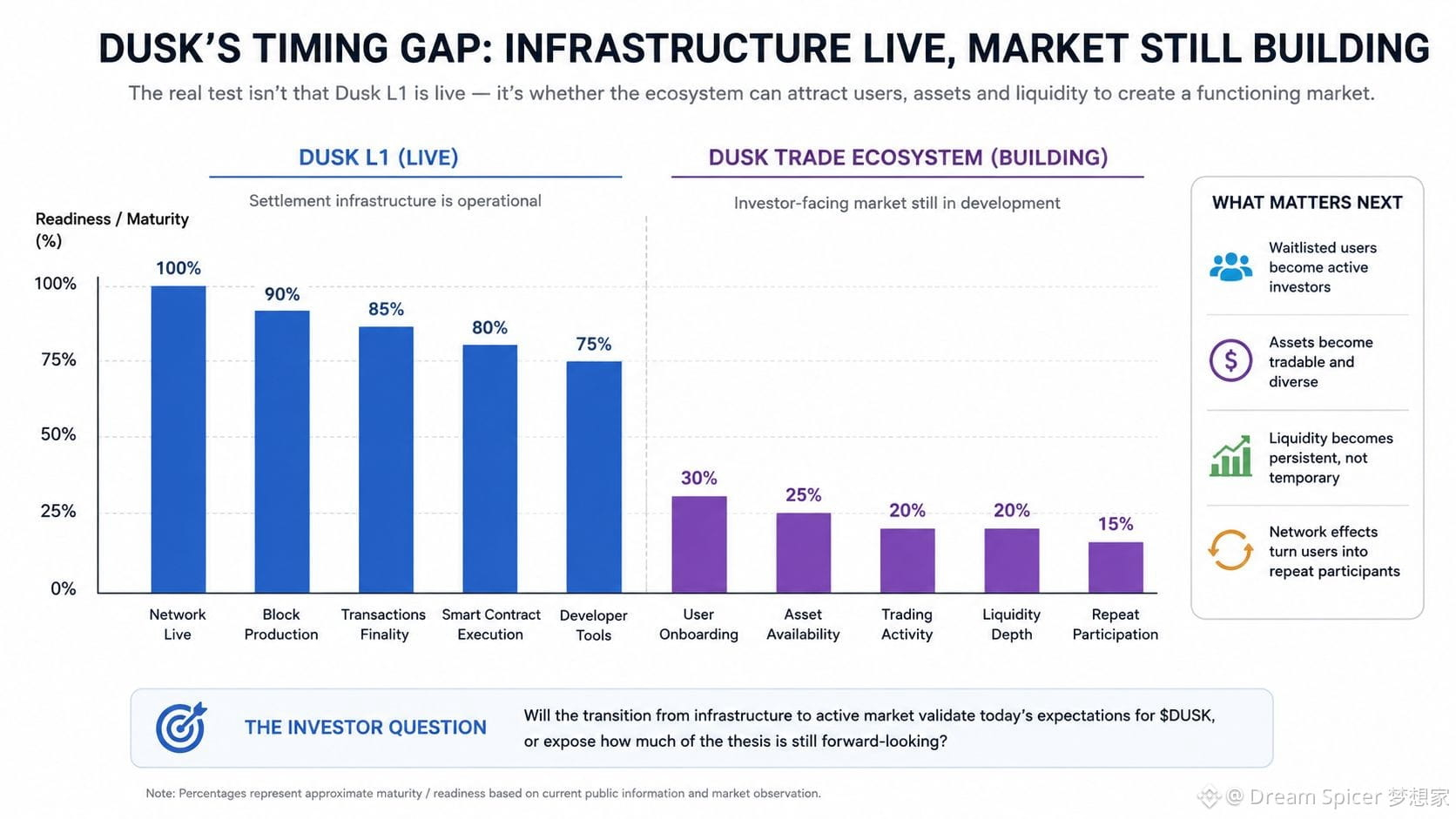
A live L1 gives investors something tangible to point to. But the bigger economic question is whether that infrastructure eventually attracts enough real users, assets and liquidity to create a functioning market.
That’s a different test.
Dusk can have working settlement infrastructure without immediately having deep liquidity. And an investor facing market has its own friction. onboarding, asset availability, trading activity and repeat participation all have to line up.
This is where I think expectations can get ahead of evidence.
The market may start valuing the future Trade ecosystem before there’s enough activity to measure its network effects.
So I’m less interested in the Live label itself and more interested in what comes next. waitlisted users becoming active investors, assets becoming tradable and liquidity becoming persistent rather than temporary.
For $DUSK , will that transition validate today’s expectations, or expose how much of the thesis is still forward looking?
#dusk @Dusk #Dusk #DUSK
It’s what that gap can do to expectations.
A live L1 gives investors something tangible to point to. But the bigger economic question is whether that infrastructure eventually attracts enough real users, assets and liquidity to create a functioning market.
That’s a different test.
Dusk can have working settlement infrastructure without immediately having deep liquidity. And an investor facing market has its own friction. onboarding, asset availability, trading activity and repeat participation all have to line up.
This is where I think expectations can get ahead of evidence.
The market may start valuing the future Trade ecosystem before there’s enough activity to measure its network effects.
So I’m less interested in the Live label itself and more interested in what comes next. waitlisted users becoming active investors, assets becoming tradable and liquidity becoming persistent rather than temporary.
For $DUSK , will that transition validate today’s expectations, or expose how much of the thesis is still forward looking?
#dusk @Dusk #Dusk #DUSK

Vérifié
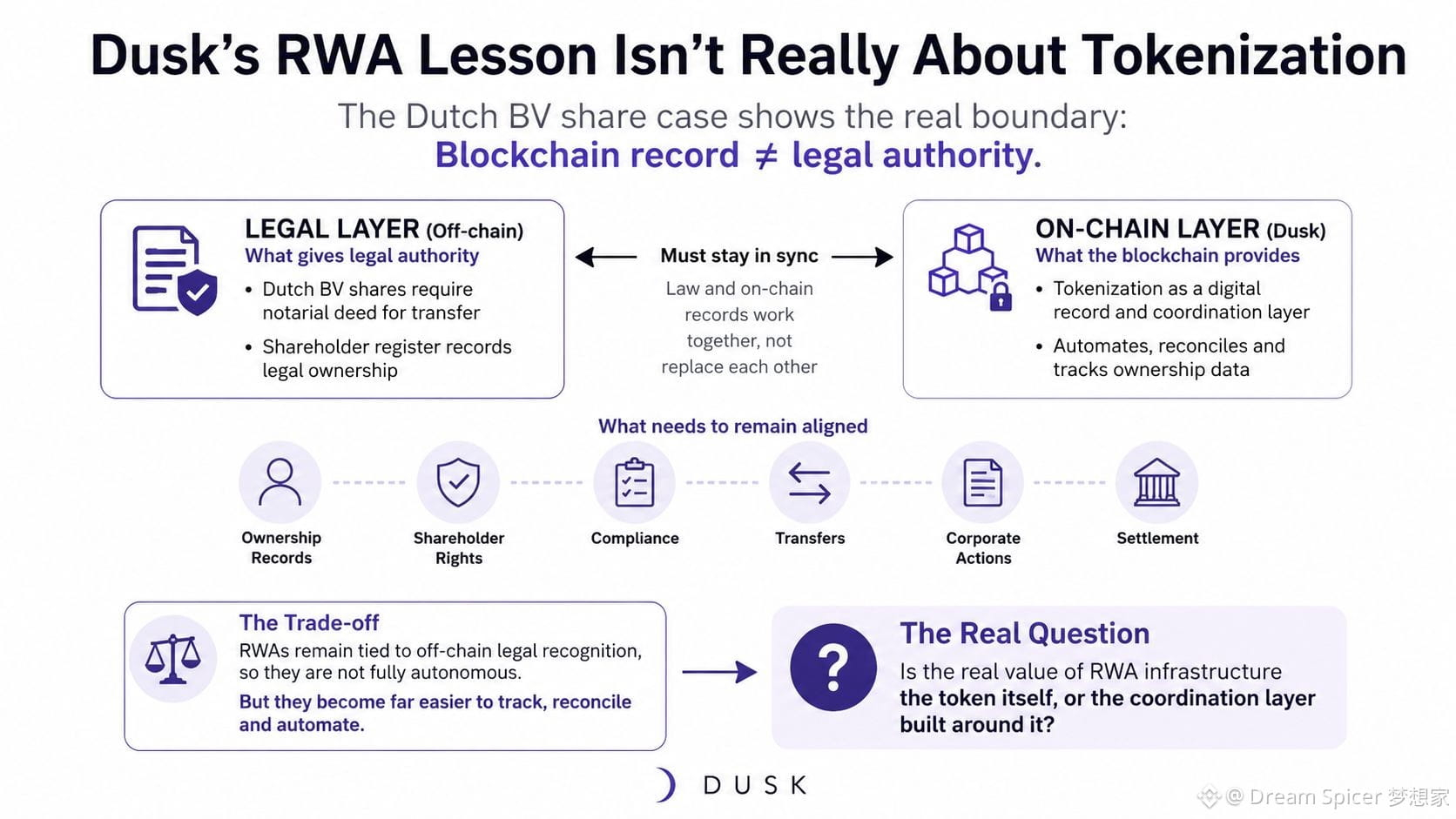
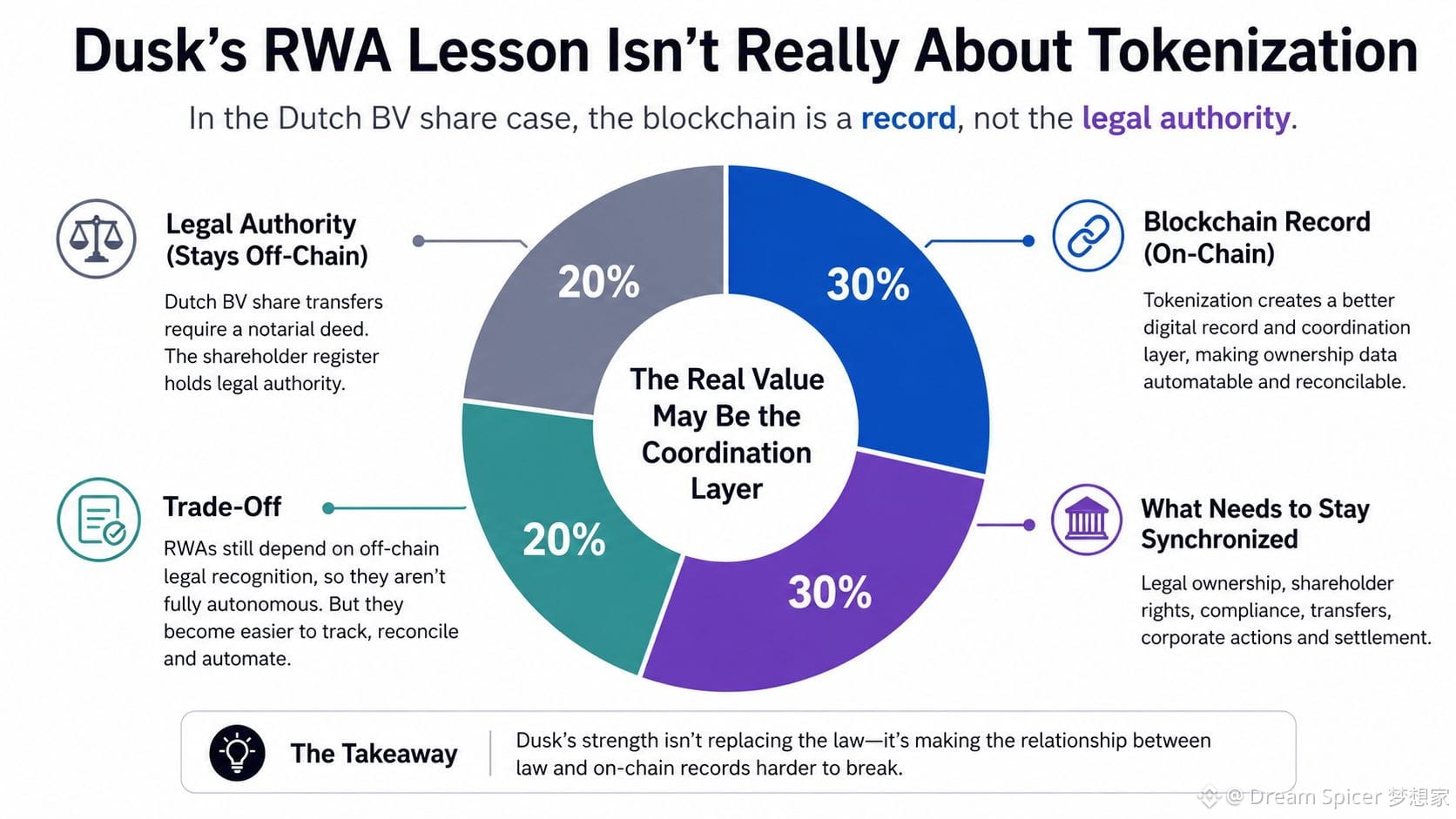
The more I study @Dusk ’s Dutch BV share case, the more interesting the legal boundary becomes.
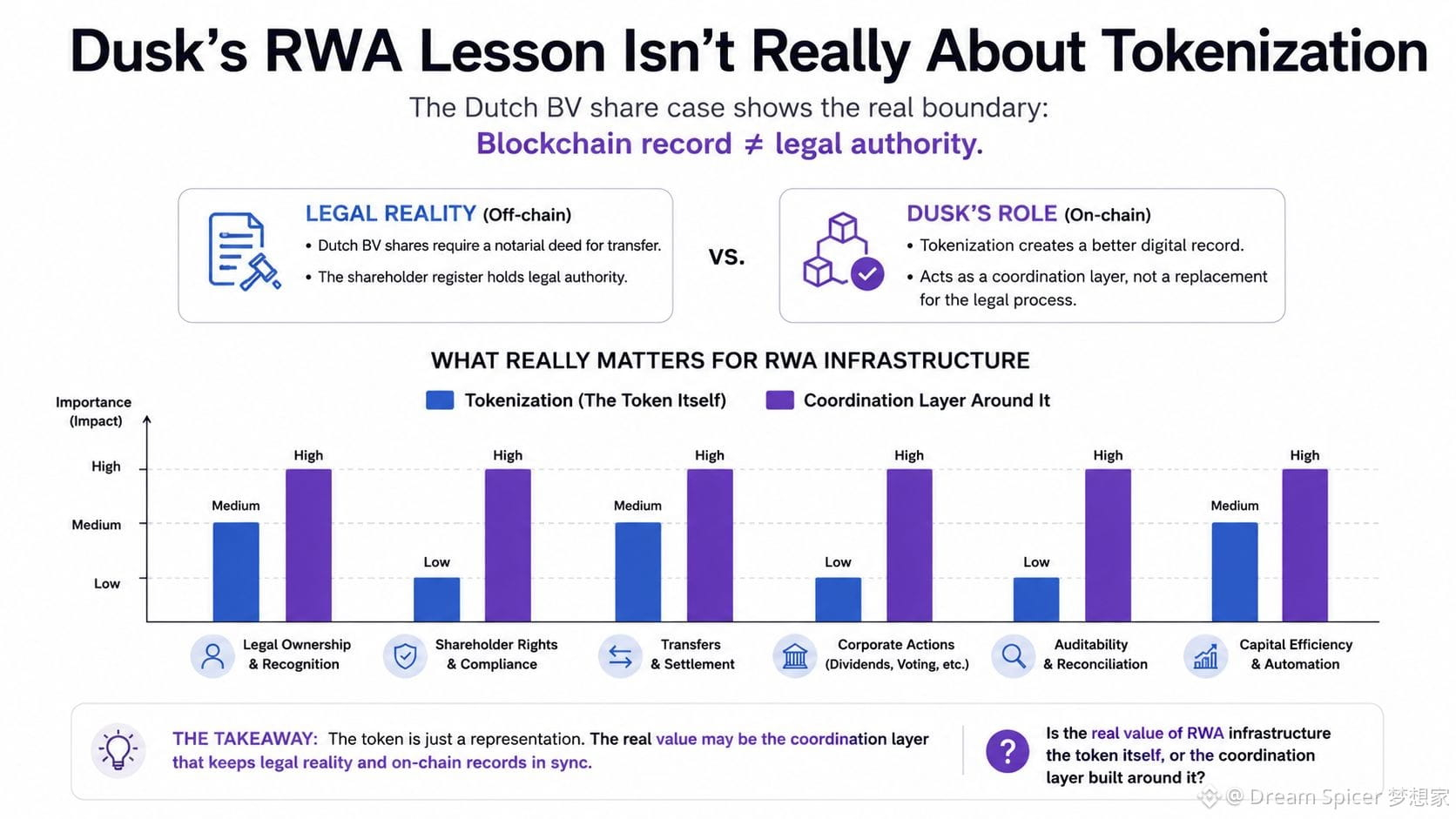
For BV shares, the shareholder register can record ownership, but the blockchain record itself doesn’t become the legal authority. Dutch notarial requirements still matter when shares are transferred.
What I find interesting is that $DUSK doesn’t try to hide this limitation. Its own work effectively treats tokenization as a better digital record and coordination mechanism, not as a replacement for the legal process.
That changes how I look at the whole RWA thesis.
The hard problem isn’t creating a token that says I own this.
It’s keeping that digital record synchronized with the things that actually matter. Legal ownership, shareholder rights, compliance, transfers and corporate actions.
There’s a trade off here too. If blockchain infrastructure still depends on off chain legal recognition, then RWAs don’t become fully autonomous. But they can become much easier to track, reconcile and automate.
Maybe that’s the more realistic path for institutional tokenization.
Not replacing the legal system, but making the relationship between law and on chain records much harder to break.
That raises an interesting question.
Is the real value of RWA infrastructure the token itself, or the coordination layer built around it?
#dusk #Dusk #DUSK
For BV shares, the shareholder register can record ownership, but the blockchain record itself doesn’t become the legal authority. Dutch notarial requirements still matter when shares are transferred.
What I find interesting is that $DUSK doesn’t try to hide this limitation. Its own work effectively treats tokenization as a better digital record and coordination mechanism, not as a replacement for the legal process.
That changes how I look at the whole RWA thesis.
The hard problem isn’t creating a token that says I own this.
It’s keeping that digital record synchronized with the things that actually matter. Legal ownership, shareholder rights, compliance, transfers and corporate actions.
There’s a trade off here too. If blockchain infrastructure still depends on off chain legal recognition, then RWAs don’t become fully autonomous. But they can become much easier to track, reconcile and automate.
Maybe that’s the more realistic path for institutional tokenization.
Not replacing the legal system, but making the relationship between law and on chain records much harder to break.
That raises an interesting question.
Is the real value of RWA infrastructure the token itself, or the coordination layer built around it?
#dusk #Dusk #DUSK
The more I study @Dusk , the more I like one uncomfortable part of its RWA thesis.
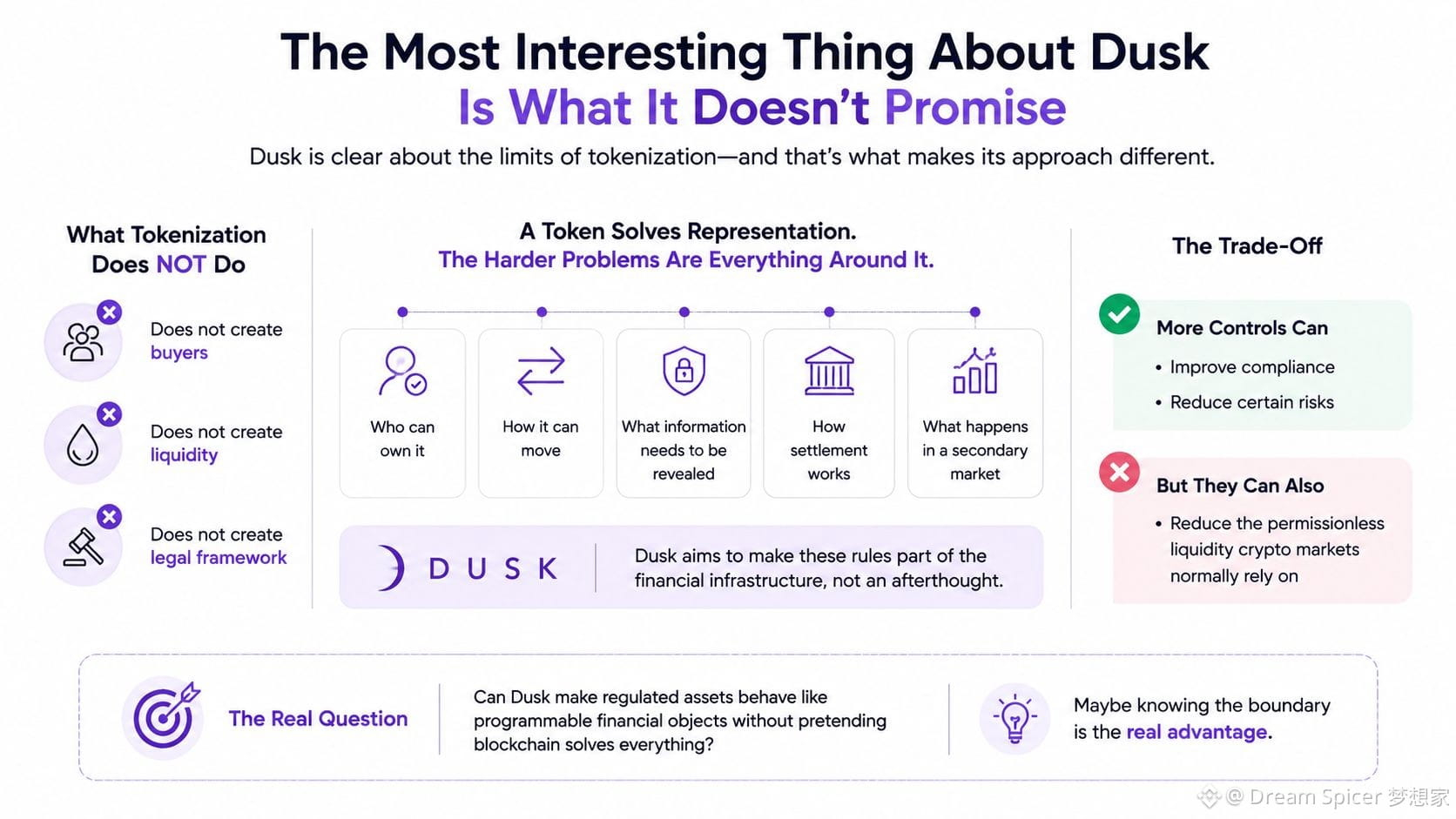
Dusk is pretty clear about the limits of tokenization.
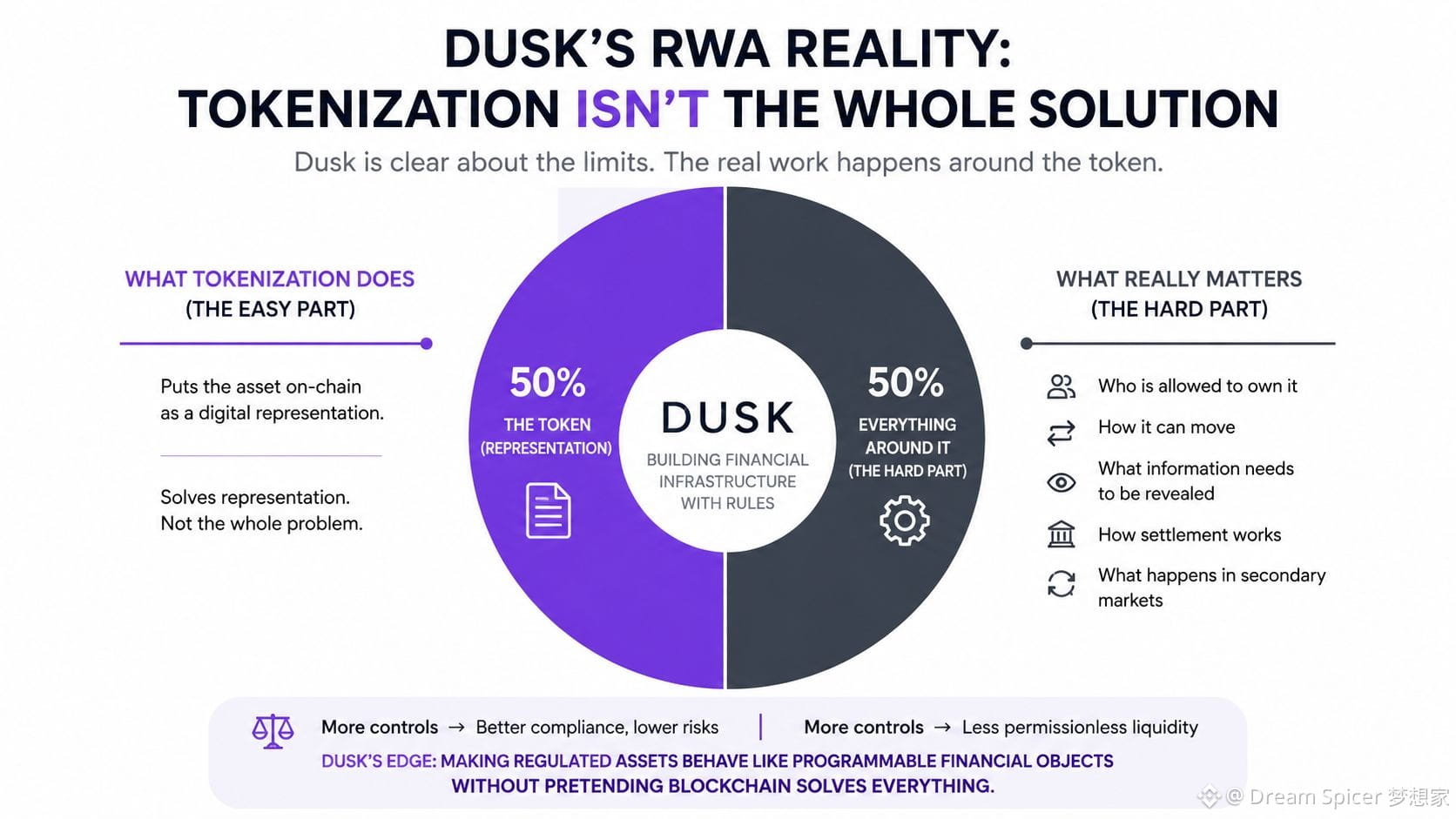
Putting a security on chain doesn’t magically create buyers. It doesn’t create liquidity. And it definitely doesn’t create the legal framework around the asset.
That sounds obvious, but it’s an important distinction.
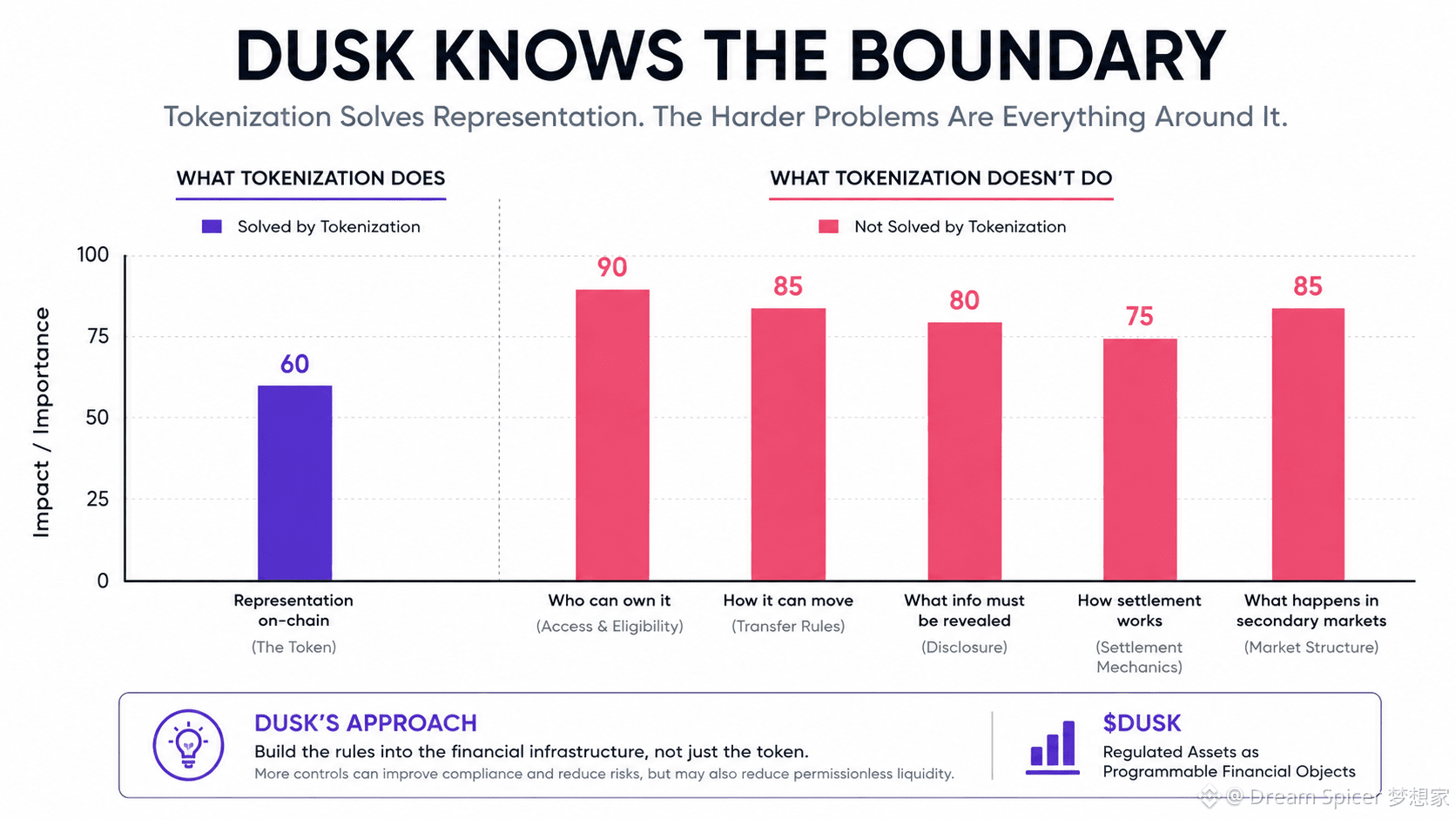
A token solves representation. The harder problems are everything around it. Who is allowed to own it, how it can move, what information needs to be revealed, how settlement works and what happens when the asset reaches a secondary market.
This is where $DUSK gets interesting to me.
The protocol is trying to make those rules part of the financial infrastructure itself, rather than treating the token as the finished product.
There’s a trade off, though. More controls can improve compliance and reduce certain risks, but they can also reduce the permissionless liquidity crypto markets normally rely on.
So I’m not looking at $DUSK as another tokenization play.
I’m more interested in whether Dusk can make regulated assets behave like programmable financial objects without pretending blockchain solves everything.
Maybe knowing that boundary is the real advantage.
#dusk #Dusk #DUSK
Dusk is pretty clear about the limits of tokenization.
Putting a security on chain doesn’t magically create buyers. It doesn’t create liquidity. And it definitely doesn’t create the legal framework around the asset.
That sounds obvious, but it’s an important distinction.
A token solves representation. The harder problems are everything around it. Who is allowed to own it, how it can move, what information needs to be revealed, how settlement works and what happens when the asset reaches a secondary market.
This is where $DUSK gets interesting to me.
The protocol is trying to make those rules part of the financial infrastructure itself, rather than treating the token as the finished product.
There’s a trade off, though. More controls can improve compliance and reduce certain risks, but they can also reduce the permissionless liquidity crypto markets normally rely on.
So I’m not looking at $DUSK as another tokenization play.
I’m more interested in whether Dusk can make regulated assets behave like programmable financial objects without pretending blockchain solves everything.
Maybe knowing that boundary is the real advantage.
#dusk #Dusk #DUSK
I kept coming back to this while studying @TermMax .
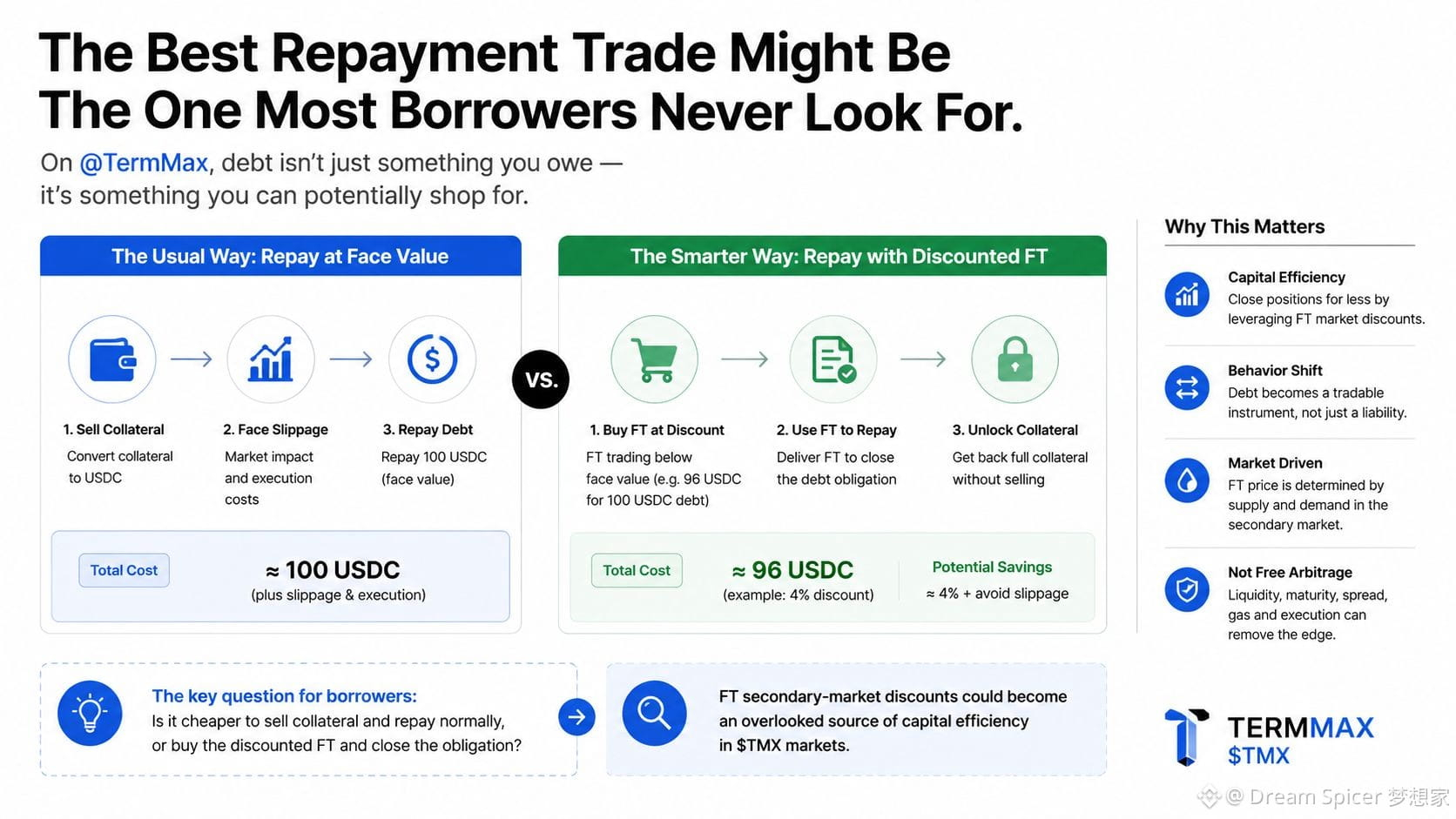
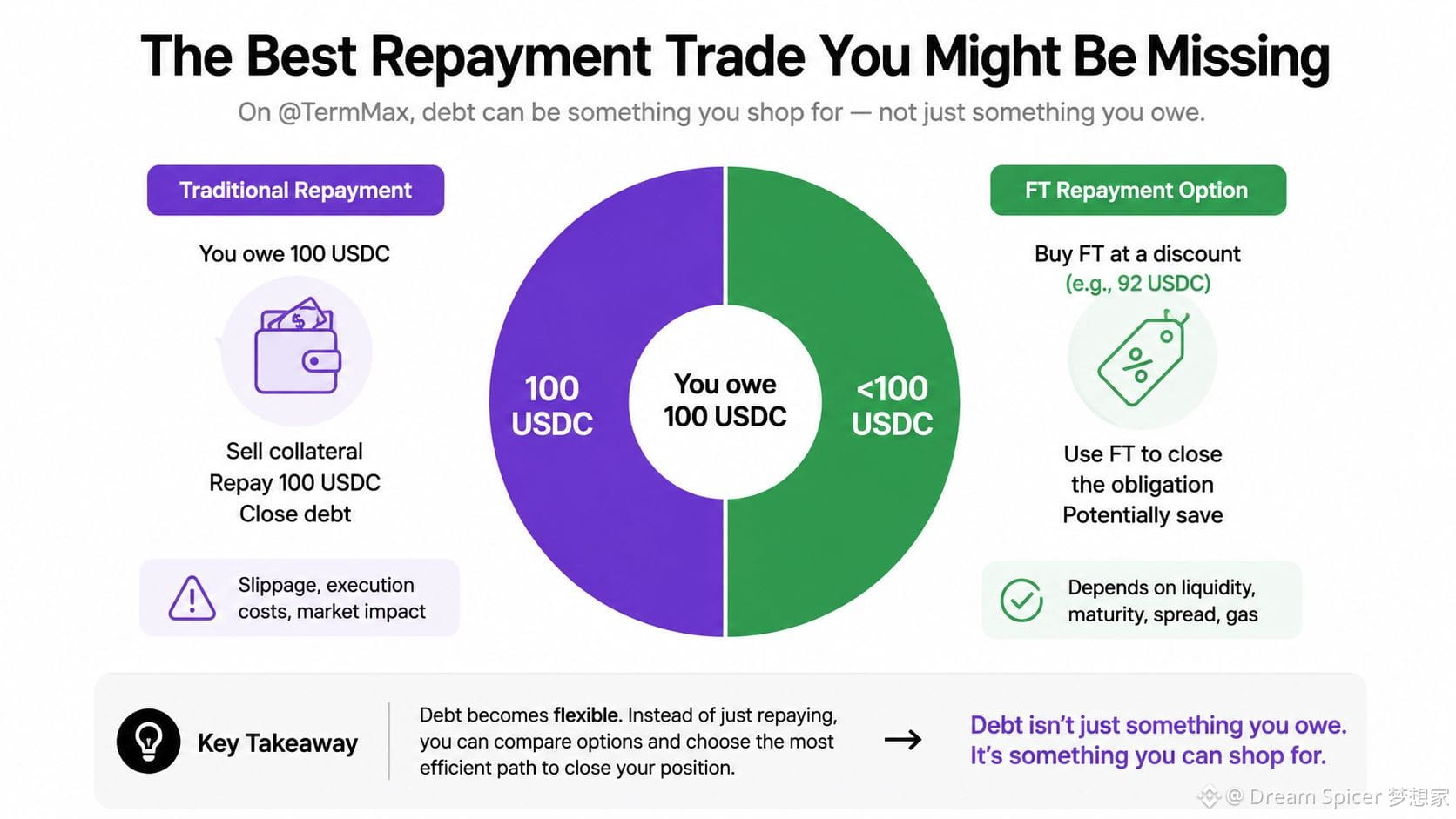
If you owe 100 USDC, the natural assumption is simple you need 100 USDC to close the debt.
But TermMax’s FT structure makes that assumption less rigid.
FTs are transferable and can trade in a secondary market, where price is driven by supply and demand. That means an FT representing a future debt payment can sometimes trade below its face value.
So a borrower has another calculation to make.
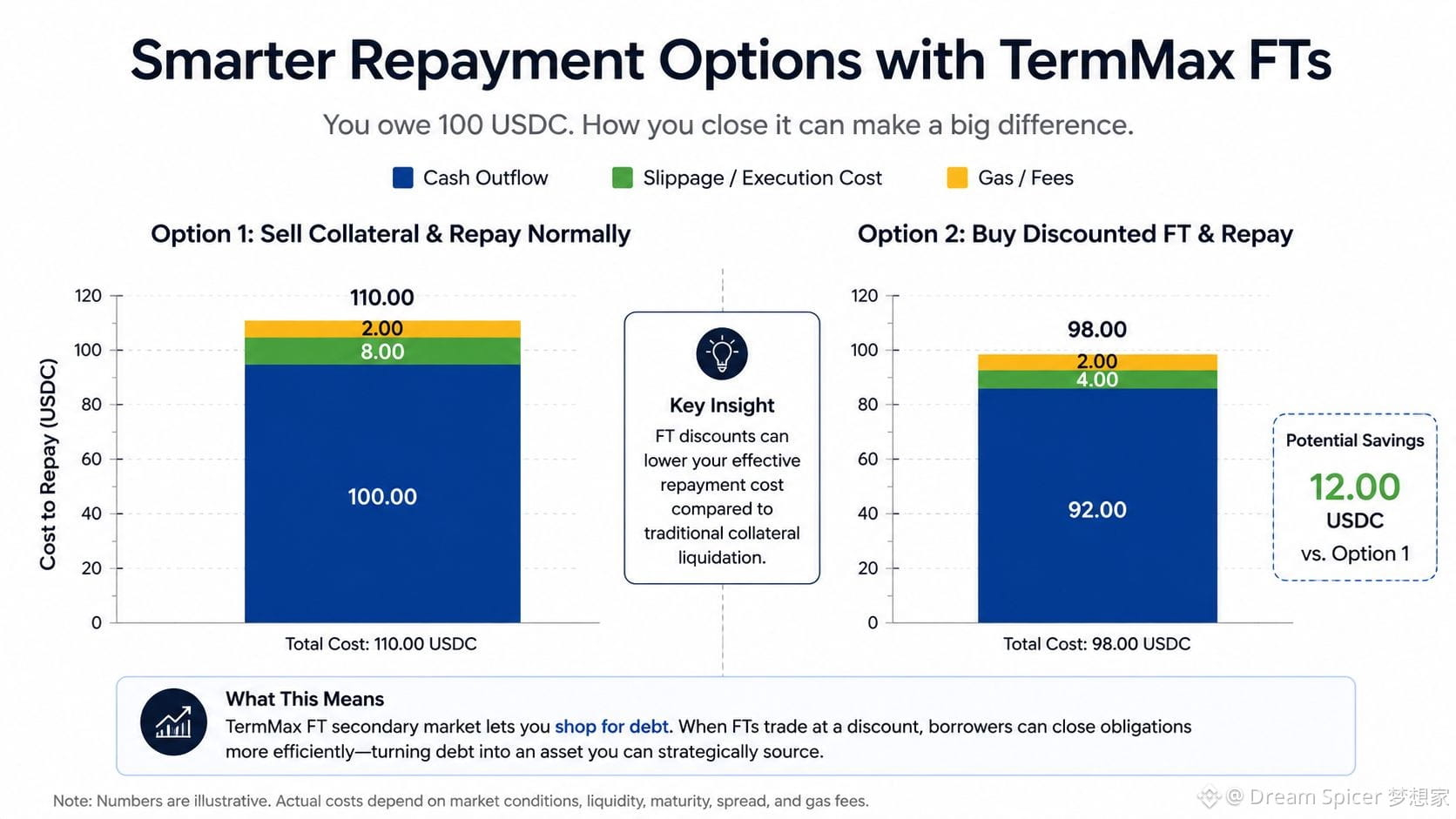
Is it cheaper to sell collateral and repay normally, or buy the discounted FT and use it to close the obligation?
That distinction matters because collateral sales can introduce slippage and execution costs.
I don’t see this as free arbitrage. Liquidity, maturity, spread and gas can easily erase the discount.
What I find more interesting is the change in behavior.
Debt stops being something you simply owe.
It becomes something you can potentially shop for.
That makes me wonder whether FT secondary market discounts could become an overlooked source of capital efficiency in $TMX markets.
#termmax #TermMax #Termmax
If you owe 100 USDC, the natural assumption is simple you need 100 USDC to close the debt.
But TermMax’s FT structure makes that assumption less rigid.
FTs are transferable and can trade in a secondary market, where price is driven by supply and demand. That means an FT representing a future debt payment can sometimes trade below its face value.
So a borrower has another calculation to make.
Is it cheaper to sell collateral and repay normally, or buy the discounted FT and use it to close the obligation?
That distinction matters because collateral sales can introduce slippage and execution costs.
I don’t see this as free arbitrage. Liquidity, maturity, spread and gas can easily erase the discount.
What I find more interesting is the change in behavior.
Debt stops being something you simply owe.
It becomes something you can potentially shop for.
That makes me wonder whether FT secondary market discounts could become an overlooked source of capital efficiency in $TMX markets.
#termmax #TermMax #Termmax
Connectez-vous pour découvrir plus de contenu