I used to think a token’s supply was mostly a numbers game.
Looking at DUSK made me think about it differently.
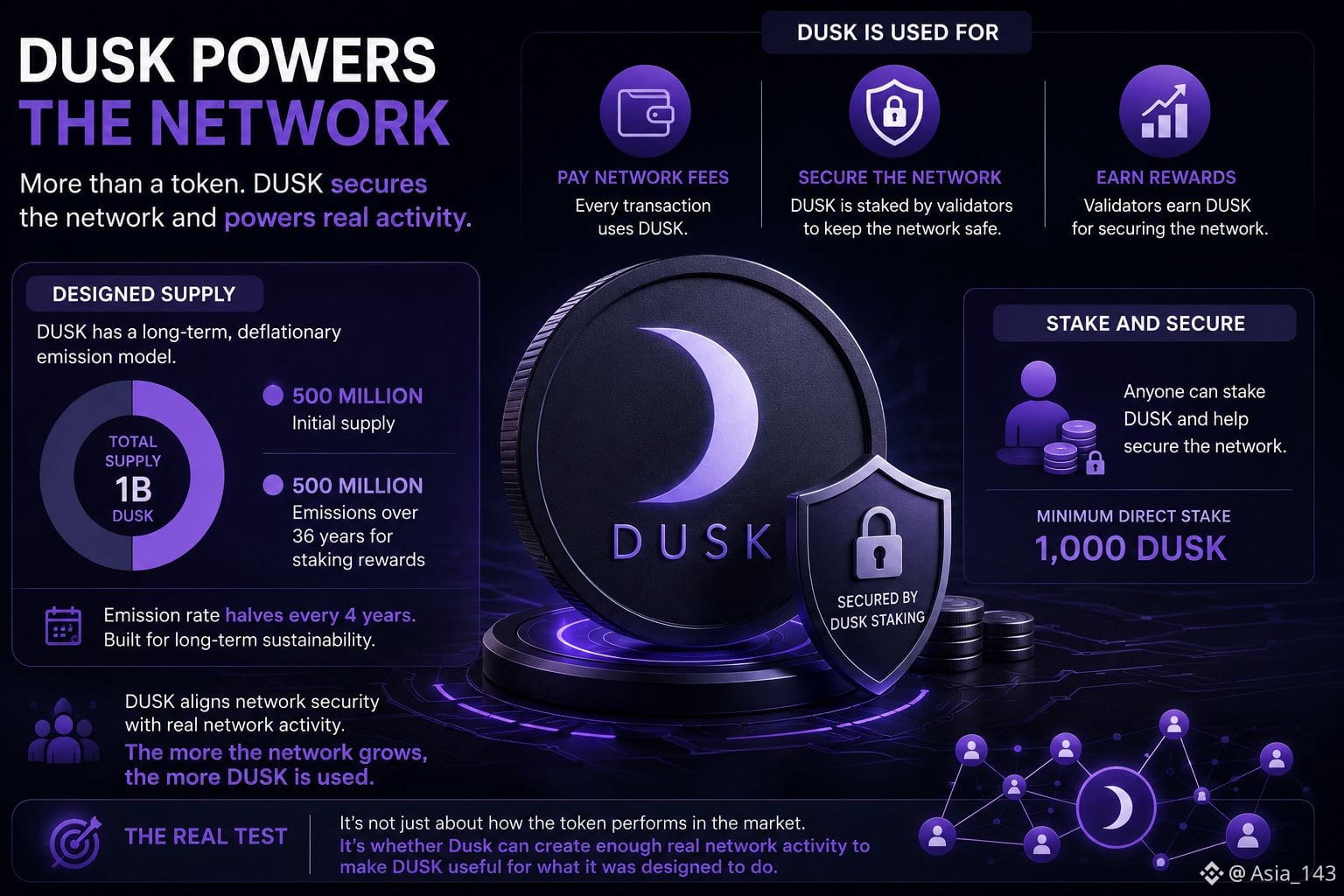
DUSK isn't only used for trading. It's the native token used to pay network fees and secure Dusk through staking. The current minimum direct stake is 1,000 DUSK.
What caught my attention is how the supply is designed.
Dusk started with 500 million DUSK, with another 500 million released over 36 years for staking rewards. The emission rate is designed to halve every four years.
So I don't see DUSK as simply a token with a maximum supply.
There's a connection between the token and the network itself: DUSK is used to pay for activity and incentivize the people helping secure that activity.
And that's the part I find interesting.
The real test isn't just how the token performs in the market.
It's whether Dusk can create enough real network activity to make DUSK useful for what it was designed to do.
That's what I'm watching.
#dusk $DUSK @Dusk
Looking at DUSK made me think about it differently.
DUSK isn't only used for trading. It's the native token used to pay network fees and secure Dusk through staking. The current minimum direct stake is 1,000 DUSK.
What caught my attention is how the supply is designed.
Dusk started with 500 million DUSK, with another 500 million released over 36 years for staking rewards. The emission rate is designed to halve every four years.
So I don't see DUSK as simply a token with a maximum supply.
There's a connection between the token and the network itself: DUSK is used to pay for activity and incentivize the people helping secure that activity.
And that's the part I find interesting.
The real test isn't just how the token performs in the market.
It's whether Dusk can create enough real network activity to make DUSK useful for what it was designed to do.
That's what I'm watching.
#dusk $DUSK @Dusk