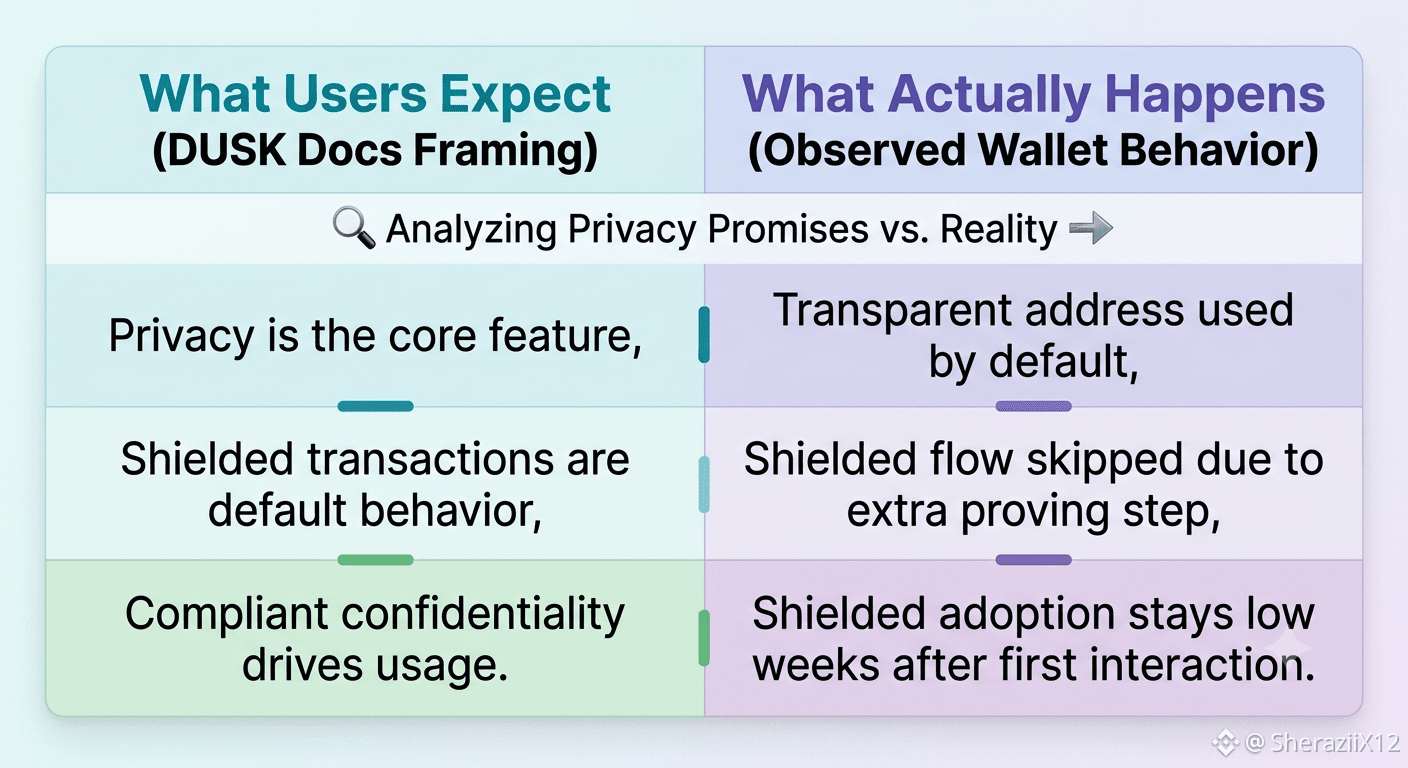
What kept pulling me back into DUSK wasn't the pitch about compliant privacy, it was something smaller I noticed while poking around wallet activity. DUSK ($DUSK ) gives users two address types out of the box, a transparent one and a shielded one, and the wallet defaults new users toward the transparent path because it's faster to set up and doesn't require the extra proving step. Most first-time wallets I looked at stayed on the transparent side for weeks before ever touching the shielded flow, if they touched it at all. That's the opposite of what the docs frame as the point of .(#dusk )The shielded transactions are the actual differentiator, but they're also the part that asks the most patience from a new user, so retention seems less about liking the tech and more about whether someone had a specific reason to push past the default setup. I kept thinking about how that gap between "available privacy" and "used privacy" probably looks similar across other confidential chains, not just here. Curious whether @Dusk is tracking that shielded-adoption curve internally, and what it would take to close it.

Publier

--
Haussier
Avertissement : ce contenu inclut des opinions de tiers. Il ne constitue pas un conseil. Binance Ai peut être utilisée, sans garantie de résultat. Consultez les CG.