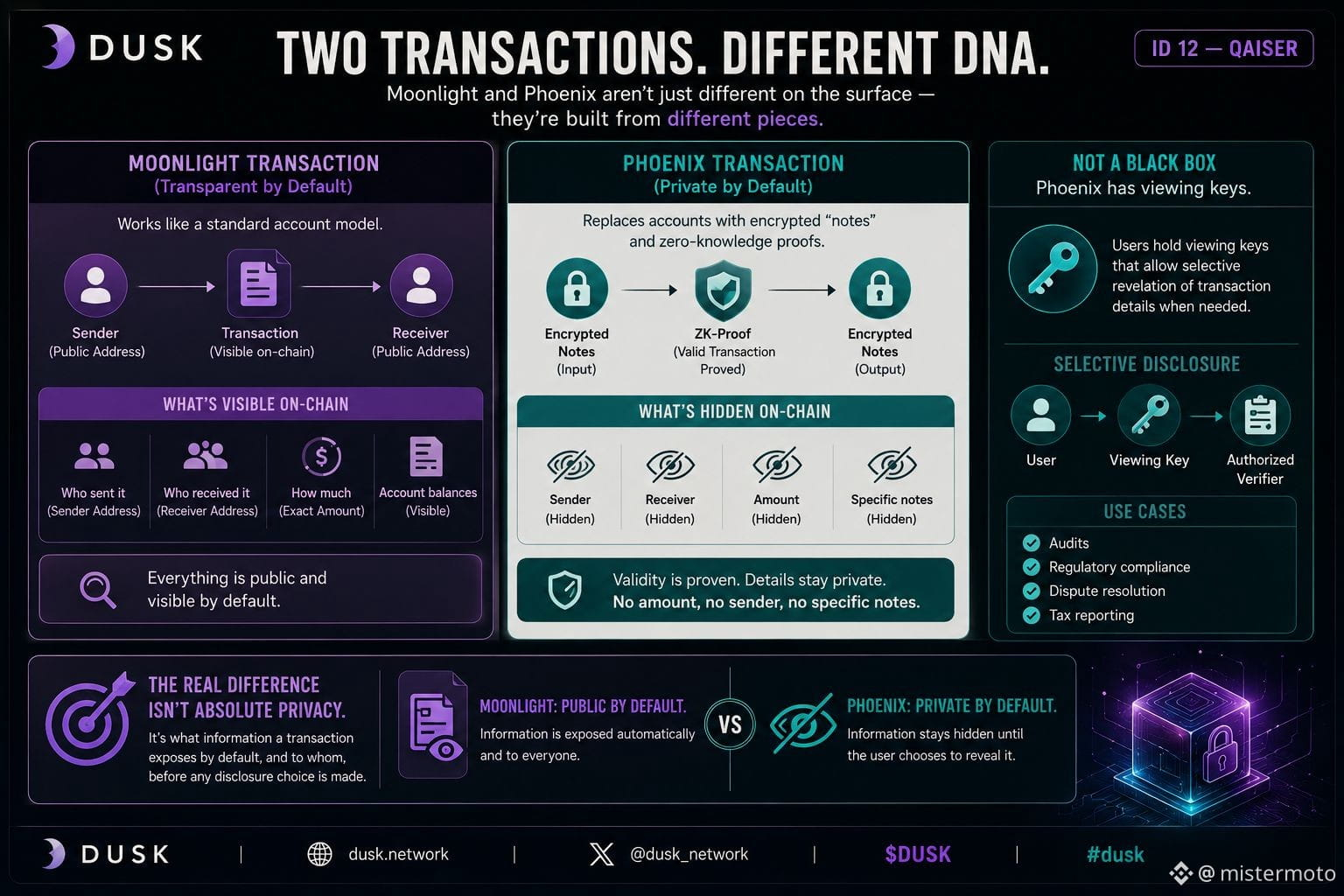
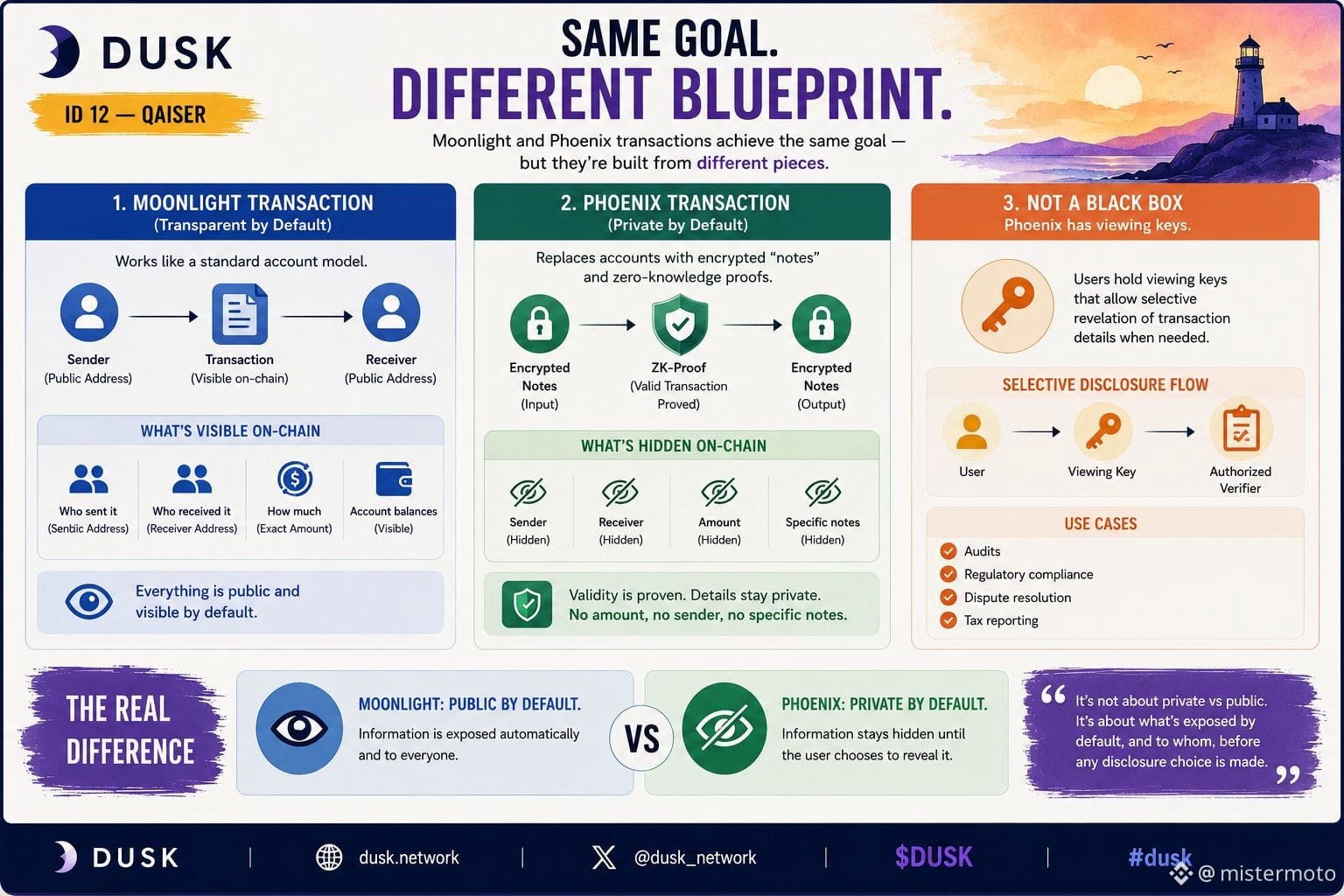
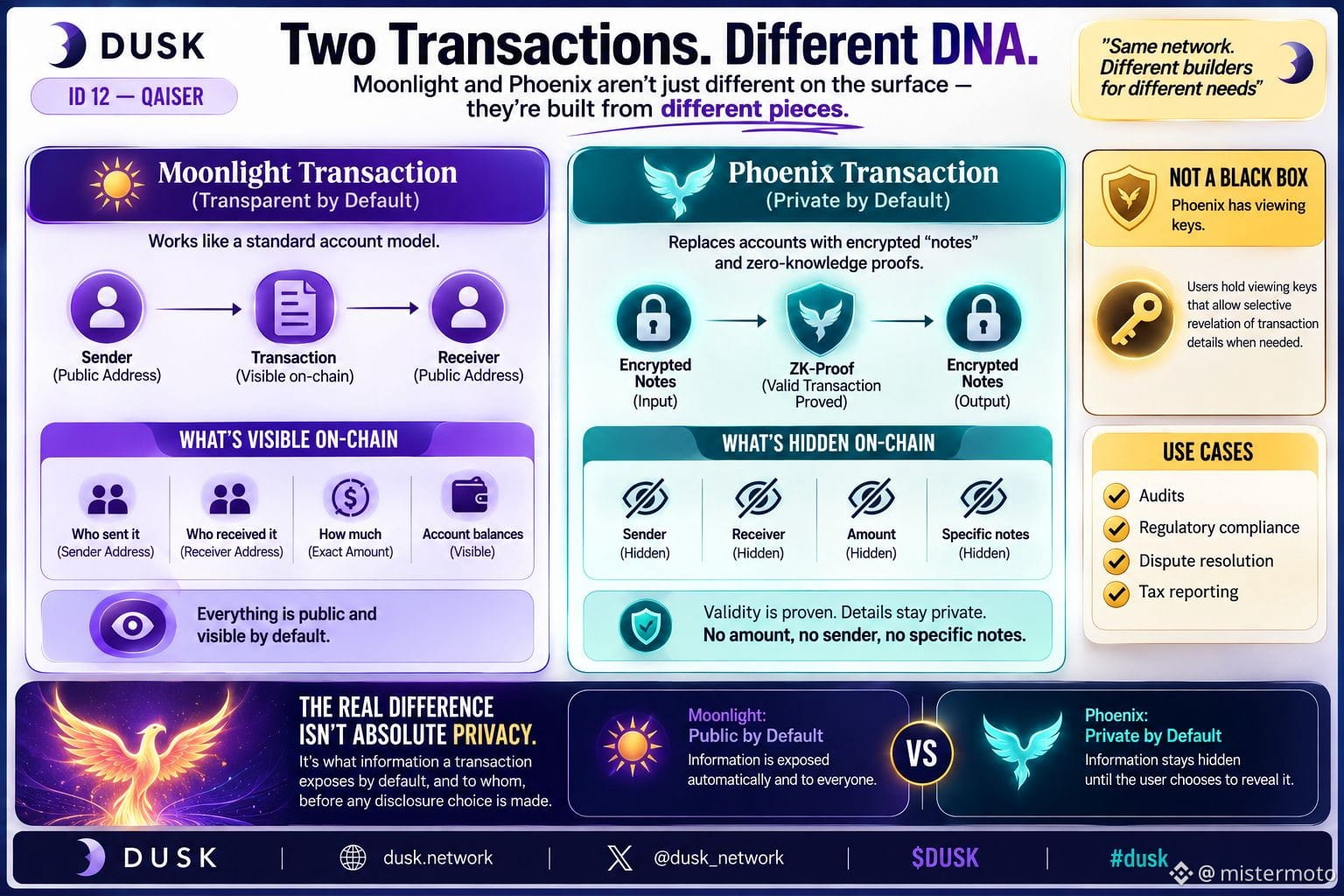
#dusk $DUSK @Dusk A Moonlight transaction and a Phoenix transaction don't just look different on the surface they're built out of different pieces entirely.
Moonlight works like a standard account model. Every account has a visible balance and a transfer openly shows who sent it who received it, and how much moved. Phoenix replaces that structure with something else: value sits in encrypted "notes" instead of an account balance, and a transaction has to prove it's valid enough funds, no double spend using a zero knowledge proof, without putting the amount, the sender, or the specific notes involved on public display.
Worth being careful here, though. Phoenix isn't a black box with no way in. Users hold viewing keys that let them selectively reveal transaction details when auditing or regulatory requirements call for it. So the real difference isn't private vs public as an absolute it's what information a transaction exposes by default, and to whom, before any disclosure choice is made.
@Dusk $DUSK #dusk