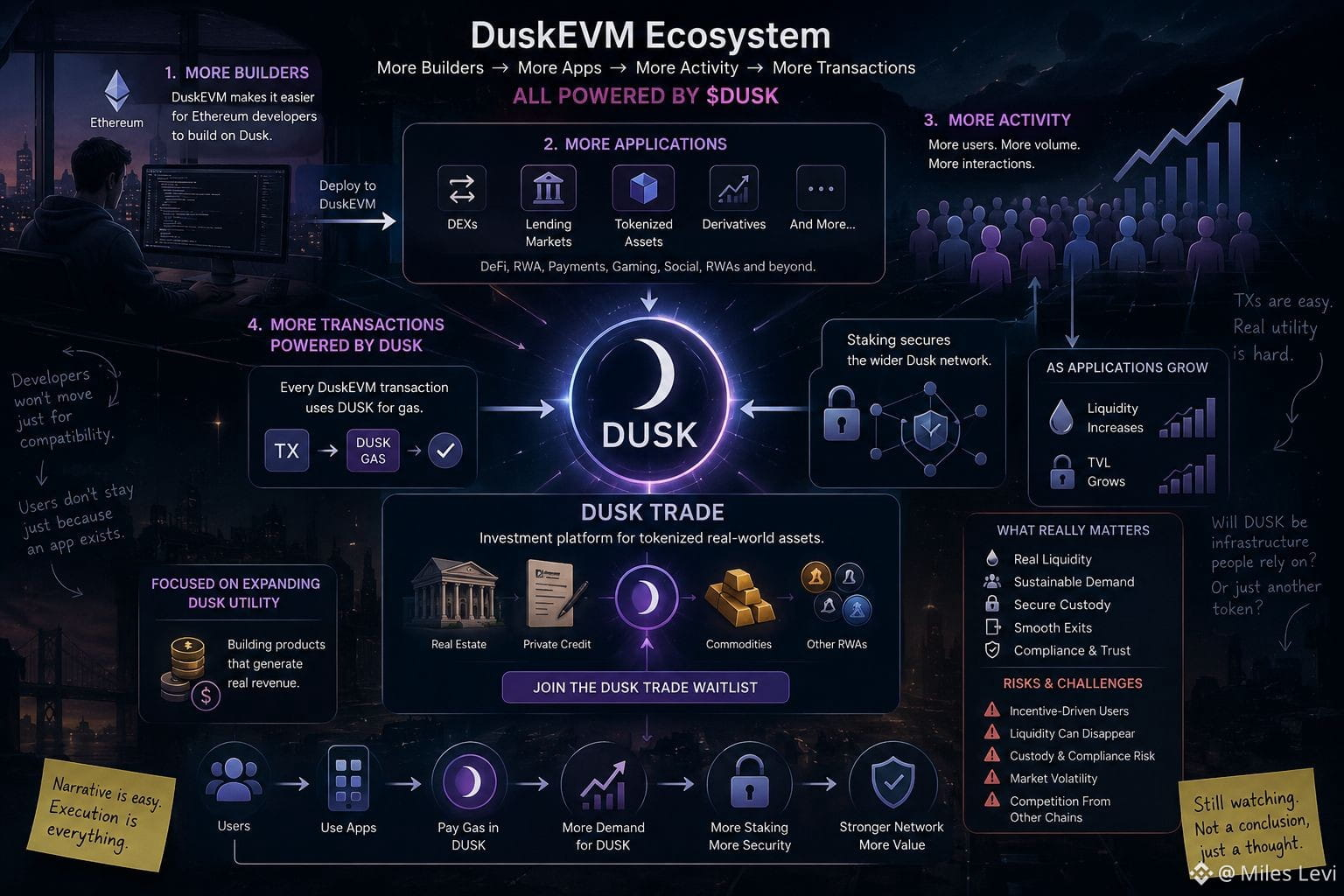
I get uneasy when a thesis is this tidy.
DuskEVM's logic is clean: closer compatibility with Ethereum devs, more apps show up, DUSK sits underneath as gas and stake. More apps, more transactions, more liquidity. Simple.
What I keep coming back to is everything the arrows skip over.
Compatibility doesn't move developers — it just removes one excuse. What actually moves them is users already there, liquidity deep enough to matter, tooling that doesn't break, wallets that work, incentives worth the setup cost, and a credible exit if it doesn't pan out. And users don't stay because an app technically exists on a chain. They stay because markets are deep, fees are tolerable, custody feels safe, and leaving isn't a project of its own when things get rocky.
That's the gap I can't paper over with DUSK.
An ecosystem can look busy and still be hollow — rented liquidity, incentive-chasing users, real volume routing elsewhere while the local numbers look fine. Tokenized RWAs make this sharper, not softer. The label is the easy part. Settlement, redemption, compliance, and who actually provides liquidity when it's needed — that's where these things usually break, and we've watched enough on-chain "representations" learn that the hard part starts after mint, not before.
Dusk Trade is the same bet in miniature. Either it turns "utility" into something people use without being paid to, or it quietly shows how hard sticky demand is to manufacture once you're past pure trading activity.
I'm not calling it dead on arrival. I'm watching one thing: whether DUSK ends up as infrastructure people actually depend on, or a token that needs its ecosystem to keep growing faster than real usage ever does.
#dusk $DUSK @Dusk
DuskEVM's logic is clean: closer compatibility with Ethereum devs, more apps show up, DUSK sits underneath as gas and stake. More apps, more transactions, more liquidity. Simple.
What I keep coming back to is everything the arrows skip over.
Compatibility doesn't move developers — it just removes one excuse. What actually moves them is users already there, liquidity deep enough to matter, tooling that doesn't break, wallets that work, incentives worth the setup cost, and a credible exit if it doesn't pan out. And users don't stay because an app technically exists on a chain. They stay because markets are deep, fees are tolerable, custody feels safe, and leaving isn't a project of its own when things get rocky.
That's the gap I can't paper over with DUSK.
An ecosystem can look busy and still be hollow — rented liquidity, incentive-chasing users, real volume routing elsewhere while the local numbers look fine. Tokenized RWAs make this sharper, not softer. The label is the easy part. Settlement, redemption, compliance, and who actually provides liquidity when it's needed — that's where these things usually break, and we've watched enough on-chain "representations" learn that the hard part starts after mint, not before.
Dusk Trade is the same bet in miniature. Either it turns "utility" into something people use without being paid to, or it quietly shows how hard sticky demand is to manufacture once you're past pure trading activity.
I'm not calling it dead on arrival. I'm watching one thing: whether DUSK ends up as infrastructure people actually depend on, or a token that needs its ecosystem to keep growing faster than real usage ever does.
#dusk $DUSK @Dusk