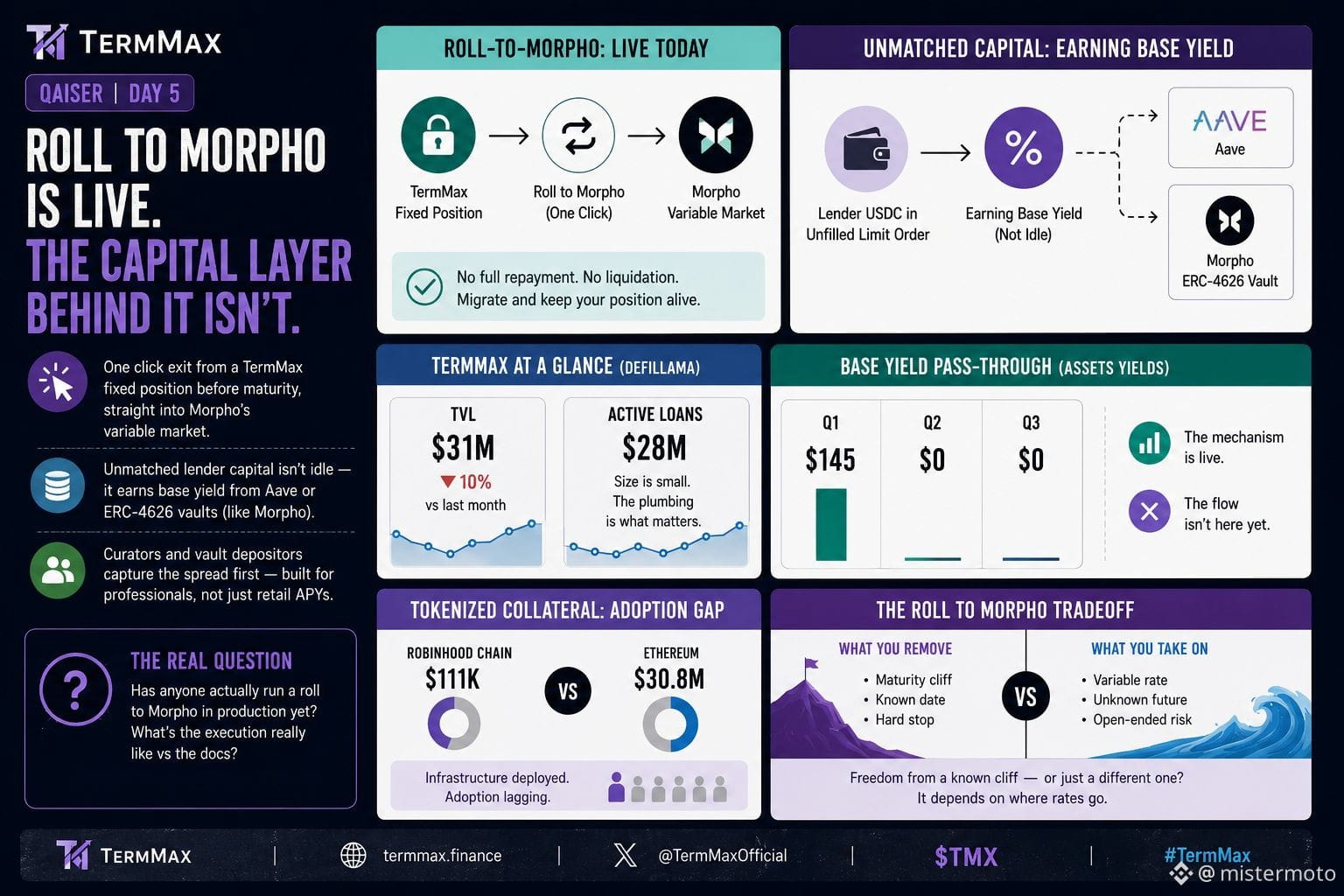
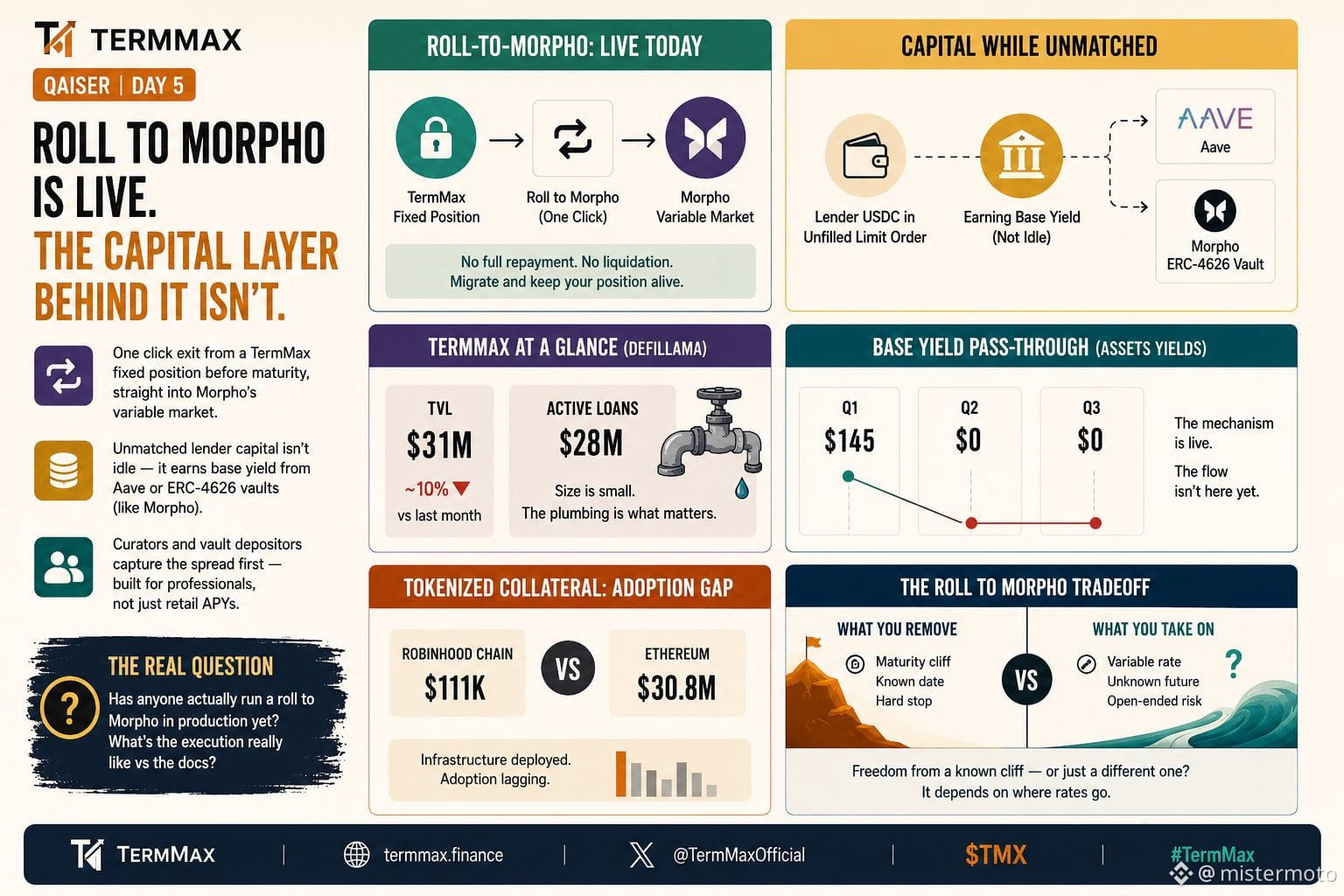
#termmax @TermMax Was reading through TermMax docs and the roll to Morpho exit is actually live not roadmap talk. One click out of a fixed position before maturity straight into Morpho's variable market.
The part I keep thinking about is what happens to capital that hasn't been matched yet. While a lender's USDC sits in an unfilled limit order it isn't idle it's earning the base yield from whatever source the curator selected, Aave or an ERC 4626 vault like Morpho.
The numbers underneath are modest. TVL around $31m on Defi Llama down roughly 10% over the past month with about $28m in active loans. Small but size isn't the interesting part here the plumbing is.
What got me is who touches that base yield first.
It's curators and vault depositors the people already sophisticated enough to be setting range orders who capture the spread before it ever reaches a retail facing APY number. The fixed rates for everyone pitch is real. The capital efficiency layer underneath it is quietly built for professionals.
Then I checked whether the mechanism is actually being used. Defi Llama's income statement has an assets yields line that's the base yield pass-through. It was $145 in Q1. It's been $0 for the two quarters since.
Same pattern on the tokenized collateral side. Robinhood Chain holds about $111k against Ethereum's $30.8m. The infrastructure is deployed; the flow isn't there yet.
Which brings me back to the roll to Morpho exit. On paper it removes the maturity cliff you don't have to repay in full or get liquidated you migrate to variables and keep going.
But migrating debt isn't the same as resolving it. You've swapped a known cliff on a known date for an unknown rate on an open ended one. That might be exactly what a borrower wants if they expect rates to fall. It might also just be the cliff wearing a different name.
Has anyone actually run one through a live rollover yet? Curious what the execution looks like in practice versus the docs.
@TermMax #TermMax