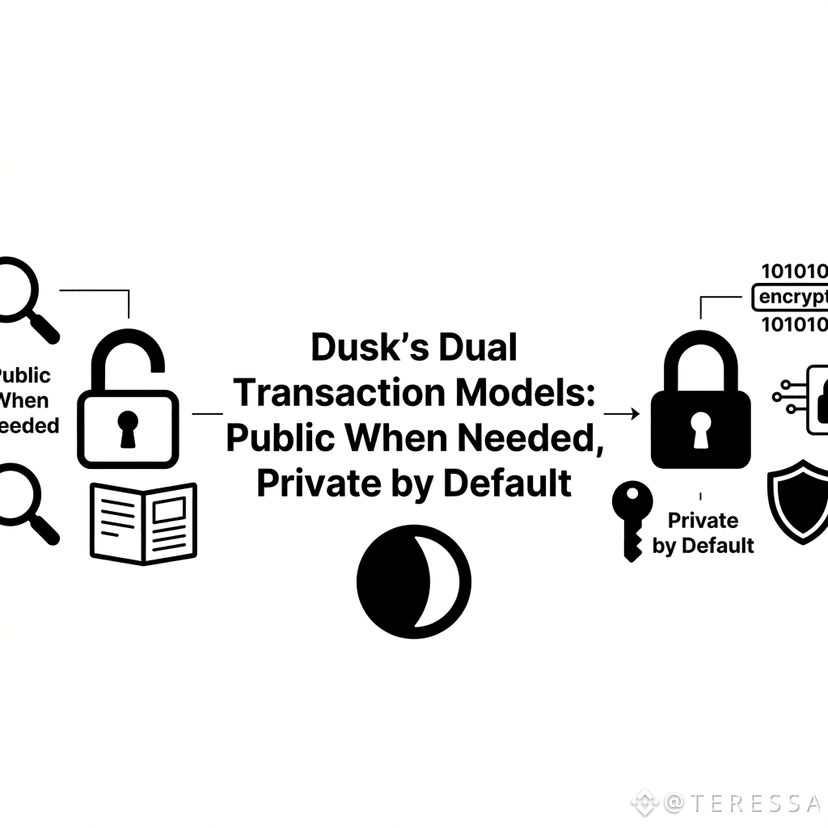

Dusk’s Dual Transaction Models: Public When Needed, Private by Default
We assume public is the safer default. If everything is visible, nothing can be hidden wrongly. That logic feels responsible, even virtuous, when applied to financial systems.
But default public means someone else decided your baseline. You opt into privacy rather than choosing when to share.
Dusk flips that quietly. Private by default returns the starting position to the individual. Public becomes a deliberate act, not a condition you were born into on-chain.
That’s less a technical distinction than a philosophical one. Who sets the baseline matters as much as what the baseline is.
If privacy were the default everywhere, how differently would we think about what we choose to make visible?
$ONG
$ENA
$DUSK
#dusk @Dusk
We assume public is the safer default. If everything is visible, nothing can be hidden wrongly. That logic feels responsible, even virtuous, when applied to financial systems.
But default public means someone else decided your baseline. You opt into privacy rather than choosing when to share.
Dusk flips that quietly. Private by default returns the starting position to the individual. Public becomes a deliberate act, not a condition you were born into on-chain.
That’s less a technical distinction than a philosophical one. Who sets the baseline matters as much as what the baseline is.
If privacy were the default everywhere, how differently would we think about what we choose to make visible?
$ONG
$ENA
$DUSK
#dusk @Dusk