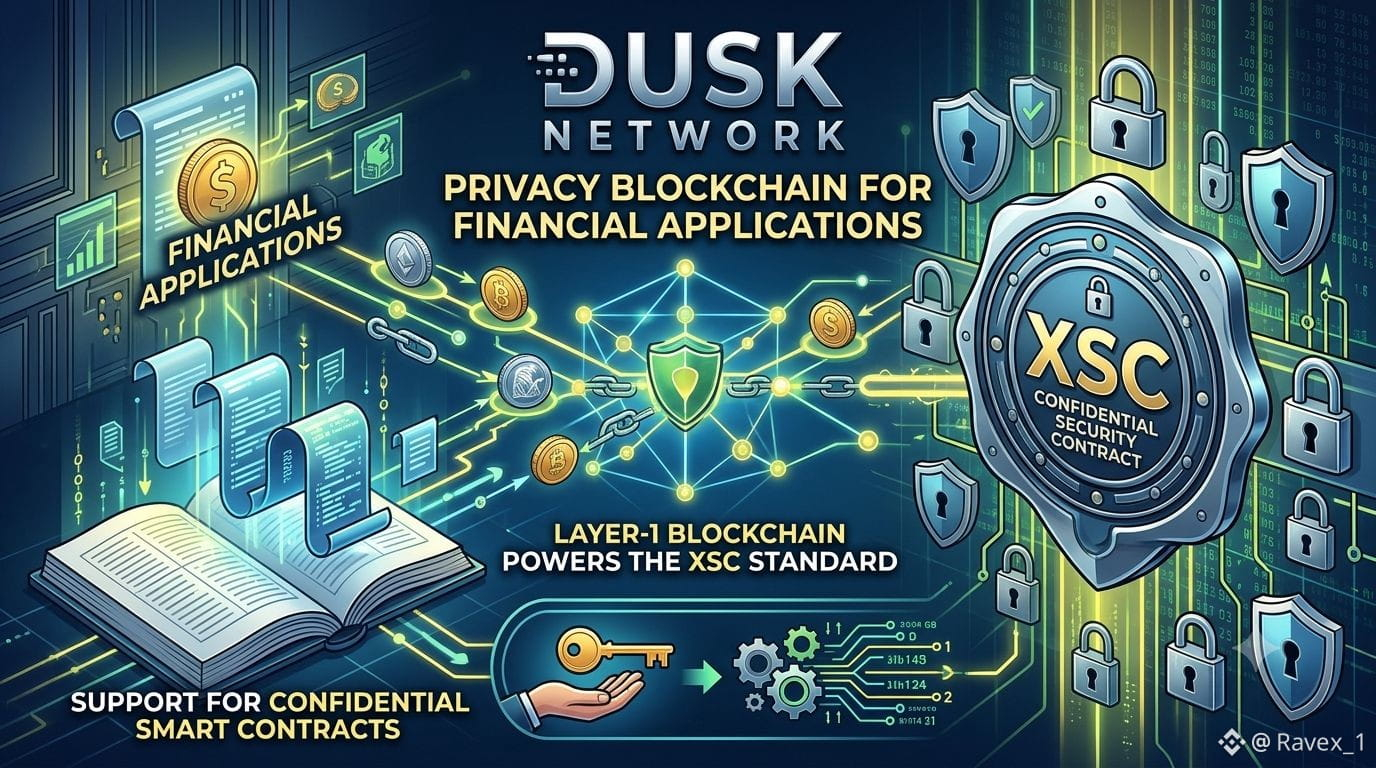
That tension is where I find Dusk Network interesting. I don’t see it as simply “a private blockchain.” I see it as an attempt to build financial infrastructure where transactions can remain verifiable without exposing every sensitive detail.
The distinction matters. Think of a bank verifying that I have enough money for a transaction without handing everyone my entire bank statement. Dusk’s Confidential Security Contract (XSC) approach uses zero-knowledge technology and confidential smart contracts to move toward that model: prove what matters, while hiding what doesn’t.
For institutions, that could be more meaningful than basic anonymity. Compliance often requires selective disclosure, auditability, and controlled access—not complete visibility. Dusk is trying to make those requirements coexist at the protocol level.
What caught my attention is how this connects privacy with real-world assets. Tokenizing securities is easy to describe; building a network where ownership, transfers, and regulatory constraints can coexist without exposing sensitive financial data is much harder.
But there is a trade-off I keep thinking about: if privacy becomes programmable, who ultimately decides when disclosure is necessary?
And perhaps that is the real test for Dusk—not whether it can hide transactions, but whether it can make privacy and accountability work together.
@Dusk #dusk $DUSK
$COLLECT
#TrumpPressesCongressToPassClarityAct
#FASBProposesStablecoinsAsCashEquivalents
#WalmartFalls7%
#USJoblessClaimsFallTo206000
The distinction matters. Think of a bank verifying that I have enough money for a transaction without handing everyone my entire bank statement. Dusk’s Confidential Security Contract (XSC) approach uses zero-knowledge technology and confidential smart contracts to move toward that model: prove what matters, while hiding what doesn’t.
For institutions, that could be more meaningful than basic anonymity. Compliance often requires selective disclosure, auditability, and controlled access—not complete visibility. Dusk is trying to make those requirements coexist at the protocol level.
What caught my attention is how this connects privacy with real-world assets. Tokenizing securities is easy to describe; building a network where ownership, transfers, and regulatory constraints can coexist without exposing sensitive financial data is much harder.
But there is a trade-off I keep thinking about: if privacy becomes programmable, who ultimately decides when disclosure is necessary?
And perhaps that is the real test for Dusk—not whether it can hide transactions, but whether it can make privacy and accountability work together.
@Dusk #dusk $DUSK
$COLLECT
#TrumpPressesCongressToPassClarityAct
#FASBProposesStablecoinsAsCashEquivalents
#WalmartFalls7%
#USJoblessClaimsFallTo206000