
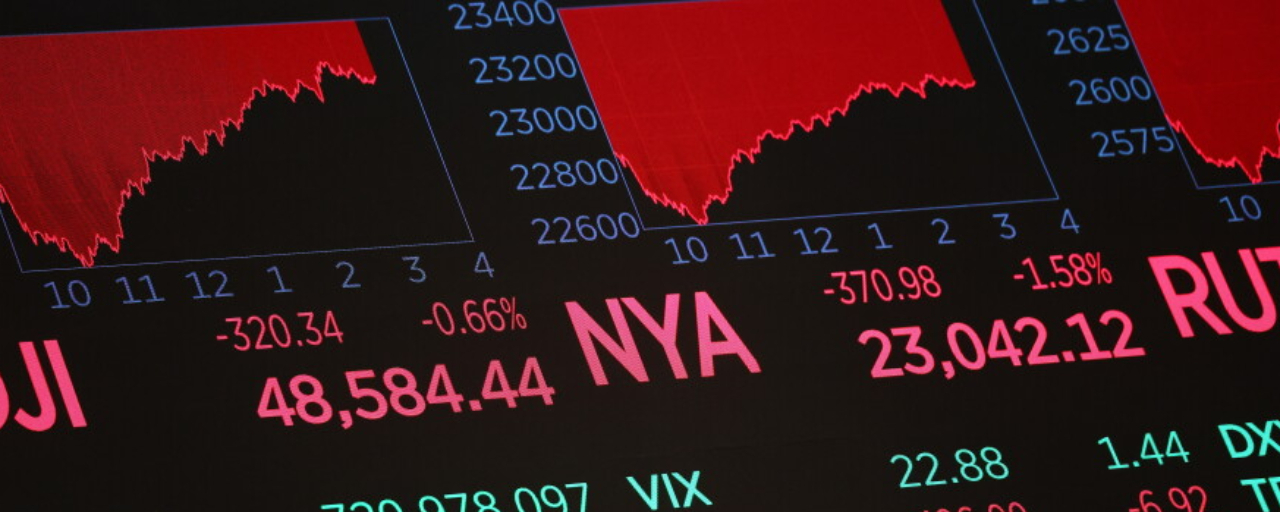
Thursday undid Wednesday in about six hours.
U.S. stocks opened lower and never recovered, erasing the prior session's rally as Treasury yields snapped back and traders braced for a fresh round of sanctions aimed at Iran's trading partners China chief among them, based on Thursday morning's briefings.
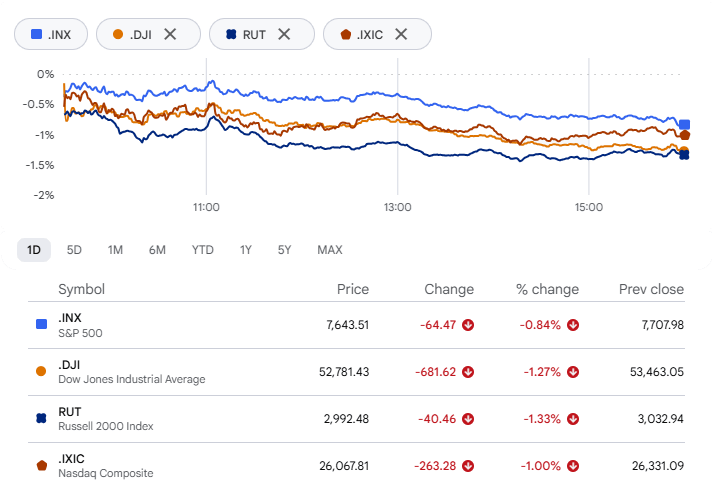
By the close, the broad S&P 500 index had lost 0.87%, the tech-heavy Nasdaq Composite 1%, and the 30 stock Dow Jones Industrial Average 1.32%, or nearly 704 points. The small-cap Russell 2000 fared worst of the majors, down 1.34%.
The Bond Rescue That Didn't Take
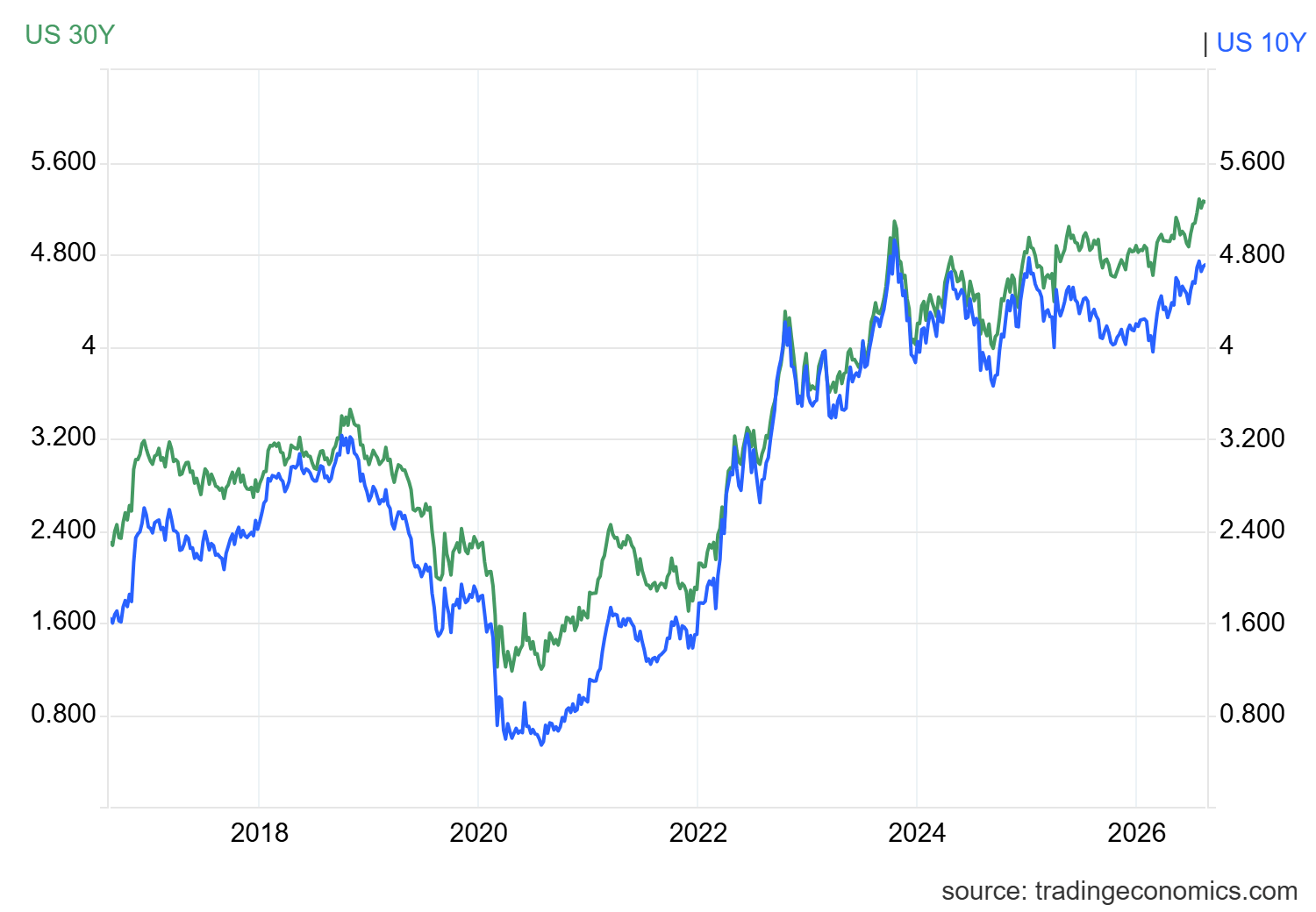
Wednesday's calm had a source: the Treasury Department's surprise announcement that it would at least double its buybacks of 10-, 20- and 30-year debt, a move that briefly hauled longer-dated yields off multi-decade highs. Treasury Secretary Scott Bessent went on CNBC Thursday and suggested the buyback could end up even larger than the announced $4 billion. Markets shrugged.
The 10-year yield climbed back above 4.70%, and the 30-year which had touched its highest level in nearly 20 years earlier in the week pushed back up near 5.25%, wiping out most of Wednesday's relief.
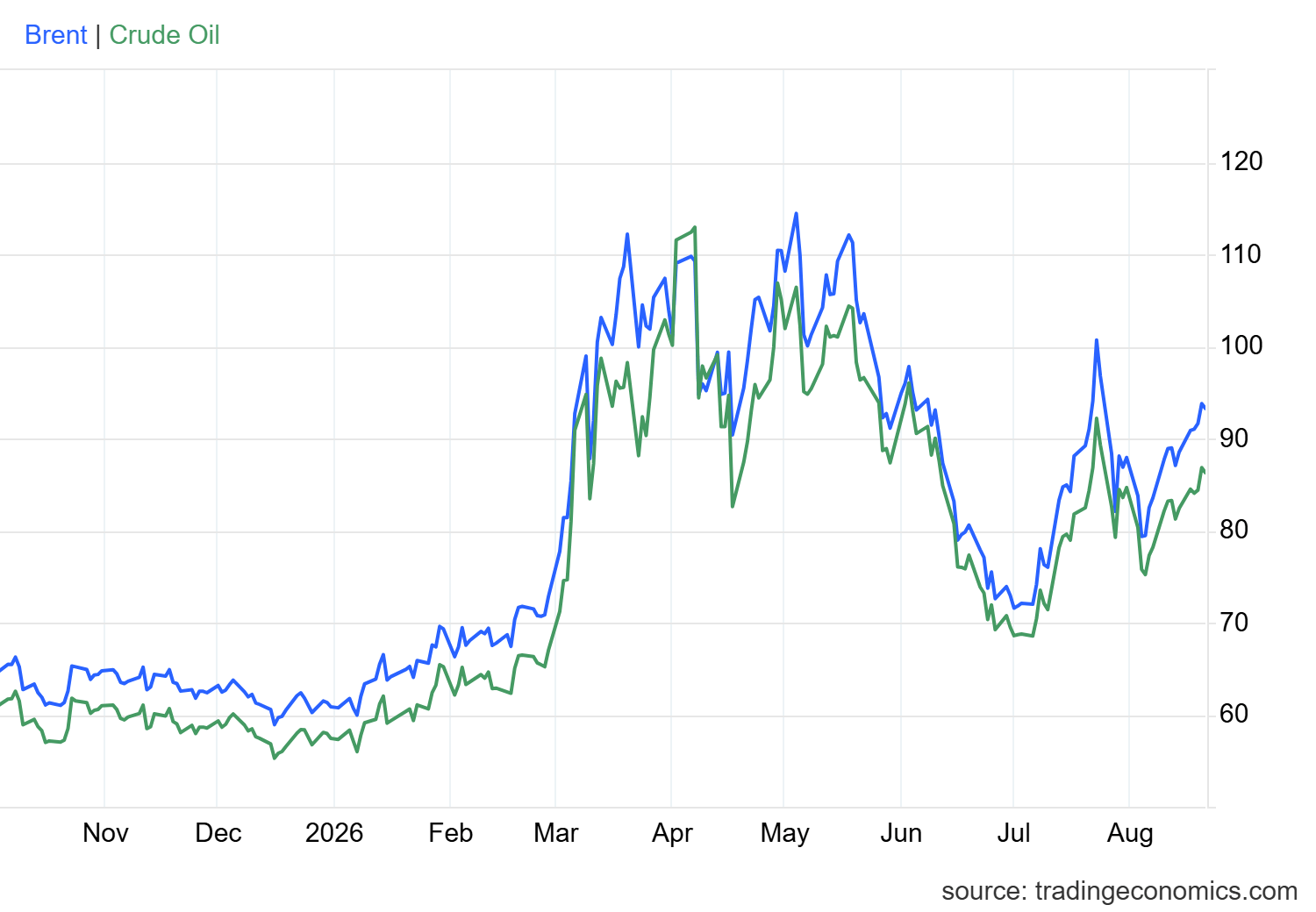
Oil added its own pressure to the rate story. WTI crude rose nearly 3% as President Trump's overnight vow of "Economic Warfare and Isolation on an unprecedented scale" against Iran, paired with Bessent's promise of additional sanctions Monday, put a fresh geopolitical premium back into energy prices and by extension, into inflation expectations.
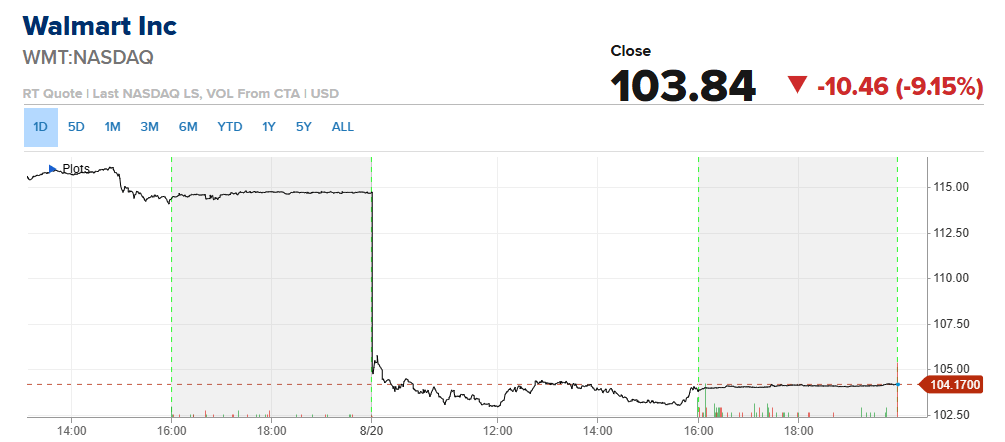
Walmart's Bad Day, By the Numbers. Nothing dragged harder on sentiment than Walmart. Shares fell roughly 9%, their worst single-day drop since May 17, 2022, when the stock lost more than 11%. The irony: Walmart beat on both earnings and revenue, raised its full-year outlook, and disclosed a $2.9 billion tariff refund it's plowing into price cuts. What spooked investors was underneath the headline same-store sales growth slowed to its weakest pace in roughly six years, a soft signal on the health of the American shopper that rippled through the rest of the consumer sector.
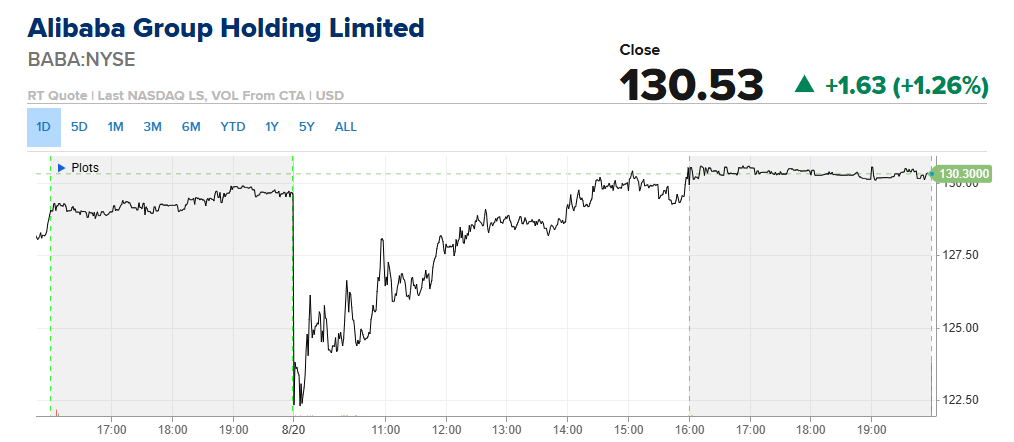
Alibaba added a separate worry from a different angle. The Chinese tech giant's U.S.-listed shares fell nearly 3% after it reported a 75% drop in quarterly profit, the cost of an aggressive buildout in AI infrastructure even as AI-related revenue climbed sharply. Investors are increasingly asking the same question of Alibaba that they've asked of American hyperscalers all year: how long does heavy spending have to run before it pays off.
One story from the brief needs a full rewind.
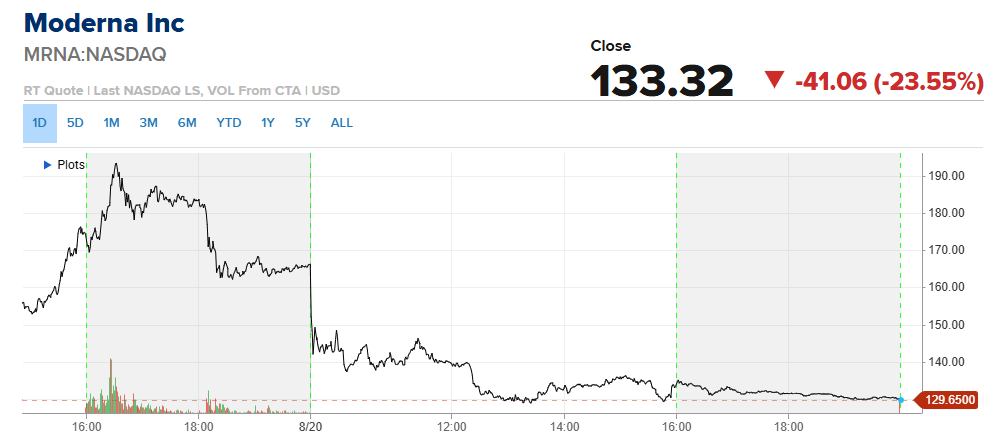
Moderna's monster rally a trial win for its personalized melanoma vaccine, developed with Merck, that sent shares surging as much as 177% happened Wednesday, was, by any measure, one of the biggest single-day moves in biotech history, adding tens of billions in market value and lifting Merck more than 10% alongside it.
Thursday told a different story. With the euphoria a day old, investors started taking profits, and Moderna gave back a chunk of the move, falling more than 23% even as the underlying science drew continued praise from analysts. Merck, whose gain had been more modest to begin with, held roughly steady. Neither move erased the scale of what happened Wednesday Moderna's stock still sat far above where it started the week but Thursday was a reminder that even landmark trial data doesn't guarantee a straight line up.
Where the Green Was
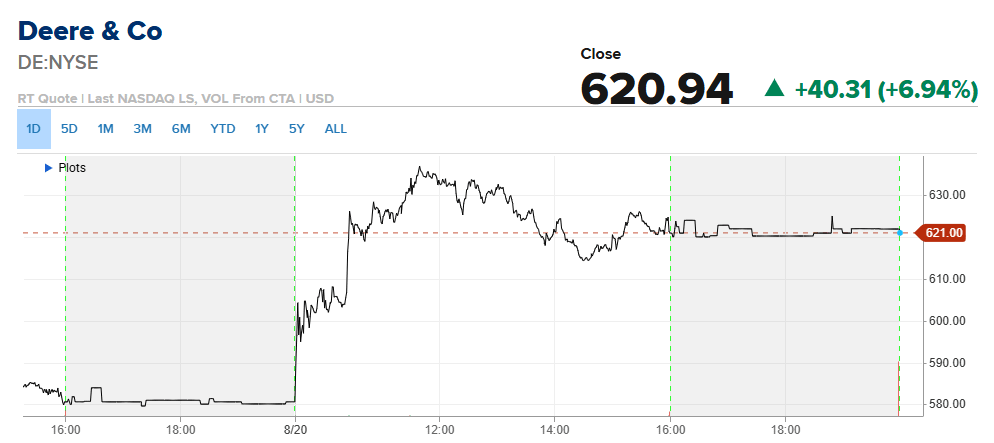
Deere was one of the week's rare industrial bright spots, with shares jumping roughly 7% after the farm and construction equipment maker posted a $1.38 billion quarterly profit, up from $1.29 billion a year earlier, on revenue that rose 5% to $12.6 billion. Management pointed to construction and infrastructure demand offsetting a continued slump in large farm equipment.
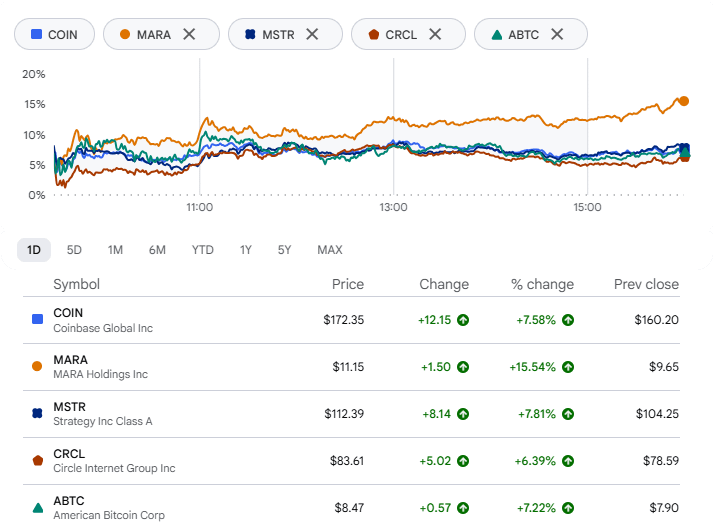
Crypto-linked stocks caught a bid too, tracking a rally in Bitcoin and ether tied to renewed optimism over crypto-friendly legislation in Congress. Coinbase gained roughly 7.5%, Circle Internet rose about 6.4%, and American Bitcoin climbed close to 7%. Mara Holdings was the standout, surging more than 15%.
The Sector Map Told the Real Story
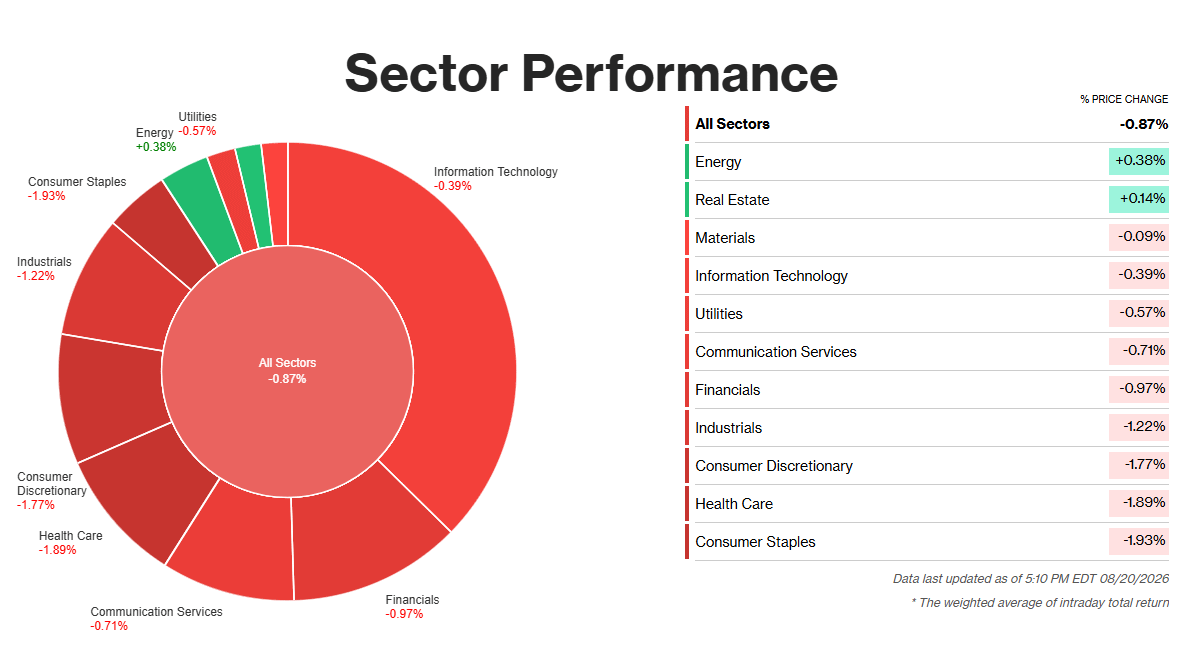
Breadth was ugly under the surface. Energy and real estate were the only two of the eleven S&P 500 sectors to finish in the green, and neither by much both gains were fractional. Everywhere else, red: consumer staples and consumer discretionary led the losses as Walmart's numbers rattled confidence in the American shopper, while healthcare extended a longer-running slide tied to looming most-favored-nation drug pricing rules that continue to compress pharma multiples even on days with good news.
Best-Performing Sectors
Energy topped the board Thursday as crude climbed again on renewed U.S.-Iran tensions. The primary catalyst has been a persistent surge in energy and commodity prices as markets brace for potential disruption. The rally in crude has stoked inflation fears, pushing the 30-year Treasury yield to a level not seen since 2007. For producers, higher realized prices flow straight to margins, and traders have rotated into the sector as a hedge against further Middle East escalation.
Real estate's gain looks shakier. The sector has fought elevated borrowing costs all year, and it continues to be challenged by supply imbalances in the commercial office segment tracing back to the pandemic, even as higher rates have historically weighed on the group. With yields climbing again Thursday, this looks more like a bounce than a trend.
Worst-Performing Sectors
Consumer-facing sectors bore the brunt of Thursday's selling, broadly rather than in one name. Consumer staples and discretionary stocks led markets lower as bond yields reversed some of Wednesday's decline, with the 10-year Treasury yield rising to 4.70%. That combination — firmer yields plus cautious retail earnings — has investors uneasy about the American shopper. Home Depot and Lowe's showed consumers still spending, but on smaller projects, while Walmart posted its slowest same-store sales growth in six years. That's a sector-wide signal, not a company-specific one.
Health care's slide fits a longer pattern rather than a single-day shock. The sector's struggles this year are largely a policy story, with a Most-Favored-Nation pricing framework threatening to benchmark U.S. drug prices against cheaper international rates and pressuring large-cap pharma earnings. That overhang keeps multiples compressed even when individual names post solid results.
Retail took the hardest hit outside Walmart itself, with Advance Auto Parts sinking on its own earnings miss, while higher rates and higher oil leaned on homebuilders, airlines, cruise lines and defense names alike.
Two forces are now pulling in the same direction a bond market that won't stay calmed and a war that keeps finding new ways to reprice oil and neither shows signs of loosening its grip before Monday's sanctions announcement gives Wall Street something new to price in.