The bridge itself isnot what would keep me awake at 2am.
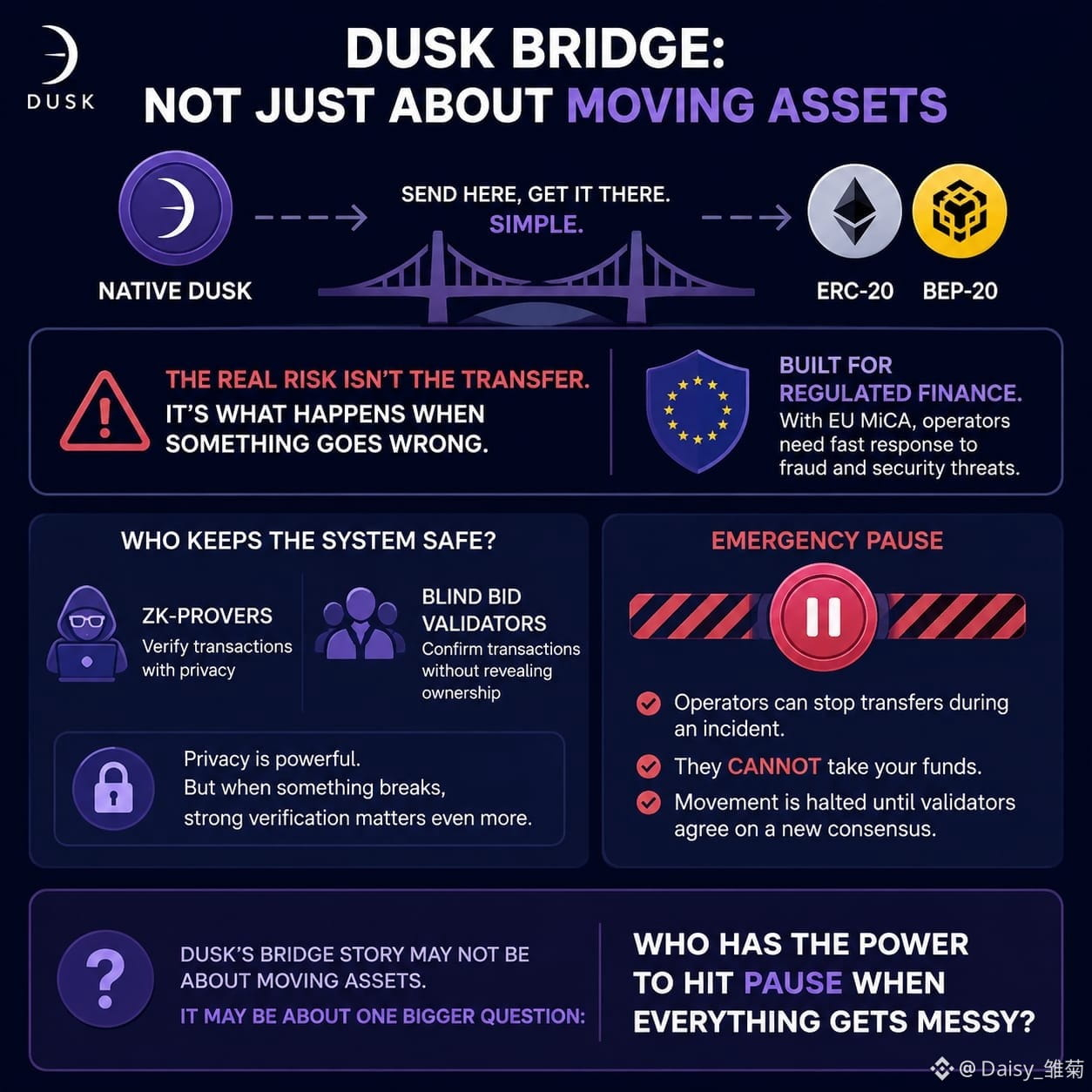
Moving assets between Native @Dusk and versions like ERC-20 or BEP-20 sounds simple. Send here, get it there, and everyone’s happy. But that’s the easy part.
The real thing to watch is what happens when something goes wrong.
Dusk is built with regulated finance in mind, not just another DeFi playground. With EU MiCA bringing stronger rules for fraud and security, operators need a way to respond fast when a serious problem hits.
So those keys? They have a purpose.
Who is keeping an eye on the system?
Normal transfers use ZK-Provers and Blind Bid validators to confirm transactions while hiding actual ownership details. That privacy is powerful but when something breaks, strong verification matters even more.
And this is where Dusk gets REALLY interesting.
There’s an Emergency Pause a kind of kill switch. Operators can stop transfers during an incident, but they cannot simply take your funds. The goal is to halt movement until validators agree on a new consensus.
Tbh, Dusk’s bridge story may not really be about moving assets.
It may be about one bigger question:
Who has the power to hit pause when everything gets messy?
@Dusk #dusk $DUSK
Moving assets between Native @Dusk and versions like ERC-20 or BEP-20 sounds simple. Send here, get it there, and everyone’s happy. But that’s the easy part.
The real thing to watch is what happens when something goes wrong.
Dusk is built with regulated finance in mind, not just another DeFi playground. With EU MiCA bringing stronger rules for fraud and security, operators need a way to respond fast when a serious problem hits.
So those keys? They have a purpose.
Who is keeping an eye on the system?
Normal transfers use ZK-Provers and Blind Bid validators to confirm transactions while hiding actual ownership details. That privacy is powerful but when something breaks, strong verification matters even more.
And this is where Dusk gets REALLY interesting.
There’s an Emergency Pause a kind of kill switch. Operators can stop transfers during an incident, but they cannot simply take your funds. The goal is to halt movement until validators agree on a new consensus.
Tbh, Dusk’s bridge story may not really be about moving assets.
It may be about one bigger question:
Who has the power to hit pause when everything gets messy?
@Dusk #dusk $DUSK