

The modern history of gold begins in 1971, when the U.S. ended the "Gold Standard" (the Bretton Woods system), allowing the price to float freely. Since then, it has transitioned from a fixed $35/oz commodity to a multi-thousand-dollar global asset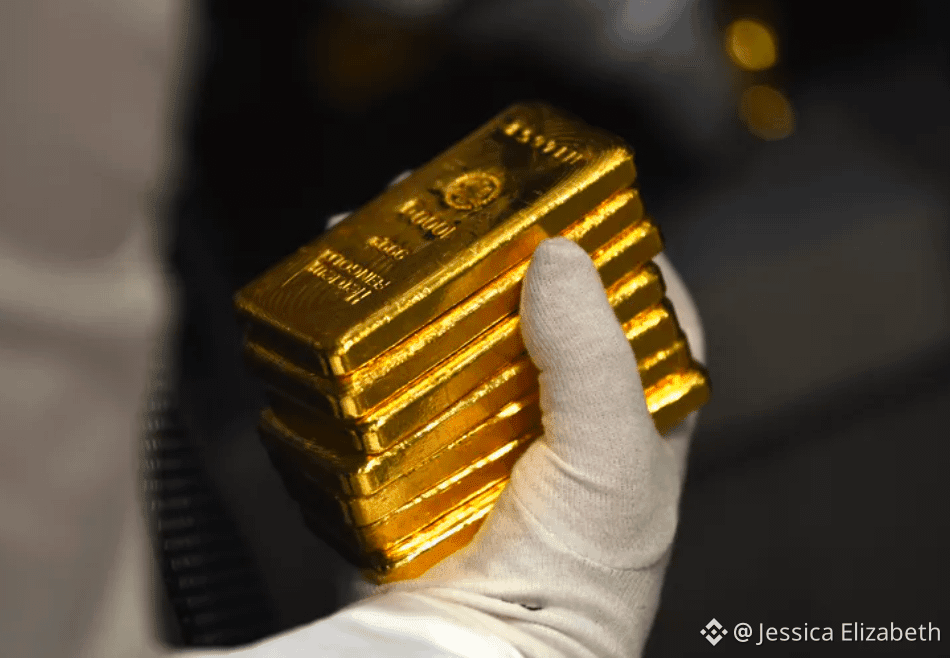
Era / Event Year Approx. Price (USD/oz) Context
The Gold Standard 1970 $35 Fixed price under Bretton Woods.
Stagflation Peak 1980 $850 Iranian Revolution & U.S. inflation.
The "Death of Gold" 1999 $252 Central banks sold reserves; low inflation.
Financial Crisis 2011 $1,921 Global banking collapse & quantitative easing.
Pandemic Surge 2020 $2,075 COVID-19 lockdowns & massive stimulus.
The Hyper-Rally 2024 $2,700 Geopolitical tension & high interest rates.Modern Record 2026 $5,310 Dollar weakness & aggressive CB buying.
Defining Eras of Gold History
1. The Fiat Transition (1971–1980)
When President Nixon "closed the gold window," gold was decoupled from the dollar. It immediately surged, fueled by the 1970s oil shocks and runaway inflation. It took only nine years for gold to jump from $35 to $850—a massive 2,300% increase. 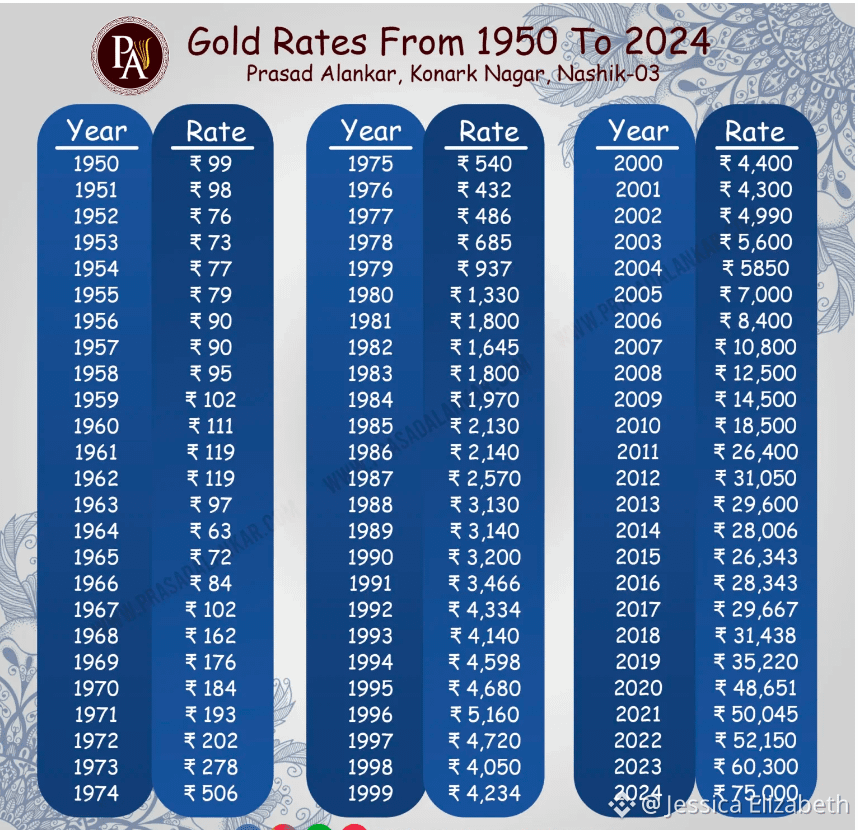
2. The Long Bear Market (1981–2000)
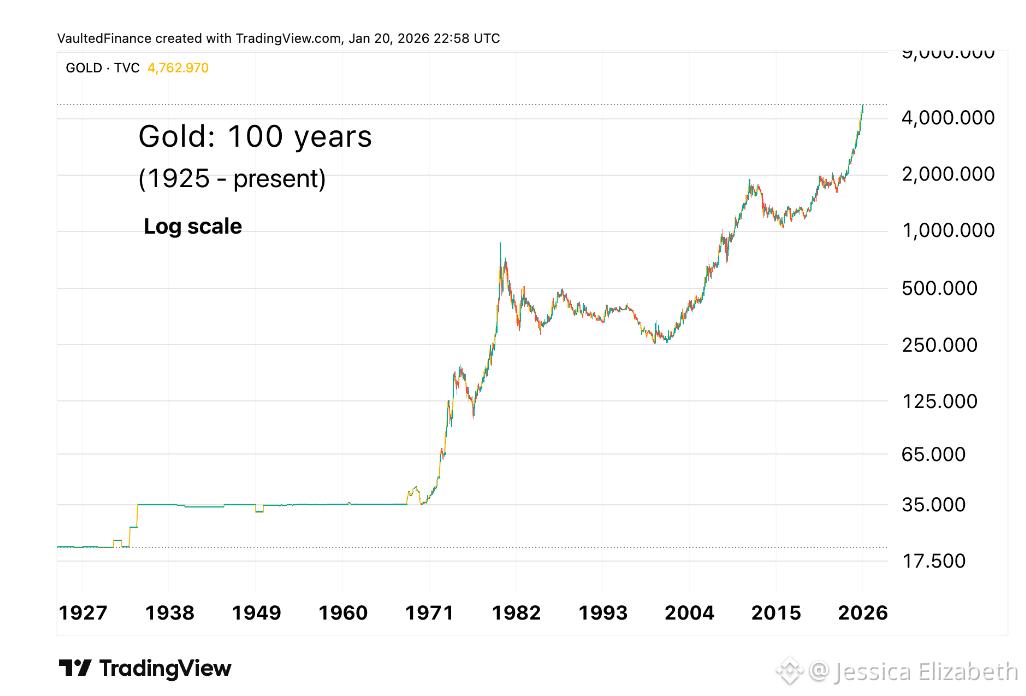
As Paul Volcker’s Fed raised interest rates to 20% to crush inflation, gold lost its luster. For two decades, a strong dollar and a booming stock market made gold look like a "relic." By 1999, it hit a multi-decade low of $252
3. The Bull Resurgence (2001–2012)
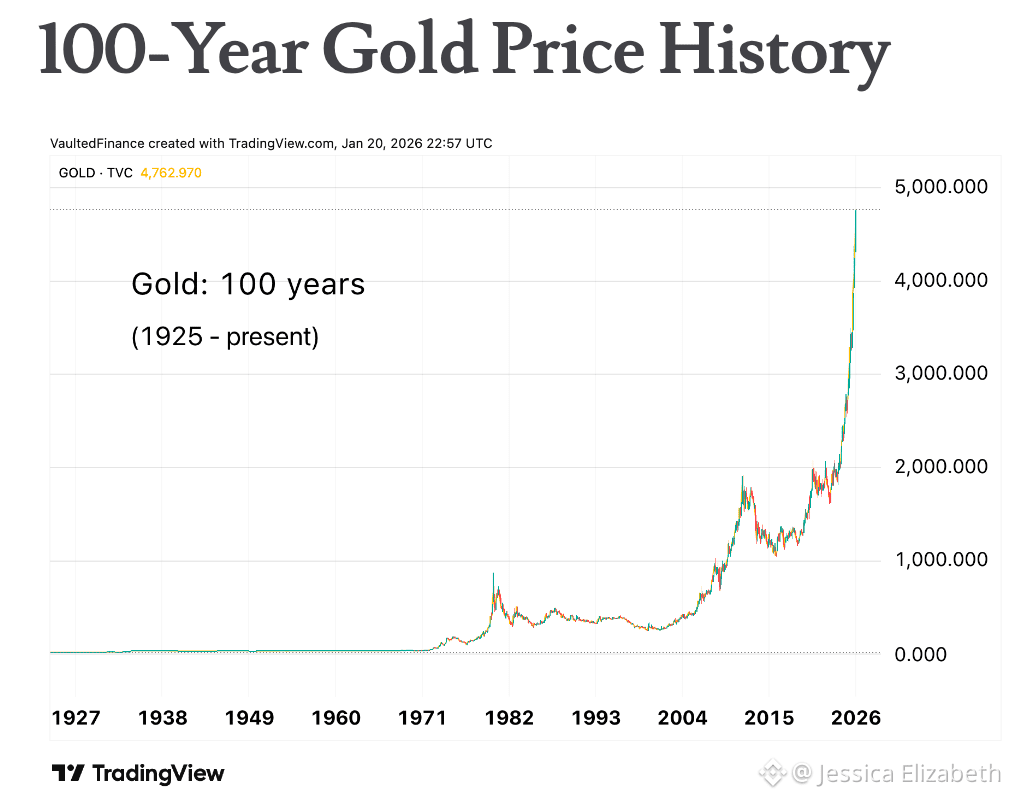
The 9/11 attacks and the subsequent Global Financial Crisis (2008) reminded the world why "safe havens" matter. Gold entered a 12-year winning streak, peaking at $1,921 in 2011 as investors feared the total collapse of the Euro and the U.S. Dollar
4. The 2026 "Hyper-Surge"
We are currently in the most aggressive gold rally in history. The move from $2,000 in early 2024 to over $5,000 today has been driven by: De-dollarization: Nations like China and Russia reducing their USD holdings in favor of bullion.Central Bank Appetite: In 2025 alone, central banks purchased record tonnages of gold to diversify reserves.Currency Erosion: Constant government deficit spending has led to a "debasement" of paper money, making gold's fixed supply incredibly valuable..
Historical Return Analysis
If you had invested $10,000 in gold at various points in history, here is what it would be worth at today’s $5,200 price:
Bought in 1970: ~$1,485,000
Bought in 2000: ~$185,000
Bought in 2020: ~$26,000
The Lesson: Gold doesn't just "go up"; it reacts to the failure of other systems. It is the only financial asset that is not someone else's liability.Would you like me to create a breakdown of gold’s performance against the S&P 500 over the last 50 years, or perhaps compare gold to silver's historical highs?