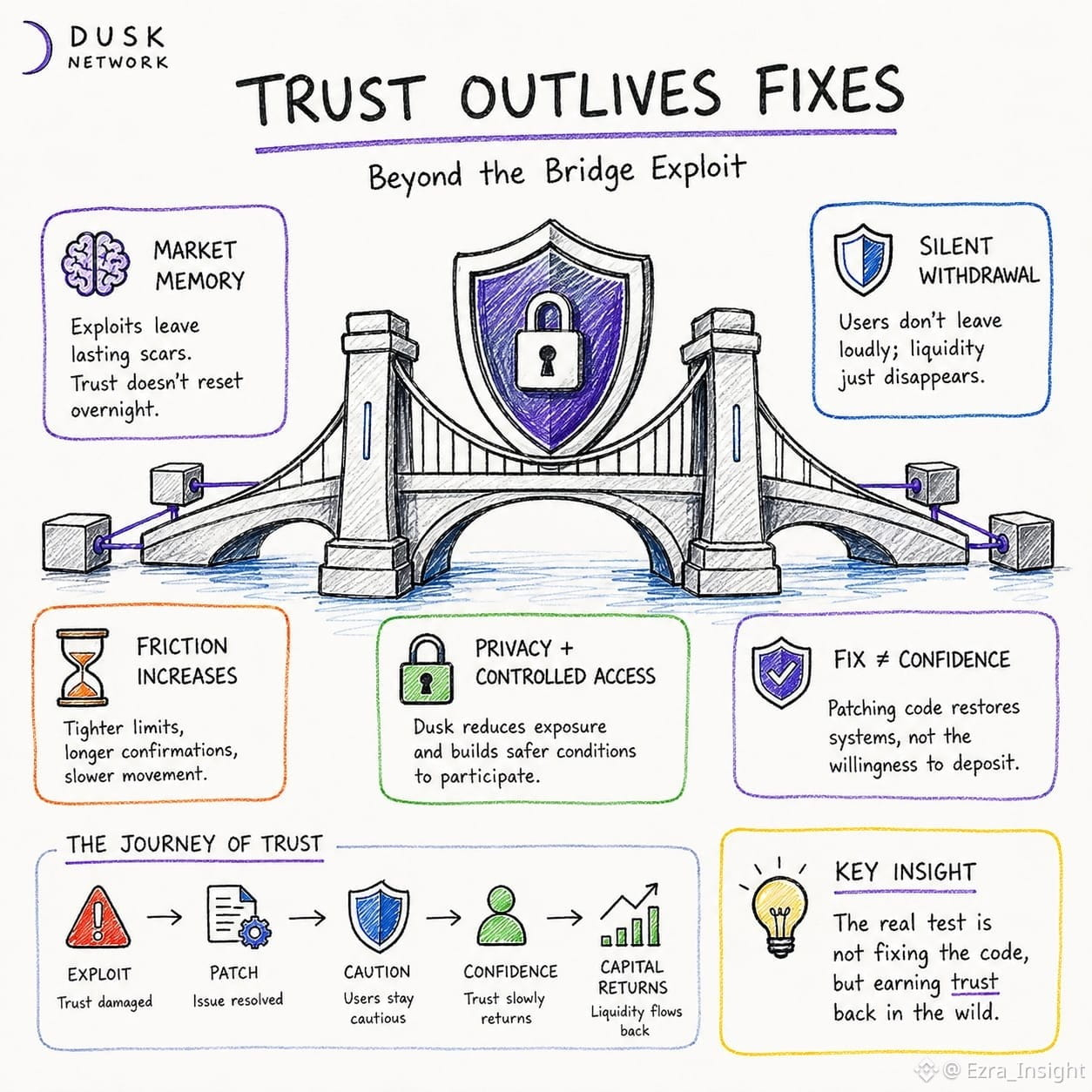
I kept thinking about how bridge post-mortems are usually treated as the end of a failure. Read the report, patch the bug, move on. But the more I look at what happens afterward, the less final that feels. A past exploit leaves a kind of memory in the market. Liquidity moves more carefully, limits get tighter, confirmations take longer, and users rarely announce that they no longer trust a route; they simply stop taking it. That’s where Dusk caught my attention. Its focus on privacy and controlled access made me think about trust from another angle: protecting sensitive activity may matter, but so does creating conditions where users can participate without feeling that every action exposes more than it should. Privacy can reduce one kind of risk, but confidence still has to survive real usage. A technical fix can restore the code. It doesn’t automatically restore the willingness to deposit. Maybe the real test of reliability is whether capital comes back after it has already learned to be afraid?
@Dusk $DUSK #dusk
@Dusk $DUSK #dusk