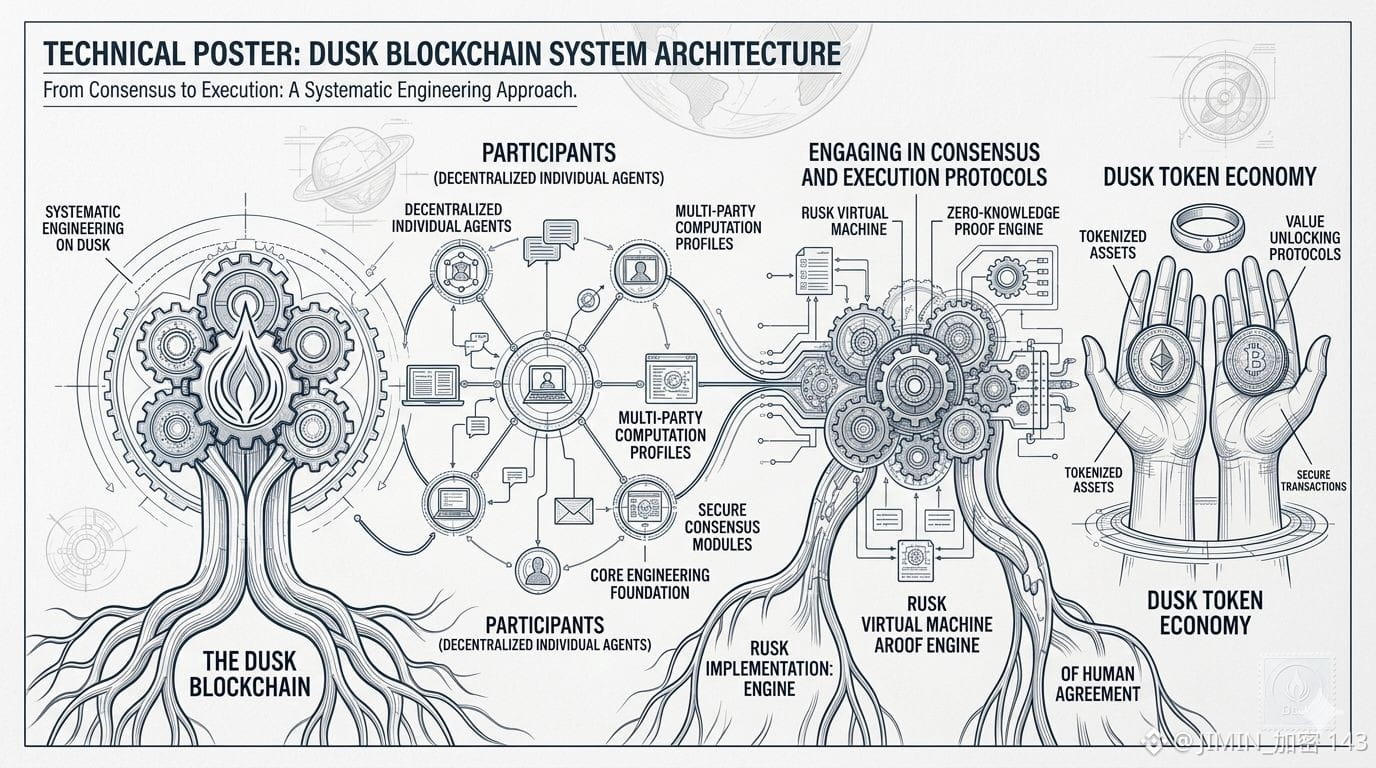
A blockchain network is ultimately a collection of computers following the same protocol.
These computers maintain copies of relevant blockchain information, communicate with other participants and perform different responsibilities depending on their role.
Within DUSK, nodes are important because they form the infrastructure supporting consensus, execution and network communication. The Rusk implementation provides the software environment through which important protocol components operate.
This creates an interesting distinction between the user-facing side of blockchain and the infrastructure side.
A person holding DUSK may only interact with a wallet. A provisioner, however, interacts with the network at a much deeper level. The node must remain synchronized, communicate with peers and participate in the responsibilities assigned by the consensus protocol.
Understanding nodes also helps explain why decentralization is not simply about having many wallet addresses. The actual infrastructure matters.
A healthy blockchain requires independent participants capable of running the software, maintaining network connectivity and following the protocol.
That is why node architecture deserves attention when researching DUSK.
The coin is visible to the market, but the nodes are part of the machinery that allows the network itself to function.#dusk $DUSK @Dusk
#TwoDronesHitKurdistanPMOffice #IAEAToRemoveNuclearMaterialFromSyriaSite #IAEAToRemoveNuclearMaterialFromSyriaSite #ChinaJulyOutputRetailInvestmentAllMiss
$AAPLB $NVDA.US
These computers maintain copies of relevant blockchain information, communicate with other participants and perform different responsibilities depending on their role.
Within DUSK, nodes are important because they form the infrastructure supporting consensus, execution and network communication. The Rusk implementation provides the software environment through which important protocol components operate.
This creates an interesting distinction between the user-facing side of blockchain and the infrastructure side.
A person holding DUSK may only interact with a wallet. A provisioner, however, interacts with the network at a much deeper level. The node must remain synchronized, communicate with peers and participate in the responsibilities assigned by the consensus protocol.
Understanding nodes also helps explain why decentralization is not simply about having many wallet addresses. The actual infrastructure matters.
A healthy blockchain requires independent participants capable of running the software, maintaining network connectivity and following the protocol.
That is why node architecture deserves attention when researching DUSK.
The coin is visible to the market, but the nodes are part of the machinery that allows the network itself to function.#dusk $DUSK @Dusk
#TwoDronesHitKurdistanPMOffice #IAEAToRemoveNuclearMaterialFromSyriaSite #IAEAToRemoveNuclearMaterialFromSyriaSite #ChinaJulyOutputRetailInvestmentAllMiss
$AAPLB $NVDA.US