
I used to think getting institutions onto the same network was the difficult part.
Now I think that’s only the beginning.
The real tension starts after settlement: when does information become visible, who gets to see it first, and how much delay is acceptable before transparency starts creating an advantage for someone else?
That matters especially for large positions. Immediate disclosure sounds good in theory, but in practice it can expose strategy before an institution is ready.
This is where Dusk gets interesting to me.
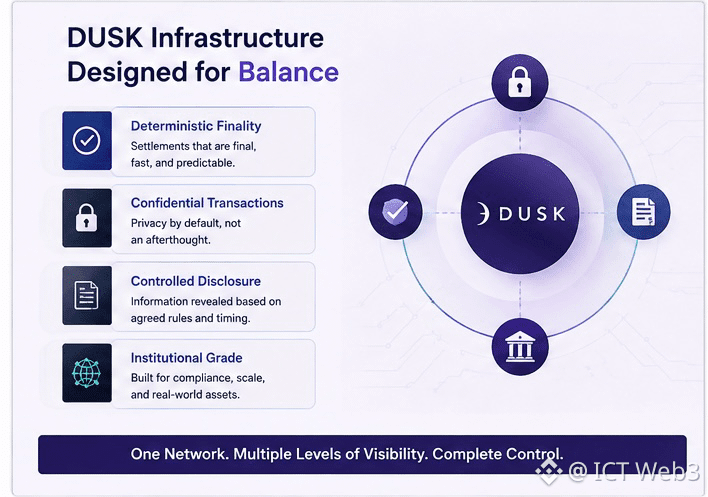
The bigger challenge isn’t simply putting financial activity onchain. It’s creating infrastructure where finality, privacy and disclosure can coexist without forcing every participant into the exact same level of visibility at the exact same moment.
A shared network can coordinate settlement.
Trust is harder.
Maybe the real measure of institutional adoption won’t be how many firms join, but how comfortable they become operating under the same rules of visibility.
@Dusk $DUSK #Dusk $PORTAL $GPS
Now I think that’s only the beginning.
The real tension starts after settlement: when does information become visible, who gets to see it first, and how much delay is acceptable before transparency starts creating an advantage for someone else?
That matters especially for large positions. Immediate disclosure sounds good in theory, but in practice it can expose strategy before an institution is ready.
This is where Dusk gets interesting to me.
The bigger challenge isn’t simply putting financial activity onchain. It’s creating infrastructure where finality, privacy and disclosure can coexist without forcing every participant into the exact same level of visibility at the exact same moment.
A shared network can coordinate settlement.
Trust is harder.
Maybe the real measure of institutional adoption won’t be how many firms join, but how comfortable they become operating under the same rules of visibility.
@Dusk $DUSK #Dusk $PORTAL $GPS