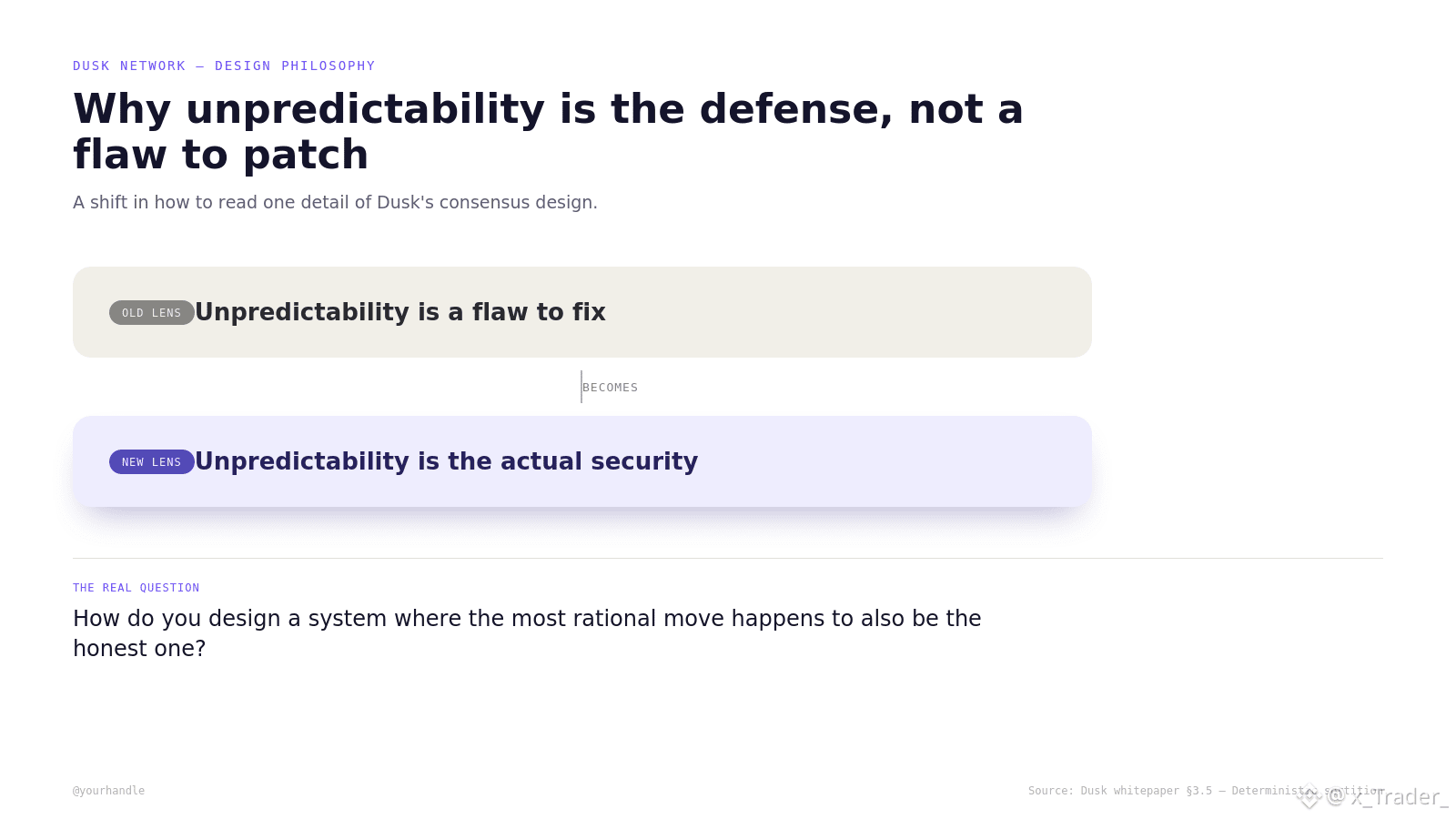
I used to think unpredictability in a blockchain was a bug you tolerate, not a feature you'd actually design for.
Studying Dusk changed that.
Imagine you're a provisioner. You've staked, you're eligible, you know you could be picked to generate the next block. But you don't know if you will be. Neither does anyone else. Not the other validators. Not even you, ten seconds before it happens.
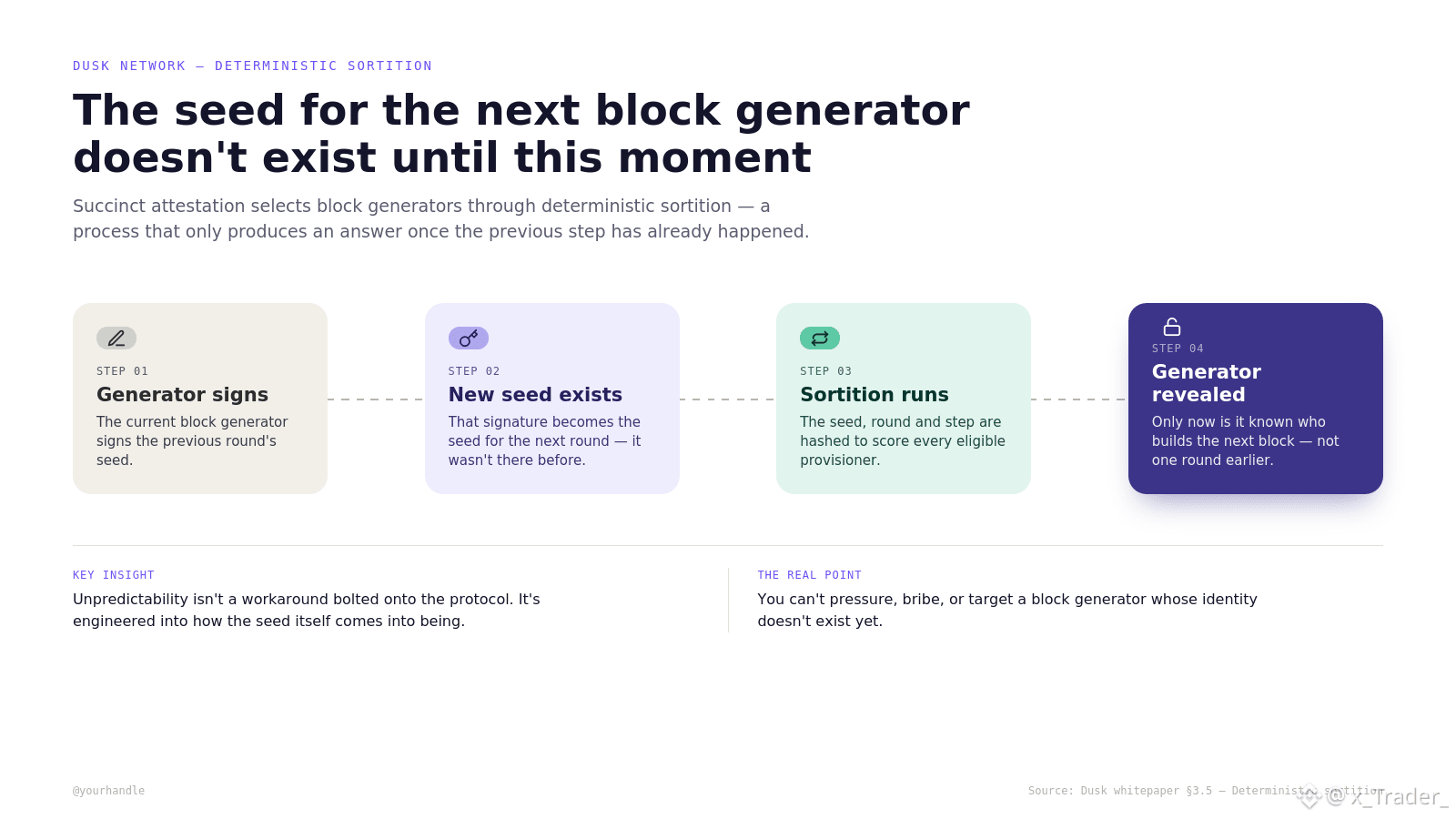
Here's the strange part. The seed that decides who gets picked for block N+1 doesn't exist yet while block N is still being built. It's literally generated from the current block generator signing the previous seed. The answer to "who's next" isn't hidden somewhere — it hasn't been computed yet.
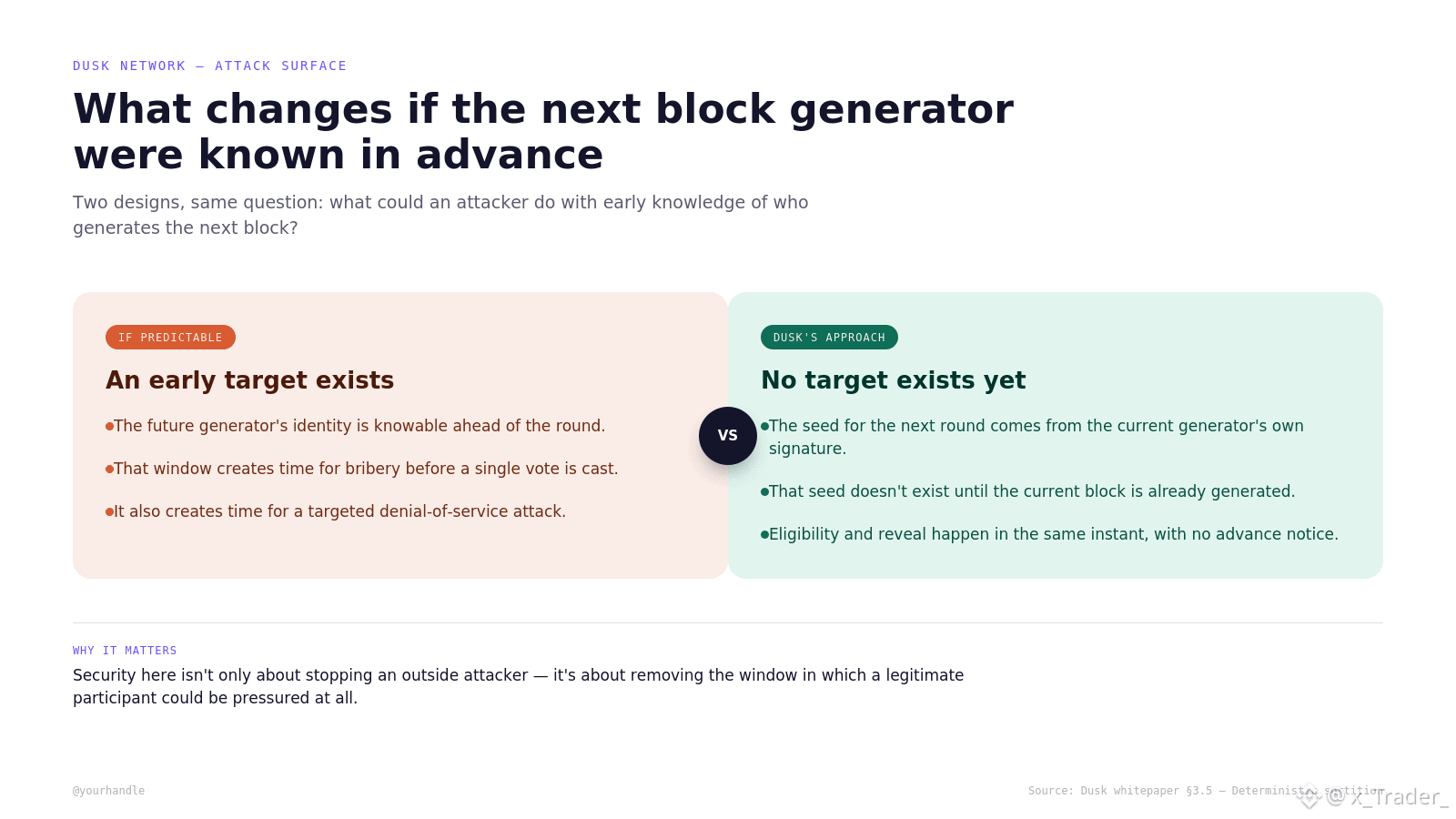
Why does that matter? Because predictability is a liability here, not a convenience. If an attacker could work out who generates block 40 today, they'd have all the time in the world to target that validator — bribe them, DDoS them, pressure them — before the moment ever arrives.
Dusk's deterministic sortition closes that window entirely. You only find out you're the generator the instant it's already true.
So the real design question wasn't "how do we pick a leader." It was "how do we pick one without ever letting anyone plan for it."
Guess what happens the moment block selection becomes predictable even slightly early?
#dusk $DUSK @Dusk
Poll:
Guess what breaks first if you could predict the next block generator
🎯 Bribery becomes possible
🛑 DDoS becomes possible
⚖️ Both, same vulnerability
🔒 Nothing, still secure
Studying Dusk changed that.
Imagine you're a provisioner. You've staked, you're eligible, you know you could be picked to generate the next block. But you don't know if you will be. Neither does anyone else. Not the other validators. Not even you, ten seconds before it happens.
Here's the strange part. The seed that decides who gets picked for block N+1 doesn't exist yet while block N is still being built. It's literally generated from the current block generator signing the previous seed. The answer to "who's next" isn't hidden somewhere — it hasn't been computed yet.
Why does that matter? Because predictability is a liability here, not a convenience. If an attacker could work out who generates block 40 today, they'd have all the time in the world to target that validator — bribe them, DDoS them, pressure them — before the moment ever arrives.
Dusk's deterministic sortition closes that window entirely. You only find out you're the generator the instant it's already true.
So the real design question wasn't "how do we pick a leader." It was "how do we pick one without ever letting anyone plan for it."
Guess what happens the moment block selection becomes predictable even slightly early?
#dusk $DUSK @Dusk
Poll:
Guess what breaks first if you could predict the next block generator
🎯 Bribery becomes possible
🛑 DDoS becomes possible
⚖️ Both, same vulnerability
🔒 Nothing, still secure