I’ve become a little numb to the word “privacy” in crypto.
Every few cycles, a new project comes along saying transparency has gone too far and that it can finally fix the problem. Then the market moves on, the narrative changes, and most people forget.
Dusk is one of the projects that made me stop for a second.
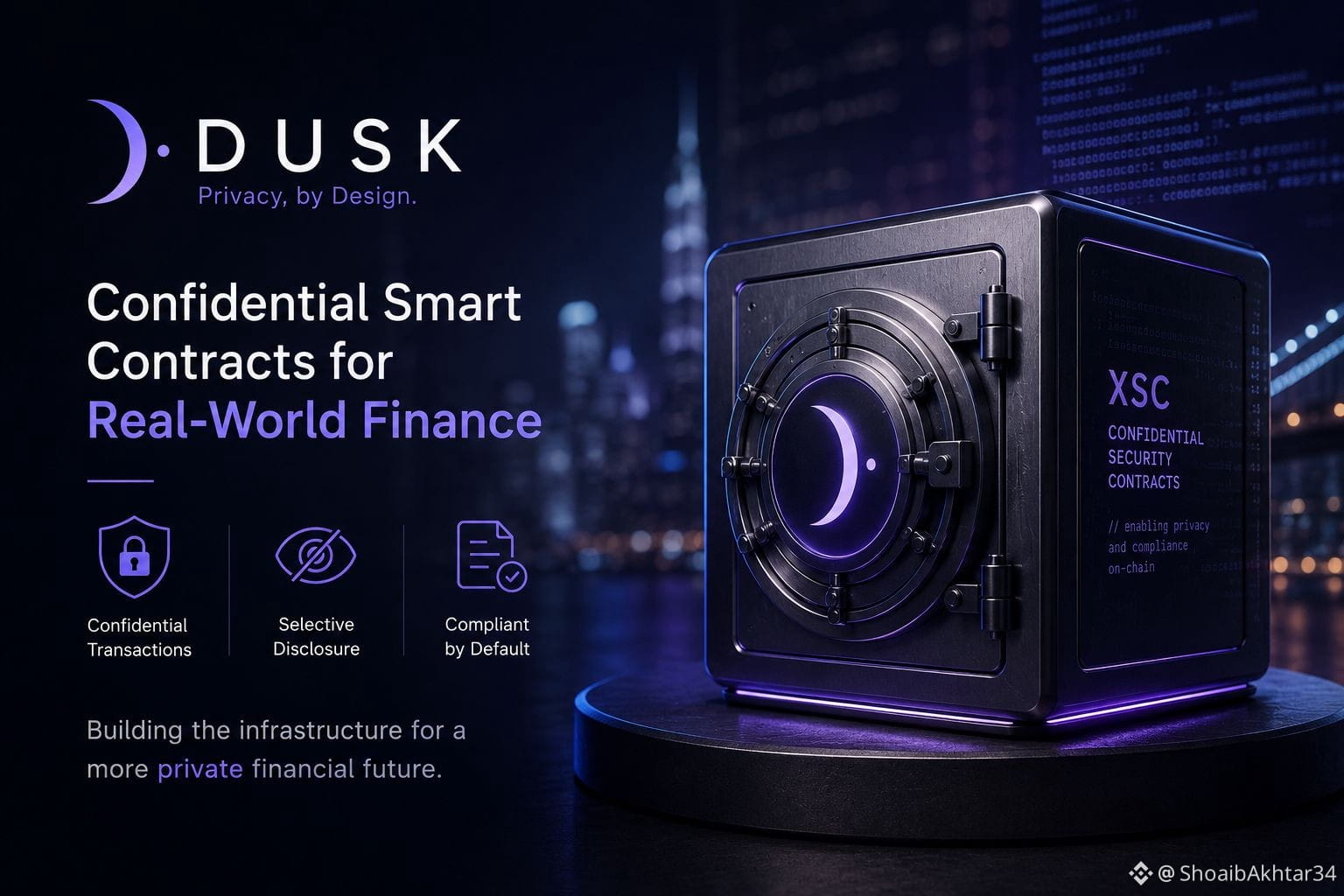
Maybe because the problem it’s chasing feels less theoretical. Financial markets were never built around showing everyone your balance, your positions, your counterparties, or every move you make. Dusk is trying to bring that kind of confidentiality on-chain, while still leaving room for verification and selective disclosure when it’s actually needed.
That sounds reasonable to me.
But reasonable doesn’t automatically mean successful.
The difficult part is everything around the technology. Institutions have rules. Regulators want visibility. Users want simplicity. Developers want good tooling. And nobody wants privacy that comes with ten extra steps just to do something basic.
That’s where I stay skeptical.
I’ve seen plenty of technically impressive projects struggle because the real world was messier than the whitepaper.
Still, something about Dusk feels a little more grounded. Its XSC standard is aimed specifically at confidential security contracts and regulated financial assets, rather than simply adding privacy because it sounds good.
I’m not saying it solves the problem.
I’m just saying it’s one I’ll keep watching.
Because if finance really moves on-chain, maybe the important question won’t be how transparent a blockchain can become.
Maybe it’ll be knowing exactly when it shouldn’t be.
#dusk @Dusk $DUSK
Every few cycles, a new project comes along saying transparency has gone too far and that it can finally fix the problem. Then the market moves on, the narrative changes, and most people forget.
Dusk is one of the projects that made me stop for a second.
Maybe because the problem it’s chasing feels less theoretical. Financial markets were never built around showing everyone your balance, your positions, your counterparties, or every move you make. Dusk is trying to bring that kind of confidentiality on-chain, while still leaving room for verification and selective disclosure when it’s actually needed.
That sounds reasonable to me.
But reasonable doesn’t automatically mean successful.
The difficult part is everything around the technology. Institutions have rules. Regulators want visibility. Users want simplicity. Developers want good tooling. And nobody wants privacy that comes with ten extra steps just to do something basic.
That’s where I stay skeptical.
I’ve seen plenty of technically impressive projects struggle because the real world was messier than the whitepaper.
Still, something about Dusk feels a little more grounded. Its XSC standard is aimed specifically at confidential security contracts and regulated financial assets, rather than simply adding privacy because it sounds good.
I’m not saying it solves the problem.
I’m just saying it’s one I’ll keep watching.
Because if finance really moves on-chain, maybe the important question won’t be how transparent a blockchain can become.
Maybe it’ll be knowing exactly when it shouldn’t be.
#dusk @Dusk $DUSK