
I lost BTC in 2022... not a lot, but enough to remember exactly which platform and exactly how it happened.
That's the lens I bring to any BTC lending product now, including this Babylon and Aave v4 thing everyone's talking about.
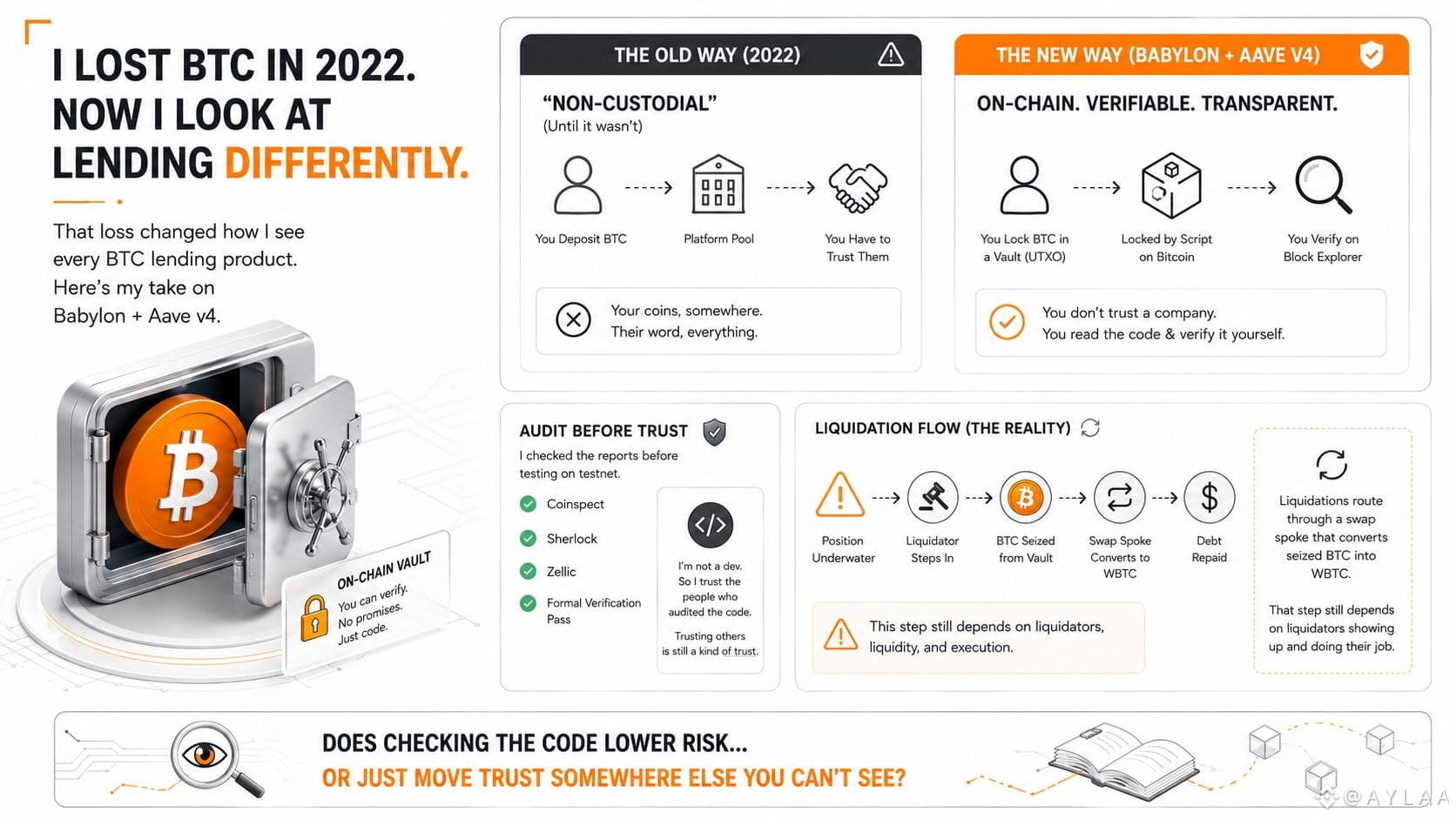
The old platforms BlockFi, Celsius, the rest all said "non-custodial" or "your Bitcoin is safe" right up until it wasn't. The problem wasn't the marketing copy, it was that your coins sat in a pool somewhere and you had to take their word for what happened to them.
So when I looked at Babylon's design, the thing that actually got my attention wasn't the "no wrapped BTC" pitch. It was that I could pull up the vault transaction on a block explorer and read the spending conditions myself. The BTC sits in a UTXO on Bitcoin, locked by a script, not a company's balance sheet.
That's a real difference from most Bitcoin lending, where "trustless" usually just means a nicer dashboard.
I still went through the audit list before testing this on testnet... Coinspect, Sherlock, Zellic, a formal verification pass. Reading code isn't my job, so I was trusting other people's trust, which is its own kind of irony.
Liquidations still route through a swap spoke that converts seized BTC into WBTC. That step still depends on liquidators showing up and doing their job.
Does checking the code yourself actually lower your risk, or does it just move the trust somewhere else you can't see as easily?
@BabylonLabs_io
$BABY
#baby
That's the lens I bring to any BTC lending product now, including this Babylon and Aave v4 thing everyone's talking about.
The old platforms BlockFi, Celsius, the rest all said "non-custodial" or "your Bitcoin is safe" right up until it wasn't. The problem wasn't the marketing copy, it was that your coins sat in a pool somewhere and you had to take their word for what happened to them.
So when I looked at Babylon's design, the thing that actually got my attention wasn't the "no wrapped BTC" pitch. It was that I could pull up the vault transaction on a block explorer and read the spending conditions myself. The BTC sits in a UTXO on Bitcoin, locked by a script, not a company's balance sheet.
That's a real difference from most Bitcoin lending, where "trustless" usually just means a nicer dashboard.
I still went through the audit list before testing this on testnet... Coinspect, Sherlock, Zellic, a formal verification pass. Reading code isn't my job, so I was trusting other people's trust, which is its own kind of irony.
Liquidations still route through a swap spoke that converts seized BTC into WBTC. That step still depends on liquidators showing up and doing their job.
Does checking the code yourself actually lower your risk, or does it just move the trust somewhere else you can't see as easily?
@BabylonLabs_io
$BABY
#baby