bridge hacks are the most consistent source of catastrophic loss in crypto.
not exchange hacks. not protocol exploits. bridges. the Ronin bridge😅
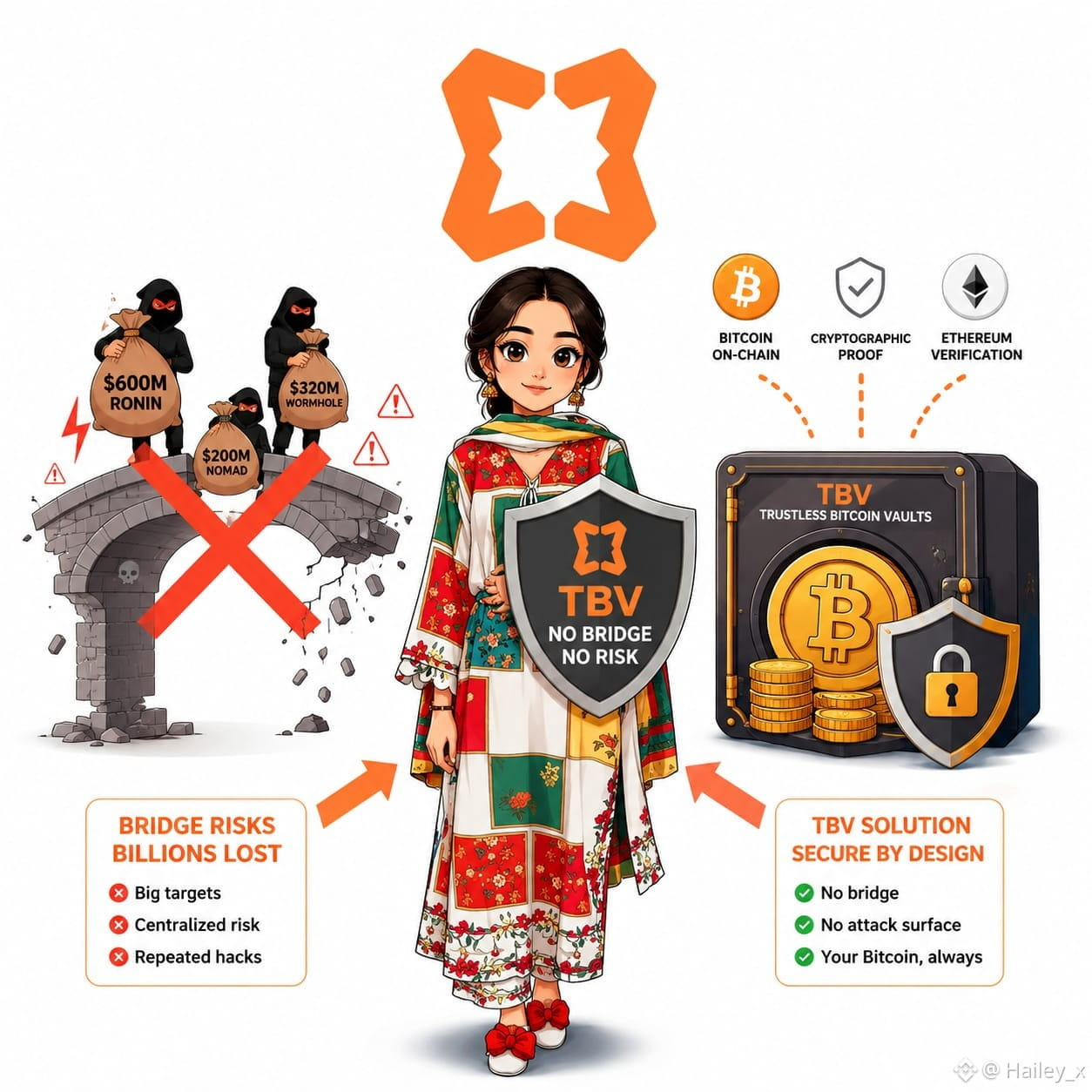
lost over $600 million. the Wormhole exploit was close to $320 million. Nomad lost nearly $200 million. these are not edge cases they are a recurring patern across the industry and the amounts involved dwarf most other attack vectors combined.
the reason bridges are so vulnerable is structural. a bridge holds assats on one chain while issuing representations on another. that means there is always a pool of real assets sitting somewhere, waiting to be unlocked.
that pool is the target. every dollar of bridged assets is a dollar that an attacker is motivated to find a way to reach. the biggar the bridge, the bigger the target, the more sophisticated
the attack that eventually comes.
most approaches to making Bitcoin usable across chains require bridging. you lock BTC on the Bitcoin chain, the bridge issues a wrapped token on the
destination chain, and you use that wrapped token in DeFi.
the trust assumption is that the bridge contract is secure and the 0perators are honest. the track record of that assumption is not encouraging.
Trustless Bitcoin Vaults (TBV) removes the bridge from the design entirely. your Bitcoin does not move to a bridge. it does not get locked in a cross-chain contract that isues a representation elsewhere. it stays on
the Bitcoin chain in a vault enforced by Bitcoin consensus. the Ethereum side verifies your collateral through cryptographic proof not through a bridge holding your actual Bitcoin.
no bridge means no bridge-sized
pool of assets sitting As a target. TBV eliminates the attack surface that has cost the industry billions, not by making the bridge more secure, but by not needing one??
#baby @BabylonLabs_io $BABY
not exchange hacks. not protocol exploits. bridges. the Ronin bridge😅
lost over $600 million. the Wormhole exploit was close to $320 million. Nomad lost nearly $200 million. these are not edge cases they are a recurring patern across the industry and the amounts involved dwarf most other attack vectors combined.
the reason bridges are so vulnerable is structural. a bridge holds assats on one chain while issuing representations on another. that means there is always a pool of real assets sitting somewhere, waiting to be unlocked.
that pool is the target. every dollar of bridged assets is a dollar that an attacker is motivated to find a way to reach. the biggar the bridge, the bigger the target, the more sophisticated
the attack that eventually comes.
most approaches to making Bitcoin usable across chains require bridging. you lock BTC on the Bitcoin chain, the bridge issues a wrapped token on the
destination chain, and you use that wrapped token in DeFi.
the trust assumption is that the bridge contract is secure and the 0perators are honest. the track record of that assumption is not encouraging.
Trustless Bitcoin Vaults (TBV) removes the bridge from the design entirely. your Bitcoin does not move to a bridge. it does not get locked in a cross-chain contract that isues a representation elsewhere. it stays on
the Bitcoin chain in a vault enforced by Bitcoin consensus. the Ethereum side verifies your collateral through cryptographic proof not through a bridge holding your actual Bitcoin.
no bridge means no bridge-sized
pool of assets sitting As a target. TBV eliminates the attack surface that has cost the industry billions, not by making the bridge more secure, but by not needing one??
#baby @BabylonLabs_io $BABY