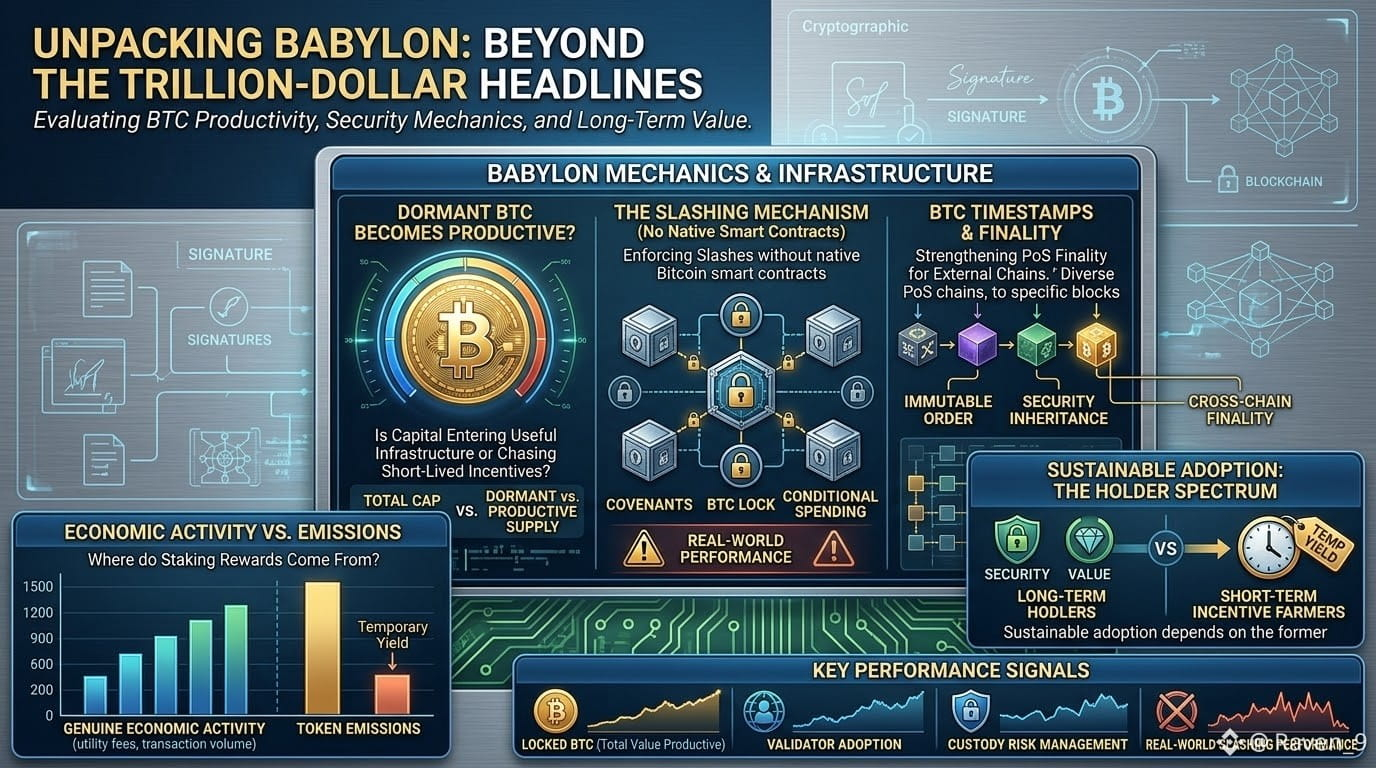
Je réfléchis à Babylone sous un angle différent. La capitalisation boursière de plusieurs milliers de milliards de dollars du Bitcoin représente le capital maximal susceptible de participer, et non la quantité qui y participera réellement. Cette distinction compte, car l’histoire véritable consiste à savoir si le BTC dormant devient productif grâce à une infrastructure utile, plutôt que via des incitations éphémères.
Ce qui m’intéresse, c’est la conception de Babylone. Je veux voir comment le slashing est appliqué sans contrats intelligents natifs sur Bitcoin, comment les horodatages Bitcoin renforcent la finalité pour les chaînes PoS, et si les récompenses de staking proviennent d’une activité économique réelle plutôt que d’émissions de jetons. Ces mécanismes révéleront bien plus que de simples chiffres marquants.
Je pense aussi qu’il existe une différence importante entre les détenteurs de Bitcoin à long terme et les « éleveurs » d’incitations à court terme. L’adoption durable dépend des participants qui accordent de la valeur à la sécurité et à l’utilité, et pas uniquement aux opportunités de rendement temporaire.
Je vais suivre le BTC verrouillé, l’adoption par les validateurs, le risque lié à la garde, et surtout la manière dont le mécanisme de slashing de Babylone se comporte dans des conditions réelles. Ces signaux me diront bien plus que l’enthousiasme du marché ne pourra jamais le faire.
@BabylonLabs_io #baby $BABY
Ce qui m’intéresse, c’est la conception de Babylone. Je veux voir comment le slashing est appliqué sans contrats intelligents natifs sur Bitcoin, comment les horodatages Bitcoin renforcent la finalité pour les chaînes PoS, et si les récompenses de staking proviennent d’une activité économique réelle plutôt que d’émissions de jetons. Ces mécanismes révéleront bien plus que de simples chiffres marquants.
Je pense aussi qu’il existe une différence importante entre les détenteurs de Bitcoin à long terme et les « éleveurs » d’incitations à court terme. L’adoption durable dépend des participants qui accordent de la valeur à la sécurité et à l’utilité, et pas uniquement aux opportunités de rendement temporaire.
Je vais suivre le BTC verrouillé, l’adoption par les validateurs, le risque lié à la garde, et surtout la manière dont le mécanisme de slashing de Babylone se comporte dans des conditions réelles. Ces signaux me diront bien plus que l’enthousiasme du marché ne pourra jamais le faire.
@BabylonLabs_io #baby $BABY