Quelque chose me tracasse depuis peu.
La plupart des discussions sur la blockchain traitent la conformité comme une caractéristique institutionnelle : quelque chose dont s’inquiètent les banques, les régulateurs ou les développeurs. Mais du point de vue de l’utilisateur, la conformité est aussi une expérience. Soit vous comprenez pourquoi votre transaction a fonctionné... soit vous ne comprenez pas.
Je pense que nous avons sous-estimé cela.
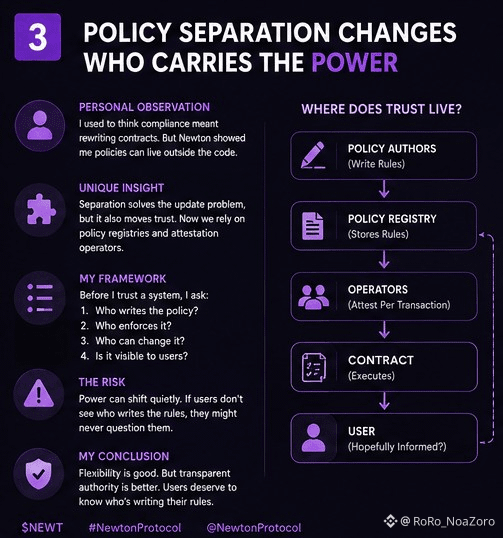
En explorant les modèles de politiques programmables, j’ai réalisé que les meilleurs systèmes ne se contentent pas d’appliquer des règles. Ils créent un comportement prévisible. Si un portefeuille est rejeté, je veux savoir quelle politique a été appliquée, et pas simplement recevoir un autre message d’erreur vague.
C’est devenu mon propre cadre. La prévisibilité. L’explicabilité. La vérifiabilité. Si vous en manquez une, la confiance commence à s’éroder, même si la technologie est sûre.
Le plus grand risque n’est pas l’application stricte. C’est l’application silencieuse. Des règles qui existent quelque part en arrière-plan, qui évoluent dans le temps pendant que les utilisateurs n’ont aucune idée de ce qui a changé ni de qui l’a changé.
Le protocole Newton est intéressant parce qu’il pousse cette discussion au-delà de la conformité elle-même, vers la mise en visibilité des politiques. Je pense que c’est là que Web3 a encore beaucoup à apprendre.
@NewtonProtocol
$DEXE $TLM $SYN
La plupart des discussions sur la blockchain traitent la conformité comme une caractéristique institutionnelle : quelque chose dont s’inquiètent les banques, les régulateurs ou les développeurs. Mais du point de vue de l’utilisateur, la conformité est aussi une expérience. Soit vous comprenez pourquoi votre transaction a fonctionné... soit vous ne comprenez pas.
Je pense que nous avons sous-estimé cela.
En explorant les modèles de politiques programmables, j’ai réalisé que les meilleurs systèmes ne se contentent pas d’appliquer des règles. Ils créent un comportement prévisible. Si un portefeuille est rejeté, je veux savoir quelle politique a été appliquée, et pas simplement recevoir un autre message d’erreur vague.
C’est devenu mon propre cadre. La prévisibilité. L’explicabilité. La vérifiabilité. Si vous en manquez une, la confiance commence à s’éroder, même si la technologie est sûre.
Le plus grand risque n’est pas l’application stricte. C’est l’application silencieuse. Des règles qui existent quelque part en arrière-plan, qui évoluent dans le temps pendant que les utilisateurs n’ont aucune idée de ce qui a changé ni de qui l’a changé.
Le protocole Newton est intéressant parce qu’il pousse cette discussion au-delà de la conformité elle-même, vers la mise en visibilité des politiques. Je pense que c’est là que Web3 a encore beaucoup à apprendre.
@NewtonProtocol
$DEXE $TLM $SYN