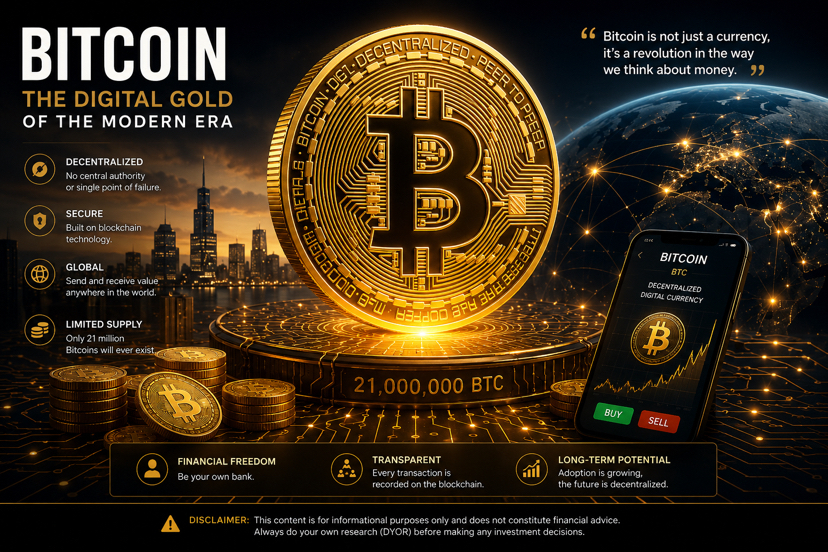
Bitcoin is the world’s first and most widely recognized cryptocurrency, introduced in 2009 by Satoshi Nakamoto. Built on blockchain technology, Bitcoin operates as a decentralized digital currency, meaning it is not controlled by any government, bank, or central authority.
One of Bitcoin’s most unique features is its limited supply of 21 million coins, making it a scarce asset often referred to as “digital gold.” This scarcity, combined with growing global adoption, has attracted investors, institutions, and companies seeking an alternative store of value.
Over the years, Bitcoin has transformed from an experimental technology into a global financial asset. It enables secure, transparent, and borderless transactions, allowing people to transfer value anywhere in the world without relying on traditional financial intermediaries.
While Bitcoin has experienced significant price volatility, its long-term growth has made it one of the most discussed assets in modern finance. As the cryptocurrency industry continues to evolve, Bitcoin remains the leading symbol of digital innovation and financial freedom.