Was digging into the @GeniusOfficial stack positioning for this CreatorPad task — how $GENIUS actually sits inside Web3 infrastructure, not how the docs frame it — when something slid into focus that I hadn't fully registered before.
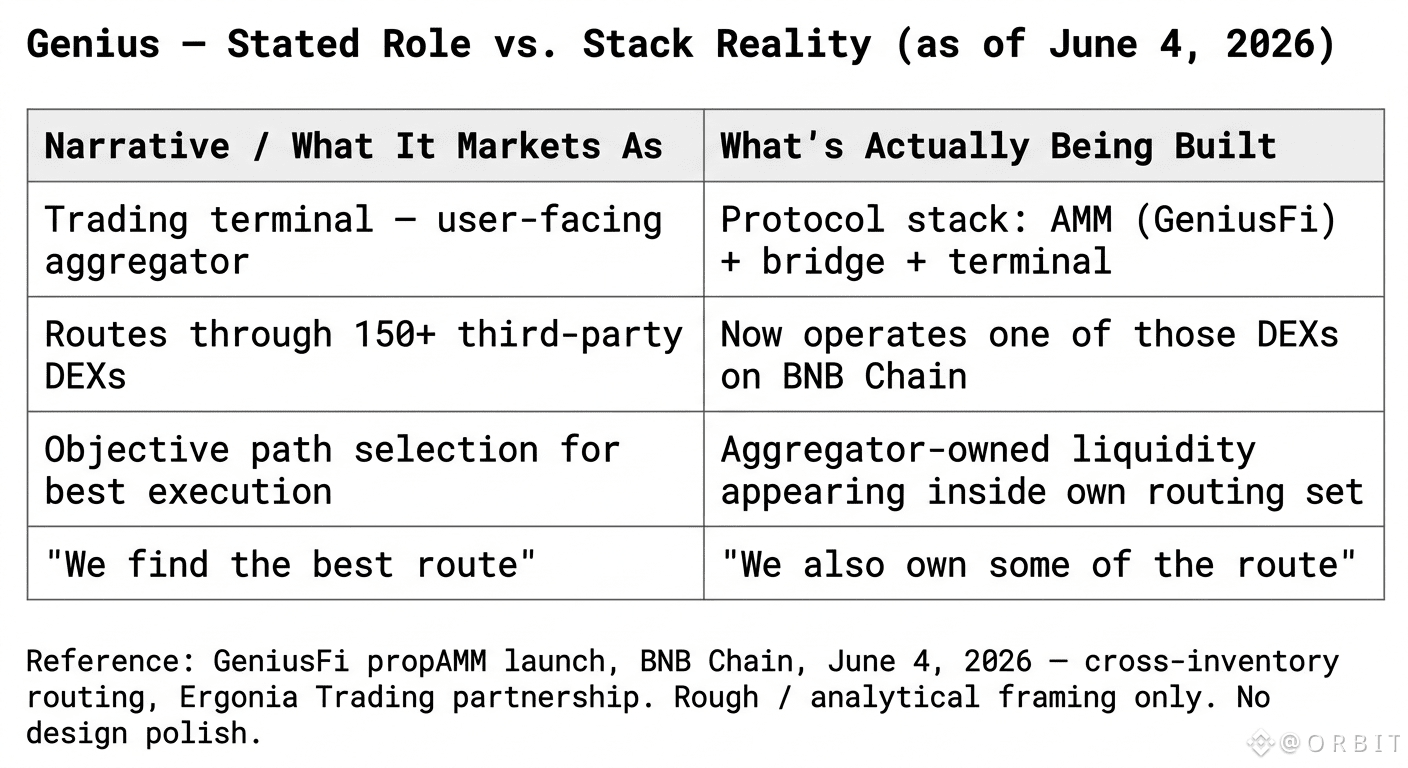
The platform markets itself as an aggregator. Routes through 150+ DEXs, finds the best path, layers on Ghost Orders for privacy. That's the terminal layer. But GeniusFi landed June 4 — a propAMM on BNB Chain built with Ergonia Trading, using cross-inventory routing to actively manage liquidity rather than pool it passively. #genius is now building a liquidity venue that sits inside the very stack it routes through.
That's the part that made me stop scrolling. They're not just picking the best path across someone else's infrastructure. They're quietly laying down pieces of the infrastructure itself. Genius Bridge Protocol is already described as the underlying layer — the terminal is its primary front-end client, which implies others could eventually build on it too. GeniusFi now adds a live AMM to the picture. Aggregator, bridge, AMM. Three stack layers. All theirs.
hmm… the obvious question nobody's really saying out loud: when the aggregator owns part of what it's aggregating, who's actually deciding which liquidity source wins?
The platform markets itself as an aggregator. Routes through 150+ DEXs, finds the best path, layers on Ghost Orders for privacy. That's the terminal layer. But GeniusFi landed June 4 — a propAMM on BNB Chain built with Ergonia Trading, using cross-inventory routing to actively manage liquidity rather than pool it passively. #genius is now building a liquidity venue that sits inside the very stack it routes through.
That's the part that made me stop scrolling. They're not just picking the best path across someone else's infrastructure. They're quietly laying down pieces of the infrastructure itself. Genius Bridge Protocol is already described as the underlying layer — the terminal is its primary front-end client, which implies others could eventually build on it too. GeniusFi now adds a live AMM to the picture. Aggregator, bridge, AMM. Three stack layers. All theirs.
hmm… the obvious question nobody's really saying out loud: when the aggregator owns part of what it's aggregating, who's actually deciding which liquidity source wins?