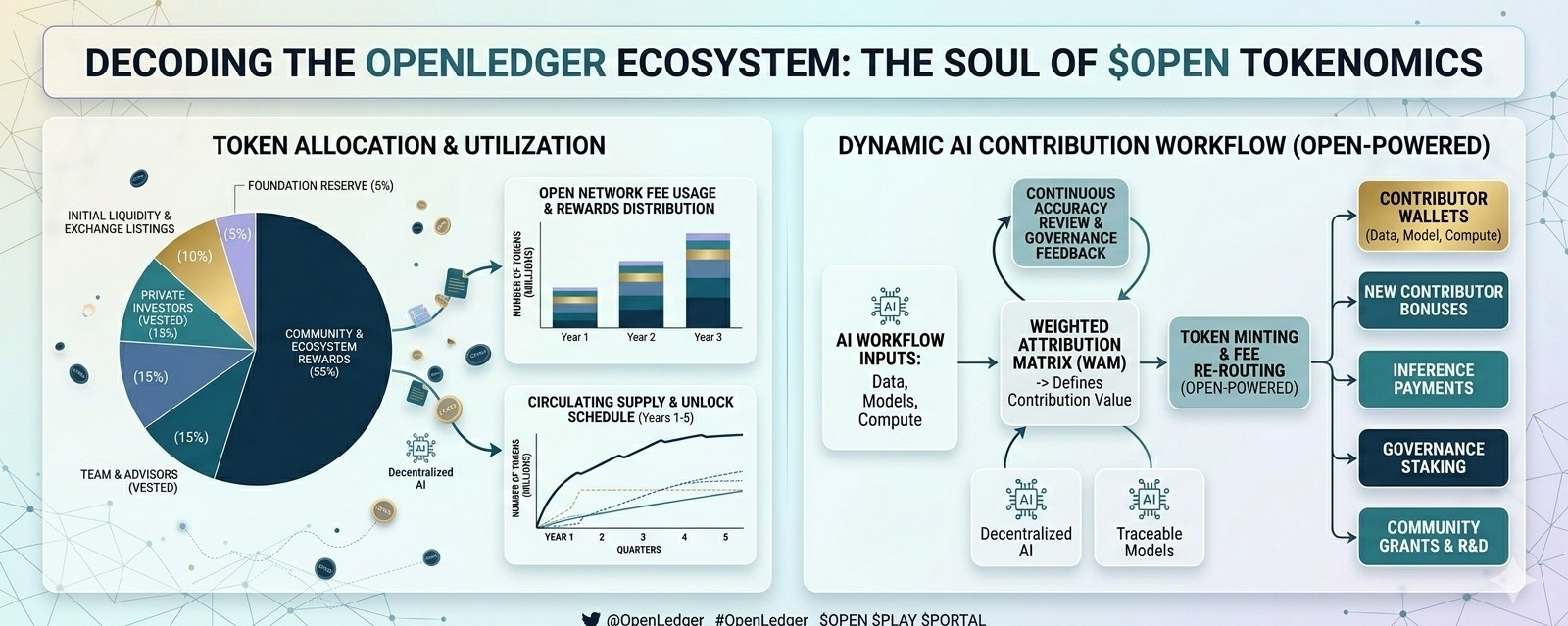

 I don’t usually dive straight into charts. Instead, I look at the quiet little confessions hidden in the token allocations—who gets trusted with tokens from day one, who has to wait and actually earn their share, who gets easy liquidity, and who needs to prove themselves inside the system first. That’s where the real story always hides for me.
OpenLedger’s setup caught my attention because it actually feels thought-out. Fixed supply, ERC-20, a solid chunk set aside for the community and ecosystem, and clear unlock timelines. On paper it looks pretty clean. But the bigger question for me is whether OPEN can truly hold up the vision they’re going for: making AI feel less extractive and way more accountable to the people actually building it.
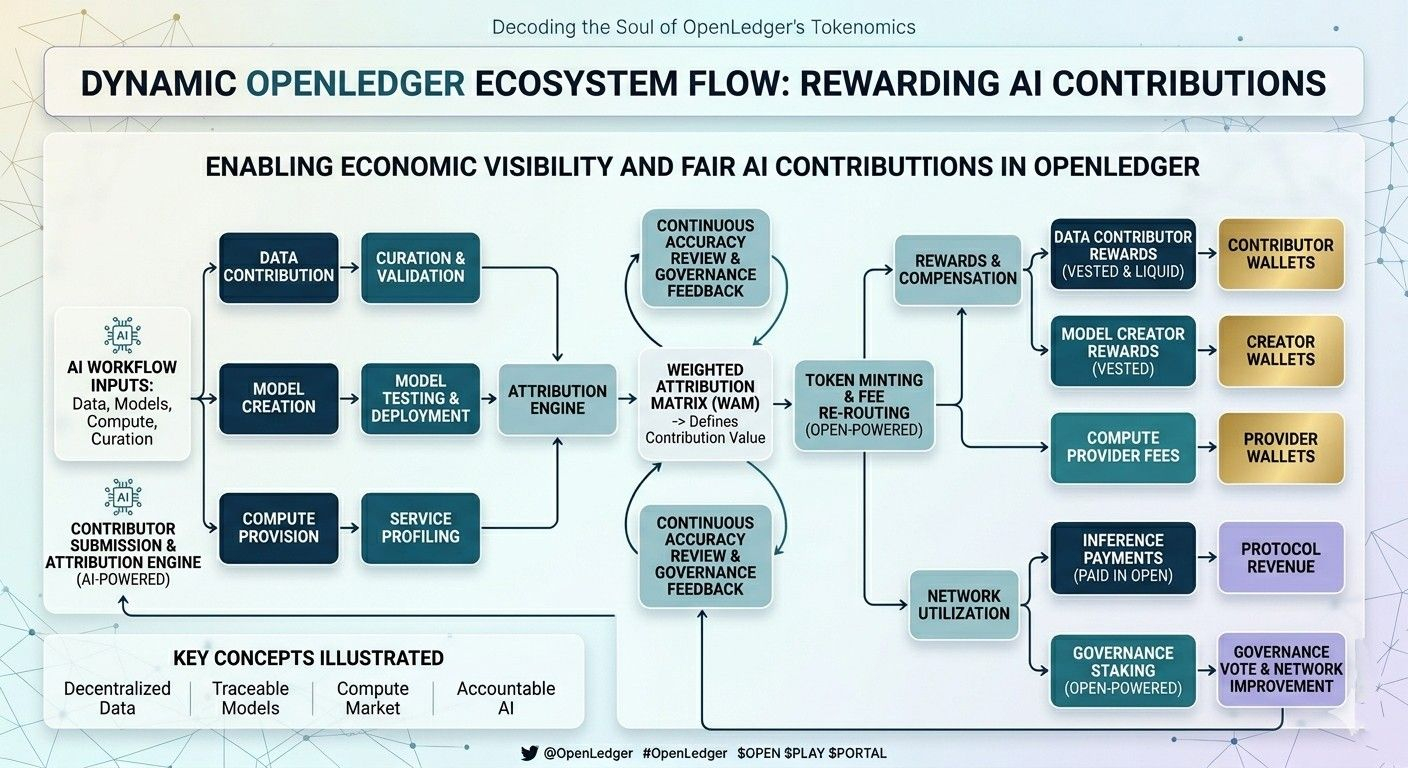
You know how most AI works right now—data pours in, smart outputs come out, but the real value gets sucked up by whoever owns the front end. OpenLedger seems to be pushing back on that by trying to make every contribution traceable, weighted, and actually rewarded. So OPEN isn’t just another payment or governance token in my eyes. It’s aiming to become the economic memory of the whole network, turning all that invisible work—data, models, compute, curation—into something that genuinely pays the humans behind it.
I love that kind of ambition, honestly. But tokenomics is exactly where big dreams get pressure-tested.
The big community allocation stands out as a positive sign. It feels like they’re not just throwing around “decentralized” as marketing fluff—they’re actually handing real ownership to the users and builders. Still, size alone doesn’t cut it. The real test is whether those rewards actually go to meaningful contributions or just end up as another round of noise farming and gaming the system.
The unlock schedule feels pretty balanced too. Enough liquidity at the start so the market can breathe, but longer vesting for insiders so they’re forced to stick around and live with what they ship. It’s no magic fix, but it at least lowers the chance of everyone cashing out the vision before the network even gets useful.
What really draws me in is how tightly the token is tied to real activity: paying for inference, rewarding data contributors based on attribution, compensating model creators, handling infrastructure, and powering governance. That creates this nice loop—query, usage, rewards, improvement. If it clicks, OPEN could become the actual language of value in the network, not just another token riding hype.
Of course, these loops are fragile as hell. Attribution has to actually be trustworthy. Real demand for inference needs to show up. Governance can’t slowly slide back into the hands of a few early players. And liquidity should help people participate, not just fuel pure speculation.
At the end of the day, I see $OPEN’s tokenomics as a serious, high-stakes promise. The design points toward real participation and long-term alignment, but the true test won’t be in any pitch deck. It’ll be in the everyday mess—when contributors feel the rewards are actually fair, developers see genuine usage, and the market figures out if OPEN stands for real economic activity or just another wave of expectations.
That space between the plan and real behavior is what’ll make or break it.
Curious to see how it unfolds.
What’s your take—can OPEN actually make AI contributions economically visible and fair, or will it run into the same old incentive problems most token models do?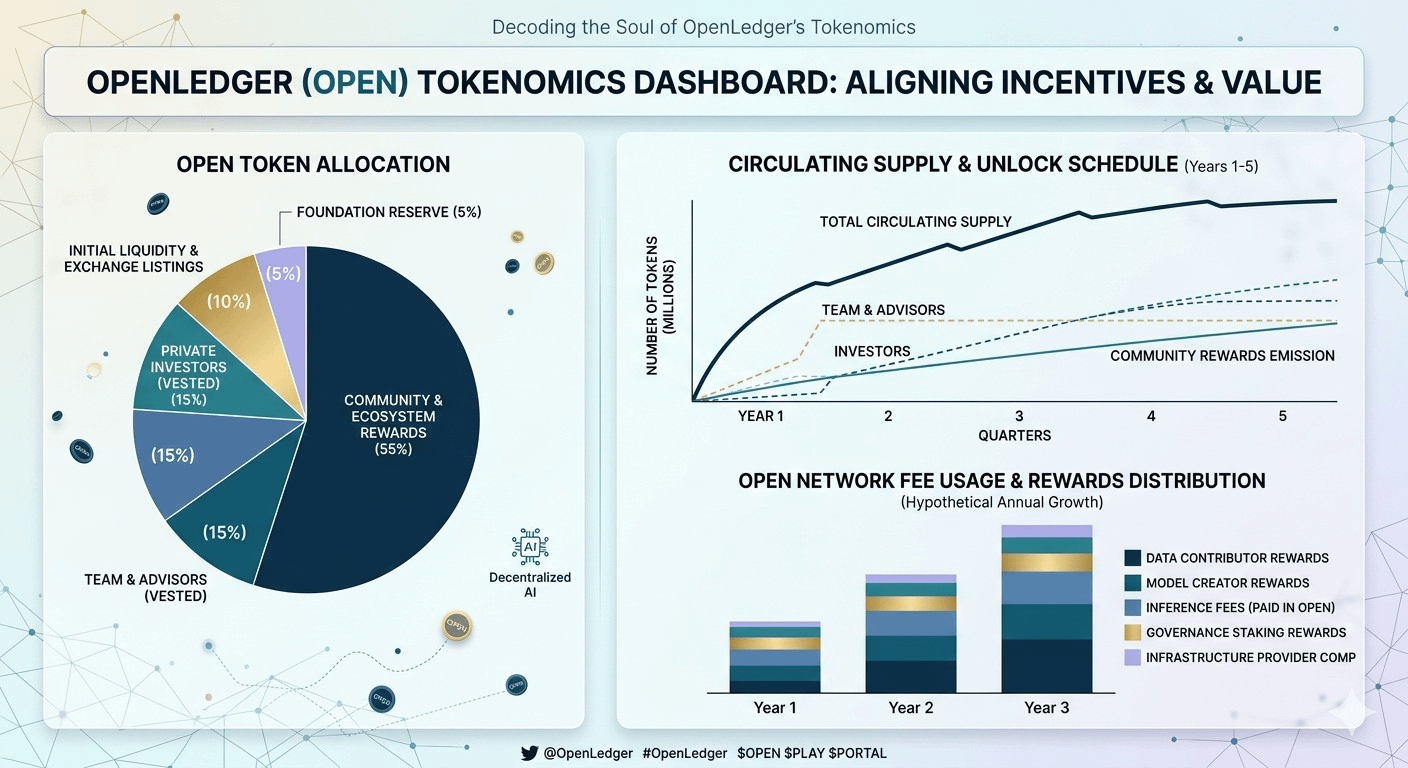
@OpenLedger #OpenLedger $OPEN $PLAY $PORTAL