I came across SIGN while thinking about the quiet ways trust gets built in digital systems. At first, it felt like another layer of complexity on top of existing networks, but as I looked closer, I began to notice its subtle focus on verification and coordination. It isn’t flashy, and it doesn’t promise instant transformation. Instead, it’s concerned with the frameworks that make credential exchange and token distribution dependable over time.
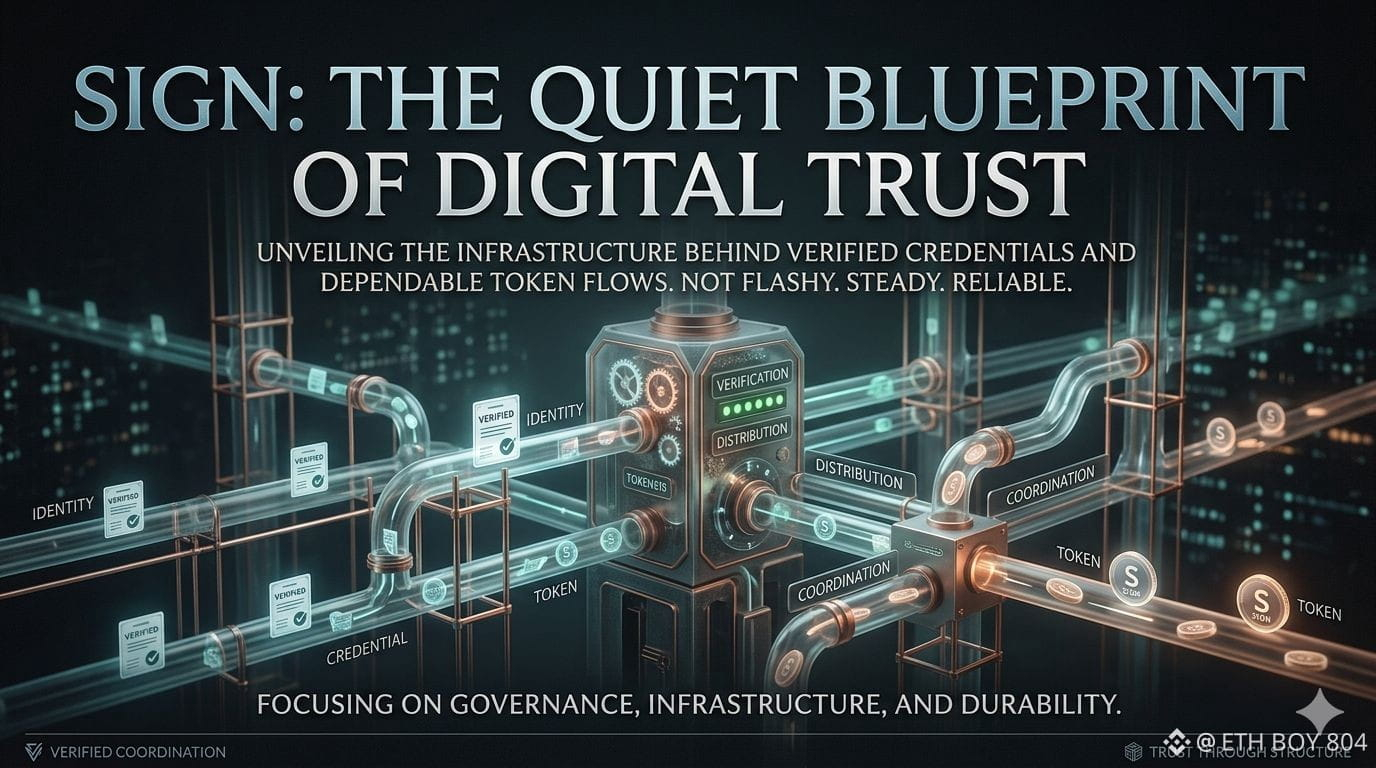
What strikes me is how structured it feels. The system emphasizes verifiable credentials in a way that seems designed for steady reliability rather than rapid adoption. There’s an attention to infrastructure—the plumbing behind governance, the scaffolding that supports token flows—rather than the surface-level features that usually get attention in crypto projects.
Of course, there’s still uncertainty. Execution in this space is rarely straightforward, and long-term durability is never guaranteed. Yet, there is a quiet confidence in how SIGN handles the basics: verification, distribution, and coordination. It reminds me that some of the most important work in digital ecosystems happens behind the scenes, in systems that are not about hype but about being quietly robust and useful, even if that usefulness is only evident over time.
#SignDigitalSovereignInfra @SignOfficial $SIGN
What strikes me is how structured it feels. The system emphasizes verifiable credentials in a way that seems designed for steady reliability rather than rapid adoption. There’s an attention to infrastructure—the plumbing behind governance, the scaffolding that supports token flows—rather than the surface-level features that usually get attention in crypto projects.
Of course, there’s still uncertainty. Execution in this space is rarely straightforward, and long-term durability is never guaranteed. Yet, there is a quiet confidence in how SIGN handles the basics: verification, distribution, and coordination. It reminds me that some of the most important work in digital ecosystems happens behind the scenes, in systems that are not about hype but about being quietly robust and useful, even if that usefulness is only evident over time.
#SignDigitalSovereignInfra @SignOfficial $SIGN