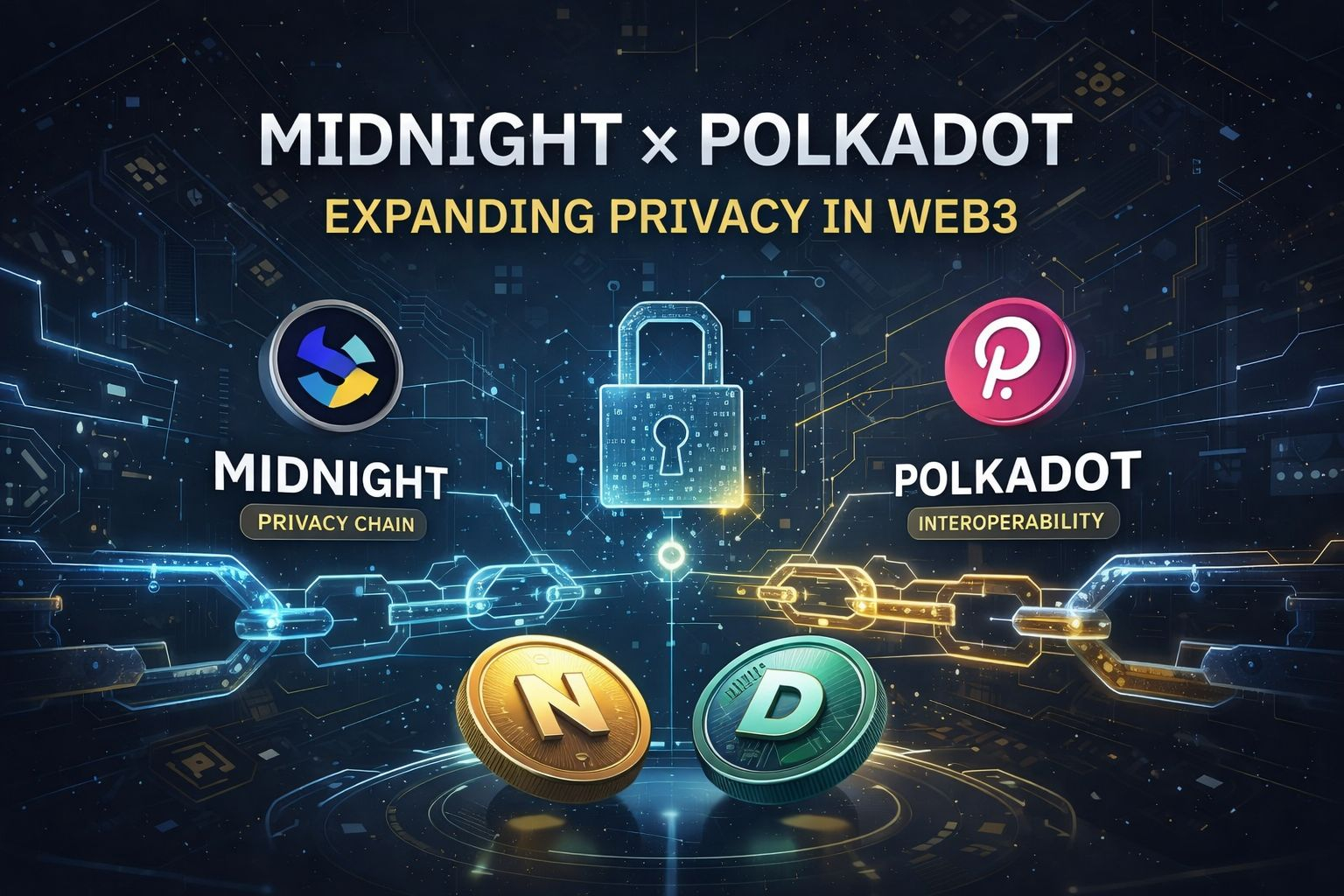
The evolution of privacy in Web3 is accelerating, and Midnight is becoming one of the most interesting projects shaping that direction. While many blockchain networks focus mainly on transparency, Midnight introduces a different philosophy: programmable privacy. Through its developer-focused infrastructure and the growing connection with the Polkadot ecosystem, the project is positioning itself as a serious platform for confidential decentralized applications.
One of the most important steps in this journey is the Midnight Devnet. Launched to give developers an early environment to experiment, the devnet is much more than a basic testing network. It functions as a full development playground where developers can design, deploy, and test privacy-preserving smart contracts before they ever reach a production network. By making this environment accessible, Midnight is lowering the barrier for building applications that protect sensitive data.
A key innovation within the development ecosystem is Compact, Midnight’s smart contract language. Compact is inspired by TypeScript, which immediately makes it approachable for a large number of developers already familiar with modern web programming. What makes Compact unique is the way it separates private and public logic inside a smart contract. Developers can clearly define which information should remain confidential and which parts of a transaction should be visible on-chain. This design simplifies the use of advanced cryptographic methods such as zero-knowledge proofs without requiring developers to become experts in cryptography.
The devnet also includes a special testing asset called tDUST. This token is used only within the development network to simulate real transactions. Testers can obtain tDUST through a faucet and use it to pay transaction fees, move shielded assets, and explore how privacy features function in a real environment. This approach encourages experimentation and allows developers to build and refine applications safely before mainnet deployment.
Midnight’s tooling ecosystem further strengthens the developer experience. Applications can be written using a dedicated VS Code extension, while blockchain interactions are managed through browser wallets and developer utilities. Zero-knowledge proof generation can run locally through a proof server, often deployed in a Docker container. This local architecture is particularly important for privacy-focused systems because it ensures that sensitive information never needs to be sent to external servers during development.
Another interesting part of Midnight’s design is its integration with the Polkadot technology stack. Midnight uses the Substrate SDK, the same framework that powers many chains in the Polkadot ecosystem. This means developers familiar with Polkadot tools can quickly adapt to Midnight and begin building privacy-enabled decentralized applications. The compatibility also opens the door to potential interoperability with other networks built on Substrate.
At the token level, the ecosystem is structured around two key assets. $NIGHT functions as the governance token, enabling participation in network decisions and protocol development. Meanwhile, $DUST operates as a shielded token used for private transactions and fees within the privacy layer of the network. This dual-token design allows Midnight to maintain both transparency for governance and confidentiality for user transactions.
Recent updates and discussions around Midnight × Polkadot highlight how the project aims to bridge privacy with interoperability. By combining Polkadot’s modular blockchain infrastructure with Midnight’s zero-knowledge privacy layer, developers may eventually build applications that move securely across multiple ecosystems while protecting sensitive user data. This combination could unlock use cases in finance, healthcare, digital identity, and enterprise compliance—sectors where privacy is essential.
What makes Midnight particularly interesting is its philosophy about information control. Privacy here is not simply about hiding data; it is about giving users and developers the power to decide what information should remain confidential and what should be publicly verifiable. Through programmable privacy, smart contracts can prove that rules were followed without revealing the underlying private data.
After exploring the Devnet and the surrounding developer tools, it becomes clear why Midnight is attracting attention in the Web3 space. The platform is not trying to make privacy complicated—it is trying to make it practical. By providing accessible tools, familiar programming languages, and a flexible development environment, Midnight is turning zero-knowledge technology into something developers can actually use.
As the ecosystem grows and integration with Polkadot infrastructure deepens, Midnight could play a major role in shaping the next generation of privacy-first decentralized applications.