


P2P trading (crypto ↔ fiat) is convenient, but risky. Banks can freeze accounts if suspicious activity is detected — often due to scammers or fraudulent transfers. Here’s how to protect yourself:
1️⃣ Trade Only on Trusted Platforms
Use verified P2P platforms like Binance, Bybit, OKX, Huobi, etc.
Avoid random Telegram/WhatsApp deals — they’re high-risk scams.
Stick to buyers/sellers with high trade volume + positive reviews.
2️⃣ Use Your Personal Bank Account Only
Never use third-party or borrowed accounts for P2P trades.
Transfers from multiple unknown sources increase the risk of freezing.
Keep transactions consistent with your account profile.
3️⃣ Avoid Suspicious Buyers & Sellers
⚠️ Red flags
Buyer insists on using someone else’s account.
Funds sent from a different name than account holder.
They rush you to release crypto before funds clear fully.
✅ Only release crypto when money is confirmed and matches sender details.
4️⃣ Keep Your Transactions Clean
Don’t include words like “crypto,” “BTC,” “USDT,” etc. in bank transfer notes.
Instead, use neutral terms like “payment,” “goods,” or “services”.
Multiple transfers with crypto mentions can trigger AML (anti–money laundering) checks.
5️⃣ Limit Daily Transaction Volume
Don’t make unusually large or repetitive transfers —it looks suspicious.
Split large trades into smaller, safer chunks if needed.
Stay within your bank’s transaction comfort zone.
⸻
6️⃣ Always Keep Records
Save screenshots of chats, transfers, and confirmations.
If your bank queries, you can prove the transaction was legit P2P trade, not fraud.
7️⃣ Separate Accounts (Optional but Smart)
Use a dedicated bank account for P2P, separate from your salary/personal savings.
Even if it gets frozen, your main account remains safe.
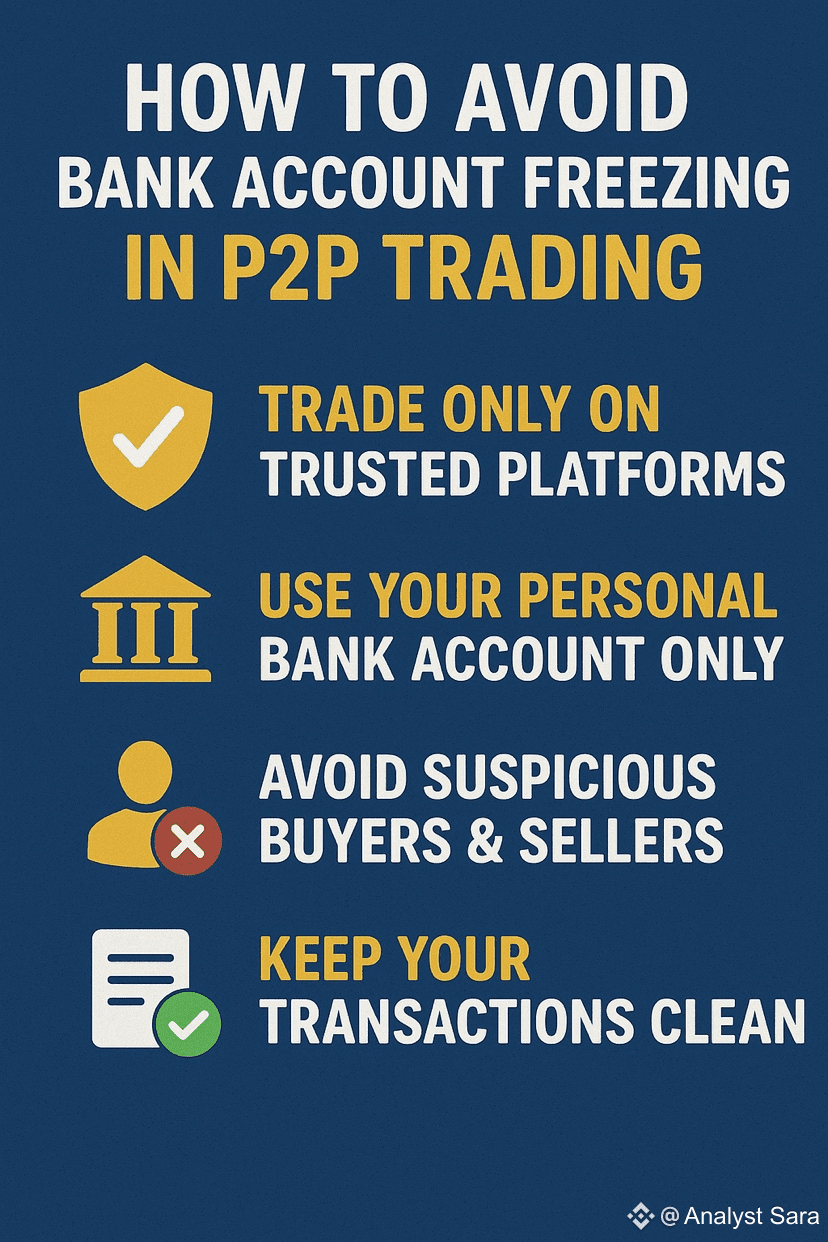 I⚡ Summary:
To avoid scams & account freezing:
👉 Stick to verified platforms
👉 Only trade with trusted users
👉 Match names + details carefully
👉 Avoid suspicious notes or large sudden transfers
👉 Keep records for safety