


The decentralized perpetuals market is one of the few crypto verticals with undeniable product-market fit, and BNB Chain is fast becoming its center of gravity. Look, in this space, a new protocol, Aster Dex, has just put up some staggering numbers. In the first half of 2025 alone, the platform processed an incredible $58 billion in trading volume.
By June, its monthly volume exploded to over $33 billion, which is a threefold jump from its last all-time high. This surge let Aster snatch nearly 20% of the entire perpetual DEX market share in just a few weeks, putting it on a collision course with the undisputed king, Hyperliquid.
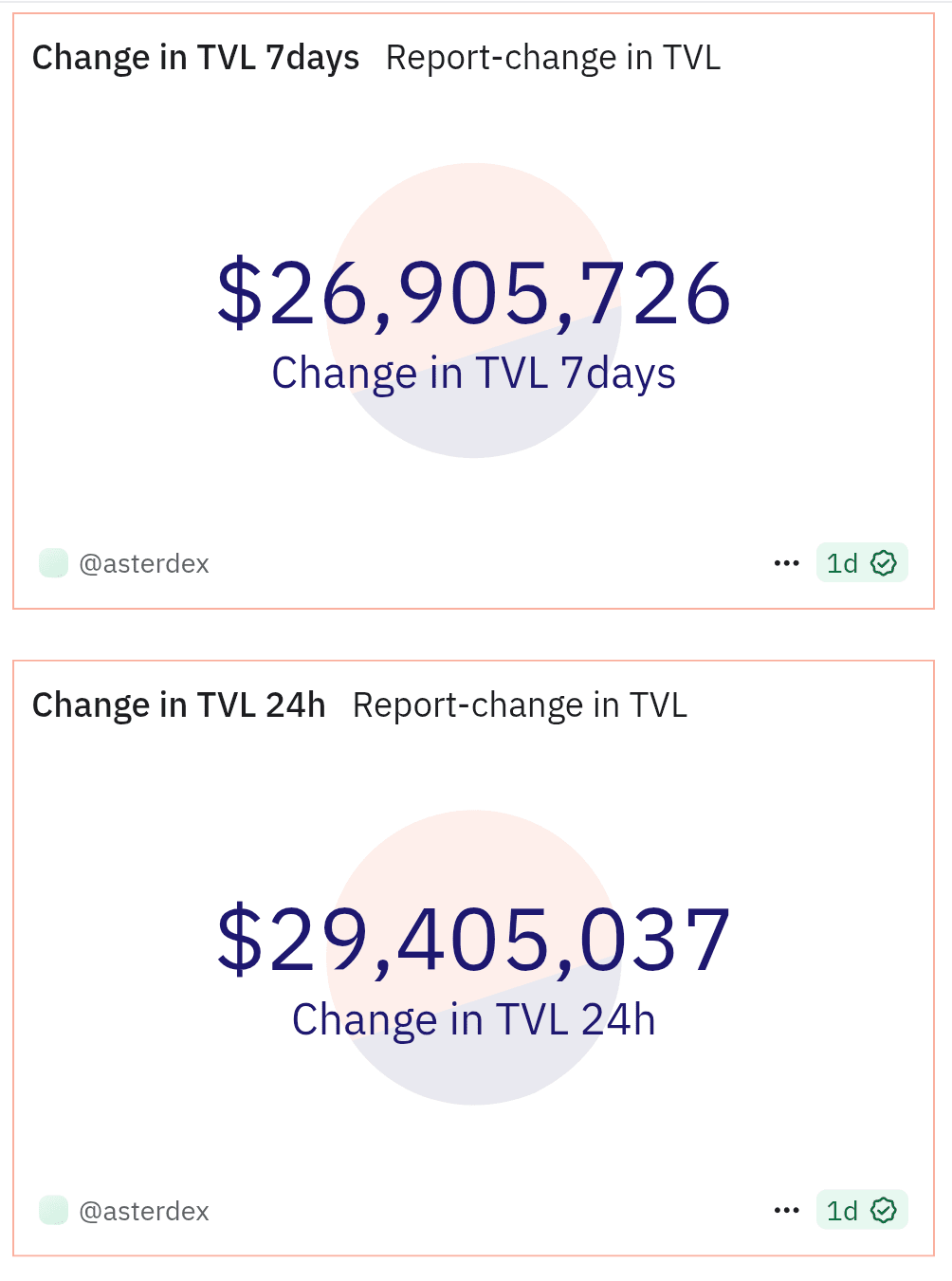
And this is all happening in a pretty fertile ecosystem. BNB Chain consistently punches above its weight in DEX activity, often leading the market in volume and fee generation. The whole perp DEX market is on fire, now making up a record 25-26% of all perpetuals volume.
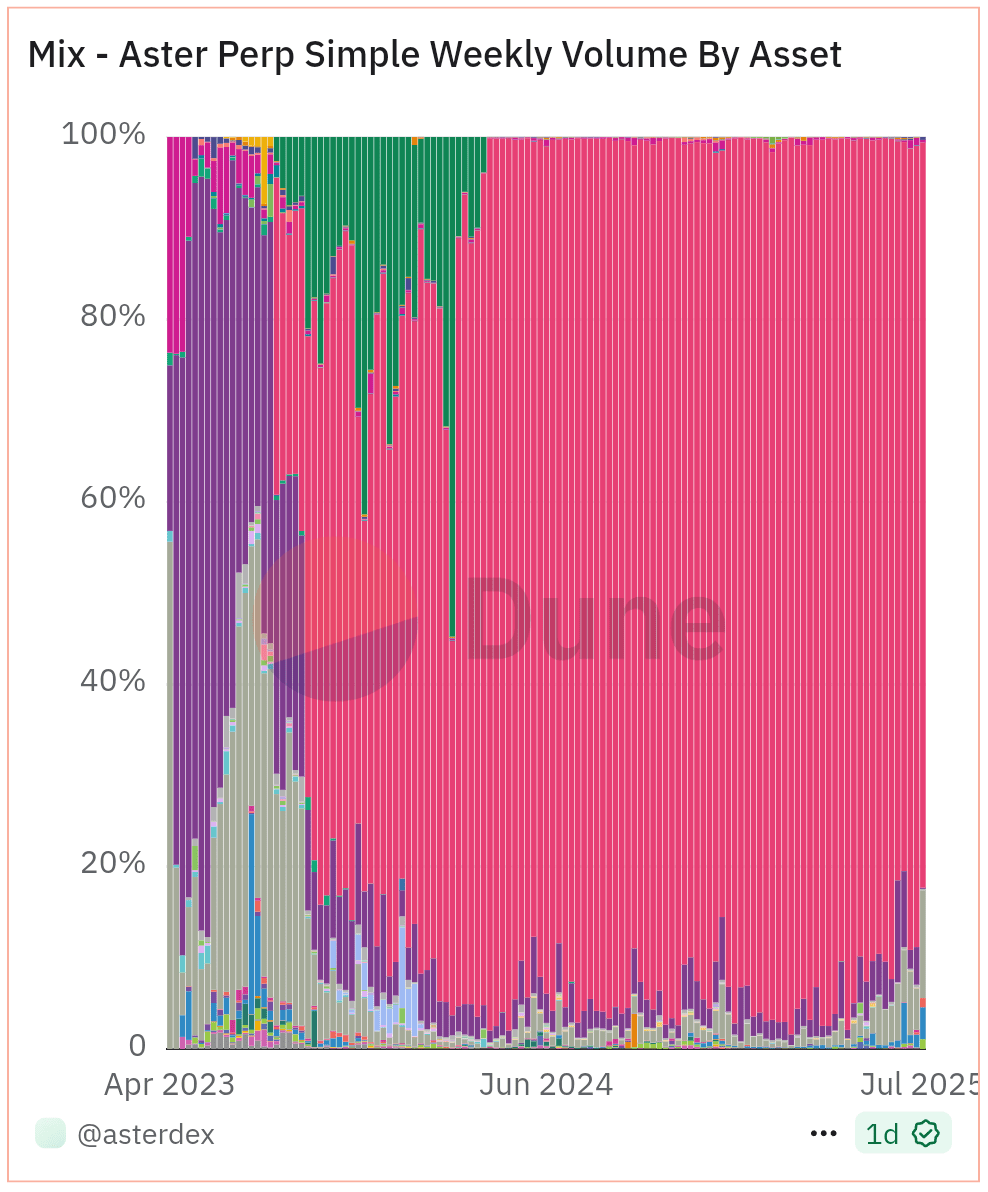
Aster's early numbers back up its strategy. The protocol's Total Value Locked (TVL) is closing in on $400 million, almost all of it on BNB Chain.
Aster is born from merging two existing protocols, Astherus for yield and APX for trading. Basically, they're using the massive network effects of the Binance ecosystem to grow at a ridiculous speed.
II. The Aster Mechanism
To get why Aster is catching on so fast, you have to look beyond its trading interface. This thing is a multifaceted financial machine, built to pull in capital and keep it there. Its whole design comes from the merger of Astherus, a yield protocol, and APX Finance, a perps DEX. The fusion created a protocol that does two things well: high-speed trading and sustainable yield. It's a direct shot at DeFi's "mercenary capital" problem.
The ecosystem has three main parts. First is AsterEX, the exchange itself. This is the engine room for volume and user activity. Then there's AsterEarn, the yield layer. This includes clever products like asBNB, a liquid staking token for BNB that sucks in and compounds yield from all over the Binance ecosystem, including Launchpools and Megadrops. The final piece is USDF, a yield-bearing stablecoin backed by a delta-neutral portfolio of crypto assets and short positions, meant to be a stable store of value that actually pays you.
This whole setup is a deliberate play to create a "sticky" liquidity flywheel. A lot of DeFi protocols bleed out when the initial high-yield rewards dry up and the liquidity providers bolt. Aster's trying to build a closed loop. For example, a user can stake BNB to get asBNB, earn yield from that, and then turn around and use that same asBNB as collateral to trade on AsterEX. Capital is doing three jobs at once. That makes it much less likely to leave, which creates a more stable trading environment for everyone.
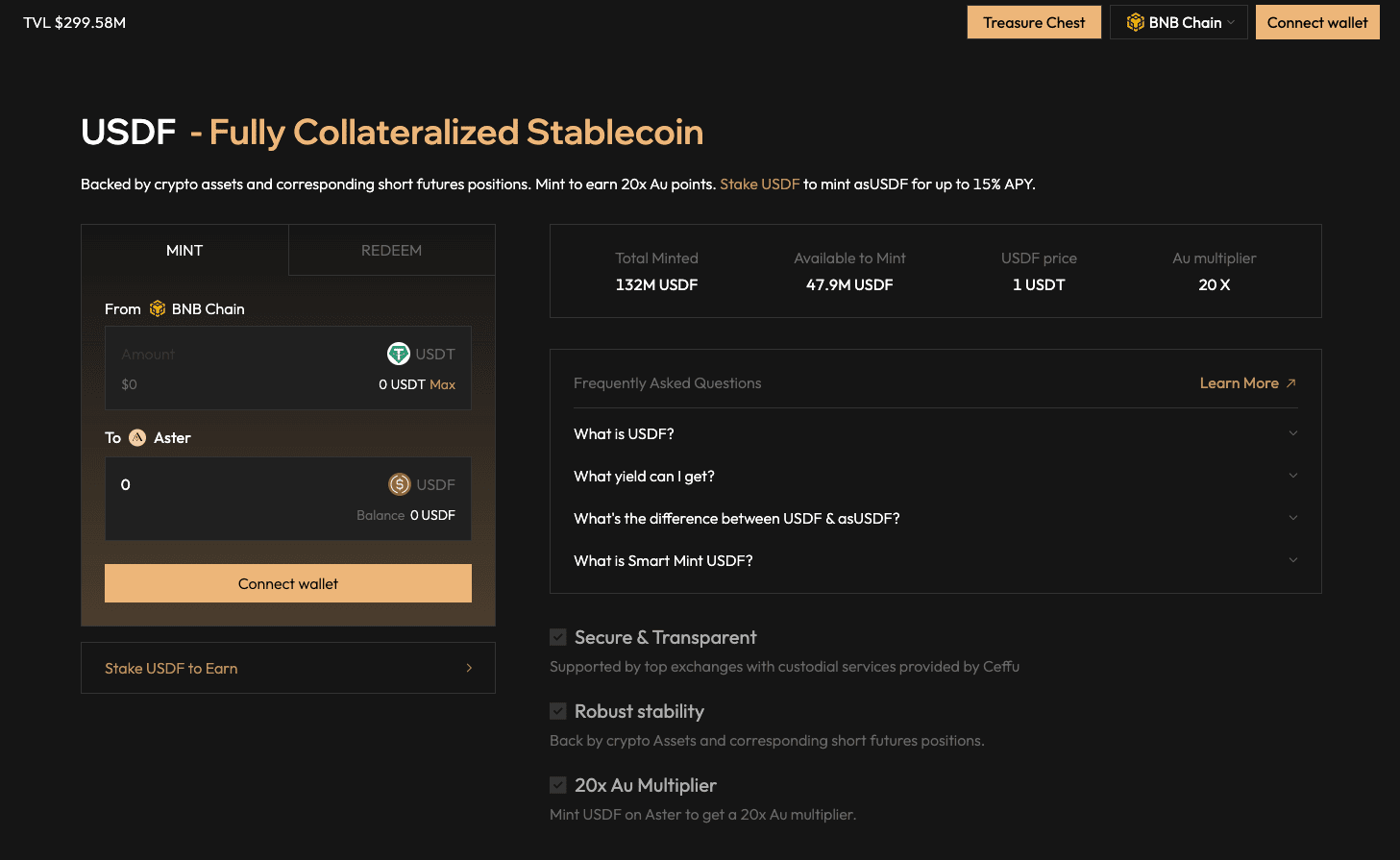
And the USDF stablecoin is a power move. Most DEXs are completely dependent on outside stablecoins like USDT. By building its own, Aster is bringing a core piece of financial infrastructure in-house. It creates a new revenue stream and gives them more control. While they have a presence on other chains, their focus is clearly on BNB Chain, using its massive user base to fuel this whole machine.
III. Inside Aster: The Technicals
The technical core of Aster is a dual-mode architecture that smartly splits its audience. It offers one experience for the retail crowd and another for the pros. Think of it as their answer to the classic DEX problem of being both easy and powerful. Simple Mode is like your local currency exchange, it's quick, easy, and gets the job done. Pro Mode is the professional trading floor, built for speed, deep liquidity, and precision.
Simple Mode is built on a fully on-chain Aster Liquidity Pool (ALP). Here, you're not trading against an order book, you're trading against a big pool of assets supplied by other users. This allows for some wild features that pull in a lot of users: one-click trading, no deposits needed, and, the main attraction: you can add up to 1001x leverage.
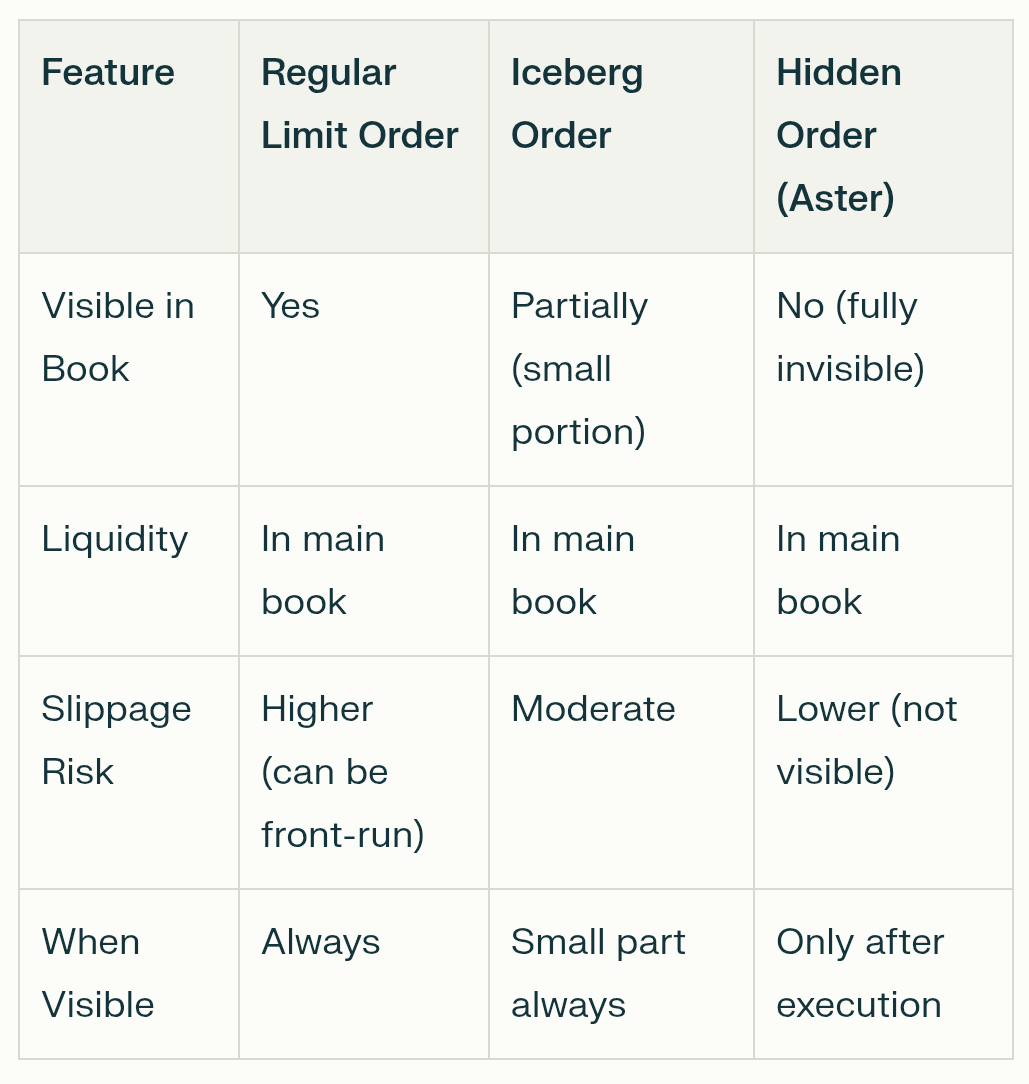
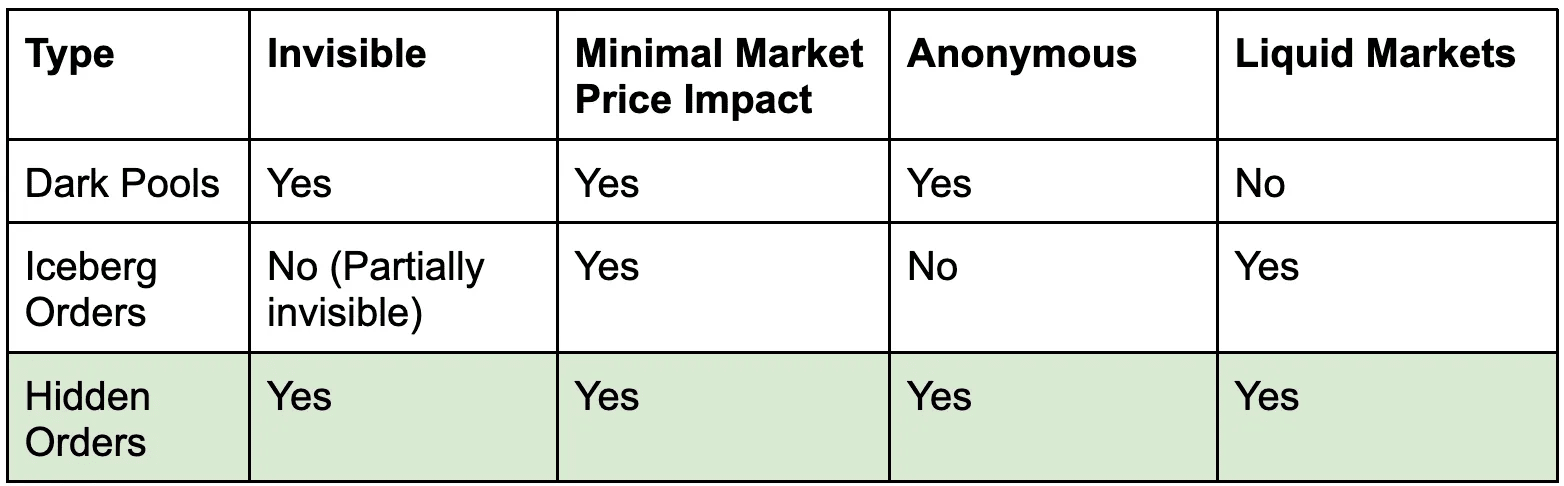
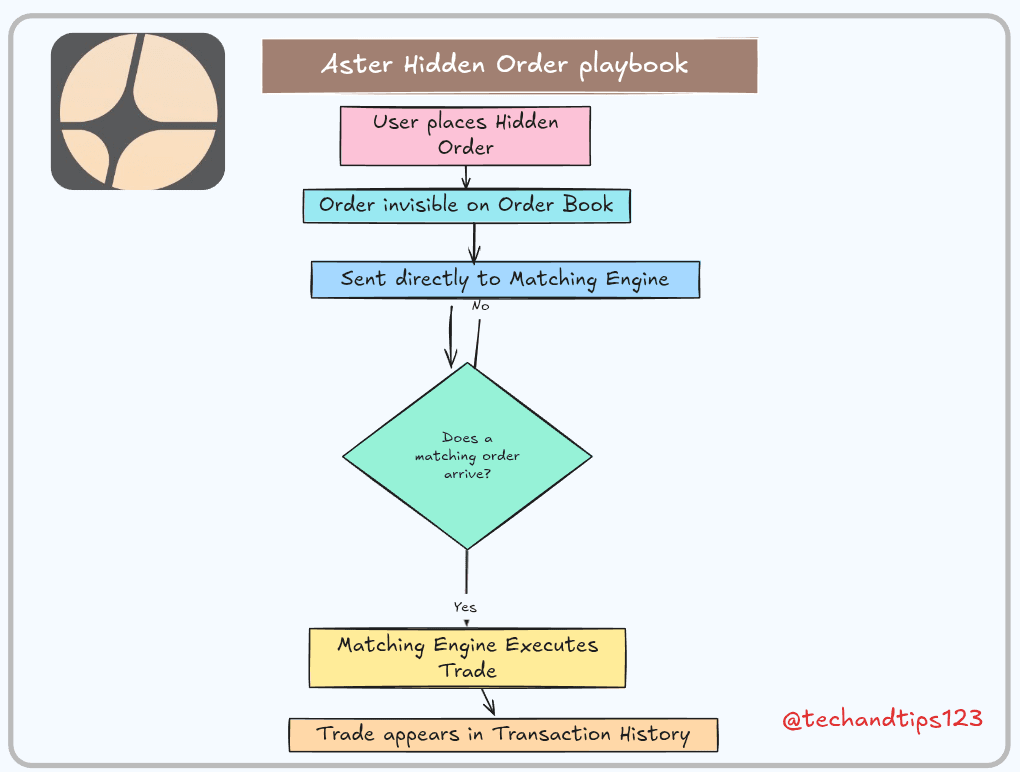
Pro Mode is for a completely different animal. It uses a Central Limit Order Book (CLOB), the same system that powers basically every CEX and the market leader, Hyperliquid. This is for the serious traders, the bots, and the institutions. It gives them the tools they need, like grid trading bots and, crucially, the recently launched Hidden Orders feature. This is their dark pool. It lets traders place big limit orders without showing their hand on the public order book until the trade is done. It's a vital tool for avoiding front-running and minimizing market impact. The fees are also aggressive, at 0.01% for makers and 0.035% for takers, which is competitive with anyone in the space.
Most DEXs have to pick a lane. GMX went for retail, dYdX went for pros. Aster is doing both. It brings in new users with the simple, high-leverage mode and then lets them "graduate" to the pro tools without ever leaving the platform. It's a user retention loop that's hard to beat.
IV. What Aster is Chasing
To really get what Aster is doing, you have to understand the giant they're chasing. Hyperliquid didn't just build another protocol. It completely changed the game for on-chain derivatives by building its own sovereign Layer 1 blockchain from the ground up. It was optimized for one thing and one thing only: high-speed trading.
That vertical integration is their moat. The chain runs on a custom consensus called HyperBFT, which can handle up to 200,000 orders per second with sub-second finality. That's CEX-level performance. Its engine is a pure, on-chain order book that gives pro traders the experience they expect. This focus has let them capture a massive chunk of the market, regularly handling 50-60% of all perp DEX volume and hitting monthly numbers over $186 billion.
The lesson here is clear. For high-performance DeFi, especially derivatives, the app-chain model is the winner. When you control the whole stack, from consensus to the UI, you can optimize in ways a dApp on a shared chain just can't. This is the playbook Aster is now copying. The Hidden Order definately pull more users in coming days for sure as it's one of standout features of Aster.
Buried in Aster's roadmap is the plan to launch Aster Chain, a "high-performance ZK-powered L1 with a privacy focus for perpetuals". This is the most important signal from the project. It shows they've learned the lesson Hyperliquid taught the market: to win long-term, you need your own chain. Their current setup on BNB Chain is just an incubation phase. The strategy is to use an existing ecosystem to build a huge user base and brand, and then move that whole operation to a purpose-built chain to compete head-to-head.
V. A Comparative Analysis
Hyperliquid's custom L1 gives it a raw performance edge, and its volume shows it. But Aster's current multi-chain model is easier to access and offers a wider set of assets, including things like stock perpetuals for big names like Tesla and NVIDIA.
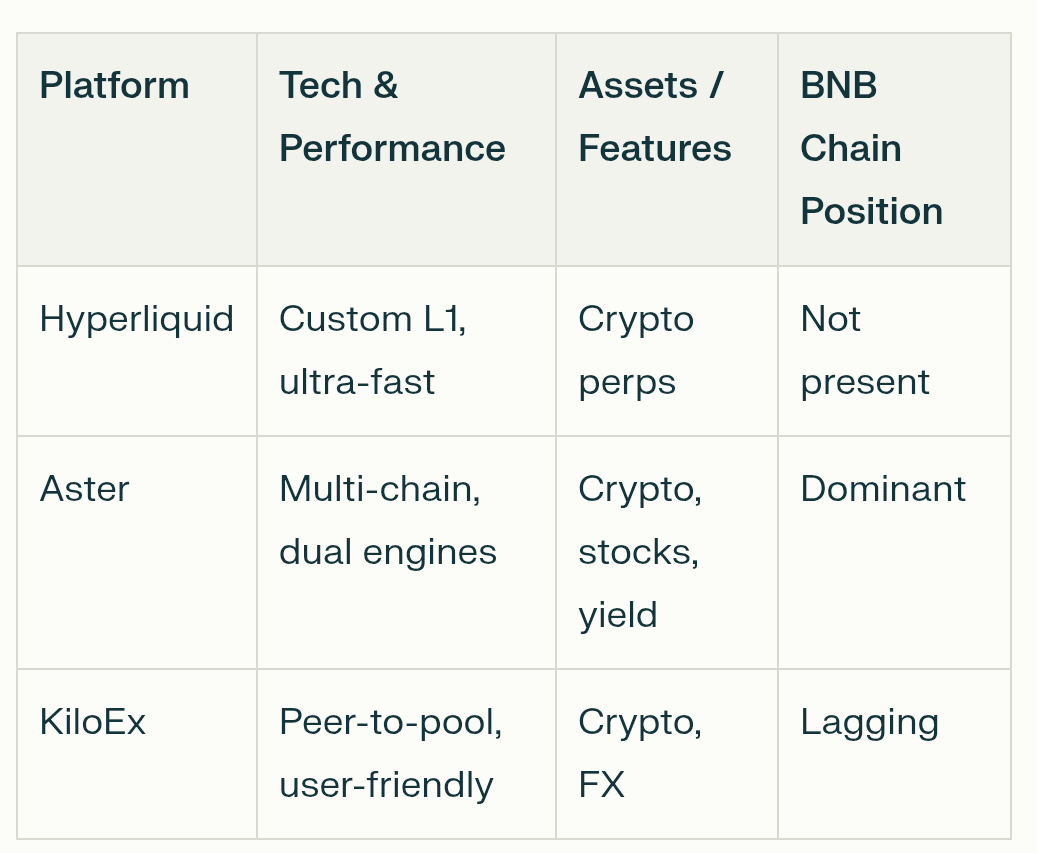
On BNB Chain itself, it's not even a competition anymore. KiloEx, also backed by Binance Labs, has a similar user-friendly focus but its volume is just a fraction of Aster's. Aster's complete ecosystem, with its yield products and dual trading engines, has let it pull way ahead. And Level Finance, with its older, oracle-based model, has basically flatlined. Its failure is a perfect example of how quickly this market moves. The data shows a clear consolidation on BNB Chain. Aster is sucking up all the oxygen, and smaller competitors are suffocating.
VI. The BNB Chain Advantage
So, Aster's strategy is basically a "Trojan Horse" attack. Building a new L1 from nothing, like Hyperliquid did, is brutally hard. You have to convince everyone to move to your new, unproven world. Aster took a smarter route. It built its protocol inside the biggest, one of most active crypto chain on the planet: BNB Chain.
Launching on BNB gave Aster instant access to a huge user base, deep liquidity, and distribution channels that are second to none. Its asBNB product, which funnels rewards from Binance Launchpools straight into the DEX, is a killer feature you just can't build in a vacuum. Aster basically outsourced the hardest parts of building a network, user acquisition and liquidity, to BNB Chain.
And now that it has the users, the volume, and the brand, it's getting ready for the final boss fight: leaving the city to build its own kingdom. The launch of Aster Chain, their ZK-powered L1, is the endgame. This move will let them finally compete with Hyperliquid on pure performance.
But this is the hardest part. The whole strategy depends on whether they can get their massive community and all that liquidity to move from BNB Chain to their new L1. That's a tough migration to pull off.
The upcoming airdrop of their $AST token is the key. How they design that airdrop and the token's long-term utility will decide if they can turn their current momentum into a lasting, sovereign ecosystem. If they pull it off, it'll be one of the smartest go-to-market plays in DeFi history. We are Optimistic.