

OpenSea Clone Script — How to Create an NFT Marketplace Like OpenSea in 2023?
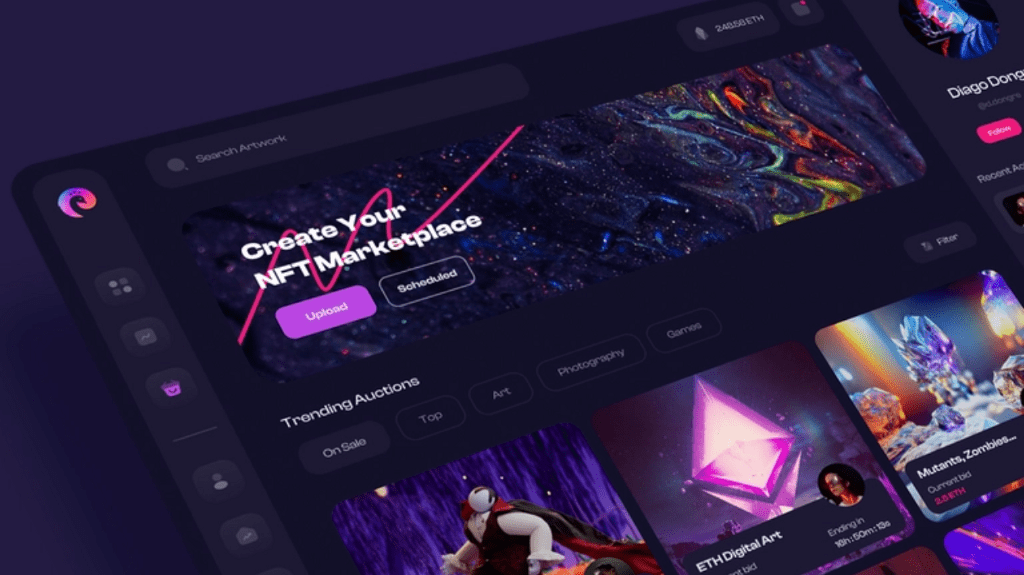
NFTs are unique digital assets that are stored on a blockchain. Unlike cryptocurrencies, which are interchangeable with one another and have the same value, NFTs are unique and cannot be replicated. NFTs can be used to represent any kind of digital asset, including art, music, video game items, and more.
The relevance of NFTs in the current market is that they provide a new way for creators and artists to monetize their digital content. By using NFTs, creators can sell their digital assets and receive payment directly from the buyer, without having to rely on intermediaries such as art dealers or auction houses. Additionally, NFTs provide a new way for collectors to acquire and own unique digital assets that cannot be duplicated.
In this blog, let’s see a technical approach to how to create an NFT marketplace like OpenSea. Initially, let's start with analyzing the OpenSea NFT marketplace.
What is OpenSea and What are its Important Features?
OpenSea is a popular NFT marketplace that allows users to buy, sell, and discover NFTs. It is one of the largest and most widely used NFT marketplaces, with a wide range of available assets.
Some of the key features of OpenSea include:
Easy NFT creation: OpenSea allows users to easily create and sell their own NFTs, without requiring any technical knowledge or coding skills.
Wide range of assets: OpenSea offers a wide range of digital assets, including art, music, domain names, virtual real estate, and more.
Multiple blockchain support: OpenSea supports multiple blockchains, including Ethereum, Polygon, and Flow, allowing users to buy and sell NFTs on different networks.
User-friendly interface: OpenSea has a user-friendly interface that allows users to easily browse, search, and filter NFTs, as well as buy and sell them.
Decentralized ownership: OpenSea is built on blockchain technology, which ensures that ownership of NFTs is decentralized and cannot be tampered with.
OpenSea and NFTs represent an exciting new opportunity for creators and collectors alike, providing a new way to monetize and own digital content. As the market for NFTs continues to grow, we can expect to see even more innovative use cases and applications for these unique digital assets.
What is OpenSea Clone Script? How It Can Help To Create an NFT Marketplace Instantly?
An OpenSea Clone Script is a pre-built software solution that enables entrepreneurs and developers to create their own NFT marketplace like OpenSea quickly and easily. The clone script is designed to replicate the features, functionalities, and design of OpenSea, which is one of the most popular and successful NFT marketplaces in the world.
Using an OpenSea clone script can be a cost-effective and time-saving way to launch an NFT marketplace, as it eliminates the need for custom development from scratch. The clone script includes all the essential features and functionalities of OpenSea, such as NFT creation, buying and selling, bidding, auctions, and more. It also includes customizable options, such as branding, design, and UI/UX customization.
The benefits of using an OpenSea clone script to create an NFT marketplace include:
Faster time to market: Using a pre-built clone script can significantly reduce the development time and cost, enabling you to launch your NFT marketplace quickly.
Lower development cost: Clone scripts are generally less expensive than custom development, making it a more affordable option for startups and small businesses.
Proven functionality: OpenSea is one of the most successful NFT marketplaces, and its clone script comes with all the proven functionalities and features that have made OpenSea successful.
Easy customization: The clone script allows for easy customization, enabling you to add your branding, design, and other features that cater to your specific audience.
Flexibility: The clone script can be integrated with different blockchains, payment gateways, and smart contracts, giving you the flexibility to create an NFT marketplace that suits your needs.
OpenSea clone script can help entrepreneurs and developers to create an NFT marketplace quickly and easily, without the need for custom development. The clone script offers all the essential features and functionalities of OpenSea, with the added advantage of customization and flexibility. Let’s see the various stages of OpenSea like NFT marketplace development in the upcoming sections.
Identifying the Architecture Design of OpenSea
OpenSea is a decentralized NFT marketplace that allows users to buy, sell and discover NFTs. The architecture of OpenSea is composed of several key components, which work together to provide a seamless and user-friendly experience for buyers and sellers of NFTs.
Smart Contract Layer
The smart contract layer is the backbone of the OpenSea platform. It is responsible for creating, managing, and transferring NFTs. The smart contract layer is built on top of a blockchain, typically Ethereum, and is designed to ensure that all transactions are secure and immutable.
Backend Services
The backend services layer of OpenSea is responsible for handling user authentication and authorization, as well as handling transactions between buyers and sellers. This layer includes services such as payment processing, order matching, and dispute resolution.
API Layer
The API layer of OpenSea provides a set of interfaces for external developers to access the platform. The API layer is designed to be flexible and extensible, allowing developers to build custom applications that interact with the OpenSea platform.
Frontend
The frontend of OpenSea is the user interface that users interact with when browsing and buying NFTs. The frontend is built using modern web technologies such as React and GraphQL, and is designed to be intuitive and user-friendly.
Metadata Storage
The metadata storage layer of OpenSea is responsible for storing and serving metadata associated with NFTs. This includes data such as the name, description, and image associated with an NFT. Metadata is stored off-chain to reduce the load on the blockchain.
The architecture of OpenSea is designed to be decentralized and scalable. By leveraging the power of blockchain technology, OpenSea is able to provide a secure and transparent marketplace for NFTs. The platform is built using a modular architecture, which allows developers to extend and customize the platform as needed. Overall, the architecture of OpenSea is designed to provide a seamless and user-friendly experience for buyers and sellers of NFTs, while ensuring that all transactions are secure and transparent.
How to Integrate Blockchain With the NFT Marketplace Like OpenSea?
NFTs are typically built on top of blockchain technology, which ensures that each NFT is unique and cannot be replicated. There are several different blockchains that support NFTs, including Ethereum, Polygon, and Flow, each with its own strengths and limitations.
Ethereum is currently the most popular blockchain for NFTs, with the majority of NFTs being created and traded on the Ethereum network. Ethereum provides a high degree of flexibility and extensibility, which makes it easy to create and manage complex NFTs. Other popular blockchains for NFTs include Polygon, which offers fast and cheap transactions, and Flow, which is designed to be scalable and developer-friendly.
To integrate a blockchain with an NFT marketplace like OpenSea, several steps are typically required. First, a smart contract must be created that defines the rules and behavior of the NFT. This smart contract typically includes information such as the name, description, and image associated with the NFT, as well as any special features or functionality that the NFT may have.
Once the smart contract is created, it must be deployed to the blockchain. This typically involves compiling the smart contract code and deploying it to the blockchain using a tool like Remix or Truffle. Once the smart contract is deployed, it can be interacted with using an API, allowing users to create and manage NFTs on the blockchain.
To create and manage NFTs, users typically interact with the smart contract using a tool like Metamask or MyEtherWallet. These tools allow users to sign transactions and interact with the blockchain directly, without needing to write any code.
Smart contracts are a critical component of NFT creation and ownership, as they define the rules and behavior of the NFT. In general, smart contracts for NFTs are designed to be flexible and extensible, allowing developers to create NFTs with a wide range of features and functionality. Some common features of NFT smart contracts include the ability to transfer ownership, the ability to store metadata, and the ability to add additional functionality through the use of other smart contracts.
Blockchain integration is a critical component of any NFT marketplace, as it ensures that each NFT is unique and cannot be replicated. By leveraging the power of blockchain technology, NFT marketplaces like OpenSea are able to provide a secure and transparent marketplace for NFTs, while also providing a high degree of flexibility and extensibility.
User Authentication and Authorization for NFT Trading
User authentication and authorization are critical components of any online marketplace, including NFT marketplaces. Authentication refers to the process of verifying a user’s identity, while authorization refers to the process of determining what actions a user is allowed to perform on the platform. In this section, we will discuss the importance of user authentication and authorization in NFT marketplaces, the different authentication methods available, and how to implement authorization for NFT trading.
Importance of User Authentication and Authorization
User authentication and authorization are important for several reasons. First, authentication ensures that only authorized users are able to access the platform, reducing the risk of unauthorized access and data breaches. Additionally, authentication allows users to securely access their accounts and perform actions such as buying and selling NFTs. Authorization is important to ensure that users are only able to perform actions that they are authorized to do, reducing the risk of fraudulent activity and unauthorized trading.
Different Authentication Methods
There are several different authentication methods available, including:
Username and password: This is the most common authentication method, where users are required to enter a username and password to access the platform.
Two-factor authentication (2FA): This method requires users to provide a second form of authentication, such as a code sent via SMS or a fingerprint scan, in addition to their username and password.
OAuth: This method allows users to authenticate using a third-party service, such as Google or Facebook, which can simplify the authentication process and reduce the risk of password-related security issues.
Implementing Authorization for NFT Trading
Authorization for NFT trading typically involves defining roles and permissions for users on the platform. For example, a seller may be authorized to create and list NFTs for sale, while a buyer may be authorized to purchase NFTs using a payment method that they have previously verified. Authorization can be implemented using several methods, including:
Role-based access control (RBAC): This method involves defining roles for users on the platform, such as “seller” and “buyer,” and assigning permissions to these roles. Users are then assigned to roles based on their level of access on the platform.
Attribute-based access control (ABAC): This method involves defining attributes for users, such as their age or location, and assigning permissions based on these attributes. For example, a user may be authorized to buy NFTs only if they are over 18 years old.
Permissioned blockchains: This method involves using a permissioned blockchain, where access to the blockchain is restricted to authorized users. This can ensure that only authorized users are able to create and trade NFTs on the platform.
Design a User-Friendly UI for the NFT Marketplace Like OpenSea
User interface (UI) design is a critical component of any online marketplace, including NFT marketplaces. A well-designed user interface can make the platform more user-friendly, engaging, and easy to use, leading to increased user satisfaction and higher adoption rates. In this section, we will discuss the importance of user interface design, identify key features of OpenSea’s UI, and provide tips on how to design a user-friendly UI for the NFT marketplace.
Importance of User Interface Design
The user interface is the first point of contact between the user and the platform. A well-designed UI can make the platform more appealing and engaging, leading to increased user satisfaction and higher adoption rates. Additionally, a well-designed UI can improve the overall user experience by making the platform more intuitive, easy to navigate, and responsive.
Key Features of OpenSea’s UI
OpenSea is a leading NFT marketplace that has gained popularity due to its user-friendly UI. Some key features of OpenSea’s UI include:
Clear and simple navigation: The platform has a clear and simple navigation system that makes it easy for users to find the NFTs they are looking for.
Search and filtering options: OpenSea has a powerful search and filtering system that allows users to search for NFTs based on various parameters such as collection, price, and rarity.
Comprehensive NFT view: Each NFT has a comprehensive view that provides users with all the relevant information about the NFT, including its description, price, owner, and history.
User-friendly wallet integration: OpenSea has a user-friendly wallet integration system that allows users to seamlessly buy and sell NFTs using their preferred cryptocurrency wallet.
Designing a User-Friendly UI for the NFT Marketplace
It involves several key steps:
Define the target audience
The first step is to define the target audience and their needs. This will help in designing a UI that caters to their specific requirements.
Create a clear and simple navigation system
A clear and simple navigation system is critical to make the platform easy to use and navigate. This can involve using a top or side menu, search bar, and filtering options.
Prioritize the key features
It is important to prioritize the key features of the NFT marketplace and make them easily accessible to users. This can involve using prominent buttons and links on the UI.
Use a consistent design language
A consistent design language can help in creating a cohesive and recognizable brand identity. This can involve using consistent color schemes, typography, and iconography across the platform.
Ensure responsiveness
With the growing use of mobile devices, it is important to ensure that the UI is responsive and optimized for different screen sizes and devices.
Payment Integration
In any online marketplace, including NFT marketplaces, the ability to process payments is crucial to enable transactions between buyers and sellers. In this section, we will discuss the payment methods supported by OpenSea, explain how to integrate payment gateways, and discuss the smart contracts required for payment processing.
Payment Methods Supported by OpenSea
OpenSea supports multiple payment methods, including cryptocurrency payments using Ethereum and other ERC-20 tokens, as well as fiat payments using credit cards and bank transfers. The platform’s native cryptocurrency is Ether (ETH), which is the primary currency used for trading NFTs.
Integrating Payment Gateways
Integrating payment gateways involves several steps, including selecting a payment gateway, integrating it with the NFT marketplace, and configuring the payment options. Some popular payment gateways for NFT marketplaces include Coinbase Commerce, BitPay, and Stripe.
To integrate a payment gateway with an NFT marketplace, you will need to:
Create an account with the payment gateway provider: The first step is to create an account with the payment gateway provider of your choice.
Configure the payment gateway settings: Once you have created an account, you will need to configure the payment gateway settings, including the payment options and fees.
Integrate the payment gateway with the NFT marketplace: You will then need to integrate the payment gateway with the NFT marketplace. This can involve using an API or a plugin that connects the two platforms.
Test the payment gateway: Before launching the NFT marketplace, it is important to test the payment gateway to ensure that it is functioning correctly.
Smart Contracts for Payment Processing
Smart contracts are self-executing contracts with the terms of the agreement between buyer and seller being directly written into lines of code. In NFT marketplaces, smart contracts are used to automate the payment processing and transfer of NFT ownership between buyers and sellers.
The smart contract is initiated when a buyer purchases an NFT and sends payment to the seller. The smart contract then verifies the payment and transfers ownership of the NFT to the buyer. Smart contracts can also be used to enforce the terms of the transaction, such as requiring the buyer to make payment within a specific timeframe.
To create a smart contract for payment processing, you will need to:
Define the terms of the transaction: The first step is to define the terms of the transaction, including the price of the NFT, the payment method, and the conditions for transfer of ownership.
Code the smart contract: Once the terms of the transaction have been defined, you will need to code the smart contract. This can involve using a smart contract programming language, such as Solidity.
Deploy the smart contract: After coding the smart contract, you will need to deploy it to the blockchain. This can involve using a platform such as Ethereum or Binance Smart Chain.
Test the smart contract: Before launching the NFT marketplace, it is important to test the smart contract to ensure that it is functioning correctly.
Testing and Deployment
Testing and deployment are essential steps in the software development lifecycle. In this section, we will discuss the importance of testing and deployment, how to test the NFT marketplace, and how to deploy the NFT marketplace to a production environment.
Importance of Testing and Deployment
Testing and deployment are critical steps in ensuring the quality and reliability of the NFT marketplace. Testing helps identify bugs and issues before the marketplace is released to users, while deployment involves preparing the marketplace for production and ensuring that it is accessible to users.
Testing the NFT Marketplace
To test the NFT marketplace, you will need to perform various types of testing, including functional testing, performance testing, and security testing.
Functional testing involves testing the features and functionality of the marketplace to ensure that they are working correctly. This can involve using automated testing tools, manual testing, or a combination of both.
Performance testing involves testing the scalability and responsiveness of the marketplace to ensure that it can handle large numbers of users and transactions. This can involve load testing, stress testing, and capacity testing.
Security testing involves testing the security of the marketplace to ensure that it is protected against cyber threats, including hacking, fraud, and theft. This can involve vulnerability scanning, penetration testing, and security auditing.
Testing should be performed at various stages of the development process, including during the development phase, the testing phase, and the user acceptance testing (UAT) phase.
Deploying the NFT Marketplace
To deploy the NFT marketplace to a production environment, you will need to follow several steps, including:
Prepare the infrastructure: Before deploying the marketplace, you will need to prepare the infrastructure, including setting up servers, databases, and other necessary components.
Configure the environment: You will then need to configure the environment, including the web server, database server, and application server.
Deploy the code: You can then deploy the code to the production environment. This can involve using a deployment tool, such as Jenkins or GitLab.
Test the deployment: After deploying the code, you will need to test the deployment to ensure that the marketplace is accessible and functioning correctly.
Monitor the environment: Once the marketplace is live, you will need to monitor the environment to ensure that it is performing optimally and to identify and resolve any issues that may arise.
What are the Main Features of OpenSea Clone Script?
OpenSea Clone Script is one of the most popular white-label solutions to create an NFT marketplace that allows users to buy, sell, and discover NFTs. The platform offers a range of features that make it easy for users to navigate and use the marketplace. Here are some of the main features of an NFT marketplace like OpenSea:
NFT discovery: A good NFT marketplace should have a comprehensive search and discovery functionality that allows users to browse through different categories, trending collections, and artists. OpenSea has a user-friendly interface that allows users to search for NFTs based on keywords, categories, and collections.
NFT creation: Users should be able to create their own NFTs and upload them to the marketplace. OpenSea allows users to create NFTs on the Ethereum blockchain and offers a range of customization options such as the ability to set a reserve price, royalties, and unlockable content.
Trading features: The marketplace should allow users to buy and sell NFTs easily. OpenSea offers a range of trading features such as bidding, making an offer, instant buying, and auctions.
Wallet integration: NFT marketplaces should integrate with users’ wallets to make transactions easy and secure. OpenSea integrates with popular wallets such as Metamask, Coinbase Wallet, and WalletConnect.
Royalties: Creators should be able to earn royalties on their NFTs when they are resold. OpenSea offers a royalty system that allows creators to earn a percentage of the sale price every time their NFT is resold.
Community features: NFT marketplaces should offer features that foster community engagement such as social sharing, commenting, and upvoting. OpenSea has a vibrant community that includes forums, chat, and social media integration.
Analytics: NFT marketplaces should provide analytics and insights to help users make informed decisions about buying and selling NFTs. OpenSea offers analytics such as transaction history, market data, and bidding history.
These are some of the main features that an NFT marketplace like OpenSea should have. While there may be variations in the features offered by different marketplaces, a good NFT marketplace should have a user-friendly interface, comprehensive search and discovery functionality, and easy-to-use trading features.
OpenSea has several features that make it unique and popular among users. Here are some of the unique features of OpenSea:
Multi-Chain Support: OpenSea supports multiple blockchains, including Ethereum, Polygon, and Binance Smart Chain. This allows users to trade NFTs across different blockchains without leaving the platform.
Discoverability: OpenSea has a powerful search and filtering system that allows users to easily find NFTs that match their interests. Users can search by keywords, categories, and collections, and filter by price, rarity, and other attributes.
Community Features: OpenSea has a vibrant community of buyers, sellers, and creators. The platform has social features that allow users to follow each other, create collections, and interact with each other through comments and likes.
Customizable Storefronts: OpenSea allows creators to customize their own storefronts and brand their NFTs. This allows creators to showcase their work in a unique and memorable way, and helps buyers discover new and interesting NFTs.
Auctions and Offers: OpenSea allows users to create auctions and accept offers for their NFTs. This allows users to negotiate prices and create a more dynamic and engaging marketplace.
Gas-Free Trading: OpenSea has introduced a “gas-free” trading feature that allows users to trade NFTs without paying gas fees. This is achieved by batching transactions together, which reduces the cost of trading and makes it more accessible to a wider audience.
How Much Does it Cost to Create OpenSea Clone?
The cost to create an NFT marketplace like OpenSea can vary depending on several factors such as the complexity of the features, the development team’s experience, the technology stack used, and the time required to develop the platform. It is important to note that creating an NFT marketplace like OpenSea is a complex project and may require a significant investment of time and money.
Here is an estimate of the development time and cost for each feature and functionality of the NFT marketplace:
NFT creation: The development time for NFT creation functionality can range from 2–4 weeks and the cost can range from $5,000-$10,000.
Trading features: The development time for trading features such as bidding, making an offer, instant buying, and auctions can range from 4–6 weeks and the cost can range from $10,000-$20,000.
Wallet integration: The development time for integrating with popular wallets such as Metamask, Coinbase Wallet, and WalletConnect can range from 2–4 weeks and the cost can range from $5,000-$10,000.
Royalties: The development time for adding royalty functionality can range from 2–4 weeks and the cost can range from $5,000-$10,000.
Community features: The development time for adding community features such as social sharing, commenting, and upvoting can range from 4–6 weeks and the cost can range from $10,000-$20,000.
Analytics: The development time for adding analytics functionality such as transaction history, market data, and bidding history can range from 2–4 weeks and the cost can range from $5,000-$10,000.
In addition to the features listed above, there are other costs to consider such as server costs, third-party integrations, testing, and deployment. The total cost to create an NFT marketplace like OpenSea can range from $50,000-$100,000 or more, depending on the complexity of the platform and the development team’s experience.
It is important to work with a development team that has experience building NFT marketplaces and understands the nuances of blockchain technology. They can help you determine the scope of the project and provide a more accurate estimate of the time and cost required to create an NFT marketplace like OpenSea.
However, with a white-label solution like an OpenSea clone script, entrepreneurs can create an NFT marketplace at a very affordable price.
In conclusion, creating an NFT marketplace like OpenSea requires careful consideration of various components, including architecture design, blockchain integration, user authentication and authorization, user interface design, payment integration, and testing and deployment. Each component plays a crucial role in ensuring the quality, reliability, and security of the marketplace.
To create a successful NFT marketplace, it is essential to understand the needs of the target audience and design the marketplace with their needs in mind. By providing a user-friendly interface, supporting multiple payment options, and ensuring robust security measures, you can increase user satisfaction and adoption rates.
Overall, creating an NFT marketplace can be a complex process, but by following the best practices and incorporating the latest technologies, you can create a reliable and secure marketplace that meets the needs of users and supports the growth of the NFT industry.
OpenSea Clone Script — How to Create an NFT Marketplace Like OpenSea in 2023? was originally published in CryptoStars on Medium, where people are continuing the conversation by highlighting and responding to this story.