


Date: 28-10-2024
Technical Analysis:
Read charts like never before with Flow Chart Diagram .Stay tuned and watch the levels closely for any signs of a breakout or breakdown!

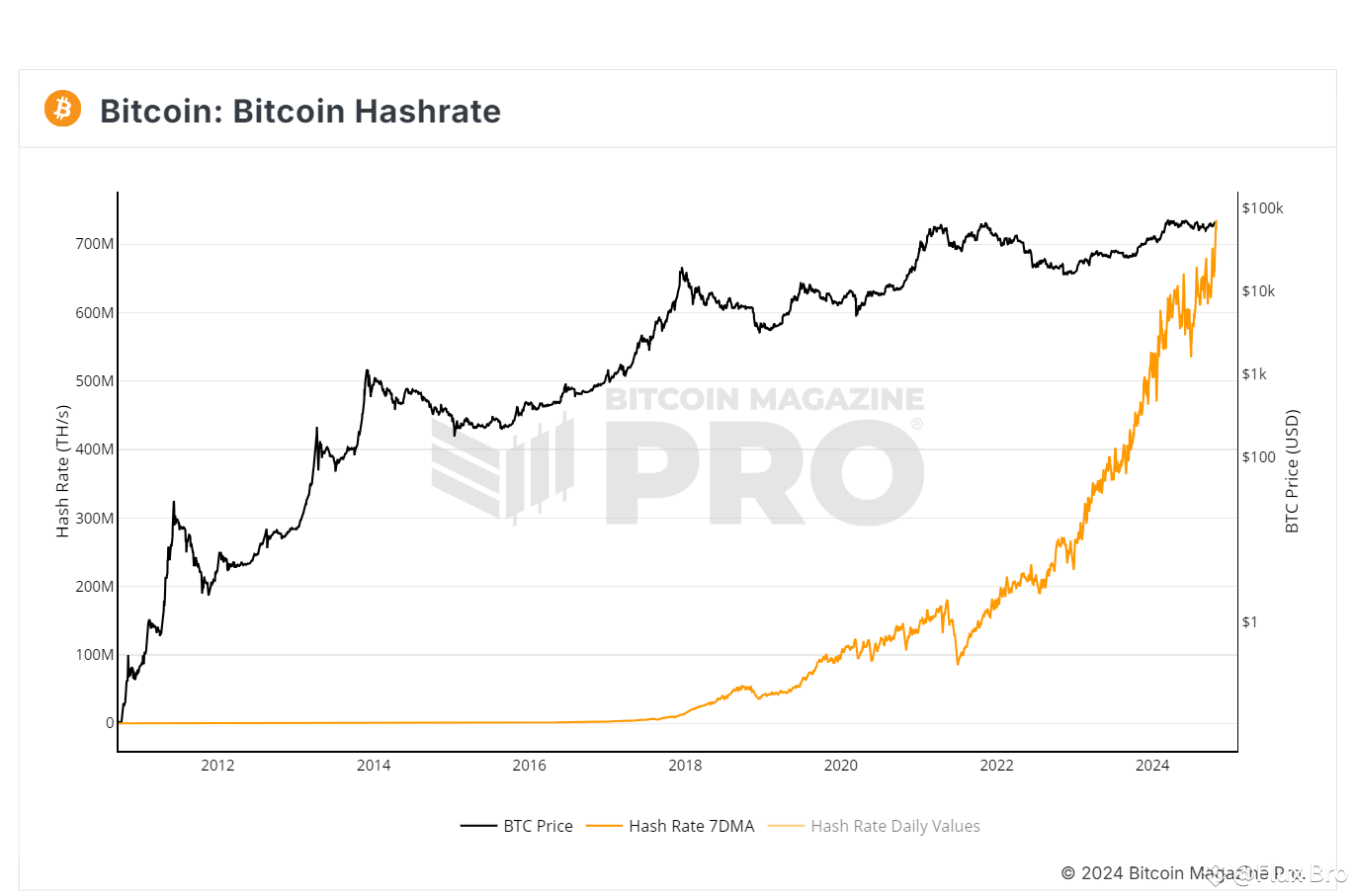
The relationship between Bitcoin’s hashrate and price has long been a point of interest for traders and analysts. As seen in this chart, both Bitcoin’s hashrate and price have been on an upward trajectory, though each follows its own unique pattern. Understanding this correlation and its implications is critical for making informed decisions.
Let’s dive deep into what the Bitcoin Hashrate tells us about network security, miner sentiment, potential price trends, and how it might impact the next bull run.
🧠 What is the Bitcoin Hashrate? Why Does it Matter?
Hashrate measures the total computational power used to mine and process Bitcoin transactions on the blockchain. It’s a critical metric for the following reasons:
Security: A higher hashrate makes the network more secure, as more computational power is needed to attempt an attack.
Miner Sentiment: Rising hashrate usually indicates optimism among miners, as they invest more in hardware, assuming future profitability.
Price Correlation: Historically, a growing hashrate often signals miner confidence, often aligning with positive price movements over time.
🔍 Detailed Breakdown of the Hashrate-Price Relationship
1. 2012-2016: Early Growth Phase 💡
Hashrate Analysis: Bitcoin’s hashrate began climbing steadily during this period as more people became aware of Bitcoin’s potential and mining became more profitable.
Price Impact: This period saw the first noticeable correlation between hashrate and price. As the hashrate grew, the network became more secure, attracting more investors, which in turn increased Bitcoin’s price. The 2013 bull run marked Bitcoin’s first major price spike, correlating with a jump in hashrate.
Key Insight: Early adopters capitalized on the trend. It demonstrated that hashrate growth could be a leading indicator for price momentum.
2. 2016-2020: The Institutional Interest Era 🏦
Hashrate Boom: As institutional investors began to take interest, we witnessed significant growth in the hashrate, with mining farms becoming more industrialized.
Price Action: The 2017 bull run pushed Bitcoin’s price from $1,000 to nearly $20,000. This parabolic growth correlated with a massive jump in hashrate, reinforcing the idea that miner optimism and network security were crucial in driving public confidence.
Bear Market Stability: Even during the 2018 bear market, the hashrate didn’t fall as significantly as expected. This indicated that miners were still confident in the long-term prospects of Bitcoin, supporting the notion that hashrate could serve as a “floor” for price drops.
Key Insight: Institutions noticed the resilience of the hashrate during price declines, which helped lay the foundation for even greater institutional investment and Bitcoin’s reputation as “digital gold.”
3. 2020-2024: The Parabolic Hashrate and Price Surge 🚀
Hashrate Surge: With Bitcoin’s price crossing $10,000 and then soaring past $60,000, we saw an unprecedented rise in hashrate. This era was marked by massive mining investments globally, especially in countries with cheap electricity.
Mining Migration: China’s crackdown on Bitcoin mining in 2021 led to a significant drop in hashrate, but it quickly recovered as miners relocated to friendlier jurisdictions. This adaptability further strengthened Bitcoin’s security and resilience.
Price Impact: The rapid recovery of the hashrate after the China ban showed miner resilience, which gave investors confidence. This period solidified the notion that a growing hashrate, even in adverse conditions, is bullish for long-term price trends.
Key Insight: As hashrate continues to grow, the probability of another bull run increases, with miners committing more resources to the network.
📈 Predictions Based on the Hashrate Trend
1. Future Bull Run in 2024-2025? 🌕
Why: Historically, large increases in the hashrate have preceded Bitcoin bull runs, as miner optimism and network security drive investor confidence. Given the current trend, it’s reasonable to predict a bull run in late 2024 to 2025.
Strategy: For traders, observing hashrate trends can offer clues about miner sentiment. An accelerating hashrate in 2024 could indicate strong miner confidence in an upcoming bull market, signaling a good time to accumulate.
2. Hashrate as a Price Support Indicator 📊
Why: When hashrate remains strong or grows despite price downturns, it often creates a “support floor.” This pattern was observed in 2018 and again during the COVID-19 market crash. As long as the hashrate remains high, Bitcoin’s price is unlikely to drop as drastically.
Prediction: If Bitcoin’s price drops while hashrate remains stable or increases, expect the price to recover. This insight can help traders avoid panic selling.
3. Increased Miner Commitment Could Signal Another All-Time High 🚀
Why: As mining becomes more competitive and the network hash power grows, miners are less likely to sell at lower prices, holding out for higher profits. This “hodling” behavior can contribute to supply scarcity, pushing prices up.
Strategy: Watch for sustained hashrate growth even during minor price drops. This may suggest that miners are holding their coins, indicating a potential for supply-driven price increases.
🔥 Pro Tips for Using Hashrate Data to Make Informed Decisions
Watch for Sudden Hashrate Drops 📉
Insight: Significant declines in hashrate can signal regulatory crackdowns (like China’s ban in 2021) or miner capitulation. These events often lead to short-term price drops but can also create buying opportunities for long-term investors.
Monitor Hashrate Alongside Difficulty Adjustments ⚙️
Insight: Bitcoin adjusts its mining difficulty roughly every two weeks based on hashrate changes. A high hashrate combined with rising difficulty often signals network strength, but if difficulty drops while hashrate remains high, it could indicate that miners are expecting profitability issues in the short term.
Use Hashrate as a Long-Term Sentiment Indicator 📈
Insight: Consistent hashrate growth over time reflects a commitment by miners, indicating long-term confidence in Bitcoin. For investors, a steadily rising hashrate signals strong fundamentals and suggests a lower risk of sudden price collapses.
🚀 Conclusion: Mastering Bitcoin’s Hashrate for Profitable Trading 🚀
The Bitcoin hashrate is a critical indicator for understanding market sentiment, security, and future price trends. By recognizing patterns in hashrate growth, price movements, and mining trends, you can develop a more informed trading strategy that anticipates market shifts.
Remember, while price charts can fluctuate wildly in the short term, the hashrate provides a long-term picture of Bitcoin’s health and miner sentiment. As the hashrate continues to grow, so too does the probability of future price increases.
📌 Final Takeaway: Use the hashrate as a compass to navigate the unpredictable waters of Bitcoin trading. When you align your strategy with hashrate insights, you’re not just trading the market; you’re aligning with the network itself. Happy trading, and may your next bull run be profitable!
Disclaimer: The content of this article is for informational purposes only and does not constitute financial advice. Cryptocurrency investments are highly volatile and may lead to substantial financial loss. Always perform your own research and consult a qualified financial advisor before making any investment decisions. The opinions expressed are solely those of the author and do not represent the views of the publisher or its affiliates. Investing in cryptocurrencies involves inherent risks, and past performance is not a reliable indicator of future results. Please exercise caution.