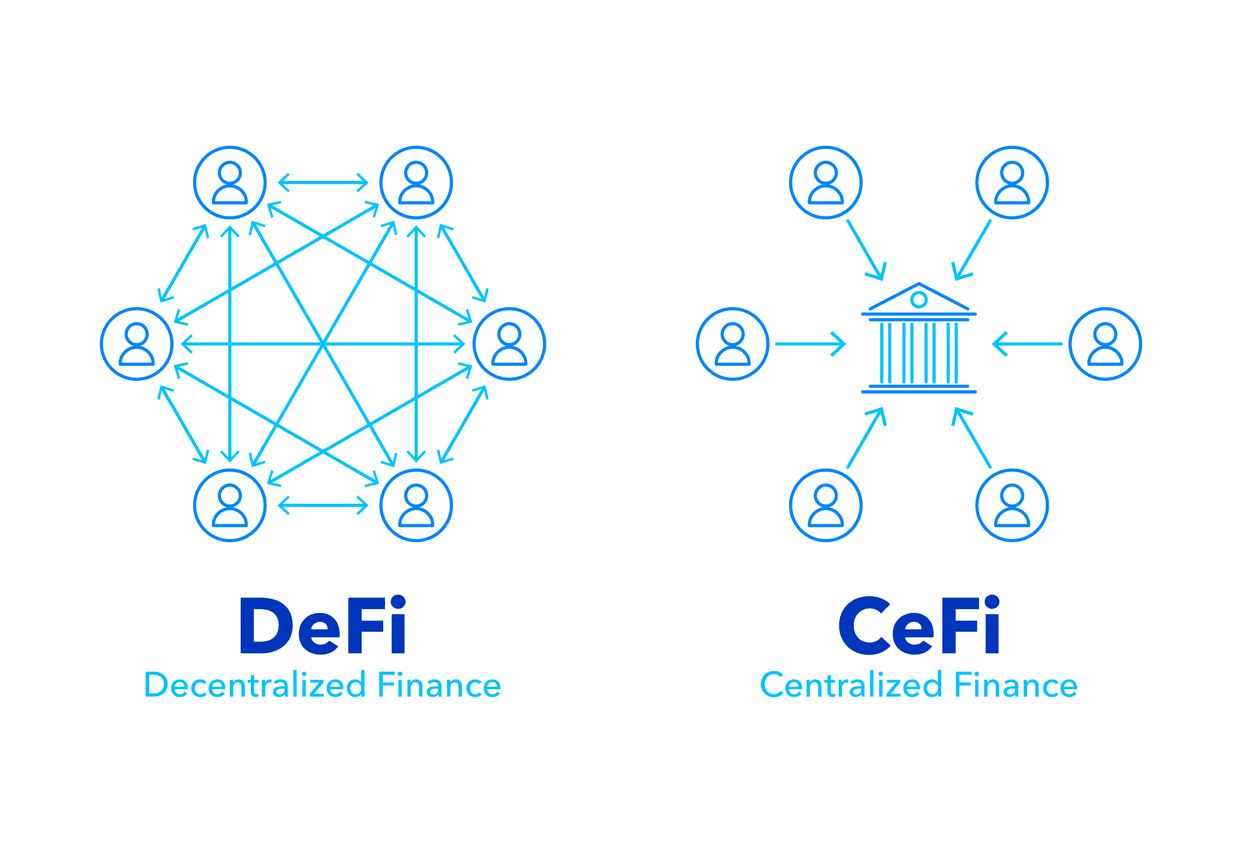
Decentralized Finance (DeFi) and Centralized Finance (CeFi) are two prominent paradigms reshaping the financial industry. As we delve into the realm of digital assets, it's crucial to understand the key differences and implications of these two approaches.
The Rise of DeFi
DeFi, short for Decentralized Finance, represents a revolutionary shift in the financial landscape. Built on blockchain technology, DeFi platforms aim to eliminate intermediaries, offering users greater control over their assets and financial decisions. Through DeFi, individuals can engage in lending, borrowing, trading, and yield farming, all within a trustless and transparent environment.
DeFi's key features include:
Decentralization: DeFi platforms operate on decentralized networks, reducing reliance on traditional financial institutions.
Accessibility: Anyone with an internet connection can access DeFi services, promoting financial inclusion.
Transparency: Transactions are recorded on a public ledger, ensuring transparency and auditability.
Smart Contracts: Smart contracts automate processes, eliminating the need for intermediaries.
CeFi: A Different Approach
On the other hand, Centralized Finance (CeFi) represents the traditional financial system adapted to the digital age. CeFi platforms, like centralized exchanges and banks, provide familiar financial services but operate under the control of centralized entities. While CeFi offers user-friendly interfaces and liquidity, it also entails reliance on intermediaries and may be subject to regulatory oversight.
Key characteristics of CeFi include:
Centralization: CeFi platforms are controlled by centralized entities, such as banks or exchanges.
Regulation: CeFi entities often comply with regulatory requirements, providing a sense of security.
Custodial Services: Users trust intermediaries to hold and manage their assets.
Ease of Use: CeFi platforms offer familiar financial services, making them accessible to a wide audience.
DeFi vs. CeFi: Bridging the Gap
The DeFi vs. CeFi debate is not about choosing one over the other but understanding their respective strengths and weaknesses. While DeFi promotes decentralization and self-custody, CeFi offers convenience and regulatory compliance. In the future, we may see a convergence of these two worlds as they borrow the best aspects from each other.
Some potential trends:
Hybrid Solutions: CeFi institutions might adopt DeFi technology to offer decentralized services within a regulated framework.
Regulatory Clarity: Regulatory frameworks for DeFi are evolving, providing clarity and legitimacy.
Interoperability: DeFi and CeFi platforms may collaborate to create seamless financial ecosystems.
In conclusion, the DeFi vs. CeFi discussion underscores the transformation happening in finance. DeFi offers empowerment and transparency, while CeFi provides familiarity and regulatory security. The future likely holds a blend of these approaches, offering users a diverse range of financial services. Understanding both DeFi and CeFi is key to navigating the evolving landscape of finance.
Join the conversation and share your thoughts on #DeFiCeFi! 🌐 #Finance #Blockchain #Crypto