Binance Square

vana

6.2M vues
5,521 mentions
Razib⁰⁰⁹
·
--
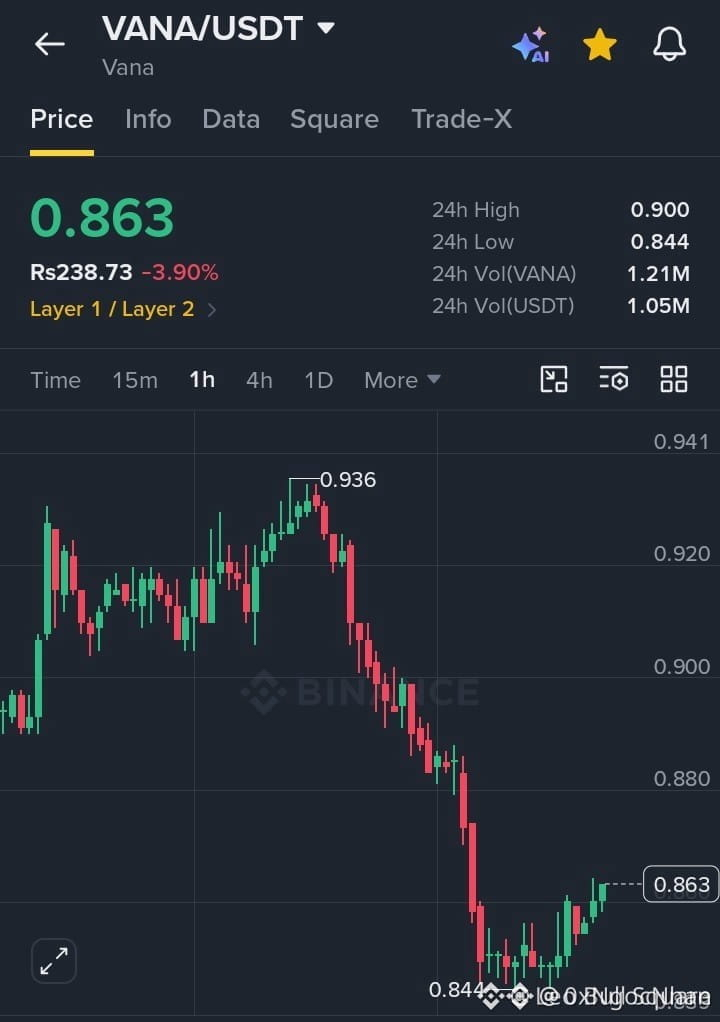
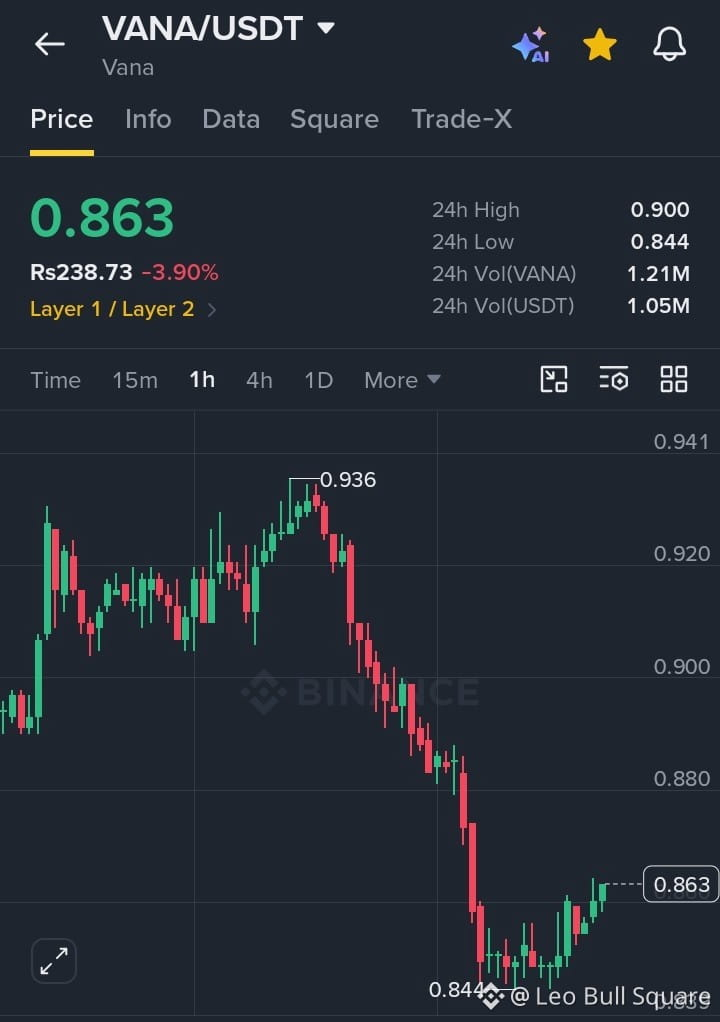
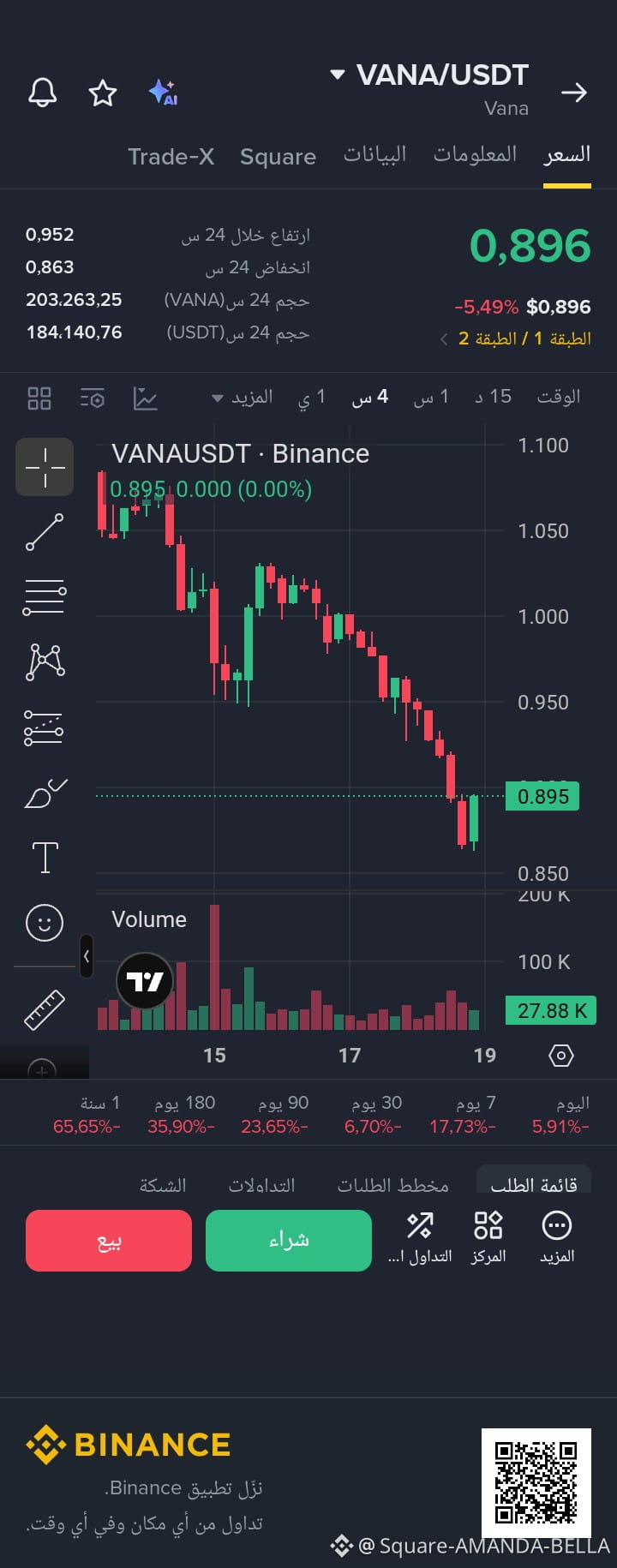
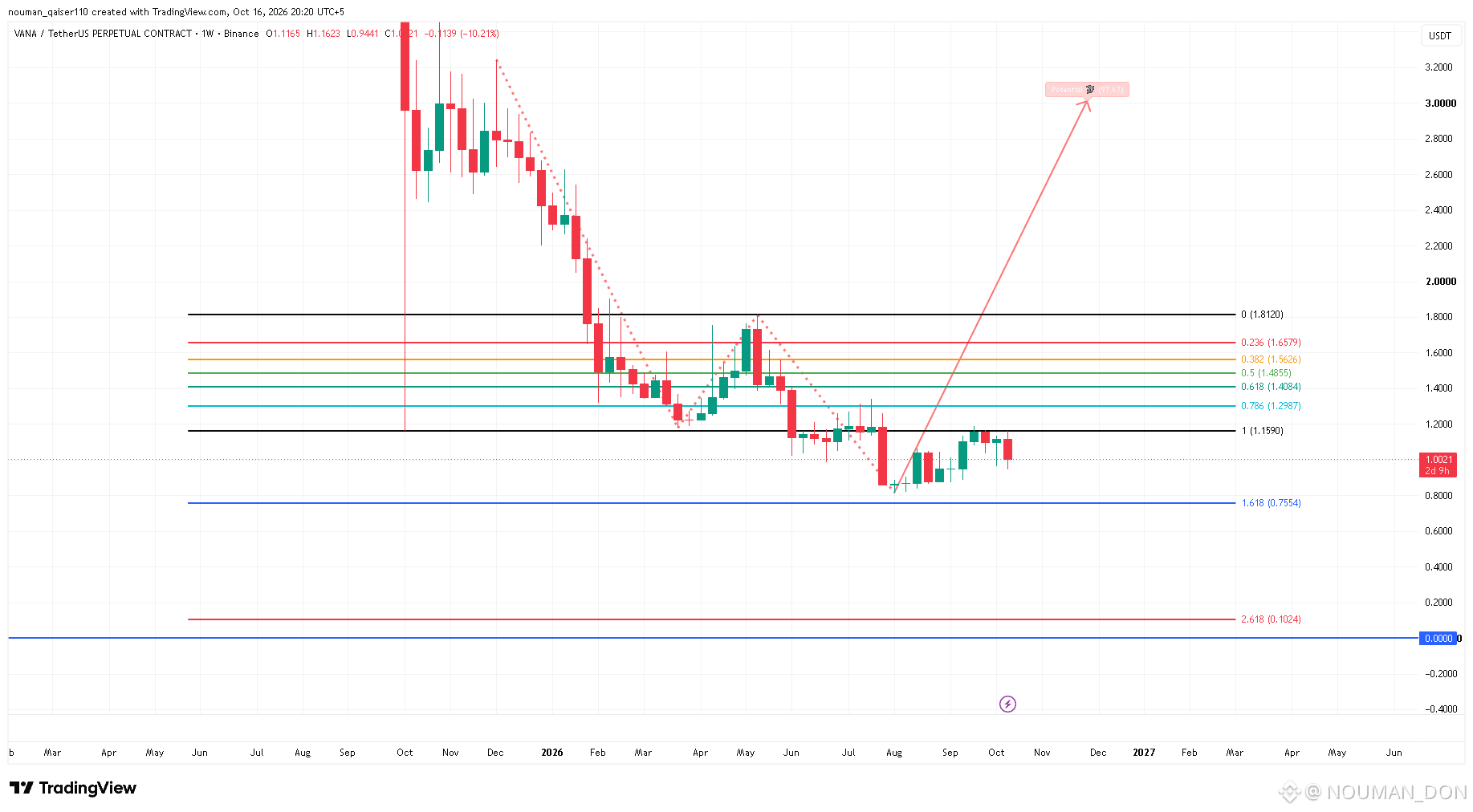
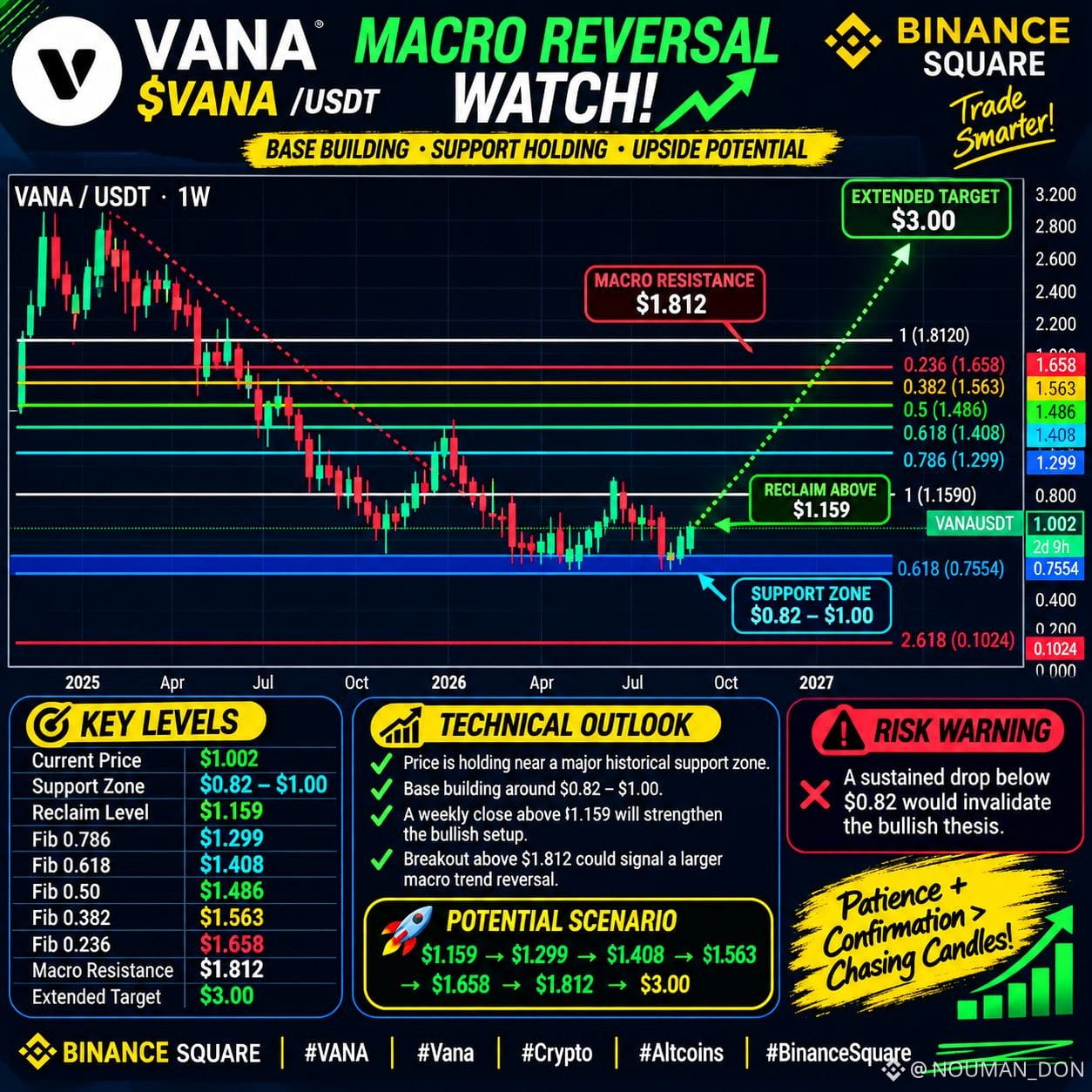
Vana is a Layer-1 blockchain focused on empowering users to monetize personal data through Data DAOs and support AI model training, making data a tradable on-chain asset. Its native token VANA trades near about $1.5–$1.8 USD, far below its all-time high above $35 in late 2024, showing a significant long-term correction. Short-term sentiment leans bearish to neutral, with more technical indicators signaling downward pressure and consolidation around support levels. Ecosystem developments—like DataDAO expansion, a native DEX (DataDex), and scheduled token unlocks—could influence demand and network activity. Low trading prices reflect broader crypto market weakness and relatively limited liquidity compared to larger Layer-1 projects. Overall, VANA stands as a speculative altcoin, where uptake in data monetization use cases and market sentiment will be key price drivers. @Vana $VANA #vanacoin {spot}(VANAUSDT) #vana
Vana is a Layer-1 blockchain focused on empowering users to monetize personal data through Data DAOs and support AI model training, making data a tradable on-chain asset.

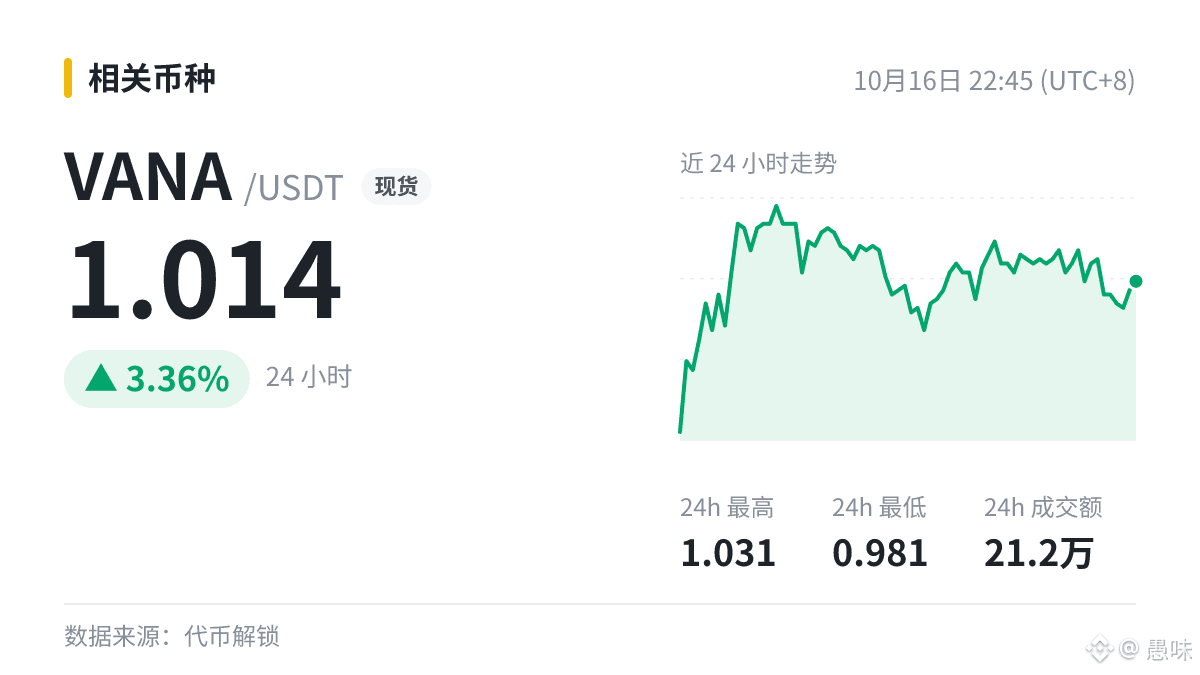
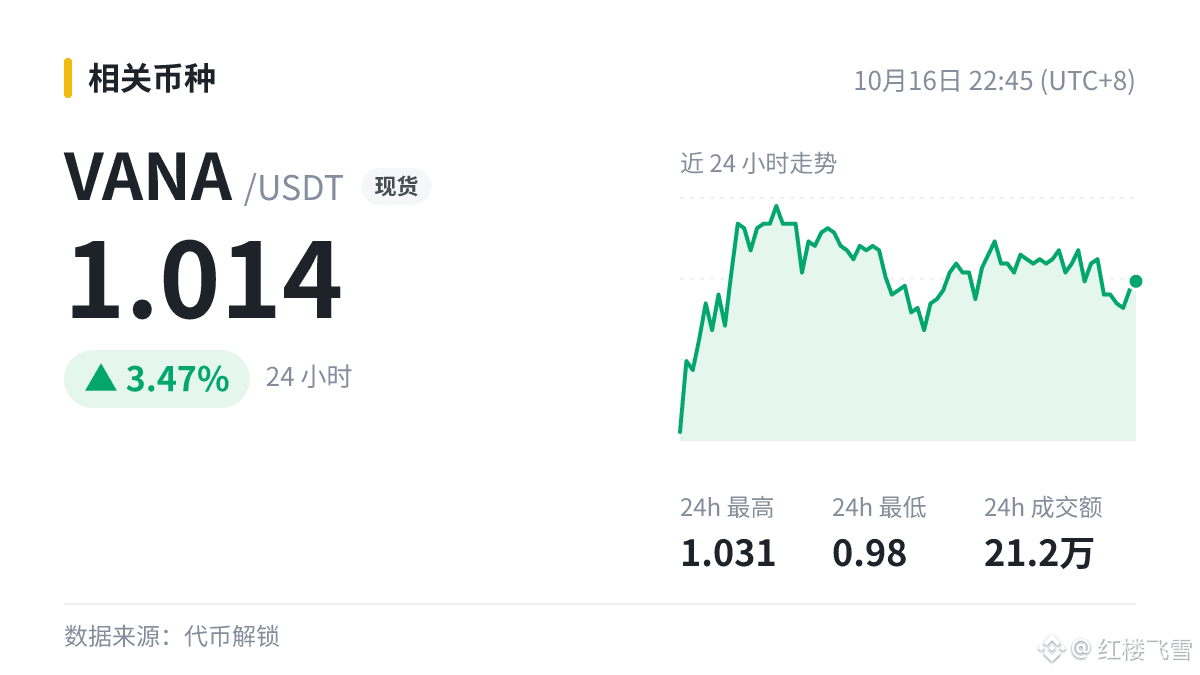
Its native token VANA trades near about $1.5–$1.8 USD, far below its all-time high above $35 in late 2024, showing a significant long-term correction.

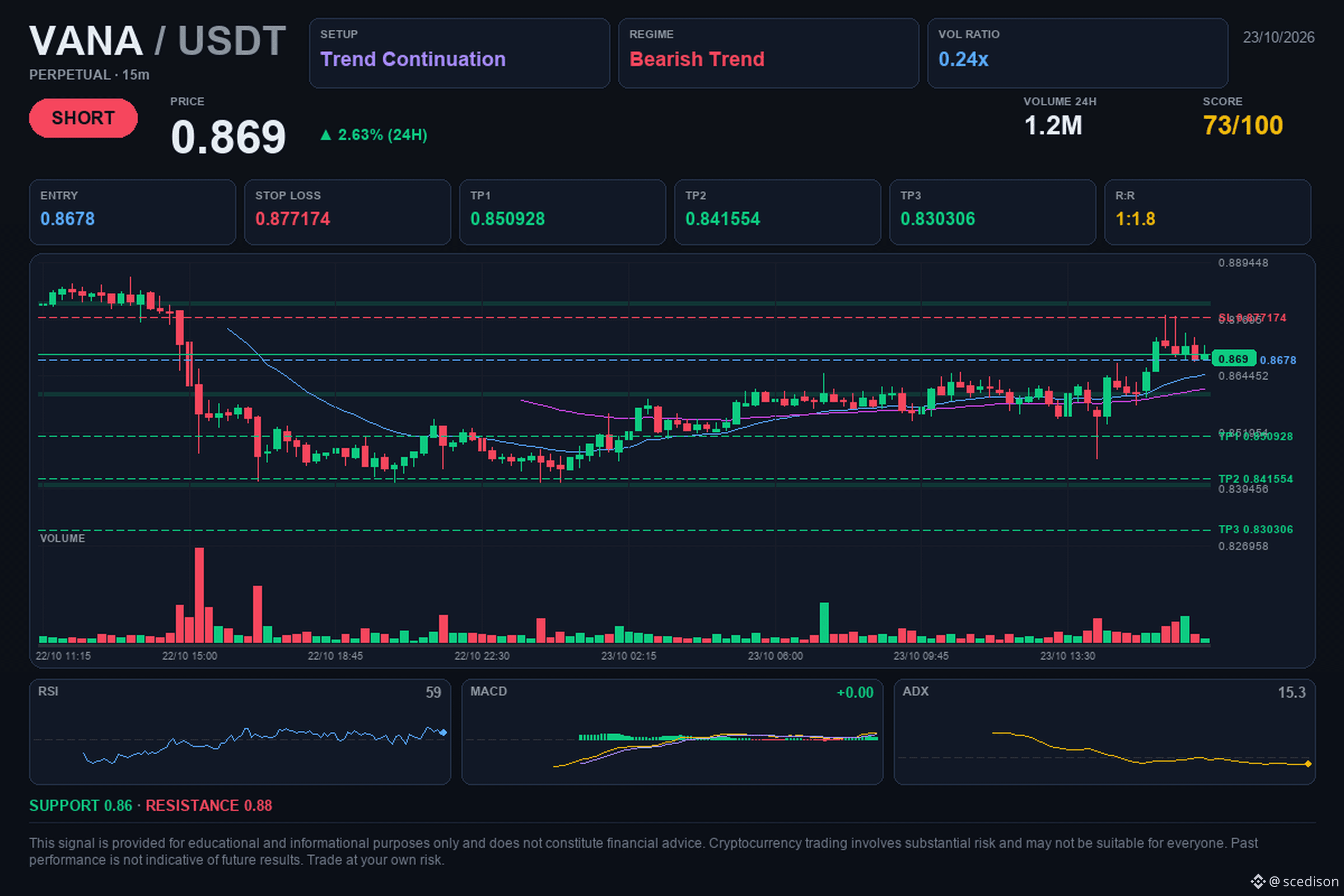
Short-term sentiment leans bearish to neutral, with more technical indicators signaling downward pressure and consolidation around support levels.

Ecosystem developments—like DataDAO expansion, a native DEX (DataDex), and scheduled token unlocks—could influence demand and network activity.

Low trading prices reflect broader crypto market weakness and relatively limited liquidity compared to larger Layer-1 projects.

Overall, VANA stands as a speculative altcoin, where uptake in data monetization use cases and market sentiment will be key price drivers.

@Vana Official $VANA #vanacoin
#vana
Vanar Chain: Powering the Next Generation of Modular Blockchain Innovation#vana $VANRY @Vanar Vanar Chain is redefining what’s possible in the world of modular blockchain infrastructure. As developers and builders seek chains that offer both scalability and true decentralization, Vanar Chain emerges with innovative cross-chain capabilities, optimized consensus mechanisms, and a community-first ethos that empowers participants at every level. Whether you’re a validator, developer, or DeFi enthusiast, the ecosystem around $VANRY is designed for real-world utility, low fees, and seamless interoperability with other networks. The @vanar team has been consistently releasing updates that reflect their roadmap commitments—improving network throughput, expanding smart contract support, and integrating advanced tooling that makes building on Vanar Chain more accessible than ever. Early adopters are already exploring novel use cases in gaming, NFTs, and on-chain governance, proving that this ecosystem isn’t just another L1 project—it’s a foundation for the next wave of decentralized applications. Looking ahead, Vanar Chain’s vision of multi-chain connectivity positions $VANRY as a token that plays a central role in securing, incentivizing, and powering transactions across an expanding ecosystem. For builders and users alike, #Vanar represents not just a blockchain, but a thriving community committed to pushing the boundaries of what decentralized systems can achieve.

Vanar Chain: Powering the Next Generation of Modular Blockchain Innovation

#vana $VANRY @Vanarchain Vanar Chain is redefining what’s possible in the world of modular blockchain infrastructure. As developers and builders seek chains that offer both scalability and true decentralization, Vanar Chain emerges with innovative cross-chain capabilities, optimized consensus mechanisms, and a community-first ethos that empowers participants at every level. Whether you’re a validator, developer, or DeFi enthusiast, the ecosystem around $VANRY is designed for real-world utility, low fees, and seamless interoperability with other networks.
The @vanar team has been consistently releasing updates that reflect their roadmap commitments—improving network throughput, expanding smart contract support, and integrating advanced tooling that makes building on Vanar Chain more accessible than ever. Early adopters are already exploring novel use cases in gaming, NFTs, and on-chain governance, proving that this ecosystem isn’t just another L1 project—it’s a foundation for the next wave of decentralized applications.
Looking ahead, Vanar Chain’s vision of multi-chain connectivity positions $VANRY as a token that plays a central role in securing, incentivizing, and powering transactions across an expanding ecosystem. For builders and users alike, #Vanar represents not just a blockchain, but a thriving community committed to pushing the boundaries of what decentralized systems can achieve.
VanarVanar Chain is positioning itself as one of the most forward-thinking Layer 1 blockchains in the space, and the vision behind @vanar goes far beyond simple token transactions. Built with a focus on real-world utility, Vanar Chain aims to power the next generation of entertainment, gaming, AI integrations, and real-world asset tokenization through a scalable and gas-efficient infrastructure. What makes $VANRY particularly interesting is its role at the center of this expanding ecosystem. It is not just a utility token for fees, but a key component in governance, ecosystem incentives, and platform-level interactions. As adoption grows, the demand for efficient, secure, and user-friendly blockchain environments becomes critical — and this is exactly where #Vanar stands out. One of the most exciting developments is the CreatorPad concept, which empowers creators, developers, and brands to launch and scale projects directly on Vanar Chain. Instead of focusing only on speculation, Vanar is building tools and infrastructure that support sustainable growth, community engagement, and long-term value creation. By lowering barriers to entry and optimizing performance, the network encourages innovation across multiple sectors. From high-throughput architecture to ecosystem-driven expansion, @Vanar is clearly targeting mainstream adoption. If the blockchain industry is moving toward real-world integration and creator empowerment, then $VANRY Y and #Vana r are positioning themselves right at the center of that transformation.

Vanar

Vanar Chain is positioning itself as one of the most forward-thinking Layer 1 blockchains in the space, and the vision behind @vanar goes far beyond simple token transactions. Built with a focus on real-world utility, Vanar Chain aims to power the next generation of entertainment, gaming, AI integrations, and real-world asset tokenization through a scalable and gas-efficient infrastructure.

What makes $VANRY particularly interesting is its role at the center of this expanding ecosystem. It is not just a utility token for fees, but a key component in governance, ecosystem incentives, and platform-level interactions. As adoption grows, the demand for efficient, secure, and user-friendly blockchain environments becomes critical — and this is exactly where #Vanar stands out.

One of the most exciting developments is the CreatorPad concept, which empowers creators, developers, and brands to launch and scale projects directly on Vanar Chain. Instead of focusing only on speculation, Vanar is building tools and infrastructure that support sustainable growth, community engagement, and long-term value creation. By lowering barriers to entry and optimizing performance, the network encourages innovation across multiple sectors.

From high-throughput architecture to ecosystem-driven expansion, @Vanarchain is clearly targeting mainstream adoption. If the blockchain industry is moving toward real-world integration and creator empowerment, then $VANRY Y and #Vana r are positioning themselves right at the center of that transformation.
#VANRYDon't be superstitious about those mute public chains anymore. Recently, looking at the dynamics of @Vanar rchain, I found they are becoming more like an industry provocateur. They no longer explain how fast they are but directly point at other public chains and say: "You can't even clarify the contracts you're executing, so what right do you have to support AI?" This statement is harsh, but it's also very true. Today's blockchain is a huge black box for AI. Input goes in, output comes out, but what happens in between? Only God knows. This 'lack of process' is the biggest stumbling block to the large-scale implementation of AI. Vanar's current approach is to do on-chain decryption. It breaks open that black box through memory and reasoning at the protocol layer, equipping it with real-time commentary. This allows AI not only to know the results but also to review the process. This is not just a technical upgrade; it is injecting cognitive capability into blockchain. Powerpei's judgment: Although the current coin prices are still bottoming out, the power of this 'cognitive disruptive leverage' is immense. When, in the second half of 2026, enterprises begin to demand that AI must be 'auditable and explainable', Vanar's 'talking chain' will become the only choice. In this industry filled with copy-paste code, teams willing to reconstruct the underlying dialogue logic are worth a second glance. It's not selling coins; it's selling 'communication rights'. #Vana $VANRY

#VANRY

Don't be superstitious about those mute public chains anymore.
Recently, looking at the dynamics of @Vanarchain rchain, I found they are becoming more like an industry provocateur.
They no longer explain how fast they are but directly point at other public chains and say:
"You can't even clarify the contracts you're executing, so what right do you have to support AI?"
This statement is harsh, but it's also very true.
Today's blockchain is a huge black box for AI.
Input goes in, output comes out, but what happens in between? Only God knows.
This 'lack of process' is the biggest stumbling block to the large-scale implementation of AI.
Vanar's current approach is to do on-chain decryption.
It breaks open that black box through memory and reasoning at the protocol layer, equipping it with real-time commentary.
This allows AI not only to know the results but also to review the process.
This is not just a technical upgrade; it is injecting cognitive capability into blockchain.
Powerpei's judgment:
Although the current coin prices are still bottoming out, the power of this 'cognitive disruptive leverage' is immense.
When, in the second half of 2026, enterprises begin to demand that AI must be 'auditable and explainable',
Vanar's 'talking chain' will become the only choice.
In this industry filled with copy-paste code, teams willing to reconstruct the underlying dialogue logic are worth a second glance.
It's not selling coins; it's selling 'communication rights'.
#Vana $VANRY
Vanar Chain — The Next Rising Crypto Queen!🚀 A powerful new blockchain project, $VANA r Chain, is officially launching on the 20th, and the crypto community is watching closely. 🌐 The goal of Vanar Chain is to provide a faster, scalable, and developer-friendly Web3 infrastructure, helping new decentralized applications and blockchain projects grow more efficiently. 📈 New project launches often bring strong market excitement, and traders are keeping an eye on potential early opportunities. 🔥 Early launch phases can see strong price movement, so staying updated with market trends is important.#MarketRebound #vanar #Vana

Vanar Chain — The Next Rising Crypto Queen!

🚀 A powerful new blockchain project, $VANA r Chain, is officially launching on the 20th, and the crypto community is watching closely.
🌐 The goal of Vanar Chain is to provide a faster, scalable, and developer-friendly Web3 infrastructure, helping new decentralized applications and blockchain projects grow more efficiently.
📈 New project launches often bring strong market excitement, and traders are keeping an eye on potential early opportunities.
🔥 Early launch phases can see strong price movement, so staying updated with market trends is important.#MarketRebound #vanar #Vana
AI Agents Finally Remember Everything!Neutron semantic memory now live in OpenClaw—AI agents keep context across sessions and platforms, no resets! Vanar making true autonomous agents possible. This is the brain Web3 needed. 🚀 @Vanarchain $VANRY #Vana

AI Agents Finally Remember Everything!

Neutron semantic memory now live in OpenClaw—AI agents keep context across sessions and platforms, no resets! Vanar making true autonomous agents possible. This is the brain Web3 needed. 🚀 @Vanarchain $VANRY #Vana
Fogo: Redefining Speed and Efficiency in the SVM EcosystemThe blockchain landscape is evolving rapidly, and @fogo @Vanar is currently at the forefront of this transformation. As a high-performance Layer 1 blockchain built on the Solana Virtual Machine (SVM), $FOGO $VANRY is designed specifically to bridge the gap between traditional finance and decentralized ecosystems. By leveraging the power of the Firedancer validator client, the network achieves incredible benchmarks, including sub-40ms block times and near-instant finality. Why the Community is Watching Fogo What sets this project apart is its focus on "enshrined" infrastructure. Unlike general-purpose chains, @fogo integrates essential trading tools—like limit order books and native oracles—directly into the protocol level. This reduces the need for third-party middleware, making decentralized trading feel as fast and smooth as a centralized exchange. Utility and Future Outlook The native token, $FOGO, serves as the backbone of this ecosystem, powering everything from transaction gas fees to staking and governance. With its mainnet now live, we are seeing the emergence of a "trader's layer" that prioritizes execution quality and ultra-low latency. For those following the growth of the SVM landscape, keeping an eye on #fogo #Vana is essential as it scales its validator set and onboards the next generation of DeFi applications. #fogo is not just about speed; it's about creating a sustainable environment for institutional-grade finance on-chain. #fogo

Fogo: Redefining Speed and Efficiency in the SVM Ecosystem

The blockchain landscape is evolving rapidly, and @Fogo Official @Vanarchain is currently at the forefront of this transformation. As a high-performance Layer 1 blockchain built on the Solana Virtual Machine (SVM), $FOGO $VANRY is designed specifically to bridge the gap between traditional finance and decentralized ecosystems. By leveraging the power of the Firedancer validator client, the network achieves incredible benchmarks, including sub-40ms block times and near-instant finality.
Why the Community is Watching Fogo
What sets this project apart is its focus on "enshrined" infrastructure. Unlike general-purpose chains, @Fogo Official integrates essential trading tools—like limit order books and native oracles—directly into the protocol level. This reduces the need for third-party middleware, making decentralized trading feel as fast and smooth as a centralized exchange.
Utility and Future Outlook
The native token, $FOGO , serves as the backbone of this ecosystem, powering everything from transaction gas fees to staking and governance. With its mainnet now live, we are seeing the emergence of a "trader's layer" that prioritizes execution quality and ultra-low latency. For those following the growth of the SVM landscape, keeping an eye on #fogo #Vana is essential as it scales its validator set and onboards the next generation of DeFi applications.
#fogo is not just about speed; it's about creating a sustainable environment for institutional-grade finance on-chain. #fogo
The Strategic Role of Persistent Memory in AI — And Why Vanar Matters NowAs artificial intelligence evolves beyond experimental deployments into real-world infrastructure, one limitation continues to surface across nearly every advanced system: memory. Not short-term processing power, not reasoning speed — but the ability to retain continuity over time. Without persistent memory, even the most sophisticated AI agents behave like temporary tools rather than evolving digital entities. This is the structural challenge that Vanar Chain is working to solve — and it may be one of the most important shifts currently happening in applied AI architecture. The Hidden Limitation of Modern AI Most AI systems today are designed for moment-based intelligence. They analyze inputs, produce outputs, and then effectively reset. Even when systems appear conversational or adaptive, their operational memory is often session-bound or environment-dependent. This creates a fundamental constraint: intelligence does not accumulate naturally. Agents may perform complex reasoning in one interaction, yet lose context when restarted, redeployed, or moved across environments. The result is fragmented intelligence — capable, but not continuous. For applications like automation, digital assistants, financial agents, and autonomous decision systems, this limitation is significant. Real-world intelligence depends not only on processing information but on remembering experience. Persistent Memory as Infrastructure Vanar’s approach centers on persistent, transferable memory embedded directly into AI operational frameworks. With memory continuity integrated at the architectural level, agents no longer restart as blank systems when environments change. Instead, they retain prior context, decision history, and interaction patterns across sessions and deployments. This transforms AI behavior in a fundamental way. Rather than performing isolated tasks, agents can develop long-term operational awareness. They can refine strategies over time, learn from repeated exposure, and maintain consistency in complex workflows. Intelligence becomes cumulative rather than temporary. In practical terms, this moves AI closer to how human learning functions — not as disconnected moments of reasoning, but as an ongoing accumulation of experience. Why Continuity Changes Everything Persistent memory does more than improve convenience — it alters the entire design philosophy of AI systems. When agents retain historical context, they become capable of: Long-running autonomous operation Adaptive decision-making based on experience Cross-environment learning Consistent behavioral modeling Progressive knowledge accumulation This opens the door to AI systems that function more like evolving participants within digital ecosystems rather than reactive tools triggered on demand. For industries relying on precision, strategy, or ongoing optimization — such as finance, logistics, and data-driven operations — this level of continuity is transformative. From Stateless Tools to Evolving Agents The broader implication is structural. AI is shifting from stateless execution models toward persistent intelligence models. In stateless systems, intelligence is recreated repeatedly. In persistent systems, intelligence grows. That difference may define the next phase of AI development. By focusing on memory continuity rather than surface-level performance metrics or attention-grabbing features, Vanar is targeting a foundational layer of intelligence architecture. The goal is not to make AI briefly impressive — but to make it durably capable. A Quiet but Foundational Shift While much of the AI industry emphasizes model size, speed, and multimodal capabilities, persistent memory addresses something deeper: the continuity of intelligence itself. Systems that remember can learn. Systems that learn can evolve. Systems that evolve can operate independently over time. If long-running, context-aware agents become the standard for advanced AI deployment, persistent memory will not be a feature — it will be a requirement. And that is why the role of Vanar may prove more significant than headline trends suggest. It is not chasing short-term visibility. It is working on the structural layer that determines whether AI systems merely perform — or truly develop.$VANRY #Vana @Vanar

The Strategic Role of Persistent Memory in AI — And Why Vanar Matters Now

As artificial intelligence evolves beyond experimental deployments into real-world infrastructure, one limitation continues to surface across nearly every advanced system: memory. Not short-term processing power, not reasoning speed — but the ability to retain continuity over time. Without persistent memory, even the most sophisticated AI agents behave like temporary tools rather than evolving digital entities.
This is the structural challenge that Vanar Chain is working to solve — and it may be one of the most important shifts currently happening in applied AI architecture.
The Hidden Limitation of Modern AI
Most AI systems today are designed for moment-based intelligence. They analyze inputs, produce outputs, and then effectively reset. Even when systems appear conversational or adaptive, their operational memory is often session-bound or environment-dependent.
This creates a fundamental constraint: intelligence does not accumulate naturally. Agents may perform complex reasoning in one interaction, yet lose context when restarted, redeployed, or moved across environments. The result is fragmented intelligence — capable, but not continuous.
For applications like automation, digital assistants, financial agents, and autonomous decision systems, this limitation is significant. Real-world intelligence depends not only on processing information but on remembering experience.
Persistent Memory as Infrastructure
Vanar’s approach centers on persistent, transferable memory embedded directly into AI operational frameworks. With memory continuity integrated at the architectural level, agents no longer restart as blank systems when environments change. Instead, they retain prior context, decision history, and interaction patterns across sessions and deployments.
This transforms AI behavior in a fundamental way.
Rather than performing isolated tasks, agents can develop long-term operational awareness. They can refine strategies over time, learn from repeated exposure, and maintain consistency in complex workflows. Intelligence becomes cumulative rather than temporary.
In practical terms, this moves AI closer to how human learning functions — not as disconnected moments of reasoning, but as an ongoing accumulation of experience.
Why Continuity Changes Everything
Persistent memory does more than improve convenience — it alters the entire design philosophy of AI systems.
When agents retain historical context, they become capable of:
Long-running autonomous operation
Adaptive decision-making based on experience
Cross-environment learning
Consistent behavioral modeling
Progressive knowledge accumulation
This opens the door to AI systems that function more like evolving participants within digital ecosystems rather than reactive tools triggered on demand.
For industries relying on precision, strategy, or ongoing optimization — such as finance, logistics, and data-driven operations — this level of continuity is transformative.
From Stateless Tools to Evolving Agents
The broader implication is structural. AI is shifting from stateless execution models toward persistent intelligence models.
In stateless systems, intelligence is recreated repeatedly.
In persistent systems, intelligence grows.
That difference may define the next phase of AI development.
By focusing on memory continuity rather than surface-level performance metrics or attention-grabbing features, Vanar is targeting a foundational layer of intelligence architecture. The goal is not to make AI briefly impressive — but to make it durably capable.
A Quiet but Foundational Shift
While much of the AI industry emphasizes model size, speed, and multimodal capabilities, persistent memory addresses something deeper: the continuity of intelligence itself. Systems that remember can learn. Systems that learn can evolve. Systems that evolve can operate independently over time.
If long-running, context-aware agents become the standard for advanced AI deployment, persistent memory will not be a feature — it will be a requirement.
And that is why the role of Vanar may prove more significant than headline trends suggest. It is not chasing short-term visibility. It is working on the structural layer that determines whether AI systems merely perform — or truly develop.$VANRY #Vana @Vanar
“VANAR JUST SOLVED BLOCKCHAIN’S BIGGEST FAILURE!” Prepare to be stunned by @Vanar #Vana $VANRY — the blockchain that could make centralized outages obsolete. Most chains still rely on external storage systems, meaning if a server goes down, your assets can vanish. Vanar Chain introduces AI compression and semantic storage, shrinking huge files into tiny, permanent objects stored fully on-chain. This could stop digital art, contracts, and metaverse assets from disappearing forever. Vanar’s architecture ensures true ownership without dependence on third-party servers. Every interaction uses $vanry, powering storage, transactions, and AI reasoning. What this means is jaw-dropping: infrastructure risk, one of crypto’s biggest vulnerabilities, may finally be gone. Vanar isn’t just innovating — it’s redefining what it means to own and secure digital property.
“VANAR JUST SOLVED BLOCKCHAIN’S BIGGEST FAILURE!”

Prepare to be stunned by @Vanarchain #Vana $VANRY — the blockchain that could make centralized outages obsolete. Most chains still rely on external storage systems, meaning if a server goes down, your assets can vanish. Vanar Chain introduces AI compression and semantic storage, shrinking huge files into tiny, permanent objects stored fully on-chain.

This could stop digital art, contracts, and metaverse assets from disappearing forever. Vanar’s architecture ensures true ownership without dependence on third-party servers. Every interaction uses $vanry, powering storage, transactions, and AI reasoning.

What this means is jaw-dropping: infrastructure risk, one of crypto’s biggest vulnerabilities, may finally be gone. Vanar isn’t just innovating — it’s redefining what it means to own and secure digital property.
🌙 The Slow Magic of Web3💭🤔Not every breakthrough arrives with noise. Some arrive quietly, like a sunrise no one noticed at first. 🌄 Web3 can feel the same. One day it’s headlines and hype, the next it’s calm and questions. But in that calm, something important grows — understanding. The longer you stay, the more you realize this space isn’t only about charts. It’s about ideas, experiments, and people trying to build a different digital future. 🌍 Yes, the market moves up and down. Yes, patience gets tested. But curiosity keeps people here. ✨ And sometimes, the slow days teach more than the exciting ones. 💬 Let’s talk What’s the biggest lesson Web3 has taught you? Are you here more for learning or earning? What keeps your interest alive in this space? Share below 👇 Because every perspective adds a piece to the bigger picture. 🧩✨ #Vana $VANRY {future}(VANRYUSDT) @Vanar

🌙 The Slow Magic of Web3💭🤔

Not every breakthrough arrives with noise.
Some arrive quietly, like a sunrise no one noticed at first. 🌄
Web3 can feel the same. One day it’s headlines and hype, the next it’s calm and questions. But in that calm, something important grows — understanding.
The longer you stay, the more you realize this space isn’t only about charts. It’s about ideas, experiments, and people trying to build a different digital future. 🌍
Yes, the market moves up and down.
Yes, patience gets tested.
But curiosity keeps people here. ✨
And sometimes, the slow days teach more than the exciting ones.
💬 Let’s talk
What’s the biggest lesson Web3 has taught you?
Are you here more for learning or earning?
What keeps your interest alive in this space?
Share below 👇
Because every perspective adds a piece to the bigger picture. 🧩✨
#Vana $VANRY
@Vanar
Vanry Coin is an emerging digital asset designed to support the next generation of Web3 innovation.@Vanar The blockchain space is evolving fast, but only a few projects are truly focused on real-world adoption. Vanar Chain is one of those projects that stands out by targeting gaming, entertainment, and digital media. Unlike traditional blockchains that struggle with speed and high fees, Vanar Chain is designed to offer fast transactions, low costs, and a smooth user experience for both developers and users. One of the most exciting parts of this ecosystem is its strong focus on Web3 gaming and immersive experiences. Vanar Chain makes it easier for developers to build scalable games, NFT platforms, and metaverse applications without worrying about performance issues. This is a big step toward mass adoption. The native token $VANRY plays a key role in the ecosystem, powering transactions, staking, and network security. As more projects and creators join the network, the demand and utility of the token continue to grow. With a clear vision, strong technology, and growing community support, Vanar Chain has the potential to become a major player in the next generation of blockchain innovation. Keeping an eye on this project could be a smart move for anyone interested in Web3. @Vana

Vanry Coin is an emerging digital asset designed to support the next generation of Web3 innovation.

@Vanarchain The blockchain space is evolving fast, but only a few projects are truly focused on real-world adoption. Vanar Chain is one of those projects that stands out by targeting gaming, entertainment, and digital media. Unlike traditional blockchains that struggle with speed and high fees, Vanar Chain is designed to offer fast transactions, low costs, and a smooth user experience for both developers and users.
One of the most exciting parts of this ecosystem is its strong focus on Web3 gaming and immersive experiences. Vanar Chain makes it easier for developers to build scalable games, NFT platforms, and metaverse applications without worrying about performance issues. This is a big step toward mass adoption.
The native token $VANRY plays a key role in the ecosystem, powering transactions, staking, and network security. As more projects and creators join the network, the demand and utility of the token continue to grow.
With a clear vision, strong technology, and growing community support, Vanar Chain has the potential to become a major player in the next generation of blockchain innovation. Keeping an eye on this project could be a smart move for anyone interested in Web3.
@Vana
#vanar $VANRY {spot}(VANRYUSDT) Here is an original Binance Square post (100–500 characters): Vanar Chain is pushing Web3 forward with AI-powered infrastructure, low fees, and high scalability for real-world use cases. From gaming to digital assets, @Vanar r is creating a seamless environment for developers and users. With strong utility and innovation, $VANRY is driving the ecosystem’s next wave of growth. #vana
#vanar $VANRY
Here is an original Binance Square post (100–500 characters):
Vanar Chain is pushing Web3 forward with AI-powered infrastructure, low fees, and high scalability for real-world use cases. From gaming to digital assets, @Vanarchain r is creating a seamless environment for developers and users. With strong utility and innovation, $VANRY is driving the ecosystem’s next wave of growth. #vana
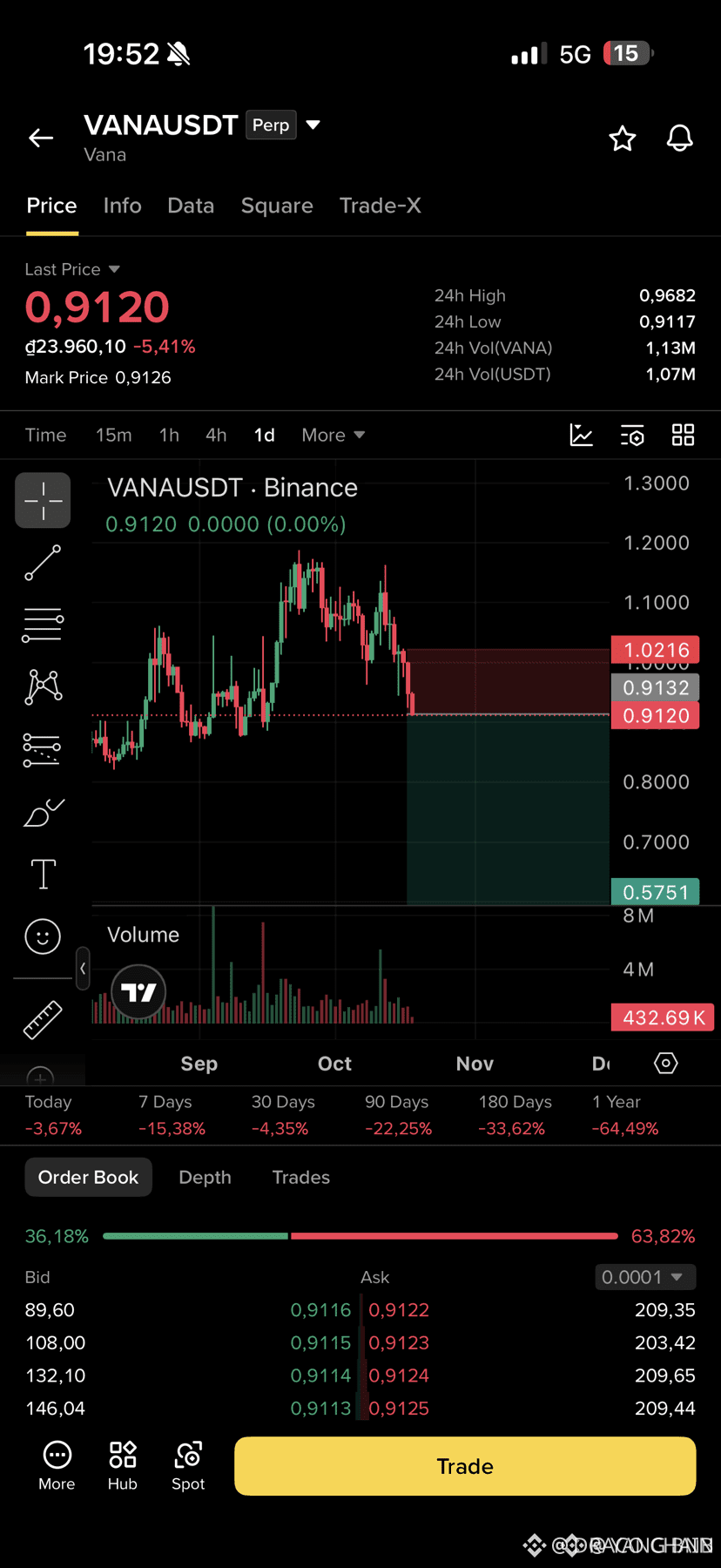
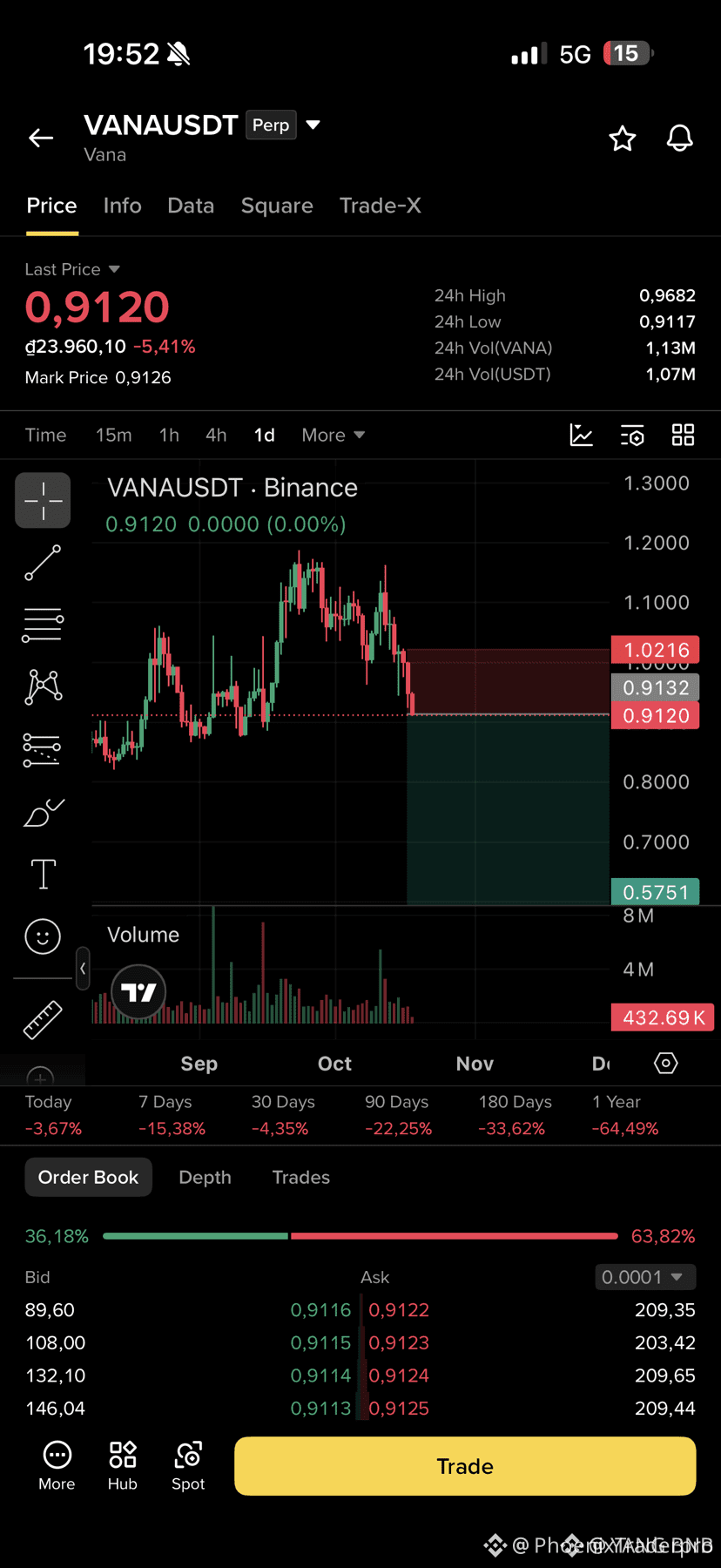
🧠🎢 Today's episode is brought to you by #Vana . The token experienced an impressive rise of around 50% following Upbit's suspension of deposits and withdrawals for $VANA . However, just 10 minutes after the announcement, substantial sell-offs began at the peak, making it the second-highest in sales across all centralized exchanges, which ultimately led to a decline in the token's price. #Careport 📊 Check out the Chart 👈 {future}(VANAUSDT)
🧠🎢 Today's episode is brought to you by #Vana . The token experienced an impressive rise of around 50% following Upbit's suspension of deposits and withdrawals for $VANA . However, just 10 minutes after the announcement, substantial sell-offs began at the peak, making it the second-highest in sales across all centralized exchanges, which ultimately led to a decline in the token's price.
#Careport 📊 Check out the Chart 👈
·
--
Haussier
$VANA — Post-Spike Consolidation, Expansion Loading 📈 LONG $VANA Buy Zone: 1.600 – 1.630 SL: 1.565 TP1: 1.690 TP2: 1.740 TP3: 1.820 Price is consolidating cleanly above the 1.60 base after a strong spike. This compression looks constructive, suggesting continuation rather than distribution. As long as the base holds, another expansion leg remains likely. #VANA #CryptoTrading #Altcoins #Momentum #Breakout $VANA {future}(VANAUSDT) follow me I Will follow back you let's rise together .... please support each other .........
$VANA — Post-Spike Consolidation, Expansion Loading 📈

LONG $VANA

Buy Zone: 1.600 – 1.630
SL: 1.565

TP1: 1.690
TP2: 1.740
TP3: 1.820

Price is consolidating cleanly above the 1.60 base after a strong spike. This compression looks constructive, suggesting continuation rather than distribution. As long as the base holds, another expansion leg remains likely.

#VANA #CryptoTrading #Altcoins #Momentum #Breakout
$VANA
follow me I Will follow back you let's rise together .... please support each other .........
·
--
Haussier
the best time to stock up. #Vana
Elon Jamess
·
--
VANRY The Engine Behind Vanar Growth

VANRY is not just another crypto token it runs the whole VanarChain network. It pays for transactions powers AI tools and keeps apps running. Developers use it to build smart contracts users use it for dApps and digital assets. The focus is real usage not hype and as more people join VANRY becomes more important every day.

#Vanar $VANRY

@Vanarchain
Vanar Building Web3For The Real WorldVanar is not just another Layer 1 blockchain. It was created with a clear mission to make Web3 practical simple and ready for everyday users. Instead of focusing only on developers and crypto natives Vanar is designed for real world adoption especially in gaming entertainment AI and global brands. The team behind Vanar comes from strong backgrounds in gaming and digital experiences. They understand how mainstream audiences interact with technology and what it takes to create products people actually enjoy using. Their vision is ambitious to bring the next three billion users into Web3 without overwhelming them with technical complexity. What makes Vanar stand out is its AI first approach. With technologies like Neutron for advanced data compression and Kayon for on chain reasoning the network allows applications to process real world information in a smarter and more efficient way. This creates opportunities for dynamic gaming economies intelligent digital ownership and interactive brand experiences that feel natural to users. Vanar also powers products such as Virtua Metaverse and the VGN games network. These platforms combine immersive digital environments with blockchain infrastructure working quietly in the background. Users can engage explore and participate without needing deep knowledge of crypto systems. At the center of the ecosystem is the #VANRY token. It is used for transaction fees staking governance and supporting applications built on the network. As the ecosystem grows VANRY plays a key role in maintaining security and participation across the platform. Vanar is more than a blockchain project. It represents a long term vision where AI entertainment finance and digital ownership connect smoothly. The focus remains clear to build Web3 that feels simple accessible and meaningful for the real world #Vana @Square-Creator-a16f92087a9c $VANRY {spot}(VANRYUSDT)

Vanar Building Web3For The Real World

Vanar is not just another Layer 1 blockchain. It was created with a clear mission to make Web3 practical simple and ready for everyday users. Instead of focusing only on developers and crypto natives Vanar is designed for real world adoption especially in gaming entertainment AI and global brands.
The team behind Vanar comes from strong backgrounds in gaming and digital experiences. They understand how mainstream audiences interact with technology and what it takes to create products people actually enjoy using. Their vision is ambitious to bring the next three billion users into Web3 without overwhelming them with technical complexity.
What makes Vanar stand out is its AI first approach. With technologies like Neutron for advanced data compression and Kayon for on chain reasoning the network allows applications to process real world information in a smarter and more efficient way. This creates opportunities for dynamic gaming economies intelligent digital ownership and interactive brand experiences that feel natural to users.
Vanar also powers products such as Virtua Metaverse and the VGN games network. These platforms combine immersive digital environments with blockchain infrastructure working quietly in the background. Users can engage explore and participate without needing deep knowledge of crypto systems.
At the center of the ecosystem is the #VANRY token. It is used for transaction fees staking governance and supporting applications built on the network. As the ecosystem grows VANRY plays a key role in maintaining security and participation across the platform.
Vanar is more than a blockchain project. It represents a long term vision where AI entertainment finance and digital ownership connect smoothly. The focus remains clear to build Web3 that feels simple accessible and meaningful for the real world

#Vana @Vanar $VANRY
@VANAR $VANRY #VANAR$VANRY /USDT – Daily Timeframe Analysis On the 1D chart, VANRY/USDT continues to reflect the aftermath of a strong rally that peaked around 0.0122. After that impulsive move upward, price entered a clear corrective phase, forming a consistent pattern of lower highs and lower lows. This structure confirms that the broader trend remains bearish for now. Recently, price found support near the 0.0049 level, where buyers stepped in and prevented further downside. From that low, VANRY has managed to recover toward the 0.0063 area, where it is currently consolidating. This bounce shows that demand exists at lower levels, but the recovery so far appears corrective rather than impulsive. The Parabolic SAR dots remain positioned above the candles on the daily timeframe, signaling that the prevailing trend is still downward. For a confirmed bullish shift, we would need to see SAR flip below price along with stronger bullish candles and expanding volume. Until that happens, rallies may face selling pressure at key resistance zones. Looking at volume, the strongest activity occurred during the earlier rally and the initial stages of the drop. Since then, volume has gradually declined, suggesting reduced momentum from both buyers and sellers. This type of volume contraction often precedes a breakout, but direction remains uncertain. Traders should watch for a decisive volume spike to confirm the next major move. Key levels to monitor: Support: 0.0049 remains the major support zone. A breakdown below this level could open the door for further downside continuation. Immediate resistance: Around 0.0077. Stronger resistance: Between 0.0093 and 0.0109, where previous distribution occurred. For bulls, the first step is reclaiming and holding above 0.0077 with strong daily closes and increasing volume. That would improve short-term momentum and potentially trigger a move toward higher resistance levels. A break above 0.0093 would be a stronger signal that the trend may be shifting from bearish to neutral or even bullish. For bears, as long as price remains below major resistance and the structure continues forming lower highs, the downtrend bias remains intact. Failure to hold above current consolidation levels could result in another retest of 0.0049 support. At this stage, $VANRY appears to be in a consolidation phase after a significant correction. Markets often need time to build accumulation before a sustained reversal. Patience and proper risk management are key. Avoid overleveraging, respect support and resistance, and wait for confirmation rather than anticipating moves. As always, this is not financial advice. Trade smart, manage risk carefully, and follow your own strategy. @Square-Creator-a16f92087a9c $VANRY #Vana

@VANAR $VANRY #VANAR

$VANRY /USDT – Daily Timeframe Analysis
On the 1D chart, VANRY/USDT continues to reflect the aftermath of a strong rally that peaked around 0.0122. After that impulsive move upward, price entered a clear corrective phase, forming a consistent pattern of lower highs and lower lows. This structure confirms that the broader trend remains bearish for now.
Recently, price found support near the 0.0049 level, where buyers stepped in and prevented further downside. From that low, VANRY has managed to recover toward the 0.0063 area, where it is currently consolidating. This bounce shows that demand exists at lower levels, but the recovery so far appears corrective rather than impulsive.
The Parabolic SAR dots remain positioned above the candles on the daily timeframe, signaling that the prevailing trend is still downward. For a confirmed bullish shift, we would need to see SAR flip below price along with stronger bullish candles and expanding volume. Until that happens, rallies may face selling pressure at key resistance zones.
Looking at volume, the strongest activity occurred during the earlier rally and the initial stages of the drop. Since then, volume has gradually declined, suggesting reduced momentum from both buyers and sellers. This type of volume contraction often precedes a breakout, but direction remains uncertain. Traders should watch for a decisive volume spike to confirm the next major move.
Key levels to monitor:
Support: 0.0049 remains the major support zone. A breakdown below this level could open the door for further downside continuation.
Immediate resistance: Around 0.0077.
Stronger resistance: Between 0.0093 and 0.0109, where previous distribution occurred.
For bulls, the first step is reclaiming and holding above 0.0077 with strong daily closes and increasing volume. That would improve short-term momentum and potentially trigger a move toward higher resistance levels. A break above 0.0093 would be a stronger signal that the trend may be shifting from bearish to neutral or even bullish.
For bears, as long as price remains below major resistance and the structure continues forming lower highs, the downtrend bias remains intact. Failure to hold above current consolidation levels could result in another retest of 0.0049 support.
At this stage, $VANRY appears to be in a consolidation phase after a significant correction. Markets often need time to build accumulation before a sustained reversal. Patience and proper risk management are key. Avoid overleveraging, respect support and resistance, and wait for confirmation rather than anticipating moves.
As always, this is not financial advice. Trade smart, manage risk carefully, and follow your own strategy.
@Vanar $VANRY #Vana
The Vanar Divergence: What 193 Million Transactions and $14 Million Market Cap Tell Us About This MaI checked the charts so you don't have to. They're ugly. But ugly charts sometimes hide the most interesting stories. $VANRY trades at $0.0074 as I write this, down over 90 percent from its all-time high, market cap hovering around $14.58 million . By every surface metric, this looks like another dead Layer 1 headed for the crypto graveyard where promising tech goes to bleed out in silence. But I searched deeper because the surface tells lies for a living. What I found is a divergence so stark it forced me to rewrite this piece three times. The network has processed 193 million transactions. Not testnet spam. Not wash trading between three addresses. Real mainnet blocks, real economic activity. Twenty-eight million wallets have been created on this chain. For context, that's more addresses than multiple L1s trading at fifty times the valuation. And yet the market cap says nobody cares. This is the kind of dislocation that either signals a value trap or an opportunity, and the only way to tell the difference is to get your hands dirty in the data. So that's what I did. I spent the last week pulling on every thread I could find, tracking validator distribution, stress-testing finality claims, and trying to understand why transaction volume and token valuation have decoupled so dramatically. Here's what I found, what I'm still trying to figure out, and where I flag the real risks that the marketing materials conveniently forget to mention. The Volume-Valuation Paradox Let me start with the numbers that don't make sense until you understand how crypto markets actually work. @Vanar has processed approximately 193 million transactions since mainnet launch. That's not an insignificant number. It's the kind of throughput that suggests actual humans are doing actual things on this chain. Gaming microtransactions, NFT mints, DeFi interactions, something. The network runs with block time capped at a maximum of 3 seconds, which means transactions confirm swiftly enough for near-instantaneous user experiences . Twenty-eight million wallet addresses have been created. Again, addresses aren't users, and I'll get to that distinction in a moment, but even if ninety percent are inactive, you're still looking at nearly three million wallets that have done something on this chain. The total value locked sits at roughly $6.9 million. Think about that for a second. 193 million transactions, 28 million addresses, and only $6.9 million in TVL reflected in a $14.58 million market cap . This is the first divergence I want you to understand. TVL measures capital parked in the ecosystem. Transactions measure activity flowing through it. Normally these correlate. High usage attracts capital, capital enables more usage. But Vanar shows high usage and low capital. That tells me something specific: people are using this chain to do things, but they're not leaving money sitting there. What kinds of things? Gaming microtransactions, probably. Low-value NFT activity. Maybe some testnet-style interaction farming. The transaction count is real, but the economic weight behind each transaction is light. I searched for breakdowns of average transaction value and couldn't find reliable data. That's a red flag in itself. When projects don't publish value-per-transaction metrics, it's usually because the numbers are embarrassing. My guess is the average transaction on Vanar is measured in cents, not dollars. This doesn't invalidate the usage story, but it contextualizes it. Vanar is being used, but not yet for high-value economic activity. It's a highway with lots of small cars and no freight trucks. Finality Speed: The 3-Second Claim Under Stress Vanar advertises 3-second block times and finality, with documentation stating "block time that is capped at a maximum of 3 seconds" to ensure "transactions are confirmed swiftly, facilitating near-instantaneous interactions" . I wanted to verify whether this holds under real network conditions, not just in ideal test scenarios. I checked multiple block explorers and transaction history samples. The 3-second claim appears legitimate for normal conditions. Blocks are produced consistently, and finality comes quickly. Transaction costs stay near $0.0005, which is competitive with major L1s and L2s . But here's what I flag as the real question: how does finality degrade under stress? We don't have great data on this because Vanar hasn't experienced the kind of congestion that Ethereum or Solana face during NFT mints or market panics. The network runs at steady throughput, but actual usage is a fraction of what the network could handle. Gas fees are fixed near $0.0005, "protecting users from volatile network costs" , which is great for user experience but means we haven't seen how the network performs when demand spikes. This means the 3-second finality claim hasn't been seriously tested. It's like a sports car that's never been above sixty miles per hour. The specs look great on paper, but we don't know how the engine holds up at redline. The partnership with Worldpay for payment infrastructure could change this. If Vanar integrates with Worldpay's global payment flows, even a tiny fraction of that traffic would stress-test the network in ways it hasn't been tested before. That's either an opportunity to prove the tech works or a risk that it doesn't. TradingView technical analysis currently shows neutral signals across oscillators and moving averages, indicating the market hasn't priced in any directional conviction . That neutrality makes sense given the untested nature of the network under real stress. Validator Concentration: The Risk Nobody Talks About I searched specifically for validator distribution data because this is where most L1s hide their biggest vulnerability. The information is frustratingly opaque. Vanar uses a Proof of Reputation mechanism layered on top of Delegated Proof of Stake, where "VANRY holders can validate, stake and vote" . In theory, this adds an extra dimension to security by weighting validation power based on something beyond token holdings. In practice, I can't find a clear breakdown of how many validators exist, how concentrated the stake is, or what the reputation metrics actually measure. The roadmap shows "Validator Decentralisation (2026)" as an upcoming milestone where "community votes will expand the validator roster and open governance" . This tells me something important: validator decentralization hasn't happened yet. This is a problem. When I can't verify validator distribution, I have to assume the worst: that the network is more centralized than marketing materials suggest. Every L1 starts centralized and gradually decentralizes. The question is where Vanar sits on that curve. Without data, I can't give it the benefit of the doubt. The security audits from Beosin and ongoing monitoring by CertiK Skynet provide some reassurance . No critical exploits have been reported since launch. But audit coverage isn't the same as decentralization. A network with 193 million transactions but only a handful of validators controlling most of the stake isn't a network at all. It's a database with extra steps. The 2026 decentralization vote will be worth watching. Until then, this remains an unquantified risk. The AI Infrastructure Story: Real or Hype? Every L1 claims to be AI-powered now. It's the 2026 version of "metaverse-native" or "Web3-ready." Most of it is marketing garbage. But I dug into Vanar's AI claims because they're specific enough to verify. Neutron, the compression layer, is live and functioning. It compresses files at up to 500 to 1 ratios, which means you can store video or images directly on-chain without the storage costs that make most media NFTs economically stupid . This gained relevance after AWS outages disrupted Binance and KuCoin in October 2025, highlighting the value of decentralized storage alternatives . Every Neutron transaction burns VANRY, creating a deflationary mechanism tied to actual usage. CoinMarketCap's AI analysis notes that "increased adoption could raise transaction volumes, directly increasing $VANRY demand for gas fees. Token burns from Neutron usage add deflationary pressure" . The Pilot Agent integration lets users interact with wallets using natural language . This is the kind of user experience improvement that actually matters for mass adoption. Normal people don't want to understand hexadecimal addresses or gas calculations. They want to say "send five dollars worth of that token to my friend" and have it happen. Kayon, the AI reasoning engine, enables on-chain queries and analysis, working alongside Neutron to give AI agents persistent memory across sessions . This solves a genuine pain point where current AI agents have that frustrating "goldfish brain" problem—executing a transaction, then forgetting everything and starting over on the next one. World of Dypians, a gaming project in the ecosystem, offered VANRY rewards and onboarded roughly 30,000 users . That's a real number, not theoretical. Thirty thousand people came, played, and earned. So the AI infrastructure exists and is being used. The question is whether usage scales from thousands of users to millions, and whether enterprise partnerships with Google Cloud and NVIDIA translate to meaningful adoption . The Worldpay Integration: Following the Money Let me walk through the Worldpay partnership because it's genuinely substantial and deserves scrutiny. Worldpay processes over $2.3 trillion annually across 150 countries. They're integrating with Vanar to build "next-gen PayFi products" including "AI-powered payment agents, new Web3 payment rails, stablecoin on/off ramps, seamless DeFi integrations" . The roadmap shows "PayFi Roll-out (H2 2025)" with a "Worldpay pilot to embed Vanar settlement in global merchant flows" . This isn't a "we're exploring blockchain" press release. It's a technical integration that puts Vanar in the flow of real payment traffic. Vanar's fixed-fee model matters here. With gas "auto-pegged to a tiny USD value" staying near $0.0005 , merchants get predictable costs regardless of network congestion. That's essential for payment processing where fee volatility breaks business models. Community discussions on Gate.com highlight both excitement and skepticism. One user notes "Kerja sama dengan Worldpay terdengar cukup bagus, tetapi yang penting adalah siapa yang menanggung risiko peringatan di lapisan pembayaran?"—roughly, "the Worldpay partnership sounds good, but who bears the risk in the payment layer?" . Another flags concern about security: "Untuk otorisasi pembayaran, bagaimana jaminan keamanannya, kalau diretas bagaimana?"—"For payment authorization, how is security guaranteed if the system gets hacked?" . These are legitimate questions. Payment infrastructure requires robust security models, and Vanar will need to demonstrate that its AI-powered payment agents can operate safely with user funds. What I'm Still Trying to Figure Out Here are the questions I haven't answered yet, and I flag them because honest analysis admits uncertainty. First, validator concentration. Without transparency on how many entities control the network, I can't assess the real security model. The 2026 decentralization vote will provide answers, but until then, this remains a blind spot . Second, average transaction value. The 193 million transaction count is impressive until you learn each transaction averaged two cents. I don't know what the average is, and the project isn't publishing it, which tells me it's probably low. Third, DApp quality. Over 100 DApps exist, but how many have real users beyond the initial incentive programs? The World of Dypians numbers are good, but one game with 30,000 users doesn't make an ecosystem. Fourth, subscription conversion. The AI tools are moving toward monetization. Will developers pay, or will they migrate to free alternatives? The answer determines whether VANRY has sustainable demand or just speculative volume. Fifth, macro headwinds. CoinMarketCap's analysis notes "crypto markets show extreme fear (index: 18/100), with total cap down 10.33% monthly. Altcoin season index is low (27/100), favoring Bitcoin over alts like VANRY" . The 90-day drop of 54.36% aligns with sector-wide risk aversion . The Divergence Thesis Let me pull this together into something actionable. Vanar Chain shows a fundamental decoupling between usage metrics and market valuation. 193 million transactions, 28 million wallets, and a $14.58 million market cap . In a rational market, those numbers don't coexist. But crypto isn't rational, and sometimes the market is right to be skeptical. The low economic weight tells me high-value activity hasn't arrived yet. The validator opacity tells me decentralization is unproven. The macro environment tells me altcoins face headwinds regardless of fundamentals. What Vanar has is infrastructure that works, partnerships that matter, and usage that's real if not yet massive. Gas fees near $0.0005 make microtransactions viable . Three-second finality enables responsive applications . Neutron's compression layer creates genuine utility and token burns . What it doesn't have is the catalyst that converts small transactions into economic gravity. That catalyst could be Worldpay integration driving payment volume. It could be breakout AI applications that bring millions of users. It could be validator decentralization restoring market confidence. Or it could be nothing, and VANRY continues bleeding toward zero while the network hums along with cheap transactions and light economic activity. Signals I'm Watching For anyone tracking this project, here are the specific signals that matter. First, Neutron adoption metrics. Rising usage increases transaction volume and token burns . Enterprise partnership announcements with Google Cloud, NVIDIA, and Worldpay will signal real-world adoption . Second, active wallet growth and staking rates. These gauge genuine user traction beyond transaction counts . Third, validator decentralization progress. The 2026 community vote will expand the validator roster . Watch for concrete metrics on how many entities control the network. Fourth, the Fear & Greed Index for macro shifts. Recovery requires improved market sentiment or VANRY-specific catalysts to decouple from macro trends . Fifth, payment volume from the Worldpay integration. If merchants actually start settling through Vanar, that's when transaction value catches up to transaction count. The Bottom Line With Clear Risk Disclosure I hold a small position in VANRY that I acquired during this research. My bias is disclosed. Do your own work. Here's what I actually believe after all this digging. Vanar Chain is not a sure thing. The validator concentration risk is real and unquantified. The economic weight behind transactions is unproven. The macro environment is hostile to altcoins. The 90-day drop of 54.36% reflects genuine market skepticism . But the usage metrics are real. The partnerships are real. The AI infrastructure is live and functioning. Three-second finality and $0.0005 fees create genuine utility . Neutron's compression and burn mechanism creates deflationary pressure tied to actual usage . This is the kind of setup that either goes to zero or multiplies. There's no gentle middle ground. The market has priced in catastrophic failure. If the project delivers even modest success, the valuation gap closes violently upward. If it fails, you lose your entire position. I'm watching Neutron adoption for signs of accelerating burns. I'm watching Worldpay integration for payment volume announcements. I'm watching validator distribution data, hoping the project publishes transparent metrics. I'm watching active wallet growth, because users don't lie. The divergence between transaction volume and market valuation is either the dumbest signal in crypto or the smartest. I'm positioned for the latter, hedged by the knowledge that the former is equally possible. CoinMarketCap's AI sums it up well: "VANRY's AI infrastructure bets could revive momentum if Neutron adoption accelerates, but macro headwinds and delayed ecosystem growth pose near-term risks. For holders, staking provides yield during accumulation phases. Will enterprise adoption outpace crypto's fear cycle?" @Vanar #Vana $VANRY

The Vanar Divergence: What 193 Million Transactions and $14 Million Market Cap Tell Us About This Ma

I checked the charts so you don't have to. They're ugly. But ugly charts sometimes hide the most interesting stories.
$VANRY trades at $0.0074 as I write this, down over 90 percent from its all-time high, market cap hovering around $14.58 million . By every surface metric, this looks like another dead Layer 1 headed for the crypto graveyard where promising tech goes to bleed out in silence.
But I searched deeper because the surface tells lies for a living.
What I found is a divergence so stark it forced me to rewrite this piece three times. The network has processed 193 million transactions. Not testnet spam. Not wash trading between three addresses. Real mainnet blocks, real economic activity. Twenty-eight million wallets have been created on this chain. For context, that's more addresses than multiple L1s trading at fifty times the valuation.
And yet the market cap says nobody cares.
This is the kind of dislocation that either signals a value trap or an opportunity, and the only way to tell the difference is to get your hands dirty in the data. So that's what I did. I spent the last week pulling on every thread I could find, tracking validator distribution, stress-testing finality claims, and trying to understand why transaction volume and token valuation have decoupled so dramatically.
Here's what I found, what I'm still trying to figure out, and where I flag the real risks that the marketing materials conveniently forget to mention.
The Volume-Valuation Paradox
Let me start with the numbers that don't make sense until you understand how crypto markets actually work.
@Vanarchain has processed approximately 193 million transactions since mainnet launch. That's not an insignificant number. It's the kind of throughput that suggests actual humans are doing actual things on this chain. Gaming microtransactions, NFT mints, DeFi interactions, something. The network runs with block time capped at a maximum of 3 seconds, which means transactions confirm swiftly enough for near-instantaneous user experiences .
Twenty-eight million wallet addresses have been created. Again, addresses aren't users, and I'll get to that distinction in a moment, but even if ninety percent are inactive, you're still looking at nearly three million wallets that have done something on this chain.
The total value locked sits at roughly $6.9 million. Think about that for a second. 193 million transactions, 28 million addresses, and only $6.9 million in TVL reflected in a $14.58 million market cap .
This is the first divergence I want you to understand.
TVL measures capital parked in the ecosystem. Transactions measure activity flowing through it. Normally these correlate. High usage attracts capital, capital enables more usage. But Vanar shows high usage and low capital. That tells me something specific: people are using this chain to do things, but they're not leaving money sitting there.
What kinds of things? Gaming microtransactions, probably. Low-value NFT activity. Maybe some testnet-style interaction farming. The transaction count is real, but the economic weight behind each transaction is light.
I searched for breakdowns of average transaction value and couldn't find reliable data. That's a red flag in itself. When projects don't publish value-per-transaction metrics, it's usually because the numbers are embarrassing. My guess is the average transaction on Vanar is measured in cents, not dollars.
This doesn't invalidate the usage story, but it contextualizes it. Vanar is being used, but not yet for high-value economic activity. It's a highway with lots of small cars and no freight trucks.
Finality Speed: The 3-Second Claim Under Stress
Vanar advertises 3-second block times and finality, with documentation stating "block time that is capped at a maximum of 3 seconds" to ensure "transactions are confirmed swiftly, facilitating near-instantaneous interactions" . I wanted to verify whether this holds under real network conditions, not just in ideal test scenarios.
I checked multiple block explorers and transaction history samples. The 3-second claim appears legitimate for normal conditions. Blocks are produced consistently, and finality comes quickly. Transaction costs stay near $0.0005, which is competitive with major L1s and L2s .
But here's what I flag as the real question: how does finality degrade under stress?
We don't have great data on this because Vanar hasn't experienced the kind of congestion that Ethereum or Solana face during NFT mints or market panics. The network runs at steady throughput, but actual usage is a fraction of what the network could handle. Gas fees are fixed near $0.0005, "protecting users from volatile network costs" , which is great for user experience but means we haven't seen how the network performs when demand spikes.
This means the 3-second finality claim hasn't been seriously tested. It's like a sports car that's never been above sixty miles per hour. The specs look great on paper, but we don't know how the engine holds up at redline.
The partnership with Worldpay for payment infrastructure could change this. If Vanar integrates with Worldpay's global payment flows, even a tiny fraction of that traffic would stress-test the network in ways it hasn't been tested before. That's either an opportunity to prove the tech works or a risk that it doesn't.
TradingView technical analysis currently shows neutral signals across oscillators and moving averages, indicating the market hasn't priced in any directional conviction . That neutrality makes sense given the untested nature of the network under real stress.
Validator Concentration: The Risk Nobody Talks About
I searched specifically for validator distribution data because this is where most L1s hide their biggest vulnerability.
The information is frustratingly opaque.
Vanar uses a Proof of Reputation mechanism layered on top of Delegated Proof of Stake, where "VANRY holders can validate, stake and vote" . In theory, this adds an extra dimension to security by weighting validation power based on something beyond token holdings. In practice, I can't find a clear breakdown of how many validators exist, how concentrated the stake is, or what the reputation metrics actually measure.
The roadmap shows "Validator Decentralisation (2026)" as an upcoming milestone where "community votes will expand the validator roster and open governance" . This tells me something important: validator decentralization hasn't happened yet.
This is a problem.
When I can't verify validator distribution, I have to assume the worst: that the network is more centralized than marketing materials suggest. Every L1 starts centralized and gradually decentralizes. The question is where Vanar sits on that curve. Without data, I can't give it the benefit of the doubt.
The security audits from Beosin and ongoing monitoring by CertiK Skynet provide some reassurance . No critical exploits have been reported since launch. But audit coverage isn't the same as decentralization. A network with 193 million transactions but only a handful of validators controlling most of the stake isn't a network at all. It's a database with extra steps.
The 2026 decentralization vote will be worth watching. Until then, this remains an unquantified risk.
The AI Infrastructure Story: Real or Hype?
Every L1 claims to be AI-powered now. It's the 2026 version of "metaverse-native" or "Web3-ready." Most of it is marketing garbage.

But I dug into Vanar's AI claims because they're specific enough to verify.
Neutron, the compression layer, is live and functioning. It compresses files at up to 500 to 1 ratios, which means you can store video or images directly on-chain without the storage costs that make most media NFTs economically stupid . This gained relevance after AWS outages disrupted Binance and KuCoin in October 2025, highlighting the value of decentralized storage alternatives .
Every Neutron transaction burns VANRY, creating a deflationary mechanism tied to actual usage. CoinMarketCap's AI analysis notes that "increased adoption could raise transaction volumes, directly increasing $VANRY demand for gas fees. Token burns from Neutron usage add deflationary pressure" .
The Pilot Agent integration lets users interact with wallets using natural language . This is the kind of user experience improvement that actually matters for mass adoption. Normal people don't want to understand hexadecimal addresses or gas calculations. They want to say "send five dollars worth of that token to my friend" and have it happen.
Kayon, the AI reasoning engine, enables on-chain queries and analysis, working alongside Neutron to give AI agents persistent memory across sessions . This solves a genuine pain point where current AI agents have that frustrating "goldfish brain" problem—executing a transaction, then forgetting everything and starting over on the next one.
World of Dypians, a gaming project in the ecosystem, offered VANRY rewards and onboarded roughly 30,000 users . That's a real number, not theoretical. Thirty thousand people came, played, and earned.
So the AI infrastructure exists and is being used. The question is whether usage scales from thousands of users to millions, and whether enterprise partnerships with Google Cloud and NVIDIA translate to meaningful adoption .
The Worldpay Integration: Following the Money
Let me walk through the Worldpay partnership because it's genuinely substantial and deserves scrutiny.
Worldpay processes over $2.3 trillion annually across 150 countries. They're integrating with Vanar to build "next-gen PayFi products" including "AI-powered payment agents, new Web3 payment rails, stablecoin on/off ramps, seamless DeFi integrations" .
The roadmap shows "PayFi Roll-out (H2 2025)" with a "Worldpay pilot to embed Vanar settlement in global merchant flows" . This isn't a "we're exploring blockchain" press release. It's a technical integration that puts Vanar in the flow of real payment traffic.
Vanar's fixed-fee model matters here. With gas "auto-pegged to a tiny USD value" staying near $0.0005 , merchants get predictable costs regardless of network congestion. That's essential for payment processing where fee volatility breaks business models.
Community discussions on Gate.com highlight both excitement and skepticism. One user notes "Kerja sama dengan Worldpay terdengar cukup bagus, tetapi yang penting adalah siapa yang menanggung risiko peringatan di lapisan pembayaran?"—roughly, "the Worldpay partnership sounds good, but who bears the risk in the payment layer?" . Another flags concern about security: "Untuk otorisasi pembayaran, bagaimana jaminan keamanannya, kalau diretas bagaimana?"—"For payment authorization, how is security guaranteed if the system gets hacked?" .
These are legitimate questions. Payment infrastructure requires robust security models, and Vanar will need to demonstrate that its AI-powered payment agents can operate safely with user funds.
What I'm Still Trying to Figure Out
Here are the questions I haven't answered yet, and I flag them because honest analysis admits uncertainty.
First, validator concentration. Without transparency on how many entities control the network, I can't assess the real security model. The 2026 decentralization vote will provide answers, but until then, this remains a blind spot .
Second, average transaction value. The 193 million transaction count is impressive until you learn each transaction averaged two cents. I don't know what the average is, and the project isn't publishing it, which tells me it's probably low.
Third, DApp quality. Over 100 DApps exist, but how many have real users beyond the initial incentive programs? The World of Dypians numbers are good, but one game with 30,000 users doesn't make an ecosystem.
Fourth, subscription conversion. The AI tools are moving toward monetization. Will developers pay, or will they migrate to free alternatives? The answer determines whether VANRY has sustainable demand or just speculative volume.
Fifth, macro headwinds. CoinMarketCap's analysis notes "crypto markets show extreme fear (index: 18/100), with total cap down 10.33% monthly. Altcoin season index is low (27/100), favoring Bitcoin over alts like VANRY" . The 90-day drop of 54.36% aligns with sector-wide risk aversion .
The Divergence Thesis
Let me pull this together into something actionable.
Vanar Chain shows a fundamental decoupling between usage metrics and market valuation. 193 million transactions, 28 million wallets, and a $14.58 million market cap . In a rational market, those numbers don't coexist.
But crypto isn't rational, and sometimes the market is right to be skeptical.
The low economic weight tells me high-value activity hasn't arrived yet. The validator opacity tells me decentralization is unproven. The macro environment tells me altcoins face headwinds regardless of fundamentals.
What Vanar has is infrastructure that works, partnerships that matter, and usage that's real if not yet massive. Gas fees near $0.0005 make microtransactions viable . Three-second finality enables responsive applications . Neutron's compression layer creates genuine utility and token burns .
What it doesn't have is the catalyst that converts small transactions into economic gravity.
That catalyst could be Worldpay integration driving payment volume. It could be breakout AI applications that bring millions of users. It could be validator decentralization restoring market confidence. Or it could be nothing, and VANRY continues bleeding toward zero while the network hums along with cheap transactions and light economic activity.
Signals I'm Watching
For anyone tracking this project, here are the specific signals that matter.
First, Neutron adoption metrics. Rising usage increases transaction volume and token burns . Enterprise partnership announcements with Google Cloud, NVIDIA, and Worldpay will signal real-world adoption .
Second, active wallet growth and staking rates. These gauge genuine user traction beyond transaction counts .
Third, validator decentralization progress. The 2026 community vote will expand the validator roster . Watch for concrete metrics on how many entities control the network.
Fourth, the Fear & Greed Index for macro shifts. Recovery requires improved market sentiment or VANRY-specific catalysts to decouple from macro trends .
Fifth, payment volume from the Worldpay integration. If merchants actually start settling through Vanar, that's when transaction value catches up to transaction count.
The Bottom Line With Clear Risk Disclosure
I hold a small position in VANRY that I acquired during this research. My bias is disclosed. Do your own work.
Here's what I actually believe after all this digging.
Vanar Chain is not a sure thing. The validator concentration risk is real and unquantified. The economic weight behind transactions is unproven. The macro environment is hostile to altcoins. The 90-day drop of 54.36% reflects genuine market skepticism .
But the usage metrics are real. The partnerships are real. The AI infrastructure is live and functioning. Three-second finality and $0.0005 fees create genuine utility . Neutron's compression and burn mechanism creates deflationary pressure tied to actual usage .
This is the kind of setup that either goes to zero or multiplies. There's no gentle middle ground. The market has priced in catastrophic failure. If the project delivers even modest success, the valuation gap closes violently upward. If it fails, you lose your entire position.
I'm watching Neutron adoption for signs of accelerating burns. I'm watching Worldpay integration for payment volume announcements. I'm watching validator distribution data, hoping the project publishes transparent metrics. I'm watching active wallet growth, because users don't lie.
The divergence between transaction volume and market valuation is either the dumbest signal in crypto or the smartest. I'm positioned for the latter, hedged by the knowledge that the former is equally possible.
CoinMarketCap's AI sums it up well: "VANRY's AI infrastructure bets could revive momentum if Neutron adoption accelerates, but macro headwinds and delayed ecosystem growth pose near-term risks. For holders, staking provides yield during accumulation phases. Will enterprise adoption outpace crypto's fear cycle?"
@Vanarchain #Vana $VANRY
venriAs blockchain technology matures, the focus is shifting from speculation to real-world utility. That’s exactly where @vanar is positioning itself. Powered by $VANRY, Vanar Chain is building an infrastructure layer designed to support mass adoption by combining speed, scalability, and enterprise-grade solutions within one cohesive ecosystem. One of the most compelling aspects of #Vana r is its clear focus on practical applications. Instead of limiting itself to simple token transfers, Vanar Chain is optimized for gaming, AI-driven platforms, digital identity, and brand integrations. This creates an environment where developers can deploy feature-rich applications without worrying about congestion or excessive transaction costs. A smooth user experience is critical for onboarding Web2 audiences, and Vanar’s architecture appears designed with that transition in mind. The $VANRY token plays an essential role in powering transactions, supporting network activity, and aligning incentives across the ecosystem. As more projects and partnerships come on board, the demand for scalable and reliable blockchain infrastructure will only increase. Vanar Chain seems prepared to meet that demand with a long-term vision focused on sustainability and growth. What excites me most about @Vanar is the balance between innovation and usability. In a space crowded with promises, execution matters — and #vanar ’s roadmap reflects an ambition to create infrastructure that businesses and creators can genuinely rely on. If adoption continues at this pace, $VANRY could become a significant utility asset within the broader Web3 landscape.

venri

As blockchain technology matures, the focus is shifting from speculation to real-world utility. That’s exactly where @vanar is positioning itself. Powered by $VANRY , Vanar Chain is building an infrastructure layer designed to support mass adoption by combining speed, scalability, and enterprise-grade solutions within one cohesive ecosystem.

One of the most compelling aspects of #Vana r is its clear focus on practical applications. Instead of limiting itself to simple token transfers, Vanar Chain is optimized for gaming, AI-driven platforms, digital identity, and brand integrations. This creates an environment where developers can deploy feature-rich applications without worrying about congestion or excessive transaction costs. A smooth user experience is critical for onboarding Web2 audiences, and Vanar’s architecture appears designed with that transition in mind.

The $VANRY token plays an essential role in powering transactions, supporting network activity, and aligning incentives across the ecosystem. As more projects and partnerships come on board, the demand for scalable and reliable blockchain infrastructure will only increase. Vanar Chain seems prepared to meet that demand with a long-term vision focused on sustainability and growth.

What excites me most about @Vanarchain is the balance between innovation and usability. In a space crowded with promises, execution matters — and #vanar ’s roadmap reflects an ambition to create infrastructure that businesses and creators can genuinely rely on. If adoption continues at this pace, $VANRY could become a significant utility asset within the broader Web3 landscape.
Connectez-vous pour découvrir d’autres contenus
Découvrez les dernières actus sur les cryptos
⚡️ Prenez part aux dernières discussions sur les cryptos
💬 Interagissez avec vos créateurs préféré(e)s
👍 Profitez du contenu qui vous intéresse
Adresse e-mail/Nº de téléphone