

#ususd
ususd
12,065 vues
7 mentions
Populaire
Récents

·
--
$US
{future}(USUSDT)
USDT, so a confirmed 24-hour price update is unavailable.
The latest market-wide report is dated October 1, 2026, while today is October 2, 2026.
Bitcoin traded near $84,156 with almost no 24-hour movement in that report.
Ethereum was slightly lower near $2,682, reflecting cautious broader market sentiment.
Solana showed a larger decline of about 1.6%, indicating pressure in some major altcoins.
BNB was also marginally lower, with limited volatility during the reporting period.
Public news sources highlighted increased attention on stablecoin payment settlement tests.
A cross-border USDC settlement pilot demonstrated faster transfer potential for payment networks.
Security concerns also surfaced after a MetaMask infrastructure incident prompted validator exits.
Smaller tokens such as MOVR, ALICE, and SYN recorded strong gains but remained highly volatile.
For USUSDT specifically, check the token’s official contract and supported trading venues carefully.
Small or unverified assets can have limited liquidity, wider spreads, and sudden price fluctuations.
Some information in this answer comes from external web sources.
#usUSDT #USUSD #ususdt
$US
USDT, so a confirmed 24-hour price update is unavailable.
The latest market-wide report is dated October 1, 2026, while today is October 2, 2026.
Bitcoin traded near $84,156 with almost no 24-hour movement in that report.
Ethereum was slightly lower near $2,682, reflecting cautious broader market sentiment.
Solana showed a larger decline of about 1.6%, indicating pressure in some major altcoins.
BNB was also marginally lower, with limited volatility during the reporting period.
Public news sources highlighted increased attention on stablecoin payment settlement tests.
A cross-border USDC settlement pilot demonstrated faster transfer potential for payment networks.
Security concerns also surfaced after a MetaMask infrastructure incident prompted validator exits.
Smaller tokens such as MOVR, ALICE, and SYN recorded strong gains but remained highly volatile.
For USUSDT specifically, check the token’s official contract and supported trading venues carefully.
Small or unverified assets can have limited liquidity, wider spreads, and sudden price fluctuations.
Some information in this answer comes from external web sources.
#usUSDT #USUSD #ususdt
USDT, so a confirmed 24-hour price update is unavailable.
The latest market-wide report is dated October 1, 2026, while today is October 2, 2026.
Bitcoin traded near $84,156 with almost no 24-hour movement in that report.
Ethereum was slightly lower near $2,682, reflecting cautious broader market sentiment.
Solana showed a larger decline of about 1.6%, indicating pressure in some major altcoins.
BNB was also marginally lower, with limited volatility during the reporting period.
Public news sources highlighted increased attention on stablecoin payment settlement tests.
A cross-border USDC settlement pilot demonstrated faster transfer potential for payment networks.
Security concerns also surfaced after a MetaMask infrastructure incident prompted validator exits.
Smaller tokens such as MOVR, ALICE, and SYN recorded strong gains but remained highly volatile.
For USUSDT specifically, check the token’s official contract and supported trading venues carefully.
Small or unverified assets can have limited liquidity, wider spreads, and sudden price fluctuations.
Some information in this answer comes from external web sources.
#usUSDT #USUSD #ususdt
93

·
--
Article
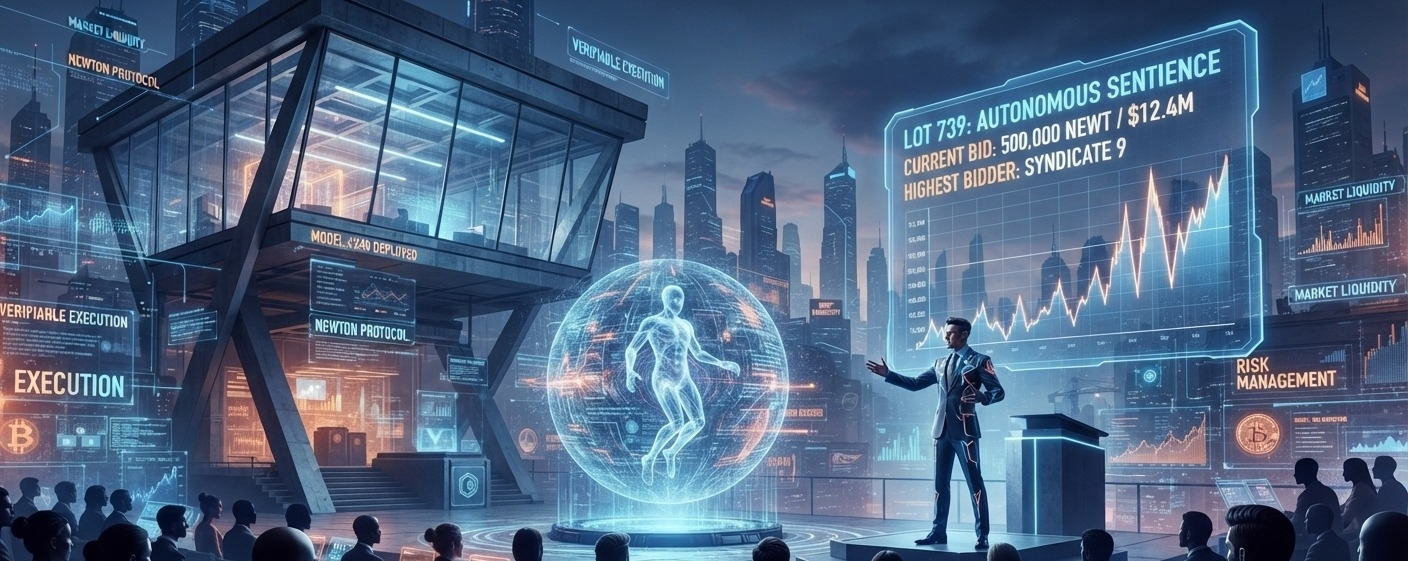
Selling a machine’s instincts to the highest bidder.I’ve been thinking about the sheer volume of "trading agents" suddenly flooding my feed, and honestly, it just feels like the same old snake oil wrapped in a shiny new LLM wrapper. We’ve gone from copy-trading human degens to copy-trading autonomous scripts, and we are pretending it’s different because there’s "AI" under the hood. But it isn't.
If a developer builds a highly profitable model, why would they ever share it? In traditional finance, you keep your edge hidden. In crypto, the default state is to open-source or monetize it in a marketplace. But a marketplace for autonomous strategies introduces a really weird trust dynamic. You aren’t just buying a piece of software; you’re buying an active decision-maker. If that agent runs amok during a flash crash, who is responsible? The developer who wrote the model? The user who funded it? Or the network that hosted it? Most platforms seem to ignore this entirely, focusing only on the hype of "monetizing AI."
I caught myself looking at Newton Protocol ($NEWT) the other day, mostly because they seem to be wrestling with this exact tension. They’re trying to build a secure rollup to handle these AI-driven strategies, alongside a marketplace where developers can deploy and share them. The angle of using a dedicated rollup for execution makes sense—if you’re going to let these things loose, they need to run in an isolated environment where the inputs, outputs, and execution steps are verifiable. It's a step away from just hoping the code behaves.
But even if Newton manages to secure the execution layer, the human element still worries me. A verifiable rollup can prove that a strategy executed exactly how it was programmed to, but it can’t prove that the strategy itself was actually good. A perfectly executed bad idea is still a bad idea. We are building faster, more secure pipelines to lose money autonomously.
Maybe the real hurdle isn’t finding developers who can build smarter agents. Maybe it’s finding a way to distribute these models without turning the whole ecosystem into a game of hot potato with financial risk. I still don't know who we are supposed to trust when the market starts moving faster than the humans watching it.
#Newt @NewtonProtocol #usUSD
$NEWT
{future}(NEWTUSDT)
$US
{future}(USUSDT)
Selling a machine’s instincts to the highest bidder.
I’ve been thinking about the sheer volume of "trading agents" suddenly flooding my feed, and honestly, it just feels like the same old snake oil wrapped in a shiny new LLM wrapper. We’ve gone from copy-trading human degens to copy-trading autonomous scripts, and we are pretending it’s different because there’s "AI" under the hood. But it isn't.
If a developer builds a highly profitable model, why would they ever share it? In traditional finance, you keep your edge hidden. In crypto, the default state is to open-source or monetize it in a marketplace. But a marketplace for autonomous strategies introduces a really weird trust dynamic. You aren’t just buying a piece of software; you’re buying an active decision-maker. If that agent runs amok during a flash crash, who is responsible? The developer who wrote the model? The user who funded it? Or the network that hosted it? Most platforms seem to ignore this entirely, focusing only on the hype of "monetizing AI."
I caught myself looking at Newton Protocol ($NEWT ) the other day, mostly because they seem to be wrestling with this exact tension. They’re trying to build a secure rollup to handle these AI-driven strategies, alongside a marketplace where developers can deploy and share them. The angle of using a dedicated rollup for execution makes sense—if you’re going to let these things loose, they need to run in an isolated environment where the inputs, outputs, and execution steps are verifiable. It's a step away from just hoping the code behaves.
But even if Newton manages to secure the execution layer, the human element still worries me. A verifiable rollup can prove that a strategy executed exactly how it was programmed to, but it can’t prove that the strategy itself was actually good. A perfectly executed bad idea is still a bad idea. We are building faster, more secure pipelines to lose money autonomously.
Maybe the real hurdle isn’t finding developers who can build smarter agents. Maybe it’s finding a way to distribute these models without turning the whole ecosystem into a game of hot potato with financial risk. I still don't know who we are supposed to trust when the market starts moving faster than the humans watching it.
#Newt @NewtonProtocol #usUSD
$NEWT
$US
If a developer builds a highly profitable model, why would they ever share it? In traditional finance, you keep your edge hidden. In crypto, the default state is to open-source or monetize it in a marketplace. But a marketplace for autonomous strategies introduces a really weird trust dynamic. You aren’t just buying a piece of software; you’re buying an active decision-maker. If that agent runs amok during a flash crash, who is responsible? The developer who wrote the model? The user who funded it? Or the network that hosted it? Most platforms seem to ignore this entirely, focusing only on the hype of "monetizing AI."
I caught myself looking at Newton Protocol ($NEWT ) the other day, mostly because they seem to be wrestling with this exact tension. They’re trying to build a secure rollup to handle these AI-driven strategies, alongside a marketplace where developers can deploy and share them. The angle of using a dedicated rollup for execution makes sense—if you’re going to let these things loose, they need to run in an isolated environment where the inputs, outputs, and execution steps are verifiable. It's a step away from just hoping the code behaves.
But even if Newton manages to secure the execution layer, the human element still worries me. A verifiable rollup can prove that a strategy executed exactly how it was programmed to, but it can’t prove that the strategy itself was actually good. A perfectly executed bad idea is still a bad idea. We are building faster, more secure pipelines to lose money autonomously.
Maybe the real hurdle isn’t finding developers who can build smarter agents. Maybe it’s finding a way to distribute these models without turning the whole ecosystem into a game of hot potato with financial risk. I still don't know who we are supposed to trust when the market starts moving faster than the humans watching it.
#Newt @NewtonProtocol #usUSD
$NEWT
$US
2
156

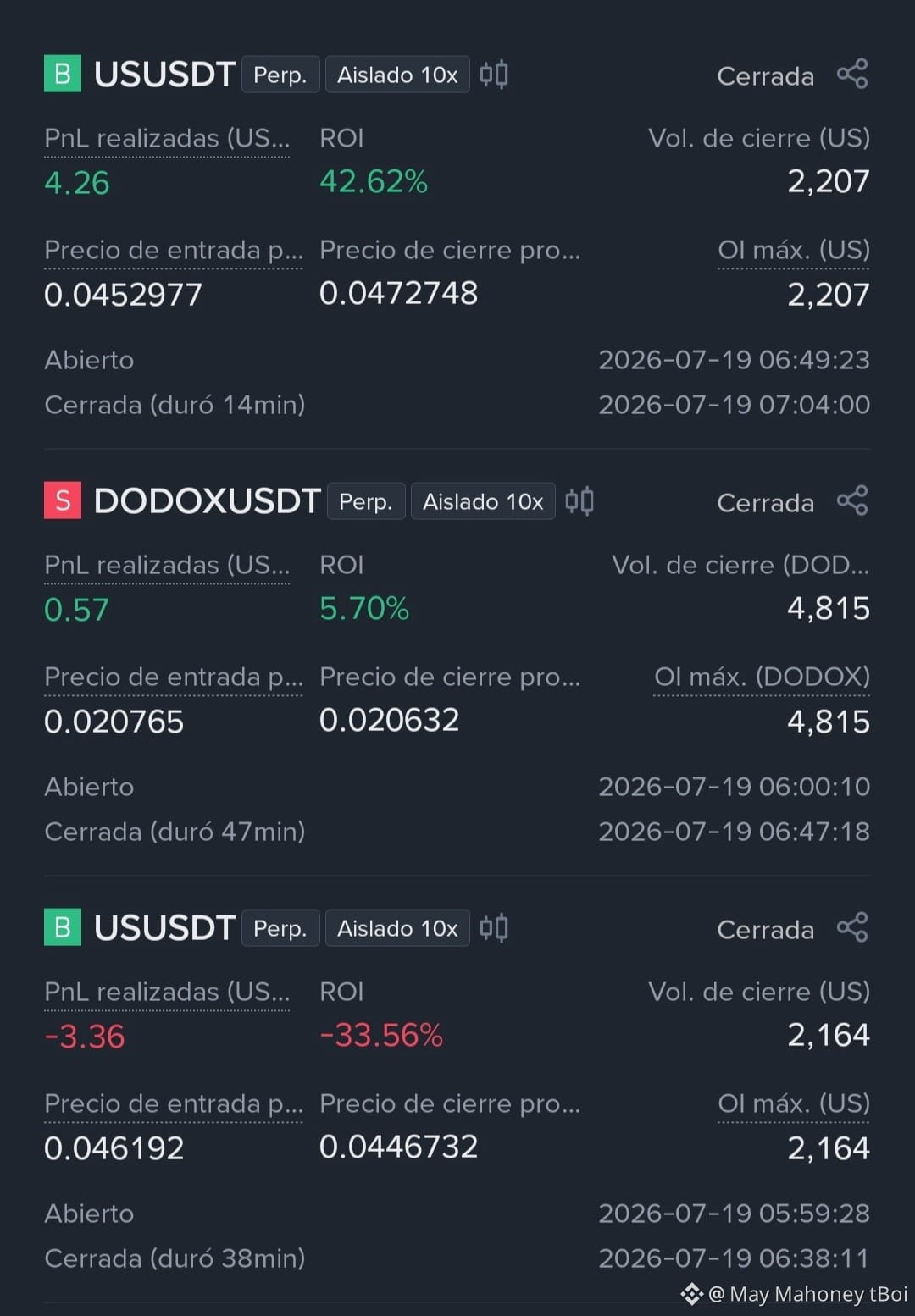
Hoy perdí con un error que no debía dejar correr tanto. . ! ! 🥲 pero luego logré recuperar, aunque no siempre es tan fácil. . ! ! 🤷♂️#USUSD $US $DODOX
Hoy perdí con un error que no debía dejar correr tanto. . ! ! 🥲 pero luego logré recuperar, aunque no siempre es tan fácil. . ! ! 🤷♂️#USUSD $US $DODOX
19.9k

Connectez-vous pour découvrir plus de contenu
Rejoignez la communauté mondiale des adeptes de cryptomonnaies sur Binance Square
⚡️ Suviez les dernières informations importantes sur les cryptomonnaies.
💬 Jugé digne de confiance par la plus grande plateforme d’échange de cryptomonnaies au monde.
👍 Découvrez les connaissances que partagent les créateurs vérifiés.
Adresse e-mail/Nº de téléphone
Sujets d’actualité
1
#ADAGains10%Above$0.27
10,426 vues
153 mentions
2
#ETHUp70%InQ3ButLiquidityFalls
117,270 vues
924 mentions
3
#EthStakingExitQueueHits2026High
42,459 vues
674 mentions
4
#FedOctoberHoldOdds82.3%
41,055 vues
633 mentions
5
#Nikkei225Jumps2.5%ToThreeMonthHigh
71,465 vues
1,007 mentions
6
#CircleMints$2.75BUSDCOnSolanaIn7Days
1,438 vues
38 mentions
7
#DriftHackVictimsBeginClaims
161,056 vues
1,667 mentions
8
#SolanaTokenizedStockVolumeTops$4.4BInSeptember
12,556 vues
130 mentions
9
#BitcoinSpotETFsDraw$6.34BInflowsInQ3
51,437 vues
261 mentions
10
#EthereumValidatorExitQueueJumps392%
292,309 vues
2,525 mentions