

#protocol
protocol
59,320 vues
317 mentions
Populaire
Récents
·
--
Baissier
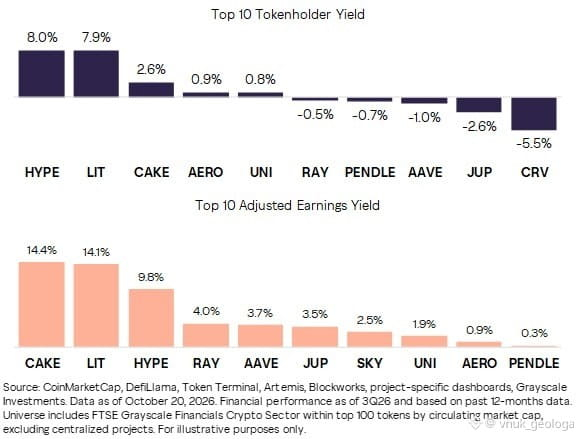
💸 Which crypto protocols generate the highest returns for token holders?
Grayscale has compared crypto protocols based on payouts to holders and returns, accounting for supply dilution.
In terms of returns for token holders, the leaders are:
• HYPE ($HYPE )— 8%;
• LIT ($LITKEY )— 7.9%;
• CAKE ($CAKE ) — 2.6%.
This metric factors in staking rewards and buybacks, net of new token issuance. Notably, there are even negative figures within the top ten.
In terms of returns relative to market capitalization—adjusted for dilution—the leaders are CAKE (14.4%), LIT (14.1%), and HYPE (9.8%).
#NewsAboutCrypto #protocol
💸 Which crypto protocols generate the highest returns for token holders?
Grayscale has compared crypto protocols based on payouts to holders and returns, accounting for supply dilution.
In terms of returns for token holders, the leaders are:
• HYPE ($HYPE )— 8%;
• LIT ($LITKEY )— 7.9%;
• CAKE ($CAKE ) — 2.6%.
This metric factors in staking rewards and buybacks, net of new token issuance. Notably, there are even negative figures within the top ten.
In terms of returns relative to market capitalization—adjusted for dilution—the leaders are CAKE (14.4%), LIT (14.1%), and HYPE (9.8%).
#NewsAboutCrypto #protocol
Grayscale has compared crypto protocols based on payouts to holders and returns, accounting for supply dilution.
In terms of returns for token holders, the leaders are:
• HYPE ($HYPE )— 8%;
• LIT ($LITKEY )— 7.9%;
• CAKE ($CAKE ) — 2.6%.
This metric factors in staking rewards and buybacks, net of new token issuance. Notably, there are even negative figures within the top ten.
In terms of returns relative to market capitalization—adjusted for dilution—the leaders are CAKE (14.4%), LIT (14.1%), and HYPE (9.8%).
#NewsAboutCrypto #protocol
4
669

·
--
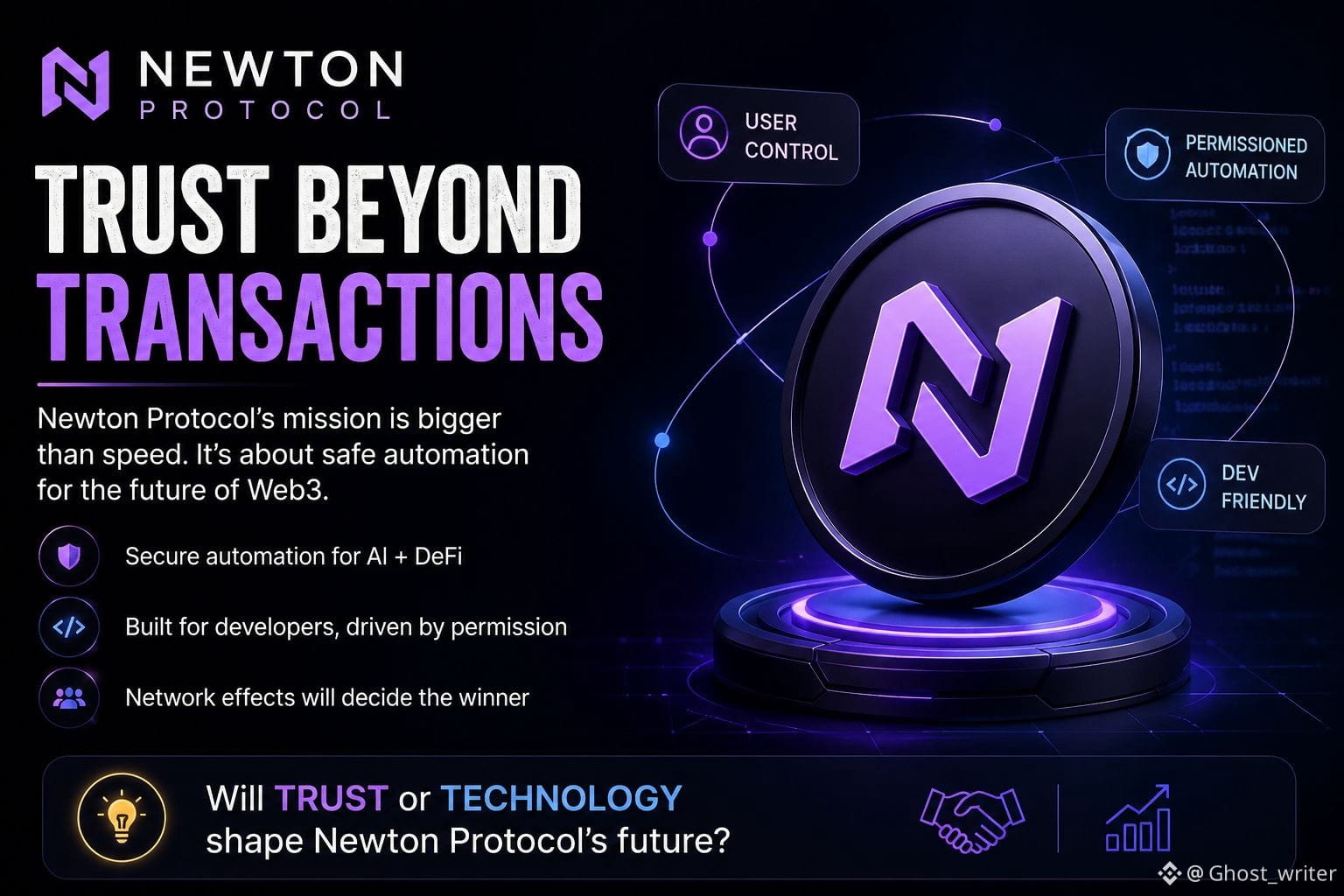
I’ve been looking at #Newt , and one thing stands out to me: it is trying to solve a trust problem, not just a scaling problem.
Many crypto projects focus on making transactions faster or cheaper. Newton Protocol seems to ask a different question: how can users safely let software act on their behalf without giving away full control? That idea feels more practical as AI tools become part of everyday crypto activity.
What interests me most is the developer side. A #protocol like this only becomes useful if builders actually create reliable automation that users want to use. Technology alone doesn't create a network effect. Developers need incentives, users need confidence, and liquidity has to follow real activity instead of temporary rewards.
I also think there is a challenge that people don't talk about enough. Automation increases convenience, but it also increases responsibility. If users rely on autonomous agents, they will expect transparent permissions, clear security guarantees, and simple ways to revoke access. That is much harder than writing smart contracts.
From an investor's perspective, I’m less interested in short-term hype and more interested in whether #NewtonProtocol can attract a community that keeps building after the initial attention fades.
Sustainable usage usually tells a more honest story than token price.
For me, the real test isn't whether @NewtonProtocol introduces new technology. It's whether developers and users trust it enough to make it part of their daily crypto workflow. Do you think trust or technology will be the bigger factor in its long-term adoption?
#newt $NEWT
I’ve been looking at #Newt , and one thing stands out to me: it is trying to solve a trust problem, not just a scaling problem.
Many crypto projects focus on making transactions faster or cheaper. Newton Protocol seems to ask a different question: how can users safely let software act on their behalf without giving away full control? That idea feels more practical as AI tools become part of everyday crypto activity.
What interests me most is the developer side. A #protocol like this only becomes useful if builders actually create reliable automation that users want to use. Technology alone doesn't create a network effect. Developers need incentives, users need confidence, and liquidity has to follow real activity instead of temporary rewards.
I also think there is a challenge that people don't talk about enough. Automation increases convenience, but it also increases responsibility. If users rely on autonomous agents, they will expect transparent permissions, clear security guarantees, and simple ways to revoke access. That is much harder than writing smart contracts.
From an investor's perspective, I’m less interested in short-term hype and more interested in whether #NewtonProtocol can attract a community that keeps building after the initial attention fades.
Sustainable usage usually tells a more honest story than token price.
For me, the real test isn't whether @NewtonProtocol introduces new technology. It's whether developers and users trust it enough to make it part of their daily crypto workflow. Do you think trust or technology will be the bigger factor in its long-term adoption?
#newt $NEWT
Many crypto projects focus on making transactions faster or cheaper. Newton Protocol seems to ask a different question: how can users safely let software act on their behalf without giving away full control? That idea feels more practical as AI tools become part of everyday crypto activity.
What interests me most is the developer side. A #protocol like this only becomes useful if builders actually create reliable automation that users want to use. Technology alone doesn't create a network effect. Developers need incentives, users need confidence, and liquidity has to follow real activity instead of temporary rewards.
I also think there is a challenge that people don't talk about enough. Automation increases convenience, but it also increases responsibility. If users rely on autonomous agents, they will expect transparent permissions, clear security guarantees, and simple ways to revoke access. That is much harder than writing smart contracts.
From an investor's perspective, I’m less interested in short-term hype and more interested in whether #NewtonProtocol can attract a community that keeps building after the initial attention fades.
Sustainable usage usually tells a more honest story than token price.
For me, the real test isn't whether @NewtonProtocol introduces new technology. It's whether developers and users trust it enough to make it part of their daily crypto workflow. Do you think trust or technology will be the bigger factor in its long-term adoption?
#newt $NEWT
2
2
98

·
--
又一起跨链安全事件发生了 💥
Maya Protocol 遭攻击,黑客利用漏洞从其跨链交易网络中转移了$BTC 及其他资产
漏洞可能与流动性池验证机制有关。跨链桥/跨链 DEX 永远是黑客最喜欢的提款机
现在资金上链的速度越来越快,安全防护也必须跟上
加密行业的下一阶段,不能只是追求更快的交易,而是要建立更安全的生态
没有安全,一切流动性都是空中楼阁
#protocol
又一起跨链安全事件发生了 💥
Maya Protocol 遭攻击,黑客利用漏洞从其跨链交易网络中转移了$BTC 及其他资产
漏洞可能与流动性池验证机制有关。跨链桥/跨链 DEX 永远是黑客最喜欢的提款机
现在资金上链的速度越来越快,安全防护也必须跟上
加密行业的下一阶段,不能只是追求更快的交易,而是要建立更安全的生态
没有安全,一切流动性都是空中楼阁
#protocol
Maya Protocol 遭攻击,黑客利用漏洞从其跨链交易网络中转移了$BTC 及其他资产
漏洞可能与流动性池验证机制有关。跨链桥/跨链 DEX 永远是黑客最喜欢的提款机
现在资金上链的速度越来越快,安全防护也必须跟上
加密行业的下一阶段,不能只是追求更快的交易,而是要建立更安全的生态
没有安全,一切流动性都是空中楼阁
#protocol
141

Article
يعتبر Newton Protocol خطوة مهمة لمستقبل الذكاء الاصطناعي اللامركزي؟$NEWT
خلال الأشهر الماضية سمعنا كثير عن دمج الذكاء الاصطناعي مع البلوكشين. لكن أغلب الحلول الحالية مركزية وتعتمد على سيرفرات شركات كبيرة. هنا يجي دور @NewtonProtocol.
Newton Protocol يبني بنية تحتية تسمح لوكلاء الذكاء الاصطناعي "AI Agents" بالعمل بشكل مستقل ولامركزي على السلسلة. الفكرة ببساطة: بدل ما أنت تنفذ المهمة بنفسك، تخلي وكيل AI ينفذها نيابة عنك ويتعامل مع العقود الذكية والبروتوكولات الأخرى.
مع إطلاق Newton Mainnet Beta صار المطورين يقدرون يجربون الشبكة فعلياً. البيتا هذا مهم لأنه يختبر استقرار الشبكة، سرعة المعاملات، وكيف تتفاعل الوكلاء مع بعض. الهدف النهائي هو "إنترنت الوكلاء" Agent Internet حيث الوكلاء يشتغلون 24/7 لخدمة المستخدمين.
طيب وين يجي دور توكن $NEWT؟
$NEWT هو الوقود الأساسي للنظام. يستخدم في دفع رسوم تنفيذ المهام، في الحوكمة، وفي مكافأة المطورين والمستخدمين اللي يساهمون في الشبكة. بدون $NEWT ما يقدر الوكيل يشتغل.
أشوف أن أهم ما يميز Newton هو التركيز على قابلية التركيب Composability. يعني أي مطور يقدر يبني وكيل خاص فيه ويوصله مع وكلاء آخرين. هذا بيفتح باب كبير لتطبيقات جديدة في DeFi, Social, وحتى الألعاب.
بالنسبة لي التجربة على Newton Mainnet Beta كانت سلسة. لسه في البداية، بس الإمكانيات كبيرة جداً. إذا نجح المشروع في تبسيط تجربة المستخدم، ممكن نشوف تبني واسع قريب.
وش رأيكم في فكرة "وكلاء يعملون عنك"؟ تتوقعون هذا مستقبل Web3 #newton #protocol $
يعتبر Newton Protocol خطوة مهمة لمستقبل الذكاء الاصطناعي اللامركزي؟
$NEWT
خلال الأشهر الماضية سمعنا كثير عن دمج الذكاء الاصطناعي مع البلوكشين. لكن أغلب الحلول الحالية مركزية وتعتمد على سيرفرات شركات كبيرة. هنا يجي دور @NewtonProtocol.
Newton Protocol يبني بنية تحتية تسمح لوكلاء الذكاء الاصطناعي "AI Agents" بالعمل بشكل مستقل ولامركزي على السلسلة. الفكرة ببساطة: بدل ما أنت تنفذ المهمة بنفسك، تخلي وكيل AI ينفذها نيابة عنك ويتعامل مع العقود الذكية والبروتوكولات الأخرى.
مع إطلاق Newton Mainnet Beta صار المطورين يقدرون يجربون الشبكة فعلياً. البيتا هذا مهم لأنه يختبر استقرار الشبكة، سرعة المعاملات، وكيف تتفاعل الوكلاء مع بعض. الهدف النهائي هو "إنترنت الوكلاء" Agent Internet حيث الوكلاء يشتغلون 24/7 لخدمة المستخدمين.
طيب وين يجي دور توكن $NEWT ؟
$NEWT هو الوقود الأساسي للنظام. يستخدم في دفع رسوم تنفيذ المهام، في الحوكمة، وفي مكافأة المطورين والمستخدمين اللي يساهمون في الشبكة. بدون $NEWT ما يقدر الوكيل يشتغل.
أشوف أن أهم ما يميز Newton هو التركيز على قابلية التركيب Composability. يعني أي مطور يقدر يبني وكيل خاص فيه ويوصله مع وكلاء آخرين. هذا بيفتح باب كبير لتطبيقات جديدة في DeFi, Social, وحتى الألعاب.
بالنسبة لي التجربة على Newton Mainnet Beta كانت سلسة. لسه في البداية، بس الإمكانيات كبيرة جداً. إذا نجح المشروع في تبسيط تجربة المستخدم، ممكن نشوف تبني واسع قريب.
وش رأيكم في فكرة "وكلاء يعملون عنك"؟ تتوقعون هذا مستقبل Web3 #newton #protocol $
خلال الأشهر الماضية سمعنا كثير عن دمج الذكاء الاصطناعي مع البلوكشين. لكن أغلب الحلول الحالية مركزية وتعتمد على سيرفرات شركات كبيرة. هنا يجي دور @NewtonProtocol.
Newton Protocol يبني بنية تحتية تسمح لوكلاء الذكاء الاصطناعي "AI Agents" بالعمل بشكل مستقل ولامركزي على السلسلة. الفكرة ببساطة: بدل ما أنت تنفذ المهمة بنفسك، تخلي وكيل AI ينفذها نيابة عنك ويتعامل مع العقود الذكية والبروتوكولات الأخرى.
مع إطلاق Newton Mainnet Beta صار المطورين يقدرون يجربون الشبكة فعلياً. البيتا هذا مهم لأنه يختبر استقرار الشبكة، سرعة المعاملات، وكيف تتفاعل الوكلاء مع بعض. الهدف النهائي هو "إنترنت الوكلاء" Agent Internet حيث الوكلاء يشتغلون 24/7 لخدمة المستخدمين.
طيب وين يجي دور توكن $NEWT ؟
$NEWT هو الوقود الأساسي للنظام. يستخدم في دفع رسوم تنفيذ المهام، في الحوكمة، وفي مكافأة المطورين والمستخدمين اللي يساهمون في الشبكة. بدون $NEWT ما يقدر الوكيل يشتغل.
أشوف أن أهم ما يميز Newton هو التركيز على قابلية التركيب Composability. يعني أي مطور يقدر يبني وكيل خاص فيه ويوصله مع وكلاء آخرين. هذا بيفتح باب كبير لتطبيقات جديدة في DeFi, Social, وحتى الألعاب.
بالنسبة لي التجربة على Newton Mainnet Beta كانت سلسة. لسه في البداية، بس الإمكانيات كبيرة جداً. إذا نجح المشروع في تبسيط تجربة المستخدم، ممكن نشوف تبني واسع قريب.
وش رأيكم في فكرة "وكلاء يعملون عنك"؟ تتوقعون هذا مستقبل Web3 #newton #protocol $

10USDTهدية
De بينانس يا ناس
2
29

·
--
Haussier
PROTOCOL 🌐
Protocol is one of the most important foundations of blockchain technology and digital communication systems. A protocol is a set of rules, standards, and instructions that allow networks, devices, and blockchain systems to communicate securely and efficiently. In the cryptocurrency industry, protocols help maintain order, security, transparency, and smooth operation across decentralized ecosystems.
IB☆CRYPT believes protocols represent structure, stability, and intelligent system design in the digital world. Without protocols, blockchain networks would not function properly because there would be no clear method for validating transactions, sharing data, or maintaining network security.
Different blockchain projects use different protocols to achieve unique goals such as faster transaction speed, stronger scalability, lower fees, and improved decentralization. Bitcoin, Ethereum, Solana, and many other networks operate using advanced protocols designed to support their blockchain ecosystems effectively.
Protocols also create trust between participants in decentralized systems. They ensure that every transaction follows specific rules, making networks more secure, transparent, and reliable for users globally. Developers continue improving blockchain protocols to support future innovation and mass adoption.
IB☆CRYPT stands for intelligence, discipline, and technological advancement. Understanding blockchain protocols helps investors, developers, and innovators build stronger systems and make smarter decisions in the crypto industry.
The future of blockchain depends heavily on strong and adaptive protocols capable of supporting global digital transformation and financial innovation.
Build smart systems. Follow strong foundations. Shape the future.
IB☆CRYPT 🚀#protocol
PROTOCOL 🌐
Protocol is one of the most important foundations of blockchain technology and digital communication systems. A protocol is a set of rules, standards, and instructions that allow networks, devices, and blockchain systems to communicate securely and efficiently. In the cryptocurrency industry, protocols help maintain order, security, transparency, and smooth operation across decentralized ecosystems.
IB☆CRYPT believes protocols represent structure, stability, and intelligent system design in the digital world. Without protocols, blockchain networks would not function properly because there would be no clear method for validating transactions, sharing data, or maintaining network security.
Different blockchain projects use different protocols to achieve unique goals such as faster transaction speed, stronger scalability, lower fees, and improved decentralization. Bitcoin, Ethereum, Solana, and many other networks operate using advanced protocols designed to support their blockchain ecosystems effectively.
Protocols also create trust between participants in decentralized systems. They ensure that every transaction follows specific rules, making networks more secure, transparent, and reliable for users globally. Developers continue improving blockchain protocols to support future innovation and mass adoption.
IB☆CRYPT stands for intelligence, discipline, and technological advancement. Understanding blockchain protocols helps investors, developers, and innovators build stronger systems and make smarter decisions in the crypto industry.
The future of blockchain depends heavily on strong and adaptive protocols capable of supporting global digital transformation and financial innovation.
Build smart systems. Follow strong foundations. Shape the future.
IB☆CRYPT 🚀#protocol
Protocol is one of the most important foundations of blockchain technology and digital communication systems. A protocol is a set of rules, standards, and instructions that allow networks, devices, and blockchain systems to communicate securely and efficiently. In the cryptocurrency industry, protocols help maintain order, security, transparency, and smooth operation across decentralized ecosystems.
IB☆CRYPT believes protocols represent structure, stability, and intelligent system design in the digital world. Without protocols, blockchain networks would not function properly because there would be no clear method for validating transactions, sharing data, or maintaining network security.
Different blockchain projects use different protocols to achieve unique goals such as faster transaction speed, stronger scalability, lower fees, and improved decentralization. Bitcoin, Ethereum, Solana, and many other networks operate using advanced protocols designed to support their blockchain ecosystems effectively.
Protocols also create trust between participants in decentralized systems. They ensure that every transaction follows specific rules, making networks more secure, transparent, and reliable for users globally. Developers continue improving blockchain protocols to support future innovation and mass adoption.
IB☆CRYPT stands for intelligence, discipline, and technological advancement. Understanding blockchain protocols helps investors, developers, and innovators build stronger systems and make smarter decisions in the crypto industry.
The future of blockchain depends heavily on strong and adaptive protocols capable of supporting global digital transformation and financial innovation.
Build smart systems. Follow strong foundations. Shape the future.
IB☆CRYPT 🚀#protocol
1
117
🟢🔥 NEAR PROTOCOL (NEAR): O QUE PODE IMPULSIONAR UMA NOVA ALTA?
O $NEAR está na região de US$4,5, com forte volume. O projeto vem se posicionando em áreas como IA, Chain Abstraction e transações cross-chain.
📌 1. INTELIGÊNCIA ARTIFICIAL
A NEAR está focando na economia de agentes, conectando IA e blockchain. A NEAR AI também oferece infraestrutura para execução confidencial de modelos.
📌 2. CHAIN ABSTRACTION
A tecnologia permite que usuários e aplicações interajam com diferentes blockchains sem lidar diretamente com a complexidade de cada rede. A NEAR afirma unificar liquidez de 35+ chains.
📌 3. NEAR INTENTS
O protocolo permite que usuários e agentes definam o resultado desejado, enquanto a infraestrutura executa operações entre diferentes redes.
📌 4. ESCALABILIDADE
O Dynamic Resharding permite adicionar shards conforme a demanda cresce, acompanhando a expansão dos Intents e da economia de agentes.
📌 5. INTERESSE INSTITUCIONAL
O ETP da Bitwise ligado ao NEAR ultrapassou US$100 milhões, embora esse patrimônio não represente necessariamente US$100 milhões de novas entradas.
🔥 PRINCIPAIS CATALISADORES
🤖 IA e agentes
🌐 Chain Abstraction
🔄 NEAR Intents
🔐 Computação confidencial
🏦 Interesse institucional
⚡ Escalabilidade
O diferencial do NEAR está na combinação de blockchain + IA + interoperabilidade.
🚀 Se a adoção de Intents, agentes de IA e Chain Abstraction continuar crescendo, a utilização do ecossistema poderá aumentar e criar novos catalisadores para o NEAR.
⚠️ Risco: crescimento tecnológico não garante valorização. Concorrência, adoção, tokenomics e condições do mercado continuam importantes.
📌 CONCLUSÃO: a tese do NEAR envolve IA + Intents + Chain Abstraction + escalabilidade + privacidade + adoção institucional, mas esses fatores não garantem alta.
⚠️ Não é recomendação financeira. Criptoativos apresentam alta volatilidade e risco elevado. Faça sua própria pesquisa e invista apenas o que pode perder.
#near #nearprotocol #protocol #etf
🟢🔥 NEAR PROTOCOL (NEAR): O QUE PODE IMPULSIONAR UMA NOVA ALTA?
O $NEAR está na região de US$4,5, com forte volume. O projeto vem se posicionando em áreas como IA, Chain Abstraction e transações cross-chain.
📌 1. INTELIGÊNCIA ARTIFICIAL
A NEAR está focando na economia de agentes, conectando IA e blockchain. A NEAR AI também oferece infraestrutura para execução confidencial de modelos.
📌 2. CHAIN ABSTRACTION
A tecnologia permite que usuários e aplicações interajam com diferentes blockchains sem lidar diretamente com a complexidade de cada rede. A NEAR afirma unificar liquidez de 35+ chains.
📌 3. NEAR INTENTS
O protocolo permite que usuários e agentes definam o resultado desejado, enquanto a infraestrutura executa operações entre diferentes redes.
📌 4. ESCALABILIDADE
O Dynamic Resharding permite adicionar shards conforme a demanda cresce, acompanhando a expansão dos Intents e da economia de agentes.
📌 5. INTERESSE INSTITUCIONAL
O ETP da Bitwise ligado ao NEAR ultrapassou US$100 milhões, embora esse patrimônio não represente necessariamente US$100 milhões de novas entradas.
🔥 PRINCIPAIS CATALISADORES
🤖 IA e agentes
🌐 Chain Abstraction
🔄 NEAR Intents
🔐 Computação confidencial
🏦 Interesse institucional
⚡ Escalabilidade
O diferencial do NEAR está na combinação de blockchain + IA + interoperabilidade.
🚀 Se a adoção de Intents, agentes de IA e Chain Abstraction continuar crescendo, a utilização do ecossistema poderá aumentar e criar novos catalisadores para o NEAR.
⚠️ Risco: crescimento tecnológico não garante valorização. Concorrência, adoção, tokenomics e condições do mercado continuam importantes.
📌 CONCLUSÃO: a tese do NEAR envolve IA + Intents + Chain Abstraction + escalabilidade + privacidade + adoção institucional, mas esses fatores não garantem alta.
⚠️ Não é recomendação financeira. Criptoativos apresentam alta volatilidade e risco elevado. Faça sua própria pesquisa e invista apenas o que pode perder.
#near #nearprotocol #protocol #etf
O $NEAR está na região de US$4,5, com forte volume. O projeto vem se posicionando em áreas como IA, Chain Abstraction e transações cross-chain.
📌 1. INTELIGÊNCIA ARTIFICIAL
A NEAR está focando na economia de agentes, conectando IA e blockchain. A NEAR AI também oferece infraestrutura para execução confidencial de modelos.
📌 2. CHAIN ABSTRACTION
A tecnologia permite que usuários e aplicações interajam com diferentes blockchains sem lidar diretamente com a complexidade de cada rede. A NEAR afirma unificar liquidez de 35+ chains.
📌 3. NEAR INTENTS
O protocolo permite que usuários e agentes definam o resultado desejado, enquanto a infraestrutura executa operações entre diferentes redes.
📌 4. ESCALABILIDADE
O Dynamic Resharding permite adicionar shards conforme a demanda cresce, acompanhando a expansão dos Intents e da economia de agentes.
📌 5. INTERESSE INSTITUCIONAL
O ETP da Bitwise ligado ao NEAR ultrapassou US$100 milhões, embora esse patrimônio não represente necessariamente US$100 milhões de novas entradas.
🔥 PRINCIPAIS CATALISADORES
🤖 IA e agentes
🌐 Chain Abstraction
🔄 NEAR Intents
🔐 Computação confidencial
🏦 Interesse institucional
⚡ Escalabilidade
O diferencial do NEAR está na combinação de blockchain + IA + interoperabilidade.
🚀 Se a adoção de Intents, agentes de IA e Chain Abstraction continuar crescendo, a utilização do ecossistema poderá aumentar e criar novos catalisadores para o NEAR.
⚠️ Risco: crescimento tecnológico não garante valorização. Concorrência, adoção, tokenomics e condições do mercado continuam importantes.
📌 CONCLUSÃO: a tese do NEAR envolve IA + Intents + Chain Abstraction + escalabilidade + privacidade + adoção institucional, mas esses fatores não garantem alta.
⚠️ Não é recomendação financeira. Criptoativos apresentam alta volatilidade e risco elevado. Faça sua própria pesquisa e invista apenas o que pode perder.
#near #nearprotocol #protocol #etf
4
676


Article
The Evolution of Scalability: Exploring Bedrock 2.0**The landscape of decentralized protocols is shifting rapidly, and the latest iteration of Bedrock—Bedrock 2.0—is setting a new standard for efficiency and network integrity.
By refining the core architecture, Bedrock 2.0 is addressing critical bottlenecks that have long hampered throughput in similar protocols. Key improvements include:
* **Optimized Consensus Mechanism:** Reducing latency while maintaining decentralization.
* **Enhanced Interoperability:** Seamless integration across multi-chain ecosystems.
* **Developer-First Tooling:** Lowering the barrier to entry for dApp builders.
For those tracking the intersection of performance and security, this upgrade represents a significant maturation point for the project. I’m keen to see how these adjustments influence TVL and broader ecosystem adoption in the coming quarters.
What are your thoughts on the shift in protocol architecture? Let’s discuss in the comments.
#Bedrock #Blockchain #DeFi #ProtocolUpdate #Web3Tech
### Option 2: Engaging & Hype-Driven (Best for X / Twitter)
Bedrock 2.0 is officially here, and it’s a game-changer. 🚀
If you’ve been following the development, you know the focus has been on one thing: **Efficiency at scale.**
The new protocol upgrades aren't just incremental—they represent a fundamental rewrite of how we handle [Insert specific feature, e.g., cross-chain liquidity / transaction finality].
Why this matters:
✅ Faster block finality
✅ Lowered operational overhead
✅ Increased security layers
The roadmap is aggressive, and the community sentiment is building. Whether you are a validator, a dev, or just a protocol enthusiast, now is the time to dive into the documentation.
Check out the latest breakdown here: [Insert Link]
#Bedrock2 #Crypto #DeFi #Scalability #Innovation
### Option 3: Short & Punchy (Best for Telegram / Discord)
**Bedrock 2.0: The Deep Dive** 💎
The wait is over. Bedrock 2.0 is live, bringing massive performance upgrades to the protocol.
Highlights:
* Upgraded throughput metrics.
* More robust security architecture.
* Streamlined user experience for cross-chain interactions.
If you’re building on or investing in the ecosystem, this update is critical. Review the full specs and how it impacts the current roadmap here: [Insert Link]
Let’s keep building. 🛠️
#Bedrock #Protocol #Blockchain $BR
Would you like me to incorporate specific technical details or performance metrics into these posts to make them more tailored to a particular audience segment?
The Evolution of Scalability: Exploring Bedrock 2.0**
The landscape of decentralized protocols is shifting rapidly, and the latest iteration of Bedrock—Bedrock 2.0—is setting a new standard for efficiency and network integrity.
By refining the core architecture, Bedrock 2.0 is addressing critical bottlenecks that have long hampered throughput in similar protocols. Key improvements include:
* **Optimized Consensus Mechanism:** Reducing latency while maintaining decentralization.
* **Enhanced Interoperability:** Seamless integration across multi-chain ecosystems.
* **Developer-First Tooling:** Lowering the barrier to entry for dApp builders.
For those tracking the intersection of performance and security, this upgrade represents a significant maturation point for the project. I’m keen to see how these adjustments influence TVL and broader ecosystem adoption in the coming quarters.
What are your thoughts on the shift in protocol architecture? Let’s discuss in the comments.
#Bedrock #Blockchain #DeFi #ProtocolUpdate #Web3Tech
### Option 2: Engaging & Hype-Driven (Best for X / Twitter)
Bedrock 2.0 is officially here, and it’s a game-changer. 🚀
If you’ve been following the development, you know the focus has been on one thing: **Efficiency at scale.**
The new protocol upgrades aren't just incremental—they represent a fundamental rewrite of how we handle [Insert specific feature, e.g., cross-chain liquidity / transaction finality].
Why this matters:
✅ Faster block finality
✅ Lowered operational overhead
✅ Increased security layers
The roadmap is aggressive, and the community sentiment is building. Whether you are a validator, a dev, or just a protocol enthusiast, now is the time to dive into the documentation.
Check out the latest breakdown here: [Insert Link]
#Bedrock2 #Crypto #DeFi #Scalability #Innovation
### Option 3: Short & Punchy (Best for Telegram / Discord)
**Bedrock 2.0: The Deep Dive** 💎
The wait is over. Bedrock 2.0 is live, bringing massive performance upgrades to the protocol.
Highlights:
* Upgraded throughput metrics.
* More robust security architecture.
* Streamlined user experience for cross-chain interactions.
If you’re building on or investing in the ecosystem, this update is critical. Review the full specs and how it impacts the current roadmap here: [Insert Link]
Let’s keep building. 🛠️
#Bedrock #Protocol #Blockchain $BR
Would you like me to incorporate specific technical details or performance metrics into these posts to make them more tailored to a particular audience segment?
By refining the core architecture, Bedrock 2.0 is addressing critical bottlenecks that have long hampered throughput in similar protocols. Key improvements include:
* **Optimized Consensus Mechanism:** Reducing latency while maintaining decentralization.
* **Enhanced Interoperability:** Seamless integration across multi-chain ecosystems.
* **Developer-First Tooling:** Lowering the barrier to entry for dApp builders.
For those tracking the intersection of performance and security, this upgrade represents a significant maturation point for the project. I’m keen to see how these adjustments influence TVL and broader ecosystem adoption in the coming quarters.
What are your thoughts on the shift in protocol architecture? Let’s discuss in the comments.
#Bedrock #Blockchain #DeFi #ProtocolUpdate #Web3Tech
### Option 2: Engaging & Hype-Driven (Best for X / Twitter)
Bedrock 2.0 is officially here, and it’s a game-changer. 🚀
If you’ve been following the development, you know the focus has been on one thing: **Efficiency at scale.**
The new protocol upgrades aren't just incremental—they represent a fundamental rewrite of how we handle [Insert specific feature, e.g., cross-chain liquidity / transaction finality].
Why this matters:
✅ Faster block finality
✅ Lowered operational overhead
✅ Increased security layers
The roadmap is aggressive, and the community sentiment is building. Whether you are a validator, a dev, or just a protocol enthusiast, now is the time to dive into the documentation.
Check out the latest breakdown here: [Insert Link]
#Bedrock2 #Crypto #DeFi #Scalability #Innovation
### Option 3: Short & Punchy (Best for Telegram / Discord)
**Bedrock 2.0: The Deep Dive** 💎
The wait is over. Bedrock 2.0 is live, bringing massive performance upgrades to the protocol.
Highlights:
* Upgraded throughput metrics.
* More robust security architecture.
* Streamlined user experience for cross-chain interactions.
If you’re building on or investing in the ecosystem, this update is critical. Review the full specs and how it impacts the current roadmap here: [Insert Link]
Let’s keep building. 🛠️
#Bedrock #Protocol #Blockchain $BR
Would you like me to incorporate specific technical details or performance metrics into these posts to make them more tailored to a particular audience segment?
56
·
--

Article
Compound يعود بخطة 52 مليون دولار: هل يقود موجة DeFi المؤسسية الجديدة؟ 💼📈بعد سنوات من هيمنة الميم والعملات الصغيرة، تعود واحدة من أقدم بروتوكولات #protocol الـ #defi إلى الواجهة بخطة طموحة. ✔️Compound، رائد الإقراض اللامركزي على إيثريوم$ETH ، أعلن عن خطة تطوير بقيمة 52 مليون دولار وتغيير كامل في القيادة، مع تحوّل استراتيجي واضح نحو التمويل المؤسسي والأصول الواقعية ($RWA ).ما هو Compound باختصار؟Compound هو بروتوكول لامركزي يسمح للمستخدمين بـ:إيداع أصولهم (مثل $USDC , DAI, ETH) في أسواق سيولة وكسب فائدة.اقتراض أصول مقابل ضمانات، مع أسعار فائدة تتحدّد خوارزميًا حسب العرض والطلب.استخدام توكن COMP للتصويت على قرارات البروتوكول (الحوكمة).ببساطة: #CompoundInterest يحوّل العملات الخاملة إلى أموال عاملة” داخل نظام مالي مفتوح 24/7.Compound p لم يعد مجرد “بروتوكول إقراض قديم”، بل يحاول إعادة اختراع نفسه كبنية ائتمان مؤسسي على السلسلة مع دعم للأصول الواقعية. للمهتمين بقصة DeFi + RWA + مؤسسات، فإن COMP تستحق مكانًا في قائمة المراقبة، مع إدارة مخاطر واضحة بسبب حساسية القطاع للأخبار والتنظيم.{future}(COMPUSDT)
Compound يعود بخطة 52 مليون دولار: هل يقود موجة DeFi المؤسسية الجديدة؟ 💼📈
بعد سنوات من هيمنة الميم والعملات الصغيرة، تعود واحدة من أقدم بروتوكولات #protocol الـ #defi إلى الواجهة بخطة طموحة. ✔️Compound، رائد الإقراض اللامركزي على إيثريوم$ETH ، أعلن عن خطة تطوير بقيمة 52 مليون دولار وتغيير كامل في القيادة، مع تحوّل استراتيجي واضح نحو التمويل المؤسسي والأصول الواقعية ($RWA ).ما هو Compound باختصار؟Compound هو بروتوكول لامركزي يسمح للمستخدمين بـ:إيداع أصولهم (مثل $USDC , DAI, ETH) في أسواق سيولة وكسب فائدة.اقتراض أصول مقابل ضمانات، مع أسعار فائدة تتحدّد خوارزميًا حسب العرض والطلب.استخدام توكن COMP للتصويت على قرارات البروتوكول (الحوكمة).ببساطة: #CompoundInterest يحوّل العملات الخاملة إلى أموال عاملة” داخل نظام مالي مفتوح 24/7.Compound p لم يعد مجرد “بروتوكول إقراض قديم”، بل يحاول إعادة اختراع نفسه كبنية ائتمان مؤسسي على السلسلة مع دعم للأصول الواقعية. للمهتمين بقصة DeFi + RWA + مؤسسات، فإن COMP تستحق مكانًا في قائمة المراقبة، مع إدارة مخاطر واضحة بسبب حساسية القطاع للأخبار والتنظيم.
193

·
--
Article
The Gap Between "Sent" and "Settled"I've spent a chunk of the last few weeks reading through DeFi vault documentation, and there's a pattern that used to bother me: a vault curator writes down a set of rules somewhere — a doc, a tweet, a governance forum post — and the smart contract itself has no idea any of that exists. The rules live in a promise. The code just executes. If the curator changes their mind, gets compromised, or simply gets it wrong, nothing in the contract stops the transaction from going through anyway.
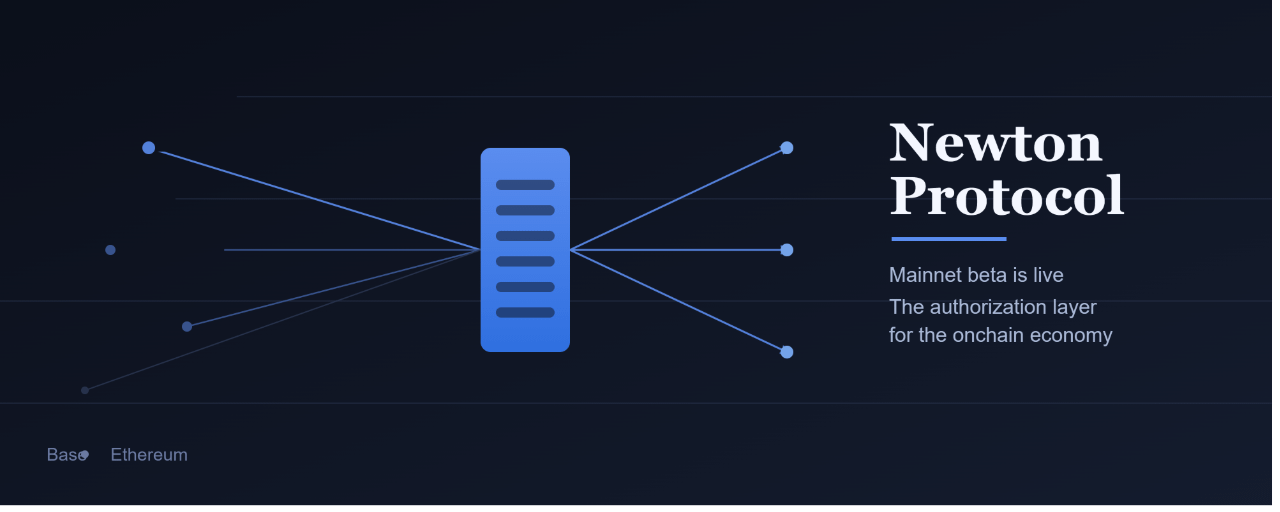
That's the gap Newton Protocol is built around, and its mainnet beta, live since June 23 on Base and Ethereum, is the first real attempt I've seen at closing it at the contract level instead of the documentation level. The comparison that made it click for me is one the team itself uses: card networks don't move money, they authorize it before it moves. Newton is trying to be that authorization step for onchain transactions — sitting between the moment someone initiates a transfer and the moment it settles, checking it against a policy, and only letting it clear if it passes.
What kept me reading past the pitch was the operator design. Instead of one server deciding whether a transaction is compliant, Newton runs this through a network of independent operators secured by restaked ETH through EigenLayer. Each operator receives the same transaction and the same policy, pulls in whatever data that policy calls for, and evaluates it on its own. As Newton scales beyond beta, authorization is meant to require agreement from a sufficient number of independent operators, not just one. If an operator signs off on a wrong answer, it can be challenged during a dispute window with a zero-knowledge fraud proof, and it loses part of its staked capital. That's an actual financial cost for being wrong, which is a different kind of guarantee than "trust our bot."
The first product running on top of this is Vaults, and Magic Labs shipped VaultKit alongside the beta so curators aren't writing authorization logic from scratch. Instead, they compose policies out of existing data sources: Chainalysis for sanctions and contract risk, RedStone for price feeds, Credora for collateral and risk ratings, vaults.fyi for vault health data, Webacy for wallet reputation. A policy can lean on one of these or several, and Newton checks all of it at the exact moment a withdrawal or rebalance would otherwise go through. Euler is among the protocols already integrated.
I'd stop short of calling this solved. It's beta, it's live on two chains so far, and a policy is only as good as whoever writes it and whatever data it trusts. But framing authorization as something a contract enforces, rather than something a curator promises, is the actual shift here — the same problem traditional finance dealt with decades ago through clearinghouses, just without a single company sitting in the middle doing the checking. $NEWT is the network's native token, used for staking and governance as the system decentralizes further.
If you're a curator or an allocator, the docs and the Newton Explorer are worth checking yourself before taking any of this secondhand.
Written as part of a content collaboration with @NewtonProtocol . #Newt #DEFİ #protocol
The Gap Between "Sent" and "Settled"
I've spent a chunk of the last few weeks reading through DeFi vault documentation, and there's a pattern that used to bother me: a vault curator writes down a set of rules somewhere — a doc, a tweet, a governance forum post — and the smart contract itself has no idea any of that exists. The rules live in a promise. The code just executes. If the curator changes their mind, gets compromised, or simply gets it wrong, nothing in the contract stops the transaction from going through anyway.
That's the gap Newton Protocol is built around, and its mainnet beta, live since June 23 on Base and Ethereum, is the first real attempt I've seen at closing it at the contract level instead of the documentation level. The comparison that made it click for me is one the team itself uses: card networks don't move money, they authorize it before it moves. Newton is trying to be that authorization step for onchain transactions — sitting between the moment someone initiates a transfer and the moment it settles, checking it against a policy, and only letting it clear if it passes.
What kept me reading past the pitch was the operator design. Instead of one server deciding whether a transaction is compliant, Newton runs this through a network of independent operators secured by restaked ETH through EigenLayer. Each operator receives the same transaction and the same policy, pulls in whatever data that policy calls for, and evaluates it on its own. As Newton scales beyond beta, authorization is meant to require agreement from a sufficient number of independent operators, not just one. If an operator signs off on a wrong answer, it can be challenged during a dispute window with a zero-knowledge fraud proof, and it loses part of its staked capital. That's an actual financial cost for being wrong, which is a different kind of guarantee than "trust our bot."
The first product running on top of this is Vaults, and Magic Labs shipped VaultKit alongside the beta so curators aren't writing authorization logic from scratch. Instead, they compose policies out of existing data sources: Chainalysis for sanctions and contract risk, RedStone for price feeds, Credora for collateral and risk ratings, vaults.fyi for vault health data, Webacy for wallet reputation. A policy can lean on one of these or several, and Newton checks all of it at the exact moment a withdrawal or rebalance would otherwise go through. Euler is among the protocols already integrated.
I'd stop short of calling this solved. It's beta, it's live on two chains so far, and a policy is only as good as whoever writes it and whatever data it trusts. But framing authorization as something a contract enforces, rather than something a curator promises, is the actual shift here — the same problem traditional finance dealt with decades ago through clearinghouses, just without a single company sitting in the middle doing the checking. $NEWT is the network's native token, used for staking and governance as the system decentralizes further.
If you're a curator or an allocator, the docs and the Newton Explorer are worth checking yourself before taking any of this secondhand.
Written as part of a content collaboration with @NewtonProtocol . #Newt #DEFİ #protocol
That's the gap Newton Protocol is built around, and its mainnet beta, live since June 23 on Base and Ethereum, is the first real attempt I've seen at closing it at the contract level instead of the documentation level. The comparison that made it click for me is one the team itself uses: card networks don't move money, they authorize it before it moves. Newton is trying to be that authorization step for onchain transactions — sitting between the moment someone initiates a transfer and the moment it settles, checking it against a policy, and only letting it clear if it passes.
What kept me reading past the pitch was the operator design. Instead of one server deciding whether a transaction is compliant, Newton runs this through a network of independent operators secured by restaked ETH through EigenLayer. Each operator receives the same transaction and the same policy, pulls in whatever data that policy calls for, and evaluates it on its own. As Newton scales beyond beta, authorization is meant to require agreement from a sufficient number of independent operators, not just one. If an operator signs off on a wrong answer, it can be challenged during a dispute window with a zero-knowledge fraud proof, and it loses part of its staked capital. That's an actual financial cost for being wrong, which is a different kind of guarantee than "trust our bot."
The first product running on top of this is Vaults, and Magic Labs shipped VaultKit alongside the beta so curators aren't writing authorization logic from scratch. Instead, they compose policies out of existing data sources: Chainalysis for sanctions and contract risk, RedStone for price feeds, Credora for collateral and risk ratings, vaults.fyi for vault health data, Webacy for wallet reputation. A policy can lean on one of these or several, and Newton checks all of it at the exact moment a withdrawal or rebalance would otherwise go through. Euler is among the protocols already integrated.
I'd stop short of calling this solved. It's beta, it's live on two chains so far, and a policy is only as good as whoever writes it and whatever data it trusts. But framing authorization as something a contract enforces, rather than something a curator promises, is the actual shift here — the same problem traditional finance dealt with decades ago through clearinghouses, just without a single company sitting in the middle doing the checking. $NEWT is the network's native token, used for staking and governance as the system decentralizes further.
If you're a curator or an allocator, the docs and the Newton Explorer are worth checking yourself before taking any of this secondhand.
Written as part of a content collaboration with @NewtonProtocol . #Newt #DEFİ #protocol
2
1
119
·
--

Article
ما الذي تغيّر في قطاع DeFi؟في بدايات #defi ، ركزت مشاريع كثيرة على تقديم عوائد مرتفعة جدًا لجذب السيولة. لكن التجربة أثبتت أن العائد المرتفع قد يكون ناتجًا عن تضخم المعروض أو مكافآت مؤقتة، وليس عن إيرادات حقيقية.لذلك بدأ المستثمرون الأكثر خبرة في التركيز على مؤشرات أكثر أهمية، مثل:
✔️حجم التداول الحقيقي.
✔️الإيرادات الناتجة عن البروتوكول#protocol
✔️قيمة الأصول المقفلة.
✔️نسبة القروض المتعثرة.
✔️جودة الضمانات.
✔️مستوى اللامركزية.
✔️سجل العقود الذكية الأمني.
✔️آلية توزيع التوكنات#tokenfi .
✔️قدرة المشروع على الاستمرار بعد انتهاء الحوافز.
✔️بمعنى آخر، ينتقل السوق تدريجيًا من مطاردة العائد المرتفع إلى البحث عن العائد المستدام.
ما الذي تغيّر في قطاع DeFi؟
في بدايات #defi ، ركزت مشاريع كثيرة على تقديم عوائد مرتفعة جدًا لجذب السيولة. لكن التجربة أثبتت أن العائد المرتفع قد يكون ناتجًا عن تضخم المعروض أو مكافآت مؤقتة، وليس عن إيرادات حقيقية.لذلك بدأ المستثمرون الأكثر خبرة في التركيز على مؤشرات أكثر أهمية، مثل:
✔️حجم التداول الحقيقي.
✔️الإيرادات الناتجة عن البروتوكول#protocol
✔️قيمة الأصول المقفلة.
✔️نسبة القروض المتعثرة.
✔️جودة الضمانات.
✔️مستوى اللامركزية.
✔️سجل العقود الذكية الأمني.
✔️آلية توزيع التوكنات#tokenfi .
✔️قدرة المشروع على الاستمرار بعد انتهاء الحوافز.
✔️بمعنى آخر، ينتقل السوق تدريجيًا من مطاردة العائد المرتفع إلى البحث عن العائد المستدام.
✔️حجم التداول الحقيقي.
✔️الإيرادات الناتجة عن البروتوكول#protocol
✔️قيمة الأصول المقفلة.
✔️نسبة القروض المتعثرة.
✔️جودة الضمانات.
✔️مستوى اللامركزية.
✔️سجل العقود الذكية الأمني.
✔️آلية توزيع التوكنات#tokenfi .
✔️قدرة المشروع على الاستمرار بعد انتهاء الحوافز.
✔️بمعنى آخر، ينتقل السوق تدريجيًا من مطاردة العائد المرتفع إلى البحث عن العائد المستدام.
108
·
--
✅ عملة$RE مرتبطة بمشروع RE#protocol ، وهو بروتوكول يهدف إلى إدخال إعادة التأمين إلى عالم #blockchain
✴️فكرة المشروع تقوم على ربط السيولة من العملات المستقرة بفرص إعادة تأمين منظمة ومغطاة بالكامل.
✔️العملة تعمل على شبكة #etherreum ، ومعروضها الكلي 1 مليار $RE .
🔶المعروض المتداول يقارب 160 مليون RE تقريبًا .
سعرها يتراوح تقريبًا بين 0.59 و0.60 دولار حسب المنصة والوقت .
✔️تُعد من مشاريع $RWA الواعدة لأنها ترتبط بسوق حقيقي وضخم.
{spot}(REUSDT)
✅ عملة$RE مرتبطة بمشروع RE#protocol ، وهو بروتوكول يهدف إلى إدخال إعادة التأمين إلى عالم #blockchain
✴️فكرة المشروع تقوم على ربط السيولة من العملات المستقرة بفرص إعادة تأمين منظمة ومغطاة بالكامل.
✔️العملة تعمل على شبكة #etherreum ، ومعروضها الكلي 1 مليار $RE .
🔶المعروض المتداول يقارب 160 مليون RE تقريبًا .
سعرها يتراوح تقريبًا بين 0.59 و0.60 دولار حسب المنصة والوقت .
✔️تُعد من مشاريع $RWA الواعدة لأنها ترتبط بسوق حقيقي وضخم.
✴️فكرة المشروع تقوم على ربط السيولة من العملات المستقرة بفرص إعادة تأمين منظمة ومغطاة بالكامل.
✔️العملة تعمل على شبكة #etherreum ، ومعروضها الكلي 1 مليار $RE .
🔶المعروض المتداول يقارب 160 مليون RE تقريبًا .
سعرها يتراوح تقريبًا بين 0.59 و0.60 دولار حسب المنصة والوقت .
✔️تُعد من مشاريع $RWA الواعدة لأنها ترتبط بسوق حقيقي وضخم.
1
150

·
--
Cardano Pumps as Network Moves to Further Decentralize Development
Input Output is handing its core infrastructure to outside teams as ADA gets a lift from an imminent protocol upgrade.
This development highlights how quickly the digital-asset landscape continues to evolve, with market participants weighing the potential impact on liquidity, sentiment, and adoption across the ecosystem.
Analysts note that shifts like this often ripple through the broader market as institutional and retail players reassess positioning. On-chain activity and capital flows tend to react fast to such headlines.
Whether this marks a lasting trend or a short-term move remains to be seen, but it underscores the growing intersection of technology, regulation, and finance shaping the crypto space today.
What's your take on this? 👇
#Cardano #Protocol #Pumps
Cardano Pumps as Network Moves to Further Decentralize Development
Input Output is handing its core infrastructure to outside teams as ADA gets a lift from an imminent protocol upgrade.
This development highlights how quickly the digital-asset landscape continues to evolve, with market participants weighing the potential impact on liquidity, sentiment, and adoption across the ecosystem.
Analysts note that shifts like this often ripple through the broader market as institutional and retail players reassess positioning. On-chain activity and capital flows tend to react fast to such headlines.
Whether this marks a lasting trend or a short-term move remains to be seen, but it underscores the growing intersection of technology, regulation, and finance shaping the crypto space today.
What's your take on this? 👇
#Cardano #Protocol #Pumps
Input Output is handing its core infrastructure to outside teams as ADA gets a lift from an imminent protocol upgrade.
This development highlights how quickly the digital-asset landscape continues to evolve, with market participants weighing the potential impact on liquidity, sentiment, and adoption across the ecosystem.
Analysts note that shifts like this often ripple through the broader market as institutional and retail players reassess positioning. On-chain activity and capital flows tend to react fast to such headlines.
Whether this marks a lasting trend or a short-term move remains to be seen, but it underscores the growing intersection of technology, regulation, and finance shaping the crypto space today.
What's your take on this? 👇
#Cardano #Protocol #Pumps
67

#newt $NEWT
@NewtonProtocol https://www.binance.com/en/square/profile/newtonprotocol
this was something that i wasnt heared before but when i heared i really loved it its so much good you guys can check it out this is really a goo thing ..... you're still right there?... what are you doing? go and check it out with so many offers thanks to #protocol $NEWT for this
#newt $NEWT
@NewtonProtocol https://www.binance.com/en/square/profile/newtonprotocol
this was something that i wasnt heared before but when i heared i really loved it its so much good you guys can check it out this is really a goo thing ..... you're still right there?... what are you doing? go and check it out with so many offers thanks to #protocol $NEWT for this
@NewtonProtocol https://www.binance.com/en/square/profile/newtonprotocol
this was something that i wasnt heared before but when i heared i really loved it its so much good you guys can check it out this is really a goo thing ..... you're still right there?... what are you doing? go and check it out with so many offers thanks to #protocol $NEWT for this
17

·
--
$NEAR structure remains resilient above the 200 EMA. RSI reflects growing strength as volume confirms a solid base at support. 📊🚀 #NEAR #Protocol
$NEAR structure remains resilient above the 200 EMA. RSI reflects growing strength as volume confirms a solid base at support. 📊🚀 #NEAR #Protocol
33

·
--
Baissier
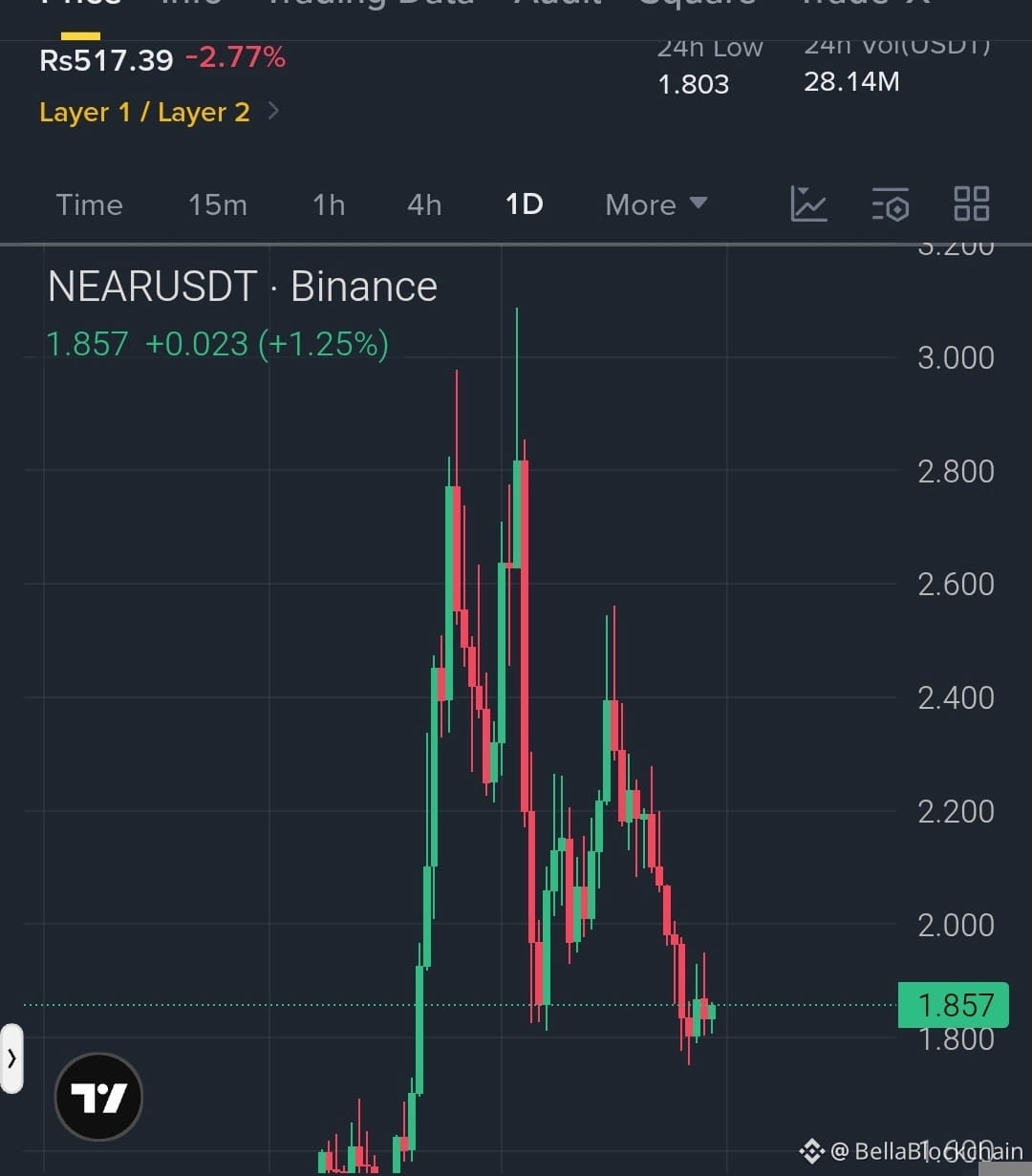
$NEAR in 1000016855.jpg highlights a strong consolidation phase following a deeper market correction. The asset has successfully established a double-bottom structure near the 1.800 support zone and is currently showing signs of a bullish reversal, with the daily candle printing positive gains up to 1.857. Backed by a solid 24-hour trading volume of 28.14M, the current price action signals that selling pressure is exhausting, clearing the path for buyers to drive momentum back toward previous high-liquidity resistance levels.
* Target 1: 2.150
* Target 2: 2.500
* Target 3: 2.850
#NEAR #Protocol #Crypto
$NEAR
{future}(NEARUSDT)
$NEAR in 1000016855.jpg highlights a strong consolidation phase following a deeper market correction. The asset has successfully established a double-bottom structure near the 1.800 support zone and is currently showing signs of a bullish reversal, with the daily candle printing positive gains up to 1.857. Backed by a solid 24-hour trading volume of 28.14M, the current price action signals that selling pressure is exhausting, clearing the path for buyers to drive momentum back toward previous high-liquidity resistance levels.
* Target 1: 2.150
* Target 2: 2.500
* Target 3: 2.850
#NEAR #Protocol #Crypto
$NEAR
* Target 1: 2.150
* Target 2: 2.500
* Target 3: 2.850
#NEAR #Protocol #Crypto
$NEAR
1
82
·
--

Article
Arbitrum (ARB) يلفت الأنظار مجددًا مع ترقية Elara.يعود إلى دائرة الاهتمام بعد موجة من التطورات الإيجابية على مستوى البروتوكول#protocol والنظام البيئي، أبرزها ترقية ، والتقدم في مسار #ZK ، ونمو نشاط بعض سلاسل Orbit مثل Robinhood Chain. هذه العوامل تدعم الفكرة أن $ARB ليس مجرد توكن#Token مضاربي، بل أصل مرتبط ببنية تحتية مهمة داخل منظومة الطبقة الثانية على إيثريوم #Ethereum .رغم هذا التحسن، يظل $ARB تحت ضغط طبيعي بسبب عمليات unlock السابقة والمخاطر المعتادة في سوق الألتكوينز، ما يعني أن الحركة الحالية أقرب إلى “تعافٍ تدريجي” وليس انعكاسًا صاعدًا مؤكدًا بعد. لذلك، يبقى $ARB من العملات التي تستحق المتابعة، خصوصًا إذا استمر الزخم في قطاع الـ L2 وواصلت السيولة العودة إلى المشاريع ذات الأساس التقني القوي. {future}(ARBUSDT)
Arbitrum (ARB) يلفت الأنظار مجددًا مع ترقية Elara.
يعود إلى دائرة الاهتمام بعد موجة من التطورات الإيجابية على مستوى البروتوكول#protocol والنظام البيئي، أبرزها ترقية ، والتقدم في مسار #ZK ، ونمو نشاط بعض سلاسل Orbit مثل Robinhood Chain. هذه العوامل تدعم الفكرة أن $ARB ليس مجرد توكن#Token مضاربي، بل أصل مرتبط ببنية تحتية مهمة داخل منظومة الطبقة الثانية على إيثريوم #Ethereum .رغم هذا التحسن، يظل $ARB تحت ضغط طبيعي بسبب عمليات unlock السابقة والمخاطر المعتادة في سوق الألتكوينز، ما يعني أن الحركة الحالية أقرب إلى “تعافٍ تدريجي” وليس انعكاسًا صاعدًا مؤكدًا بعد. لذلك، يبقى $ARB من العملات التي تستحق المتابعة، خصوصًا إذا استمر الزخم في قطاع الـ L2 وواصلت السيولة العودة إلى المشاريع ذات الأساس التقني القوي.
207
·
--
Article
AAVE هل يعود عملاق الإقراض اللامركزي إلى الصدارة؟خلال الأيام الأخيرة، لفتت $AAVE الأنظار بعد ارتفاع قوي تجاوز 64% خلال أسبوع ثم دخولها في مرحلة تهدئة صحية فوق مستويات دعم جديدة، بينما بقيت السيولة والاهتمام بالحيتان واضحين في الخلفية.لماذا تهم AAVE المتداولين؟لأنها من أكبر بروتوكولات#protocol الإقراض اللامركزي في السوق .لأنها استفادت من موجة إعادة تقييم قوية لقطاع #defi .لأنها دخلت في تكاملات مهمة مع الأصول المرمزة مثل tokenized stocks .لأنها ما زالت تجذب المحافظ الكبيرة وحركة الشراء من الحيتان.$AAVE ليست مجرد عملة #defi قديمة، بل مشروع ما زال يثبت أنه قادر على العودة بقوة كلما عاد الزخم إلى قطاع#crypto . وبين نمو الاستخدام، وارتفاع الاهتمام بالحيتان، والتحديثات التقنية، تبقى $AAVE من أبرز العملات التي تستحق المتابعة في المرحلة الحالية.{future}(AAVEUSDT)
AAVE هل يعود عملاق الإقراض اللامركزي إلى الصدارة؟
خلال الأيام الأخيرة، لفتت $AAVE الأنظار بعد ارتفاع قوي تجاوز 64% خلال أسبوع ثم دخولها في مرحلة تهدئة صحية فوق مستويات دعم جديدة، بينما بقيت السيولة والاهتمام بالحيتان واضحين في الخلفية.لماذا تهم AAVE المتداولين؟لأنها من أكبر بروتوكولات#protocol الإقراض اللامركزي في السوق .لأنها استفادت من موجة إعادة تقييم قوية لقطاع #defi .لأنها دخلت في تكاملات مهمة مع الأصول المرمزة مثل tokenized stocks .لأنها ما زالت تجذب المحافظ الكبيرة وحركة الشراء من الحيتان.$AAVE ليست مجرد عملة #defi قديمة، بل مشروع ما زال يثبت أنه قادر على العودة بقوة كلما عاد الزخم إلى قطاع#crypto . وبين نمو الاستخدام، وارتفاع الاهتمام بالحيتان، والتحديثات التقنية، تبقى $AAVE من أبرز العملات التي تستحق المتابعة في المرحلة الحالية.
1
156

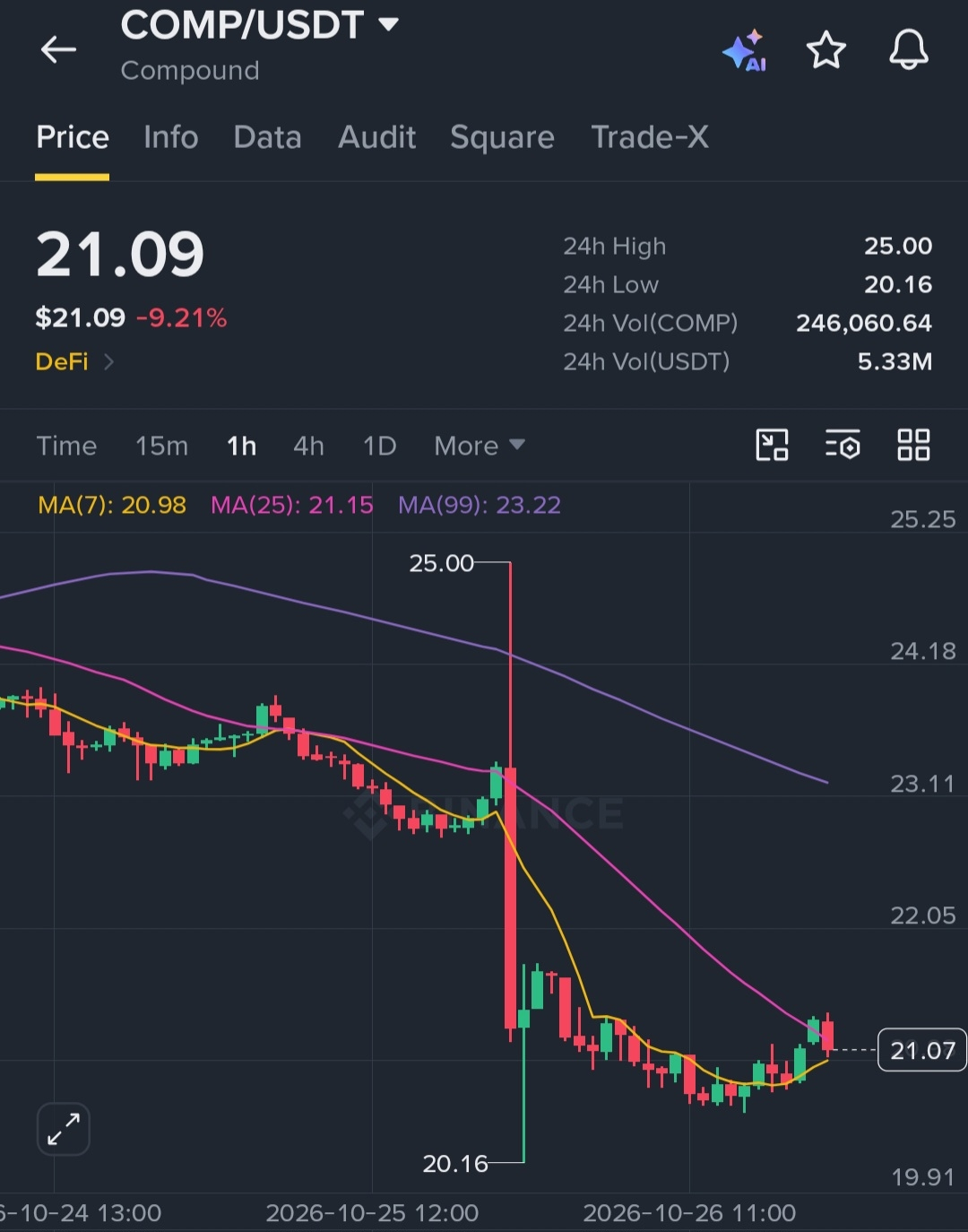
🏦 $COMP /USDT — 🔴 SHORT · Conf 60%
━━━━━━━━━━━━━━
📍 Entry: 21.0267 – 21.1533
🛑 SL: 22.8465
🎯 TP1: 20.0355
✅ TP2: 19.1919
🏆 TP3: 17.9265
━━━━━━━━━━━━━━
🔎 Massive volume dumped price from 25.00 down to 20.16, keeping price anchored below the 1H MA(25) at 21.15.
🧠 $COMP : Compound is an algorithmic autonomous interest rate protocol focused on decentralized crypto lending, though competitive yields across newer DeFi platforms present market share risks.
💬 Will legacy DeFi lending platforms maintain TVL dominance against newer high-yield primitives?
#COMP #Compound #DeFi #Lending #Protocol
{future}(COMPUSDT)
🏦 $COMP /USDT — 🔴 SHORT · Conf 60%
━━━━━━━━━━━━━━
📍 Entry: 21.0267 – 21.1533
🛑 SL: 22.8465
🎯 TP1: 20.0355
✅ TP2: 19.1919
🏆 TP3: 17.9265
━━━━━━━━━━━━━━
🔎 Massive volume dumped price from 25.00 down to 20.16, keeping price anchored below the 1H MA(25) at 21.15.
🧠 $COMP : Compound is an algorithmic autonomous interest rate protocol focused on decentralized crypto lending, though competitive yields across newer DeFi platforms present market share risks.
💬 Will legacy DeFi lending platforms maintain TVL dominance against newer high-yield primitives?
#COMP #Compound #DeFi #Lending #Protocol
━━━━━━━━━━━━━━
📍 Entry: 21.0267 – 21.1533
🛑 SL: 22.8465
🎯 TP1: 20.0355
✅ TP2: 19.1919
🏆 TP3: 17.9265
━━━━━━━━━━━━━━
🔎 Massive volume dumped price from 25.00 down to 20.16, keeping price anchored below the 1H MA(25) at 21.15.
🧠 $COMP : Compound is an algorithmic autonomous interest rate protocol focused on decentralized crypto lending, though competitive yields across newer DeFi platforms present market share risks.
💬 Will legacy DeFi lending platforms maintain TVL dominance against newer high-yield primitives?
#COMP #Compound #DeFi #Lending #Protocol

1
357

⚙️ آدم باك يدعم أكواد Covenant التشغيلية كـ "سوفت فورك أخير" للبيتكوين
أشار آدم باك، أحد رواد التشفير، إلى أكواد Covenant التشغيلية كترقية محتملة لتطوير بروتوكول البيتكوين. يهدف هذا التعديل المقترح إلى تعزيز استقرار البروتوكول وتقليل الحاجة إلى تحديثات مستقبلية متكررة.
━━━━━━━━━━━━━━
📊 التأثير: 📈 مرتفع
🏷️ BITCOIN
#Bitcoin #SoftFork #Protocol #Blockchain #AdamBack
📰 المصدر: cryptobriefing.com
⚙️ آدم باك يدعم أكواد Covenant التشغيلية كـ "سوفت فورك أخير" للبيتكوين
أشار آدم باك، أحد رواد التشفير، إلى أكواد Covenant التشغيلية كترقية محتملة لتطوير بروتوكول البيتكوين. يهدف هذا التعديل المقترح إلى تعزيز استقرار البروتوكول وتقليل الحاجة إلى تحديثات مستقبلية متكررة.
━━━━━━━━━━━━━━
📊 التأثير: 📈 مرتفع
🏷️ BITCOIN
#Bitcoin #SoftFork #Protocol #Blockchain #AdamBack
📰 المصدر: cryptobriefing.com
أشار آدم باك، أحد رواد التشفير، إلى أكواد Covenant التشغيلية كترقية محتملة لتطوير بروتوكول البيتكوين. يهدف هذا التعديل المقترح إلى تعزيز استقرار البروتوكول وتقليل الحاجة إلى تحديثات مستقبلية متكررة.
━━━━━━━━━━━━━━
📊 التأثير: 📈 مرتفع
🏷️ BITCOIN
#Bitcoin #SoftFork #Protocol #Blockchain #AdamBack
📰 المصدر: cryptobriefing.com
59
·
--
Haussier
$RARE /USDT — 🟢 LONG · Conf 70%
📍 Entry: 0.0234 – 0.0235
🛑 SL: 0.0131
🎯 TP1: 0.0246
✅ TP2: 0.0256
🏆 TP3: 0.0270
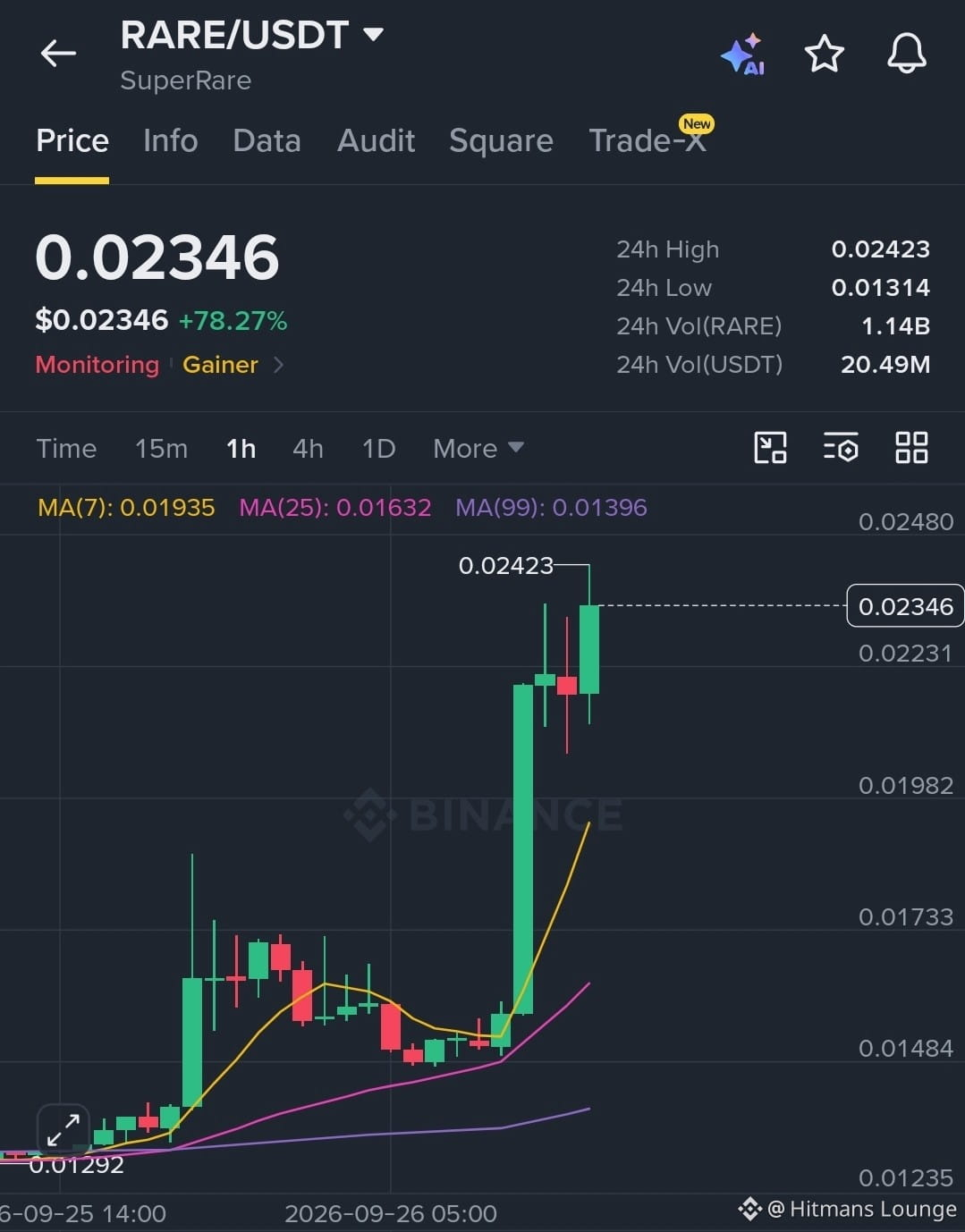
Price has broken out +78.27% from the 0.01292 base with the current candle consolidating just below the 0.02423 high — MA7 (0.01935) is steeply rising from far below, confirming the move is fresh, but the wide SL reflects the volatility reality of a low-cap with this kind of range.
$RARE : SuperRare is a curated 1/1 NFT art marketplace where RARE governs curation and treasury decisions — protocol revenue is entirely dependent on NFT art market volumes, which remain well below 2021–22 peaks, and this move appears momentum-driven rather than fundamental.
Is a +78% single-day move in RARE tracking any verifiable increase in SuperRare platform volume or new artist onboarding, or is it purely a low-float token riding the broader NFT narrative rotation?
#RARE #SuperRare #NFT #Platform #Protocol
{future}(RAREUSDT)
$RARE /USDT — 🟢 LONG · Conf 70%
📍 Entry: 0.0234 – 0.0235
🛑 SL: 0.0131
🎯 TP1: 0.0246
✅ TP2: 0.0256
🏆 TP3: 0.0270
Price has broken out +78.27% from the 0.01292 base with the current candle consolidating just below the 0.02423 high — MA7 (0.01935) is steeply rising from far below, confirming the move is fresh, but the wide SL reflects the volatility reality of a low-cap with this kind of range.
$RARE : SuperRare is a curated 1/1 NFT art marketplace where RARE governs curation and treasury decisions — protocol revenue is entirely dependent on NFT art market volumes, which remain well below 2021–22 peaks, and this move appears momentum-driven rather than fundamental.
Is a +78% single-day move in RARE tracking any verifiable increase in SuperRare platform volume or new artist onboarding, or is it purely a low-float token riding the broader NFT narrative rotation?
#RARE #SuperRare #NFT #Platform #Protocol
📍 Entry: 0.0234 – 0.0235
🛑 SL: 0.0131
🎯 TP1: 0.0246
✅ TP2: 0.0256
🏆 TP3: 0.0270
Price has broken out +78.27% from the 0.01292 base with the current candle consolidating just below the 0.02423 high — MA7 (0.01935) is steeply rising from far below, confirming the move is fresh, but the wide SL reflects the volatility reality of a low-cap with this kind of range.
$RARE : SuperRare is a curated 1/1 NFT art marketplace where RARE governs curation and treasury decisions — protocol revenue is entirely dependent on NFT art market volumes, which remain well below 2021–22 peaks, and this move appears momentum-driven rather than fundamental.
Is a +78% single-day move in RARE tracking any verifiable increase in SuperRare platform volume or new artist onboarding, or is it purely a low-float token riding the broader NFT narrative rotation?
#RARE #SuperRare #NFT #Platform #Protocol

1
356
Connectez-vous pour découvrir plus de contenu
Rejoignez la communauté mondiale des adeptes de cryptomonnaies sur Binance Square
⚡️ Suviez les dernières informations importantes sur les cryptomonnaies.
💬 Jugé digne de confiance par la plus grande plateforme d’échange de cryptomonnaies au monde.
👍 Découvrez les connaissances que partagent les créateurs vérifiés.
Adresse e-mail/Nº de téléphone
Sujets d’actualité
1
#BinancePick
3.1M vues
152,707 mentions
2
#EarningsSeason
5.3M vues
25,976 mentions
3
#AnthropicTTMRevenueGrewAbout1200%
28,363 vues
406 mentions
4
#AnthropicS1ExpectedToday
25,380 vues
338 mentions
5
#SouthKoreaReportedlyWeighsFourthCryptoTaxDelay
29,946 vues
461 mentions
6
#FranklinTempletonFilesForTwoDividendToBitcoinETFs
39,448 vues
535 mentions
7
#StrategyMSTRSurpassesNasdaqInMarketCap
29,874 vues
382 mentions
8
#CanadaProposesStablecoinRedemptionWithin3BusinessDays
1,310 vues
36 mentions
9
#ElectrumWalletBugLetRogueServersStealFunds
30,723 vues
460 mentions
10
#ArgentineCourtDismissesLIBRACaseAgainstMilei
46,078 vues
575 mentions